
Sabitlenmiş Tweet
Sorrow
341 posts


Sorrow
@Sorrow
I work for your internets irl. No answer = not interested
France Katılım Temmuz 2007
226 Takip Edilen108 Takipçiler

Sorrow retweetledi
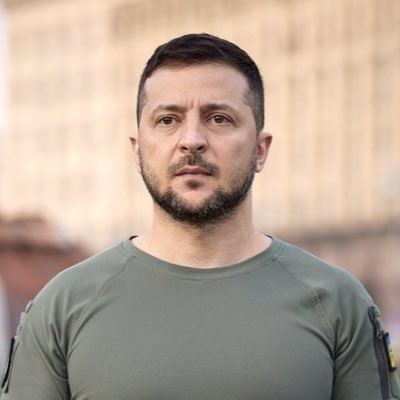
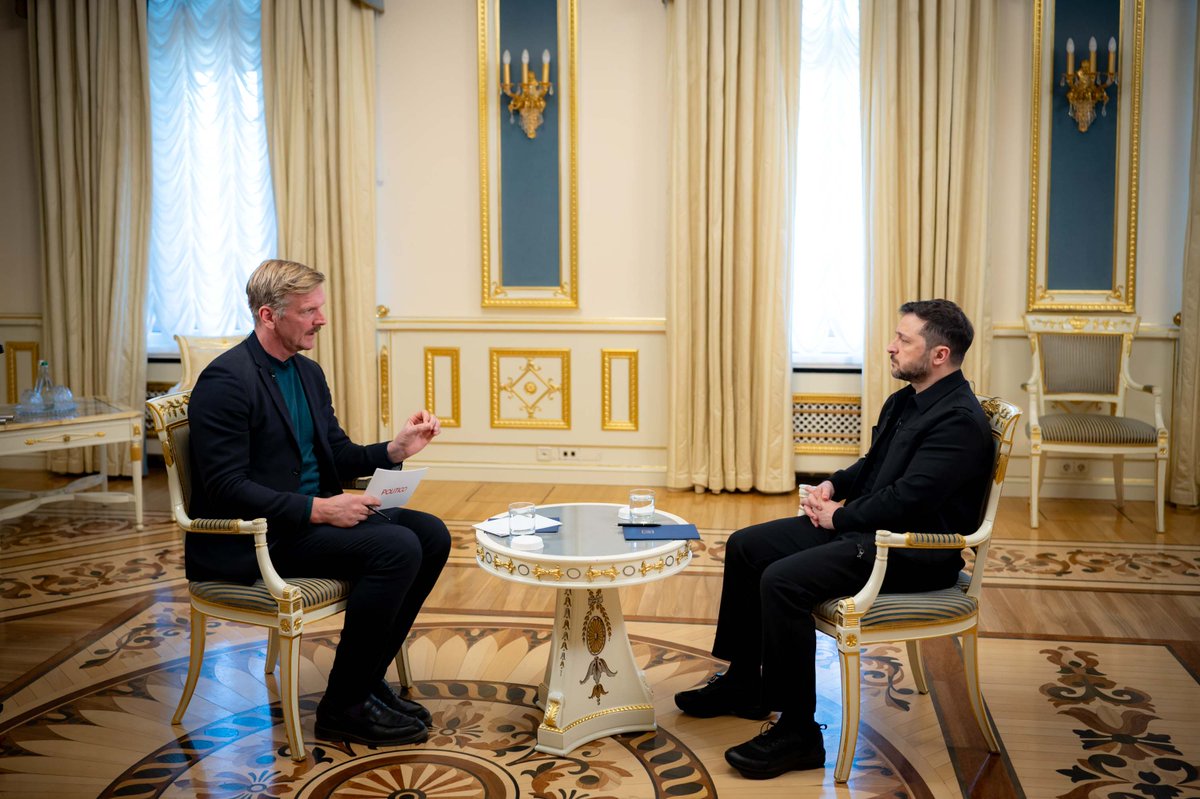
If the United States and Europe are strong, if they don’t buy Russian oil and gas, if people stand by the principles they declare, and if pressure on Russia is strong and clear – if all these things work properly, the war will end as quickly as possible.
Otherwise, it will last longer than we estimate. Normal people really want it to end tomorrow – or yesterday, as we say. But no matter what, Russia doesn’t have enough power to occupy us. It simply doesn’t.
From an interview with Gordon Repinski (2/2).
English
Sorrow retweetledi

"I don't care about stories. I never did. Every story is the same. We have no new stories. We're just repeating the same ones.. The film isn't the story. Its mostly picture, sound, a lot of emotions. The stories are just covering something"
R.I.P Béla Tarr ~ The ~Turin Horse
English
Sorrow retweetledi
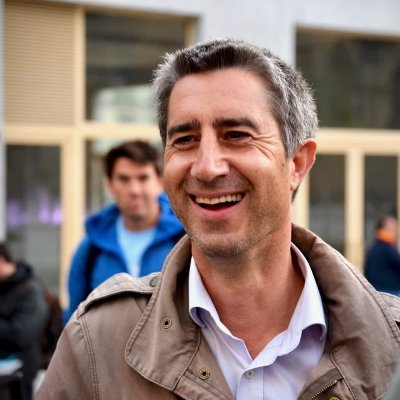
C'est quoi ce délire ?
"Les rats quittent le navire" : Sophie Binet est "mise en examen" pour avoir raconté ça de Bernard Arnault et de ses copains.
Où sont les libertés syndicales, les libertés d'expression ?
Des "rats", oui, des "rapaces", des "vautours", qui passent par les paradis fiscaux pour échapper à l'impôt. Cent fois nous l'avons répété.
Nous demandons à être poursuivis à notre tour, par solidarité. Et pour mieux dévoiler, au tribunal, les vices, les tricheries de cette oligarchie pourrie.
Le moment venu, ils auront leur grand procès. Et pas pour une banale expression.
France Inter@franceinter
La secrétaire générale de la CGT Sophie Binet mise en examen après avoir comparé des grands patrons menaçant de délocaliser à des "rats" qui "quittent le navire" Dans #LaGrandeMatinale, elle affirme que "la France est handicapée par ses multinationales" @Ben_Duhamel
Français
Finally, this PoS can finally go to jail. I feel like i've been waiting for this event for like 2 decades.
#sarkozyprison
Congrats to this investigator who managed to overcome all obstacles and the secret services alone.
English
Sorrow retweetledi

🚨Marine Le Pen ne savait pas que Gilles Bouleau allait la PULVÉRISER en direct alors que la caméra tournait encore.
Fin de carrière ?
Français
Sorrow retweetledi

And so, dear Europe, we are on our own.
Way too much time and opportunities have been wasted on false illusions and self-deceit, but we have to deal with what we have.
There's always a way to go for those who don't give up and never accept surrender and death as an option.
Ukraine has been a more than vivid illustration of the fact that we can do it.
The heart of the Free World gets back to the eastern side of the Atlantic, and we'll pull this through together as America, unfortunately, abandons reason for madness.
English
Sorrow retweetledi

“This is a wake-up call for the powerhouse of Europe!”
Powerhouse of Europe in 5 minutes:

English
Sorrow retweetledi
Increvable !
Notre numéro spécial 7 janvier de 32 pages :
👉 Sondage Ifop : les Français sont pour la caricature
👉 Les résultats de notre concours #RireDeDieu
👉 Caricatures de Mahomet : récit d'une manipulation
👉 L'histoire des miracles de Charlie à l'usage des mécréants

Français
Sorrow retweetledi

They're not even in office yet and the blackmail has already started.

English
Sorrow retweetledi
The True End of Pax Americana: A Second Trump Presidency and the Dawn of a New Era of Global Instability
The world’s surface lies in fragile calm, yet from beneath, shadows gather—a silent, unyielding invitation to the chaos we believed had been quarantined to the past.
A Second Trump Presidency: The End of Pax Americana
Since the end of World War II, Pax Americana—a period of relative global stability under U.S. leadership—has served as the backbone of the modern international order.
For nearly eight decades, the United States has acted as both anchor and enforcer, promoting democracy, free trade, and collective security. Today, however, that foundation seems to be fracturing, and a second Trump presidency could mark the ultimate collapse.
If the United States fully retreats from its role as a global stabilizer, nations around the world may soon find themselves grappling with a void—one that invites chaos, conflict, and existential threats.
Trump’s first term left allies shaken and adversaries emboldened, as his foreign policy oscillated between abrupt decisions and transactional values. A defining moment came with Trump’s impeachment, after allegedly withholding military aid from Ukraine—a critical buffer against Russian aggression—to pressure them into investigating his political rival.
For allies, this incident underscored Trump’s willingness to compromise national security for personal gain. The hasty, chaotic withdrawal from northern Syria further exemplified this volatility, abandoning Kurdish allies who had fought alongside the United States against ISIS, and echoing the haunting evacuation scenes of Saigon in Afghanistan.
Should Trump return to office, this stance may harden, signaling to the world that U.S. commitments are more conditional than ever—a precarious message in a world teetering on the edge of instability.
For many allies, Trump’s past actions have raised a fundamental question: Can they trust the United States to honor its commitments? When he abandoned the Kurds, one of America’s staunchest allies in the fight against ISIS, and moved to withdraw from NATO, it sent a message that U.S. promises could be easily discarded.
Trump’s public statements, suggesting he would “let Russia do whatever it wants” and referring to NATO as a “protection racket,” further eroded faith in America’s reliability as a partner. For allies facing existential threats, a U.S. promise under Trump may no longer be a guarantee of security but a gamble.
As a result, nations are increasingly pursuing “self-help” measures, from nuclear proliferation to significant increases in defense spending. Japan has recently announced a substantial increase in its defense budget, doubling spending to reach 2% of GDP—a historic shift that reflects deep concerns about the stability of American alliances.
Taiwan, too, is ramping up its military budget in anticipation of a potential conflict with China, especially as Beijing has closely observed how the world reacted—largely in silence—when it tightened its grip on Hong Kong. In Europe, Germany has committed €100 billion to modernize its military, a direct response to growing uncertainty over U.S. involvement and the threat of Russian aggression in the region.
This global trend toward increased defense spending and nuclear self-sufficiency reflects the fears of a world without a reliable stabilizer.
Should the U.S. continue on an unpredictable, isolationist path, other nations may feel they have no choice but to secure their own means of defense, up to and including nuclear arms. The echoes of history are hard to ignore: as empires recede, smaller powers are often left to fend for themselves, and self-preservation can lead to an arms race that escalates tensions rather than defuses them.
The Dangers of a Power Vacuum in a Multipolar World
Nature abhors a vacuum.
History shows that when a great power retreats, disorder rushes in to fill the space. The end of Pax Americana would create just such a void, likely unleashing rivalries, territorial ambitions, and a resurgence of opportunistic alliances.
The collapse of the Roman Empire ushered in centuries of fragmented rule, leaving Europe vulnerable to violent power struggles. As the British Empire receded, alliances fractured, fueling the tensions that eventually led to World War I. The interwar period, defined by the collapse of European empires, created a fertile ground for totalitarian regimes, culminating in the devastation of World War II.
Today, a similar collapse could herald catastrophic consequences. In a world without a stabilizing force, nations would scramble to form self-serving alliances, gravitating toward authoritarian powers willing to exploit vulnerabilities. China and Russia, poised to expand their influence, would likely demand concessions from smaller nations in exchange for “protection.”
The once-open oceans may become contested zones, with authoritarian powers setting terms for safe passage. Smaller countries, fearing abandonment, may accept oppressive alliances as a means of survival, reshaping the global landscape in ways that favor power over principle.
A second Trump presidency, accompanied by an isolationist outlook, would almost certainly accelerate this shift. By pivoting inward and retracting its influence, the United States would leave a power vacuum that rivals like China and Russia would rush to fill. The result: a fragmented world where dominant regional powers openly vie for control, and smaller states are left adrift in a dangerous, divided landscape.
The Shadow of Great Power War and Existential Threats
The risks of this unanchored world are profound, none more so than the possibility of renewed great power conflict. World War II, at its core, was a great power struggle—a collision of empires following the collapse of stability. Today, any similar conflict would carry existential stakes. Advances in AI, autonomous weapons, and cyber warfare have fundamentally altered the nature of conflict, raising the specter of automated battlegrounds and weapons systems capable of striking across continents in minutes.
In a world where no stabilizing force exists, the race for technological supremacy would accelerate unchecked, as each nation pursues increasingly advanced, automated weapons for an edge.
Without international oversight, AI and autonomous systems capable of making life-or-death decisions independent of human control could proliferate, exponentially increasing the potential for catastrophic miscalculations. A small skirmish could escalate, triggering an irreversible chain of events—one that humanity is not prepared to control.
A second Trump term would likely deepen these risks, as the U.S. steps away from treaties and multilateral discussions on emerging technologies. In this world, warfare would no longer require human decision-making; conflicts could unfold on a scale and speed unprecedented in history, with potentially existential consequences.
Nuclear Proliferation and the Erosion of Non-Proliferation Norms
One of the most immediate dangers in a post-Pax Americana world is the risk of nuclear proliferation. As American influence fades, nations previously dependent on U.S. protection may feel compelled to develop their own nuclear capabilities, either as a deterrent or a bargaining chip.
Japan, South Korea, and Saudi Arabia, in particular, may pursue nuclear programs if U.S. guarantees no longer appear credible. In a world where nuclear weapons become more accessible, the risks of an arms race—and the potential for nuclear miscalculations—would rise dramatically.
Trump’s previous foreign policy approach, marked by unpredictability and a disregard for long-standing alliances, could be a tipping point for these nations. Should the U.S. signal that it will no longer defend its allies decisively, these countries may see self-armament as their only viable path to security.
This erosion of non-proliferation norms could yield a world far more precarious than during the Cold War, as multiple states acquire nuclear arsenals with limited channels for communication or protocols to prevent escalation.
theintellectualist.com/the-true-end-o…

English
Sorrow retweetledi

Sorrow retweetledi

Donald Trump will remove the United States from NATO, and Putin will continue to conquer Europe. Nice work you goddamn chucklefucks
English
Sorrow retweetledi
⚫ Mort de Simon Fieschi, ancien webmaster de «Charlie Hebdo» blessé dans l'attentat
➡️ bit.ly/4faKfjL

Français
Sorrow retweetledi

Where is our fcking money, @PM_ViktorOrban??
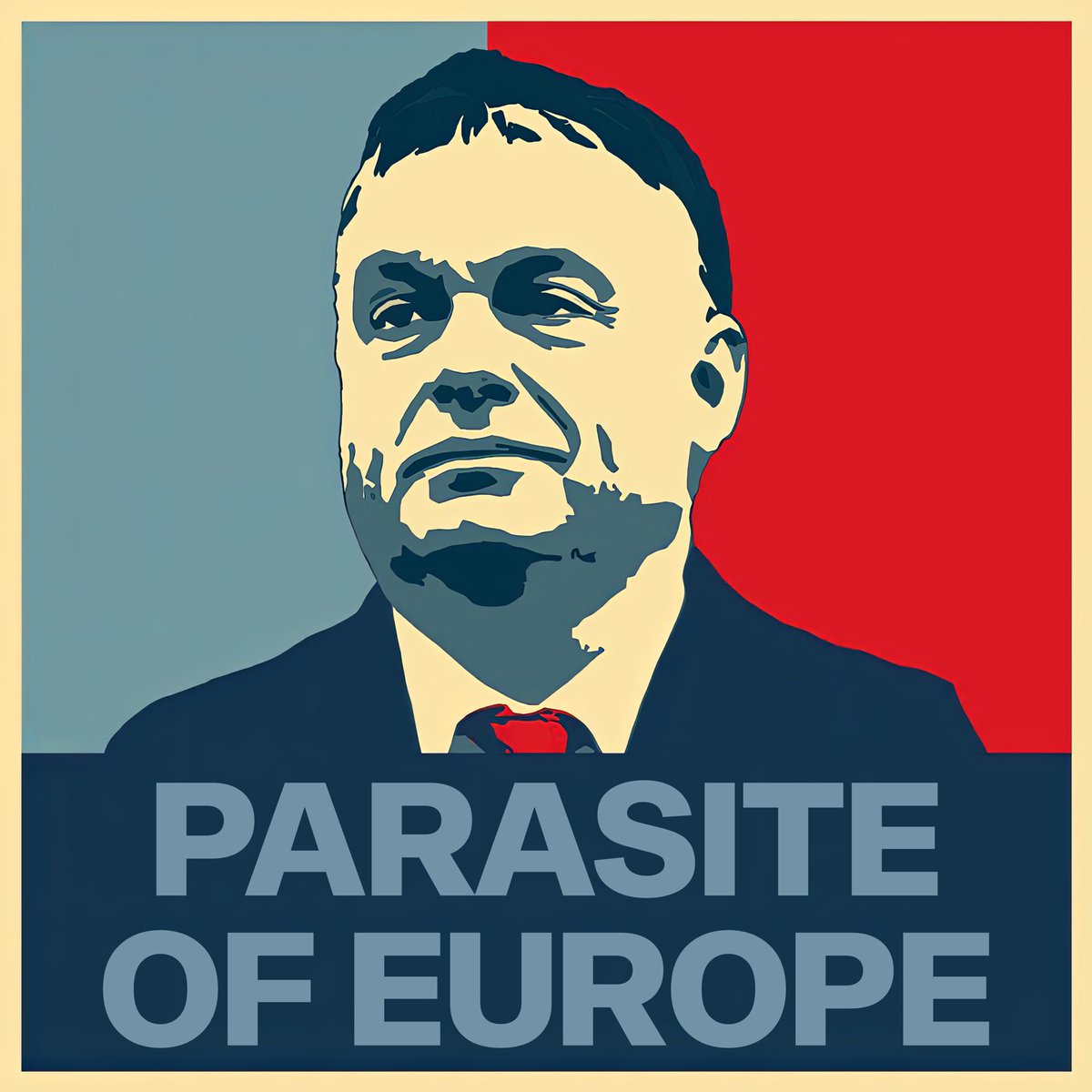
NOELREPORTS 🇪🇺 🇺🇦@NOELreports
🇪🇺🔥 German MEP Daniel Freund delivered a scathing critique of Viktor Orbán, calling him the "most corrupt politician in the EU." "Mr. Orbán, you've stolen at least €14 billion, built stadiums and palaces instead of schools and roads. No more EU funds for Hungary until the theft stops. We want our money back!" He even called for a European arrest warrant.
English
Sorrow retweetledi

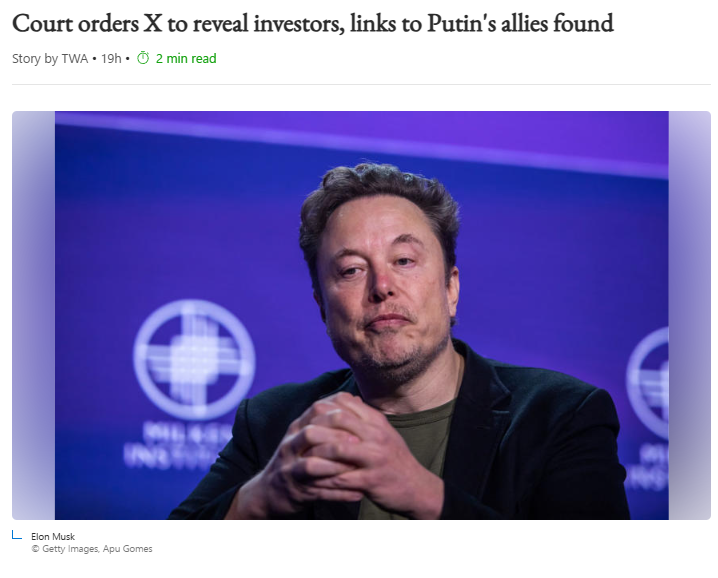
We have been telling you this. It's crazy that everything surrounding Trump and his surrogates leads to Putin. It's not a conspiracy, it's fact. msn.com/en-us/money/ma…
English
Sorrow retweetledi

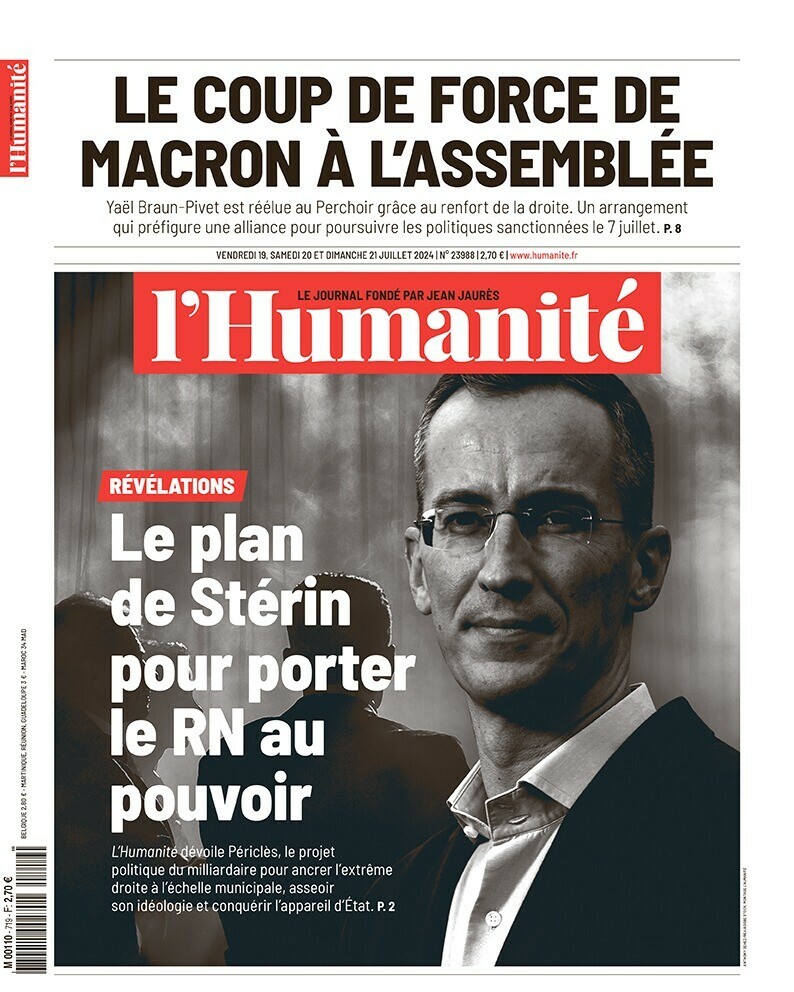
Vous aimez Bolloré ? Vous adorerez Stérin ! @humanite_fr révèle le projet Périclès établi par le milliardaire pour porter le RN au pouvoir, 150 millions d’euros pour faire gagner l’extrême droite dans les urnes et dans les têtes. Ah, au fait, Stérin est évadé fiscal depuis 2012 !
Français