Space HD

103 posts

Space HD banner
Space HD

Space HD

@Spacehd444

Exploring the universe one fact at a time. Science | Space | Astronomy

Katılım Nisan 2026
1.3K Takip Edilen251 Takipçiler
Space HD retweetledi
I fucking Love Science
I fucking Love Science@iflscience1·
NASA just shared the closest image ever taken of Jupiter... Each one of those swirls is a storm bigger than the entire Earth and going on for centuries. Let that sink in.
I fucking Love Science tweet media
English
2
4
9
590
Space HD retweetledi
I fucking Love Science
I fucking Love Science@iflscience1·
Exoplanet... This striking moment was captured by photographer Gustavo Ramirez, showing a rare shelf cloud formation stretching across the horizon. by stable_genius
I fucking Love Science tweet media
English
0
4
8
113
Space HD retweetledi
I fucking Love Science
I fucking Love Science@iflscience1·
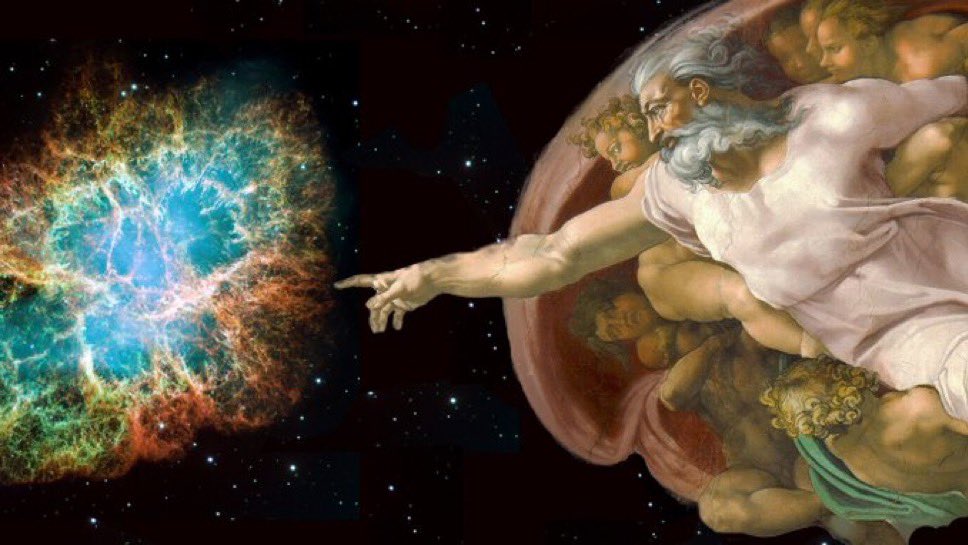
Can science and religion truly coexist, or are they destined to clash?
I fucking Love Science tweet media
English
5
5
12
226
Space HD retweetledi
I fucking Love Science
I fucking Love Science@iflscience1·
Exoplanet... This striking moment was captured by photographer Gustavo Ramirez, showing a rare shelf cloud formation stretching across the horizon. by stable_genius
I fucking Love Science tweet media
English
0
6
9
466
Space HD retweetledi
I fucking Love Science
I fucking Love Science@iflscience1·
The yellow structure depicted is the Laniakea Supercluster, a vast cosmic region that houses approximately 100,000 galaxies. The red dot in the image represents our home, the Milky Way, which boasts around 300 billion stars, including our very own Sun.
I fucking Love Science tweet media
English
0
8
14
675
Space HD retweetledi
I fucking Love Science
I fucking Love Science@iflscience1·
Once in a millennium moment, Earth and the Moon crossing infornt of the Sun. Just hours before Huygens landed on Titan on Jan 14, 2005, there was a rare transit of Earth and the Moon across the Sun as seen from Saturn. It’s an event that happens only about once every 15 years, and a dead-center transit like that only twice per millennium.
English
0
2
5
56
Space HD retweetledi
I fucking Love Science
I fucking Love Science@iflscience1·
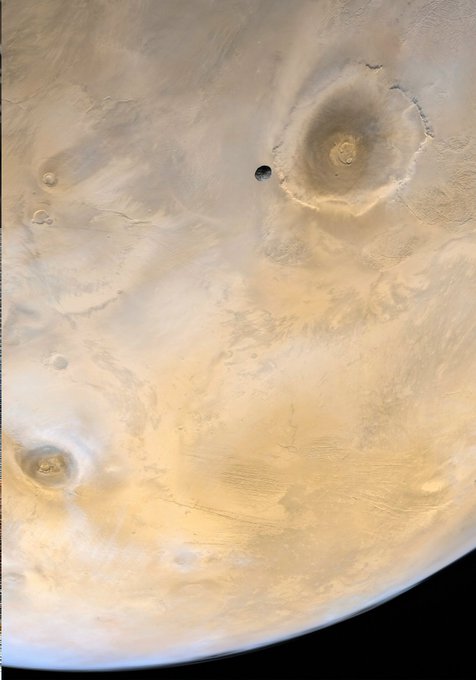
Look closely. That "little" rock is the moon Phobos. The "small" bump next to it is Olympus Mons, tallest mountian in the solar system. Three times taller than Mount Everest and roughly the size of Arizona. In this single frame, you are looking at a mountain so big it pokes out of the atmosphere and a moon so close it’s destined to be torn apart by the planet’s gravity. This is Mars like you’ve never seen it.
I fucking Love Science tweet media
English
0
10
10
153
Space HD retweetledi
I fucking Love Science
I fucking Love Science@iflscience1·
This isn’t an ocean wave. It's more than a 1,000-mile long cold front. Stretching over southern Chile and Argentina ISS
I fucking Love Science tweet media
English
2
7
14
412
Space HD retweetledi
I fucking Love Science
I fucking Love Science@iflscience1·
Look closely. That "little" rock is the moon Phobos. The "small" bump next to it is Olympus Mons, tallest mountian in the solar system. Three times taller than Mount Everest and roughly the size of Arizona. In this single frame, you are looking at a mountain so big it pokes out of the atmosphere and a moon so close it’s destined to be torn apart by the planet’s gravity. This is Mars like you’ve never seen it.
I fucking Love Science tweet media
English
2
5
7
238
Space HD retweetledi
I fucking Love Science
I fucking Love Science@iflscience1·
A satellite breaking up, filmed from the ISS. There are over 30,000 tracked objects in orbit right now. Most of them will eventually do this. Some of them will do it directly above your head. We've put so much into orbit that watching one fall apart is no longer rare.
English
0
4
3
84
Space HD retweetledi
I fucking Love Science
I fucking Love Science@iflscience1·
An animated glimpse into the complexity of the human body. 📽️: SciePro
English
0
4
8
134
Space HD retweetledi
I fucking Love Science
I fucking Love Science@iflscience1·
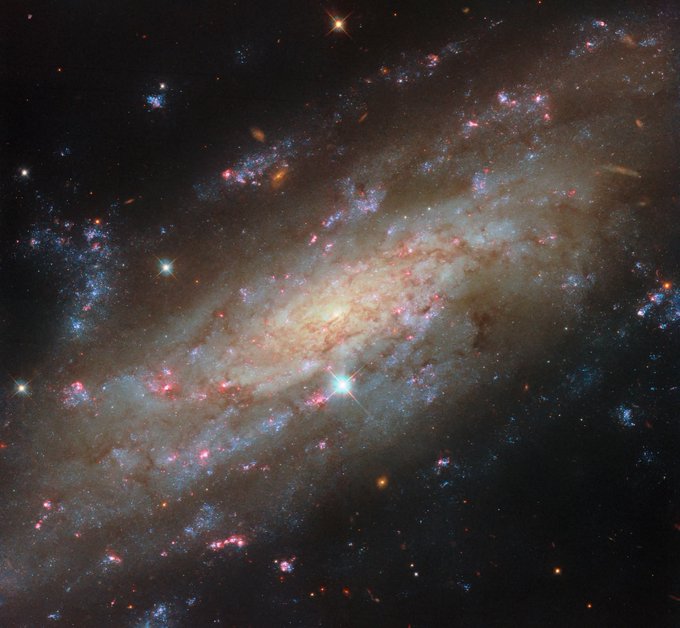
On the Go! A majestic spiral galaxy, NGC 3137, spins gracefully through the cosmos as a member of the NGC 3175 galaxy group. Named after its largest member, this cosmic family is a lively collection of galaxies—including several intriguing dwarf galaxies orbiting together through the vastness of space.Astronomers are especially fascinated by this group because it serves as a remarkable mirror to our own Local Group, home to the Milky Way and our massive neighbor, Andromeda. By studying NGC 3175’s group, scientists hope to unlock secrets about how galaxies like ours interact, evolve, and give birth to new stars.What makes NGC 3137 particularly exciting is its relative closeness—just 53 million light-years away. That’s practically next door on cosmic scales! This proximity turns it into a perfect natural laboratory for watching stars ignite, live out their fiery lives, and dramatically explode in their final moments.A stunning view straight from Hubble’s eye, capturing the intricate beauty of this distant yet accessible spiral. Image credit: ESA/Hubble & NASA, D. Thilker and the PHANGS-HST Team
I fucking Love Science tweet media
English
0
2
2
81
Space HD retweetledi
I fucking Love Science
I fucking Love Science@iflscience1·
Once, Albert Einstein’s younger son Eduard Einstein asked why he was so famous. Einstein replied: “When a blind beetle crawls over the surface of a curved object, it doesn’t notice that the path it has covered is actually curved. I was lucky enough to notice what the beetle didn’t notice.” (𝘌𝘪𝘯𝘴𝘵𝘦𝘪𝘯 𝘸𝘪𝘵𝘩 𝘩𝘪𝘴 𝘴𝘰𝘯 𝘌𝘥𝘶𝘢𝘳𝘥. 𝘚𝘰𝘶𝘳𝘤𝘦: 𝘎𝘦𝘳𝘮𝘢𝘯 𝘍𝘦𝘥𝘦𝘳𝘢𝘭 𝘈𝘳𝘤𝘩𝘪𝘷𝘦𝘴)
I fucking Love Science tweet media
English
0
1
2
34
Space HD retweetledi
I fucking Love Science
I fucking Love Science@iflscience1·
A magnificent impact crater on Mars' Meridiani Planum. The crater is 1.5 kilometers in diameter. This image was taken by the Mars Reconnaissance Orbiter (MRO).
I fucking Love Science tweet media
English
0
6
6
89
Space HD retweetledi
I fucking Love Science
I fucking Love Science@iflscience1·
Messier 101 - The Pinwheel Galaxy A spiral galaxy in the constellation Ursa Major, located approximately 22 million light-years away.
I fucking Love Science tweet media
English
1
4
12
139
Space HD retweetledi
I fucking Love Science
I fucking Love Science@iflscience1·
This image of Jupiter's most unusual moon, Io, was taken by the Galileo spacecraft. The image shows the moon as a bright yellow, but it is presented in natural colors, as the human eye would see it. Io's coloration is determined by the presence of sulfur and molten silicate rocks. The moon's unusual surface is constantly being renewed by a system of active volcanoes. Jupiter's powerful tidal forces deform Io and dampen its oscillations caused by the gravitational pull of the other Galilean moons. These processes cause Io's interior to become extremely hot, and molten rock then erupts to the surface. The moon's volcanoes are so active that they literally turn Io inside out, and their temperatures are so high that they begin to glow.
I fucking Love Science tweet media
English
1
9
21
257
Space HD retweetledi
I fucking Love Science
I fucking Love Science@iflscience1·
Confirmed: Oxygen can be produced without photosynthesis For centuries, it was believed that oxygen on Earth was produced exclusively by living organisms through photosynthesis, a process dependent on sunlight. New research shows this is not the only pathway. At depths of around 4,000 metres (13,000 feet) in the Pacific Ocean, far beyond the reach of sunlight - researchers observed oxygen being produced in complete darkness. The discovery was made by a team led by the Scottish Association for Marine Science while studying the Clarion–Clipperton Zone, a vast abyssal plain between Hawaii and Mexico. Sensors placed on the seafloor recorded rising oxygen concentrations, contradicting expectations based on known biological processes. Further investigation identified the source as polymetallic nodules, rock concretions rich in manganese, nickel, cobalt, and other metals. The researchers found that these nodules can generate electrical potentials when clustered together on the seabed. Under certain conditions, this electrical charge appears sufficient to drive seawater electrolysis, a chemical reaction that splits water molecules (H₂O) into hydrogen and oxygen, without the involvement of light or living organisms. The findings have important implications. They suggest that oxygen production can occur through geological and electrochemical processes, which may influence how scientists think about the early evolution of oxygen-using life on Earth. They also raise concerns about deep-sea mining on ecosystems we don’t understand Study: Evidence of dark oxygen production at the abyssal seafloor Nature Geoscience, 2024
I fucking Love Science tweet media
English
1
1
3
72
Space HD retweetledi
I fucking Love Science
I fucking Love Science@iflscience1·
The moon is yours, I dedicate it to you always
I fucking Love Science tweet media
English
0
4
14
120
Space HD retweetledi
I fucking Love Science
I fucking Love Science@iflscience1·
"We are made of Starstuff." - Carl Sagan
I fucking Love Science tweet media
English
0
6
10
110
Space HD retweetledi
I fucking Love Science
I fucking Love Science@iflscience1·
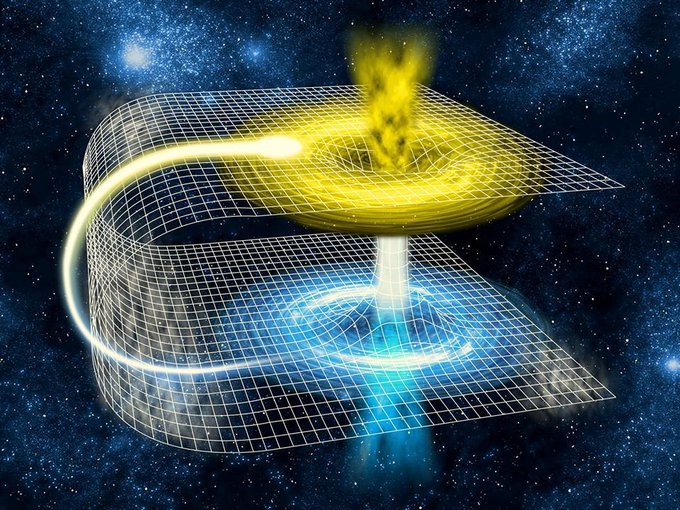
🚨: Wormholes are not shortcuts through the universe, but bridges between the future and the past, new study suggests.
I fucking Love Science tweet media
English
1
4
7
185