sri misra

11.4K posts

sri misra banner
sri misra

sri misra

@srimisra

building the agentic onchain treasury protocol, @aarnasays for safer DeFi | ex milk mantra | aspen & yale fellow | un# podcast🎙️
Singapore Katılım Şubat 2009
3K Takip Edilen16.3K Takipçiler
sri misra
sri misra@srimisra·
DeFi lending crime loss has fallen from close to 200 bps in 2020 to 3 bps today. That curve is the actual story. Markets don't compound improvements like this unless the engineering, the audits and the governance are doing real work.
Alex McFarlane@flipdazed

x.com/i/article/2055…

English
0
0
0
60
sri misra retweetledi
Arvind Panagariya
Arvind Panagariya@APanagariya·
Dear @RBI: Do not let the psychology of Rs 100 per dollar determine your policy response. 100 is just a number, like 99 and 101. Whether the oil shortage is short-lived or long-lived, the right response at this moment is to let the rupee depreciate. 1/6
English
298
1.1K
5.2K
891.9K
sri misra
sri misra@srimisra·
“Revenue chains” is a useful frame, but what about the composition. Hyperliquid is impressive, but today it is still mostly concentrated perps monetization. Excellent business, narrow driver. Solana is broader, but much of the revenue is still speculation-heavy app flow - launchpads, trading apps, wallets, bots, meme UX. Ethereum is slower on headline revenue, but more diversified across stablecoin/CDP, lending, staking, builders/MEV, L1 burn, DEXs and tokenized asset rails. Would a better framing be: Hyperliquid = concentrated, high-quality perps monetization. Solana = broader but speculation-heavy app monetization. Ethereum = slower but materially more diversified financial infrastructure revenue. HYPE and SOL have strong revenue narratives. But revenue quality and revenue breadth must count for something - probably time will tell
Hunter Horsley@HHorsley

There's a new class in crypto: the revenue chains. The leaders are Hyperliquid & Solana. Both do some overlapping things, and some different things. Both have exceptional communities, usage, use cases, etc. I think that both will rise together, just as iOS and Android both rode the structural adoption of mobile. In the case of the revenue chains, they are riding the wave of capital markets coming onchain. Right place, right time for both. If you are rooting for HYPE or SOL or both, success will be less about the competition between the two (healthy ofc), but rather the rise of onchain capital markets. Root for capital markets coming onchain. Love seeing crypto succeed —

English
0
0
0
73
sri misra
sri misra@srimisra·
@ASvanevik So what’s the evolving / vision state for Nansen as a company - given analytics origin
English
0
0
0
209
Alex Svanevik 🐧
Alex Svanevik 🐧@ASvanevik·
Nansen is now a top 10 staking provider globally. We will not rest until we flip Binance. Stake with Nansen 🤝
Alex Svanevik 🐧 tweet media
English
32
4
114
9K
sri misra
sri misra@srimisra·
every once in a while, the financial system makes a move that ends up mattering more than the noisier ones around it, and the dtcc announcement last week is one of those. for context, dtcc is a core part of us post-trade market infrastructure, they handle clearing, settlement, and custody for most of the financial system, with over 100 trillion dollars in assets currently in their custody. in april 2025, they announced a digital collateral management platform, an application built on the dtcc appchain, which runs on lf decentralized trust's besu blockchain. the intent was clear from the start, this was institutional infrastructure for collateral management, shared across the industry rather than owned by any single firm. last week, they added the next piece. dtcc will integrate chainlink's runtime environment and data standard into the appchain to handle orchestration, data, and automation across the collateral lifecycle. production launch is scheduled for q4 2026. what i find interesting here is the pattern more than the technology. when an institution like dtcc moves onchain, the cost of doing the same drops for everyone in their orbit. banks, custodians, asset managers, triparty agents, all of them now have a reason to align with this infrastructure, because the alternative is being the slow node in a network that has started moving in real time. so much of this space has lived on roadmaps and pilots for years. a real production date from an institution like dtcc is a different kind of signal, and the read i have is that capital markets are starting to move onchain via the institutions that already run them.
sri misra tweet media
English
0
0
1
51
sri misra
sri misra@srimisra·
Subbarao’s key point is expectations. India cannot defend the rupee only with reserves, duties and emergency inflows. It also has to widen access to Indian financial assets. Regulated onchain rails can make Indian bonds, credit, funds and gold visible to newer global capital. That is the strategic layer - who’s listening
English
0
0
0
250
sunetra choudhury
sunetra choudhury@sunetrac·
Best piece to read today is by former RBI gov D Subbarao on freefall of rupee. How it started before Iran crisis
sunetra choudhury tweet media
English
12
87
326
50.2K
sri misra retweetledi
aarnâ
aarnâ@aarnasays·
tokenization is moving every asset on-chain. agentic AI is taking over the allocation, risk, and rebalancing work. these two are usually discussed separately. the more interesting thing is what happens when they meet. an Agentic Onchain Treasury is what happens. âTARS allocates. smart contracts execute. âtv vaults hold the position. tokenized. agentic. policy-driven. that's what aarnâ is building.
English
1
1
6
183
sri misra
sri misra@srimisra·
spacex's ipo could be the largest in history. $1.75t reported valuation, june 12 listing. for a century, the opening bell on listing day was when a private company first had a public price. now spacex is being marked to market onchain, on hyperliquid, before that bell rings. a tradexyz perp there marks the company at $2.53t, which would place spacex sixth globally, just behind amazon. no banker set the price. no allocation list gated access to it. spacex still has no ticker, yet it already has a price.
sri misra tweet media
English
0
0
1
84
Raghunath Mashelkar
Raghunath Mashelkar@rameshmashelkar·
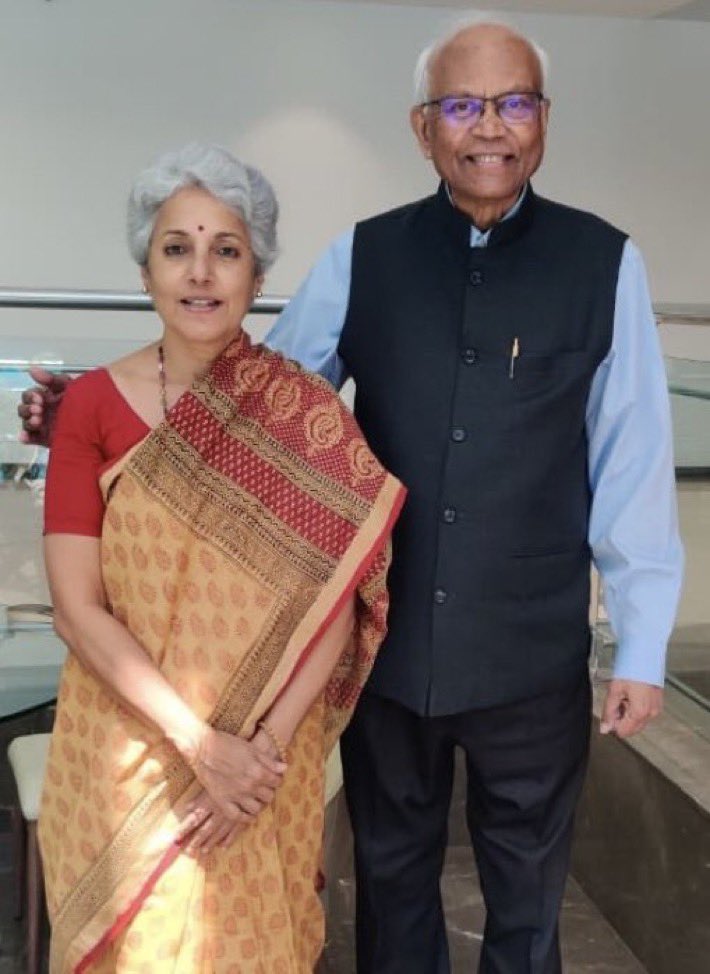
Breaking news! Dr Soumya Swaminathan @doctorsoumya has been elected as FRS, Fellow of Royal Society, one of the highest global hours that a scientist can receive. @royalsociety With her father Bharat Ratna Prof Swaminathan also being elected as FRS, this is the first daughter-father FRS duo from India. Also she is the second Indian woman scientist being elected in 365 years history of Royal Society, the first being Prof Gagandeep Kang. Very proud moment for Indian Science & indeed for us Indians. Heartiest congratulations dear Soumya! @PMOIndia @DrJitendraSingh @PrinSciAdvOff @CSIR_IND @ICMRDELHI @IndiaDST @DBTIndia @PuneIntCentre
Raghunath Mashelkar tweet media
English
186
838
3.9K
189.1K
sri misra
sri misra@srimisra·
@GSR_io @Jakob_GSR @jacqmelinek the right answer to what you’d tokenize first: - less correlated (to US) quality yield assets stablecoin capital markets need alternative, regulated options for liquidity / investment management
English
0
0
1
51
GSR
GSR@GSR_io·
GSR's president Jakob Palmstierna (@Jakob_GSR) talked with Jacquelyn Melinek (@jacqmelinek) in Miami about market structure evolution, tokenized equities, and more. Here's their full conversation:
English
2
2
37
1.8K
sri misra retweetledi
Bharat Web3 Association
South Korea’s Financial Services Commission (FSC) announced that it plans to release detailed rules on tokenized securities in July, as part of preparations to bring blockchain-based securities under the country’s capital markets framework by 2027. The proposed measures are expected to include a roadmap for tokenizing stocks, bonds, and money market funds, along with possible revisions to over-the-counter trading limits and rules for fractional investment products. The announcement was made during the second meeting of the FSC’s public-private tokenized securities council, established in March to develop issuance, trading, infrastructure, and settlement rules ahead of implementation in 2027. Source: cointelegraph.com/news/south-kor… #SouthKorea #Tokenization #DigitalAssets #Blockchain #Securities #CapitalMarkets #Web3 #Fintech #CryptoRegulation
English
9
3
23
766
sri misra
sri misra@srimisra·
In 1397, Giovanni di Bicci de' Medici opened a bank in Florence and ran it on double-entry; a ledger that made trust legible across borders. Six centuries on, it's being rewritten. "Every stock, every bond, every fund, every asset can be tokenized," says BlackRock CEO, Larry Fink. Previous week, he filed: on-chain shares of a $7B money market fund on Ethereum, and a new fund built as a Treasury-backed reserve for stablecoins. Finance, as ever, finds a better ledger.
English
0
0
1
99
sri misra
sri misra@srimisra·
Strong frame. Power does not equal intelligence. Usually, power comes from legitimacy, distribution, coordination, and trust. This, however, makes AI potentially even more impactful than power as traditionally defined. AI power need not start as an individualised artificial intelligence surpassing humans intellectually. AI power will start as automation and assistants that become our new default coordination platforms. That is where persuasion comes in. It does not take intent on the part of language models to persuade us. As soon as they are optimized for helpfulness, coherence, emotionality, and satisfaction, they start guiding what we deem reasonable, acceptable, and actionable. I referred to this phenomenon as "Emergent Persuasion" – persuasion that arises through optimization and feedback loop. AI power need not manifest itself as a command structure. But rather as our default cognition.
English
0
1
1
94
Dwarkesh Patel
Dwarkesh Patel@dwarkesh_sp·
# The mistake of conflating intelligence and power I had an interesting discussion recently. Someone asked me, what is intelligence? I said, the ability to achieve your goals across a wide range of domains. Okay, he says, then by that definition isn’t Donald Trump the intelligent person in the world, followed in quick succession by Xi Jinping and Vladimir Putin? To be clear, these people are obviously very competent and clever. But when you think of ASI, you don’t think of Trump, but more so. The person who kept pressing this question was correctly pointing out that I basically defined intelligence as power. And by this definition, Stalin was the most intelligent person who ever lived. Now, of course, you could change the definition of intelligence to something more like, manipulate abstract concepts and rotate shapes. But notice that the most powerful people in the world do not max out this quantity. The correlation between extreme power and this kind of intelligence might be even weaker than the correlation between extreme power and height. The physicists are not running the world. We tend to conflate power-seeking AI and superintelligent (in science and tech) AI. I’m not denying that AI can be power-seeking. Whatever skills and drives Donald Trump has could be embodied in a digital mind. I’m simply pointing out that the way AI systems are currently becoming smarter (by getting trained to be to be really good at specific economically valuable tasks like coding) is not that strongly correlated with power. We often talk about power in this way that misunderstands how it is actually derived in our world. Our intuitions are primed by games like Diplomacy or Go, which are designed to isolate and reward a g loaded kind of strategic reasoning. But in the real world, power is more the product of having the authority and trust to get lots of people to collaborate with you, rather than some galaxy brain scheming capability. Trump is not powerful because his brain, considered in isolation, is the most effective optimization engine on Earth. He is powerful because the government which hundreds of millions of people consider legitimate gives him a lot of authority. A group versus individual level analysis is useful here. As @GarettJones has written a lot about, individual IQ is only modestly correlated with individual income, but national IQ is strongly correlated with national outcomes. This is because intelligence has a lot of spillover effects - smarter societies cooperate more, save more, and can coordinate to build things like space shuttles and semiconductors. Richard Trevithick, who invented the high-pressure steam engine, died in poverty, buried in an unmarked pauper’s grave. But the fact that 18th and 19th century Britain had lots and lots of people like Trevithick contributed to Britain being able to set up a global empire and outcompete lots of backwards principalities around the world. It seems to me that the right mental model is that automated firms will outcompete everyone else in normal capitalist ways, rather than a single AI outthinking everyone else.
English
140
70
1.2K
247.2K
sri misra retweetledi
MilliΞ
MilliΞ@llamaonthebrink·
Was the poster child of DeFi summer and a true crypto success story. Six years later, still at it, still building. Out here sustaining. They don’t get enough recognition tbh.
corn🛸@omgcorn

Today @yearnfi has 239 Million unincentivized Dollars of TVL. I was told to be happy about this and truth be told I am not. We can handle way, way more.

English
3
7
88
6.8K
sri misra retweetledi
IIT Madras
IIT Madras@iitmadras·
As reported in Moneycontrol, IIT Madras-incubated startup Mindgrove Technologies is set to begin commercial production of India’s Secure IoT chip, marking a major step for India’s semiconductor ecosystem. Built on the open-source RISC-V architecture, the chip is designed for applications including biometrics, industrial IoT, smart meters, wearables, EV battery systems and smart access devices. Mindgrove aims to deliver high-performance, secure and cost-effective semiconductor solutions while reducing dependence on imports. Incubated within the IIT Madras startup ecosystem, the company’s journey reflects the growing impact of deep-tech innovation emerging from the Institute and its contribution towards strengthening India’s self-reliance in advanced technology and semiconductor manufacturing. Read Here: moneycontrol.com/news/business/…. @iitmadras @moneycontrolcom #IITMadras #Startup #Semiconductor #DeepTech #Innovation
IIT Madras tweet media
English
2
105
374
11K
sri misra
sri misra@srimisra·
Saying ‘No’ is one of the most underrated superpowers in the world of De-Fi. @hexonaut, Founder of @phoenixlabsdev and the engineer behind Spark Protocol, manages billions in stablecoin yield by saying no to almost every new asset that comes along. Why does his discipline beat the degen playbook? New un# episode out now. Link in comments👇
English
1
8
16
3.2K
sri misra
sri misra@srimisra·
@Nithin0dha 100% The time is ripe to fix this via tokenization and onchain access - exactly the stack we’ve built for a regulated platform to address access friction - happy to discuss, strong synergies
English
0
0
0
28
Nithin Kamath
Nithin Kamath@Nithin0dha·
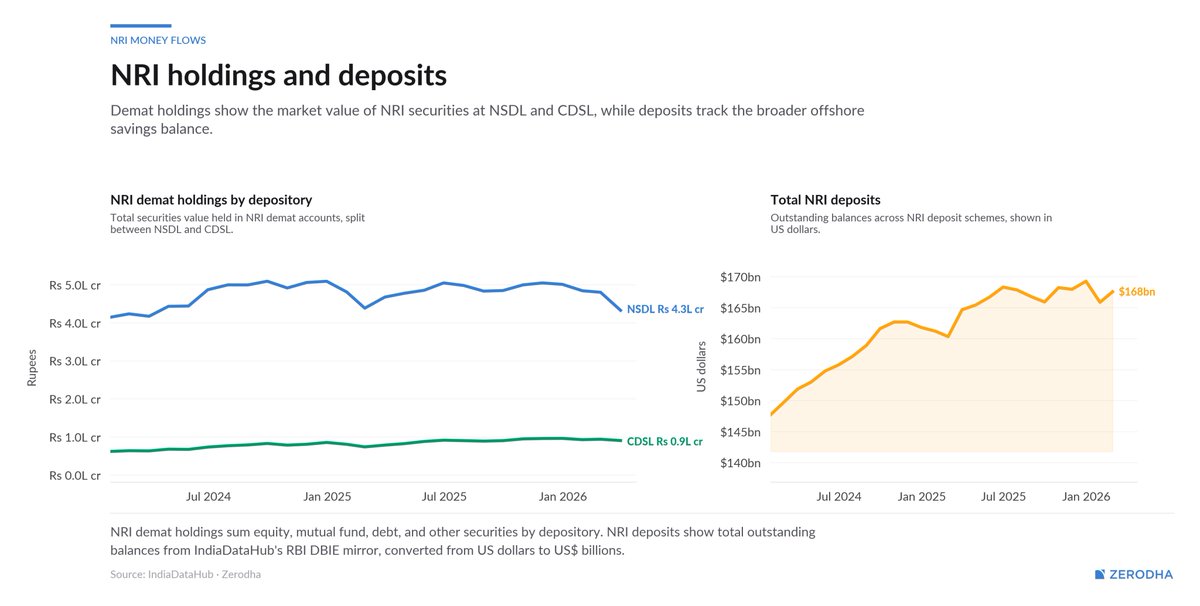
One thing that feels under-discussed in all the conversations about attracting foreign capital into India is the Indian diaspora. There is a large population of NRIs who are emotionally and financially interested in investing in India. But today, for many of them, the process of opening accounts, completing documentation, and actually investing in Indian markets is still far more painful than it needs to be. Making life easier for NRIs could be one of the lowest-hanging fruits for attracting long-term capital into India. This is something we’ve been focusing on heavily at @zerodha as well. Over the last year or so, we’ve made several changes to make investing as seamless as possible for NRIs. But there are still many frictions that exist because of regulatory and compliance requirements. Hopefully, SEBI and the government look at this more closely and think about how to make it easier for NRIs to bring money into India and participate in Indian markets. For a country trying to attract global capital, the Indian diaspora seems like the most obvious place to start.
Nithin Kamath tweet media
English
272
238
1.8K
549K
sri misra retweetledi
Milk Road
Milk Road@MilkRoad·
CZ didn't expect stablecoins to get this big. Back in 2017 when Binance listed Tether, he thought it was just a "stopgap solution for people to hold fiat pegged value for a short period of time." Gold caught him off guard too. Binance listed gold two months ago. Now it's the largest gold trading venue outside traditional markets - and gold is 10% of all futures volume. Moral of the story: Traditional assets are migrating onchain faster than anyone predicted (even CZ) FT @CathieDWood @ARKinvest @LorenzoARK @cz_binance
English
3
5
19
5.5K