srisatish

7.5K posts

srisatish

srisatish

@srisatish

this will be fun. maker @h2oai, engineer, democratizing ai. https://t.co/ds9uTziDxL, ai for good, democratize! time is the only non-renewable resource.

SFO Katılım Aralık 2008
1.6K Takip Edilen4.3K Takipçiler
srisatish retweetledi
Crémieux
Crémieux@cremieuxrecueil·
This is amazing stuff, beating drug administration because it's permanent, and it only gets better from here. We are going to get so healthy, so fast. Our grandkids are going to hear about heart attacks and have never actually seen one. Source: nejm.org/doi/full/10.10…
English

16
52
971
84.7K
srisatish retweetledi
Peter John Lambert
Peter John Lambert@pj_lambert·
Is GenAI causing the relative decline in early-career hiring? Our latest research finds that these effects may be conflated with another important driver: the rise of WFH arrangements (1/N)
Peter John Lambert tweet media
English
27
244
943
534.9K
srisatish retweetledi
Taelin
Taelin@VictorTaelin·
I discovered a new joy in life. Don't ask Codex to do stuff. Ask Codex to ask Codex to do stuff. Rejoice as you watch it handling and correcting all the dumb shit that it does and that you'd be dealing with otherwise
English
162
189
6.1K
256.2K
srisatish retweetledi
Zineb Riboua
Zineb Riboua@zriboua·
It’s worth stepping back to consider how every state responded to the war on Iran, and spending a few minutes on the remarkable play Zelenskyy is running right now. He saw the opening in Middle East and took it. Putin is visibly uneasy. Ukraine’s relationship with the Gulf is candidly transactional, the Gulf wants drones for its own defense, and that very transparency is what gives Kyiv its leverage. Moscow finds itself with little to put on the other side of the scale. I think people forget that opportunity in foreign affairs is rarely announced, it presents itself briefly, in the margins of another’s crisis, and it falls to the statesman to recognize it before it closes. That capacity, to read a moment which belongs properly to another theater and to convert it to one’s own advantage without overreaching, is precisely what defines good leadership. Many should take note.
English
16
157
890
32.7K
srisatish retweetledi
signüll
signüll@signulll·
someone yesterday asked me what i thought high agency meant. i think it’s usually some unholy combination of: - resourcefulness - relentlessness - resilience this has always been rare, but rn it feels borderline unfair. the world has never had more leverage just sitting around waiting for one person stubborn enough to use it.
English
83
346
4.7K
1.1M
srisatish retweetledi
Rohoza (Дев'ятий) Mykhailo 🇺🇦🇱🇹🇨🇦
After becoming president, I asked my bodyguards to take a walk with me through the city. After the walk, we went to a restaurant for lunch. We sat down in one of the central restaurants, and each of us was asked what we wanted to order. After a short wait, the waiter brought our meals, and at that moment I noticed a man sitting alone at the table directly in front of us, waiting to be served. Once he received his food, I told one of my soldiers: “Go invite that man to join us.” The soldier walked over and delivered my invitation. The man stood up, picked up his plate, and sat beside me. Throughout the meal, his hands trembled constantly, and he never raised his eyes from his food. When we finished eating, he waved goodbye without even looking at me. I shook his hand, and he left. One of the soldiers said to me: “Madiba, that man must be very sick. His hands wouldn’t stop shaking while he was eating.” “Not at all,” I replied. “The reason for his trembling is something else.” They looked at me in confusion, and I explained: “That man was a prison guard at the jail where I was imprisoned. After the torture sessions I endured, I would often scream and beg for water. He would come to humiliate me — he laughed at me, and instead of giving me water, he urinated on my head. He was not sick. He was terrified and shaking, perhaps afraid that now, as President of South Africa, I would send him to prison and do to him what he once did to me — torture and humiliate him. But that is not who I am. Such behavior is not part of my character or my ethics. Minds that seek revenge destroy nations, while those that seek reconciliation build them.” — Nelson Mandela
Rohoza (Дев'ятий) Mykhailo 🇺🇦🇱🇹🇨🇦 tweet media
English
41
852
1.9K
54.6K
srisatish
srisatish@srisatish·
We will be rebuilding all the AI we have with AI trained on better data using the AI we now have. AI to do AI, in continuous loop.
English
0
0
3
70
srisatish retweetledi
Anish Moonka
Anish Moonka@anishmoonka·
Charles Dickens fought his depression by walking through London at night. One October he set out at 2 in the morning and walked 30 miles, all the way to his country home in Kent. In 1860 he wrote about why it worked. It took psychology another 150 years to catch up. Dickens called his bad spells "spectres." They came back every time he started a new novel and sometimes hung on for months. His mood would fall apart, his sleep would collapse, and the only thing that pulled him out was walking. He explained his method in an essay called "Night Walks," published on July 21, 1860 in his weekly magazine All the Year Round. He had tried fighting his insomnia from bed and lost. So he changed the plan. The fix, he wrote, was "getting up directly after lying down, and going out, and coming home tired at sunrise." A worried mind cannot fix itself by worrying more in bed. You have to get up and move. Most nights he walked 12 to 20 miles. A friend called it "violent walking." Dickens wrote that on these walks his wandering self had "many miles upon miles of streets in which it could, and did, have its own solitary way." Today, walking is one of the most powerful tools doctors have against depression. In 2012 a team of researchers pulled together eight high-quality studies of walking as a depression treatment. The effect was as strong as the antidepressants doctors actually prescribe. The biggest test came from Duke University. The SMILE study took 202 adults with serious depression and split them into four groups: supervised exercise, home exercise, the drug Zoloft, or a placebo pill. After 16 weeks, the people who exercised did just as well as the people on Zoloft. A 2024 review of 75 studies covering 8,636 patients confirmed it. Walking should be one of the first things doctors try. The reason is the thing Dickens stumbled onto in the dark. Depression runs on rumination, the looping bad thoughts that grind people down during the worst stretches. In 2015 Stanford researchers scanned people's brains before and after a 90-minute walk in a quiet park. The walkers had less activity in a part of the brain called the subgenual prefrontal cortex. That spot, deep behind your forehead, is the brain's worry loop. After the walk, the worry loop got quieter. The walkers said they felt less stuck inside their own heads. The brain scans agreed. A walking body shuts up a noisy mind. The street takes attention, the walking rhythm fills the head, and the dark spells lose their grip. Dickens called the streets his cure because they gave his brain somewhere else to be. The science 150 years later says he had it right. Depression hates a brain that is moving.
Anish Moonka tweet mediaAnish Moonka tweet media
English
149
1.9K
8K
410K
srisatish retweetledi
Daniel Jeffries
Daniel Jeffries@Dan_Jeffries1·
The most revealing thing about this AI leadership paper is that it reads less like a vision for innovation and more like a glossy whitepaper for a 21st century East India Company. Every generation of incumbents discovers a new moral vocabulary for why they alone should control transformative technology. In the 90s it was cryptography. We were told strong encryption was too dangerous to spread because terrorists, rogue states, chaos, dual-use, etc. So the US crippled exports, weakened products, slowed adoption, and kneecapped parts of its own software industry. Right up until reality steamrolled the policy and we woke up to its stupidity and then eCommerce, secure communications, software signing, and the modern internet exploded and gave us tremendous benefits. Now the exact same priesthood has returned with AI. - “Dual-use.” - “Strategic advantage.” - “Model distillation.” - “National security.” - “Responsible access.” A few different nouns but mostly the same ones. Same instinct: Centralize control, gatekeep compute, fuse state and corporate power, and call it safety. The funniest part is that this strategy is almost perfectly designed to accelerate the thing they claim to fear. You do not stop a rival superpower (who happens to be the absolute best at scaling energy and manufacturing and who has a choke-hold on rare Earths refinement) from building domestic capability by permanently attempting to strangle them. You create the economic and political incentive for total self-sufficiency. We have already done that as Jensen warned. We went from 100% market to nearly 0%. Huawei is now manufacturing millions of chips. DeepSeek v4 trained on them. They have more energy than the rest of the world combined. Meanwhile, we have activists and anti-economic fools like AOC and Bernie pushing for data center moratoriums and we can't build a single bullet train in 20 years and folks fighting to not expand the energy grid here and new nuclear plants getting tied up in environmental regulation for a decade. The sanctions did the exact opposite of what the hawks wanted. They jumpstarted a moribund, dinosaur of a Chinese chips industry. We basically said to the people who happen control the most powerful manufacturing engine on the planet "we intend to squeeze you." They rightly saw it as an existential threat. The sanctions become the industrial policy. Huawei. SMIC. Domestic lithography. Packaging. Memory. Entire Chinese supply chains that did not exist at serious scale a decade ago now exist precisely because Washington convinced Beijing they had no choice. Brilliant work. So the endgame here is what exactly? 1) Push China into a Manhattan Project for chips and AI. 2) Increase the strategic value of Taiwan even further. 3) Once China reaches self sufficiency that can invade Taiwan and choke off our own super advanced chips where are made there exclusively (and no we don't have even close to enough TSMC factories in Arizona or anywhere else in the world). That's every NVIDIA chip. Every Google tensor chip. Every Apple chip. Every chip in you iPhone and Android phone. Every Amazon chip. The chips in your car and truck and hair dryer and washing machine. 4) Escalate a cold tech war into a permanent civilizational bloc conflict that is likely to turn into a shooting war at one point. 5) Fragment the global software ecosystem. 6) Create American AI aristocracies protected by regulation and compute licensing. And somehow call this “open innovation.” Meanwhile the actual history of software keeps screaming the opposite lesson: Knowledge diffuses, open ecosystems win, developers route around gatekeepers, and attempts to permanently contain computation usually fail. What really jumps off the page is the assumption that a tiny cluster of frontier labs should become quasi-sovereign actors, deciding who gets intelligence, who gets compute, who gets models, and which countries are permitted to participate in the future. Not elected governments. Not open markets. Not open-source communities. A handful of corporations sitting beside the national security state, insisting that concentration of power is necessary to protect democracy. You almost have to admire the audacity.
Anthropic@AnthropicAI

We've published a paper that explains our views on AI competition between the US and China. The US and democratic allies hold the lead in frontier AI today. Read more on what it’ll take to keep that lead: anthropic.com/research/2028-…

English
50
172
975
159K
srisatish retweetledi
Massimo
Massimo@Rainmaker1973·
He was Satyendra Nath Bose, an Indian physicist whose quiet brilliance in the 1920s forever altered our understanding of the quantum world. In 1924, Bose, then a 30-year-old professor in British India, sent a groundbreaking manuscript directly to Albert Einstein. The paper offered a novel, more elegant derivation of Planck's law for blackbody radiation by treating light quanta (photons) as indistinguishable particles—a radical departure from classical statistical methods. Impressed by its insight, Einstein personally translated the work into German and facilitated its publication in the prestigious Zeitschrift für Physik. This exchange sparked a brief but profound collaboration. Einstein extended Bose's statistical approach to material atoms, predicting a bizarre new state of matter at ultra-low temperatures: what we now call a Bose-Einstein condensate (BEC), where particles behave as a single quantum wave. Bose's original framework became known as Bose-Einstein statistics, and the class of particles that obey it—those with integer spin, including photons, gluons, W and Z bosons, and the Higgs boson—was later named bosons in his honor by Paul Dirac. Unlike fermions (matter particles like electrons), which obey the Pauli exclusion principle and cannot occupy the same quantum state, bosons can pile into identical states en masse. This "social" behavior underpins extraordinary macroscopic phenomena: the coherent light of lasers, the zero-resistance flow in superconductors, and the collective quantum coherence in BECs. Despite the monumental impact—his statistics describe half of all fundamental particles and enabled key advances in quantum field theory, condensed matter physics, and particle physics—Bose remained remarkably unassuming. He continued teaching at universities in Dhaka and Calcutta (now Kolkata), mentored students, pursued ideas in X-ray crystallography, unified field theory, and other areas, and never sought the spotlight. Nominated several times for the Nobel Prize (notably for Bose-Einstein statistics and his later work), he was never awarded it, and his name rarely appears in popular accounts of 20th-century physics. There's a poignant humility in his story: a man whose legacy literally names one of the two fundamental families of particles in the universe, yet whose personal fame never matched the scale of his contribution. Bose reminds us that true influence often arrives without fanfare. Some breakthroughs echo through textbooks and technologies, while their creators work in the background, content to let the universe carry their ideas forward—even if history's spotlight rarely finds them.
Massimo tweet media
English
74
1.4K
5.8K
420K
srisatish retweetledi
Ward Reflections
Ward Reflections@WardReflections·
Yes, it is a genuinely fascinating discovery from recent bacterial defense research (Drt3b and DRT7 systems). Scientists found special enzymes in bacteria that can synthesize DNA without using the usual DNA or RNA template. Instead, the protein’s own 3D structure acts as the guide for building repetitive DNA sequences. It’s a clever adaptation that helps bacteria fight viruses (phages). It does challenge the long-held central dogma assumption that nucleic acids always template nucleic acids. However, this is a highly specialized mechanism in bacteria, not a general rewrite of how life works. The “4 billion years unbreakable rule broken” framing is quite dramatic. Still, excellent example of how much we continue to learn about the incredible diversity of biological systems.
English
2
3
87
4K
srisatish
srisatish@srisatish·
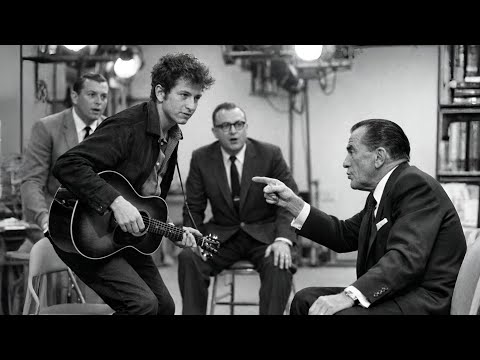
@parmita struggle is the story. “for each and every underdog soldier in the night!” as #BobDylan would say it.
English
0
0
0
38