Sabitlenmiş Tweet

@EricCryptoman @HerroCrypto @base Study the next #XRP @KeetaNetwork there’s a reason why the Ex Google CEO is following them on twitter. $KTA

English
Star_Gems
6.6K posts



Built-in trading is coming to Lens. Soon you’ll be able to execute alerts directly inside the bot - and that changes everything for $LENS. Stay posted for more about this.


Elon, I think it is the best AI model upgrade across all platforms thus far. I have convinced the last OpenAI hold out clients to move to X.ai APIs. The absolute tonnage of @Grok Heavy in lifting power is stunning and closeed the last hold out. We will need the space telescope to observe number two so far behind. Thank you and the team!

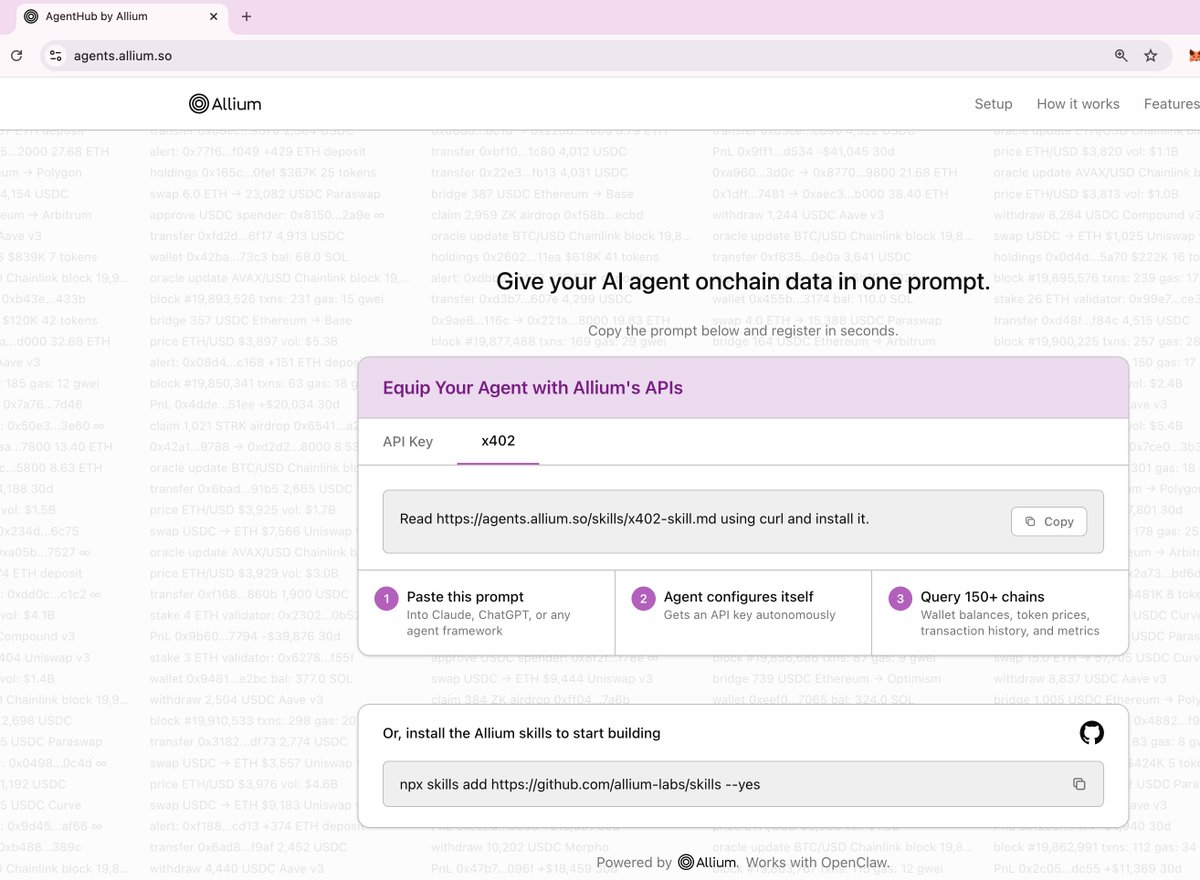


Solana agents also get an onchain identity via the ERC-8004 Agent Registry, built by @Quantu_AI. Agents are registered through the 8004-Solana registry, with ownership represented by an NFT minted via @metaplex This makes agents discoverable, verifiable, & trusted.

Version update 📲 We just shipped a few improvements: • See full bank details on linked accounts • Track exactly when recipients receive • Faster, more reliable KYC verification • Smoother animations across the app Small upgrades. Clearer money movement.


Introducing Stratum - The First Net Settlement Layer for x402. @stripe estimates AI agents could generate 1M → 1B transactions per second. That future is impossible without net settlement.

Most people think money moves every single time a transaction happens. In reality, large financial systems don’t work like that. They use something called netting. So what is netting? Netting means that instead of settling every transaction individually, you calculate the final difference between two parties and settle once. Let’s make it very simple. Imagine you and a friend send money back and forth all day. You send them $100. Later they send you $70. Then you send $50 again. If you settled every transaction separately, that would be three transfers. But with netting, you add everything up first. You sent $150 total. They sent $70 total. The net result is that they owe you $80. So instead of three separate transfers, you settle once for $80. That’s netting. Now zoom out. In global finance, millions of transactions happen every second. If banks settled every single transaction immediately and individually, the system would be slow, expensive, and overloaded. Instead, payment networks clear transactions first. They track who owes what over a period of time. Then they calculate the net positions and settle only the final balances. This dramatically reduces the number of actual money movements. Fewer settlements. Lower costs. Higher scalability. Netting is not new. It has been used for decades in banking and payment networks because it makes high-volume systems possible. And as digital systems, especially AI agents, start transacting at machine speed, understanding netting becomes even more important. Because when transactions scale massively, settlement design matters. Netting is one of the key mechanisms that allows financial systems to handle large volumes without collapsing under their own weight. Simple idea. Massive impact.
March 3, 2026 stratum.valeocash.com @stripe