

DIGITZ
107 posts


Official Report Confirmed
Over 50 Senior Iranian officials Eliminated by US airstrike in Iran, Fox News reports.
English

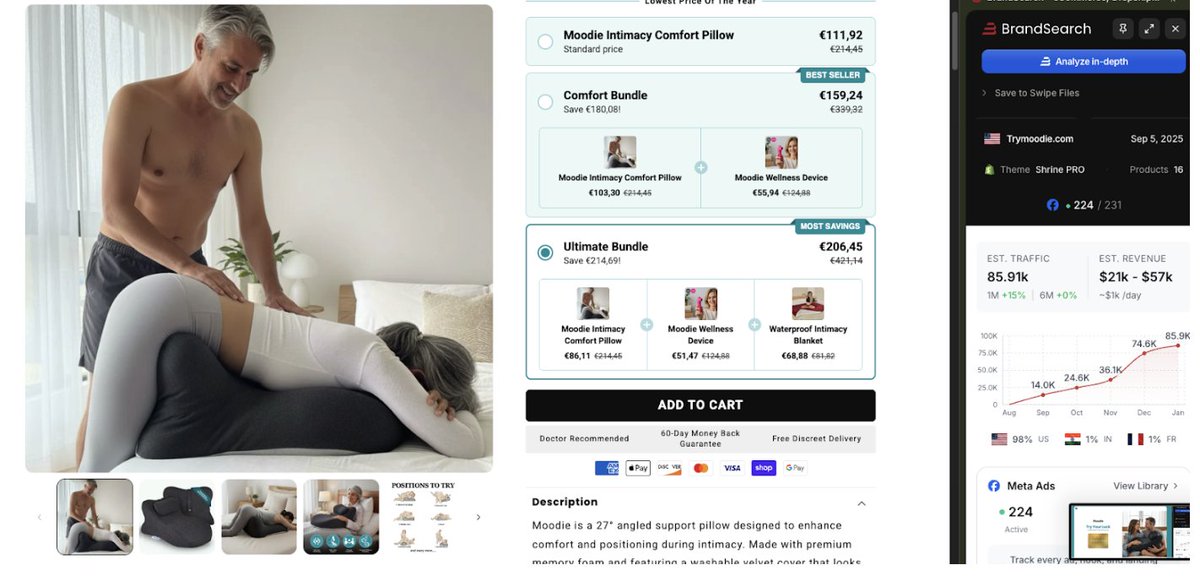
Why waste money on ads if you can't create this type of sales page?
You’re just paying Mark Zuckerberg to watch people bounce.
Look at this visual hierarchy.
Comment SALES PAGE to get over 100 optimized PDPs, Advertorials and Listicles that you can simply copy and paste.
(You must be following back for me to send the document)

English

I spent hours analyzing the stores scaling the fastest right no
50+ stores
Across all markets (US, EU, Canada)
They all have one thing in common
It’s not the product
It’s not the ads
It’s not the theme
It’s the offer structure
And you can replicate it in 10 minutes
Comment “OFFER” and I’ll send you the strategy in DM 👇
English

RIP landing page designers 🤯
I just built a system in Claude Code that clones high-converting advertorial pages & rebuilds it for your brand in minutes.
Find a presell page that's been running on Meta for months →
Feed it to Claude Code →
Get back a production-ready page with your product, your copy, your angles.
Built 100% in Claude Code.
Perfect for DTC brands and agencies testing multiple advertorial angles on Meta.
The best brands on Meta are running 5-10 different advertorial pages at any given time.
Each one targets a different audience, a different pain point, a different hook.
Building those pages manually means freelancers, back-and-forth, and weeks of waiting.
This system solves it:
→ Find an advertorial that's scaling on Meta
→ Feed the page to Claude Code
→ Claude extracts the exact DR framework
→ Swap in your brand details, product, audience, and mechanism
→ Claude one-shots a complete HTML page following the same proven structure
→ Paste into Shopify. Done.
No designer.
No copywriter turnaround.
No starting from scratch.
What you get:
→ The exact advertorial structure that's already converting on Meta, rebuilt for your brand
→ Full HTML page ready to import into Shopify in 60 seconds
→ Copy that follows every DR beat — authority, pain escalation, root cause reframe, social proof, offer
→ A repeatable system you can use to spin out new angles whenever you need them
The pages that are scaling hardest on Meta all follow the same formula. This just lets you use it.
I put together a full guide showing the exact process — how to find winning pages, extract the structure, and build your own in Claude Code.
Want the full guide for free?
> Like this post
> Comment "CLONE"
And I'll send it over (must be following so I can DM)
English
@FedotOff90 So you use one ad set per one campaign and just add new winners or new testing ads into ad sets?
English

I hear so many people asking the same stupid fcking question about how to do the current ad account structure
(even when creatives make 90% of the difference)
But to those who will die without it–Here’s the exact
framework high-spend brands use to scale safely and consistently:
1. TESTING → ABO Sandbox (The Cleanest Signal You’ll Get)
Your testing structure should be boring, simple, and brutally consistent.
ABO Setup:
2 Advantage+ ad sets (In the big 5 countries)
Ad Set #1 → 10 image creatives
Ad Set #2 → 10 video creatives
All broad (no interests, no weird targeting stacking)
3–5 day cycles
Why it works:
ABO forces spend to distribute evenly
You get clean data on which concepts win
You’re not letting the algorithm “hide losers” by funneling spend to one ad
This is where concepts are validated.
2. SCALING → CBO Advantage+ Winners
Once you have winners, don’t touch the testing campaign.
Instead:
Duplicate your winners
Create a NEW CBO
Select Advantage+ Audience Expansion
Name the ad set: ADV+ Winners
Add ONLY post IDs with 3+ purchases within 72 hours and above your break-even ROAS
Turn off Learning Phase pop-ups — they don’t matter here
Start modest
Scale budget +20-25% every 48h if stable
This creates a clean firewall between testing risk and scaling stability.
3. Why separate campaigns + separate URLs matter
Changing URLs on an approved ad inside the SAME campaign introduces cloaking signals.
Cloaking = instant shutdown. Facebook things your sending traffic to another page.
If destination changes → new campaign.
Using a second scaling CBO removes ALL risk.
4. How we build multimillion-dollar scaling systems
Two CBOs: Images only + Videos only
Broad targeting
No interests
Constant rotation of new concepts
Heavy use of post IDs for scaling stability
URL isolation for safety
Daily iteration feedback loops
Creative diversification (formats, archetypes, angles)
This is what a “simple” scalable account actually looks like
Scaling isn’t about hacks.
It’s about structure.
English
90% of product descriptions are boring as f*ck and don't convert.
I use Claude and ChatGPT to write descriptions that sell in 5 minutes instead of 2 hours.
RT + comment "COPY" and I'll send you the full guide.
(gotta follow so the DM goes through)
GIF
English

$100k+ brands don’t freestyle static ads
they rely on a consistent visual system
clear hierarchy, sharp contrast, instant readability
so the message lands before the scroll continues
most static ads underperform because they blend in
same layouts, same spacing, same mistakes
this guide breaks down how strong brands design
to look intentional, premium, and credible
without overcomplicating anything
no theory
no fluff
just repeatable layouts you can reuse endlessly
i put the full system into a short guide
rt + comment “STATIC” and i’ll send it
(follow for dm)
English

Kling Motion Control is about to change B-roll completely.
I’m serious.
Right now, you can look at your competitors, take their exact B-roll moments, and transfer them to your own AI character.
And this isn’t about basic stuff.
I’m talking about complex B-roll:
- neck pain movements
- back tension
- awkward human motions
things AI usually messes up or avoids
That’s where Kling Motion Control quietly breaks the game.
Most people don’t realize this yet but it’s a massive shift.
Here’s how I’m using it right now:
First, I build the character properly.
Higgsfield Soul + Skin Enhancer.
Real skin. Real imperfections. No plastic look.
Then I take a B-roll clip from competitors the kind that’s hard to recreate with AI.
I drop the reference clip + my character image into Kling Motion Control.
And… boom.
Same motion.
Same body language.
Different face. Different identity.
This turns competitor research into direct execution, especially for B-roll that was previously impossible to fake convincingly.
Very few people are using this correctly yet.
Follow if you want to stay ahead not catch up later
English
@_zegalone I don't get it. I see you dm me, but after that your message dissappear
English
@_zegalone Hey mate, can you dm me? I can't because your dm is closed to people who you don't follow
English

$50k–$100k/month doctor-style AI pages are scaling quietly
one calm authority avatar explaining everyday health questions people already search for
no real experts, no filming, no personal brand
ai handles faces, scripts, pacing, and visual consistency
the content feels educational, trust builds naturally
and affiliate products slot in without resistance
i broke down the exact page structure, posting flow, and monetization setup
rt + comment “doctor” and i’ll send it
(follow for dm)
English

Nano Banana + Veo 3 is soooo good for UGC videos 🤯
This Nano Banana + Veo 3 + n8n workflow generates full UGC campaigns with consistent characters, from a single product photo.
Perfect for e-comm brands & agencies who need AI UGC that actually looks like a real campaign.
Here's the problem with most AI video:
You generate 10 videos and get 10 different "creators."
Different faces, different vibes, different everything.
This n8n workflow solves it:
→ Upload one product photo via n8n form
→ AI analyzes your product automatically
→ Nano Banana locks in a consistent character
→ Veo 3 generates multiple scenes with that same talent
→ Everything auto-stitches into finished campaign videos
→ Download-ready UGC in minutes
One product photo.
One AI creator.
Unlimited scenes.
What you get:
- Full UGC campaigns with character consistency
- Multiple videos featuring the exact same "creator"
- Auto-stitched final output—no editing required
- Production-ready content in minutes, not days
Built 100% in n8n.
Want the full workflow?
> Comment "UGC"
> Like this post
And I'll send it over (must be following so I can DM)
English

We replaced a $221K/year UGC team with this Nano Banana Ad factory.
Now this brand is running 900+ super realistic AI ads on Facebook and Tiktok
And posts 20 new UGC Videos per day
What agencies charge $8K-15K for (20 UGC videos, 3-week turnaround)
Now takes 47 seconds. Unlimited creators.
Most brands are stuck in the UGC nightmare:
→ Paying $15K+ monthly for inconsistent creators
→ Waiting 2-3 weeks for basic testimonial videos
→ Getting 5-8 generic videos max per campaign
→ Creators ghosting mid-production
This system obliterates that completely.
Upload your product → AI generates 900+ UGC variations → ready-to-launch video ads.
Not mockups. Real scroll-stopping content.
Built after watching brands burn $200K+ on creator networks that deliver recycled testimonials.
The efficiency gains? Ridiculous:
→ 20x UGC production velocity
→ 97% cost reduction vs agencies
→ Unlimited video variations
→ Zero creator dependencies ever again
How it works:
1️⃣ AI Avatar Generation Engine - Creates 15+ authentic spokespeople in seconds
2️⃣ Script Intelligence System - Maps product benefits to testimonial angles automatically
3️⃣ UGC Production Stack - Generates lifestyle demos, unboxings, testimonials instantly
4️⃣ Platform Optimization - Auto-formats for TikTok/FB/Instagram algorithms
Deployed across 200+ brands generating $50M+ tracked revenue.
47-second production time per video.
Complete UGC independence.
Want to deploy this inside your brand?
1️⃣ Follow me
2️⃣ Comment "FACTORY" below and REPOST this post
(I'll DM you the complete system once you follow me)
English
$100k+ brands don’t guess how to design static ads
they follow a repeatable layout system
contrast hierarchy and message clarity
so the ad explains itself in under a second
most static ads fail because they look generic
this guide breaks down how top brands structure visuals
to feel premium modern and trustworthy
no design theory
just frameworks you can reuse for every creative
i turned the full system into a short guide
rt + comment “static” and i’ll send it
(follow for dm)
English
This brand is printing.
Because it finally explains meno belly without the bullshit.
It’s not overeating but instead your nervous system stuck on high alert after menopause.
Morning flat, evening blown up like a bowling ball...every woman recognizes that pain.
Years of diets, detox crap, and workouts did nothing because they were attacking the symptom, not the cause.
This copy nails the real problem:
stress + sleep disruption + hormone shifts = a body that won’t f*cking relax.
Then the product actually fits the insight.
A small wearable ritual that calms the nervous system, lowers stress signals, and lets the body stop clinging to the belly for protection.
That’s why the “tummy tuck” moment hits so hard.
It’s relief.
They’re selling the moment your body finally chills the f*ck out and lets go.
Best ad below:

English

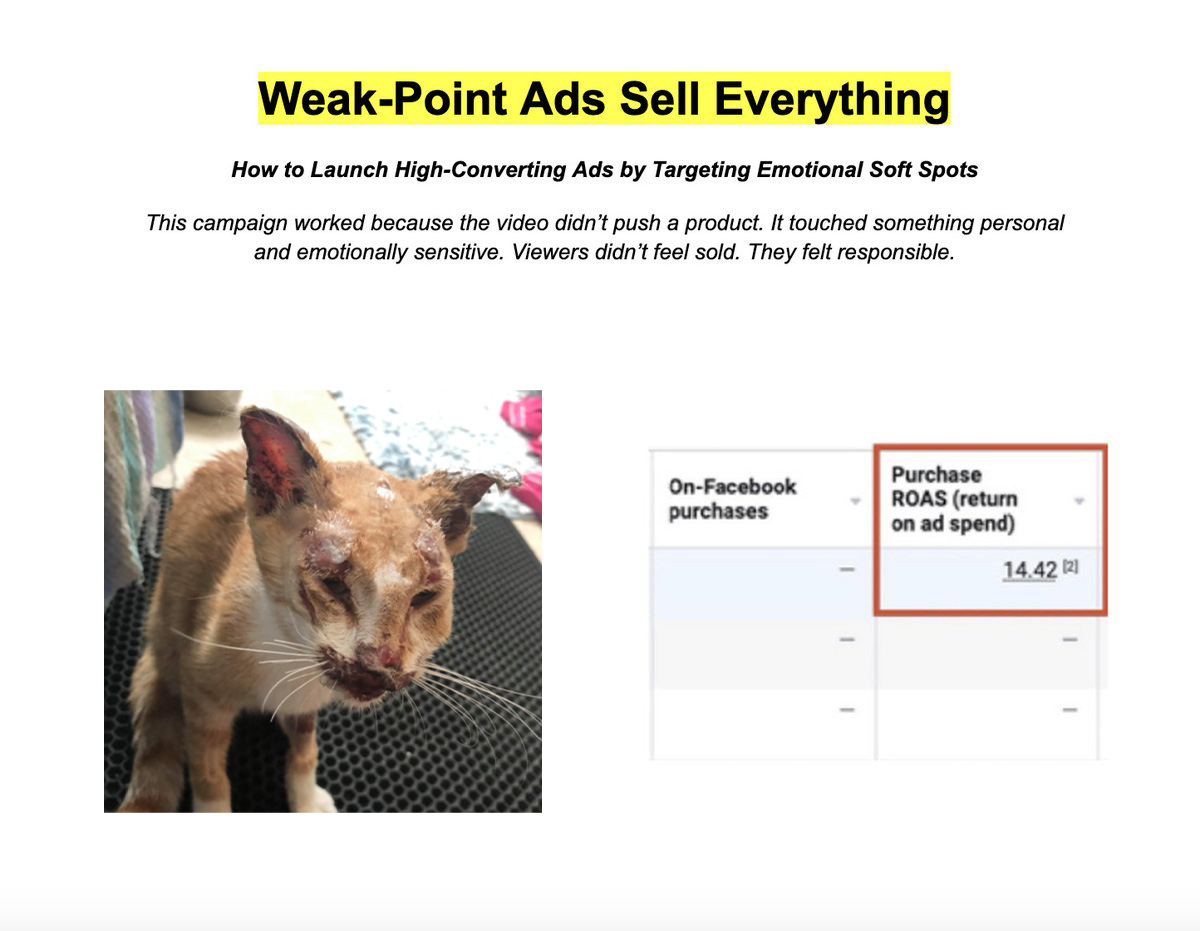
$610k unlocked by changing one creative angle
most pet ads explain care ingredients, benefits, routines
this one showed the consequence first
waiting → worse pain
scrolling → neglect
doing nothing → responsibility
no product push, no urgency tricks
the image did the selling
the viewer filled the gap
ads that hit the weak point don’t convince
they compel action
i mapped the exact framework i use to build these creatives
rt + comment “weak” and i’ll send it
(follow for dm)
English

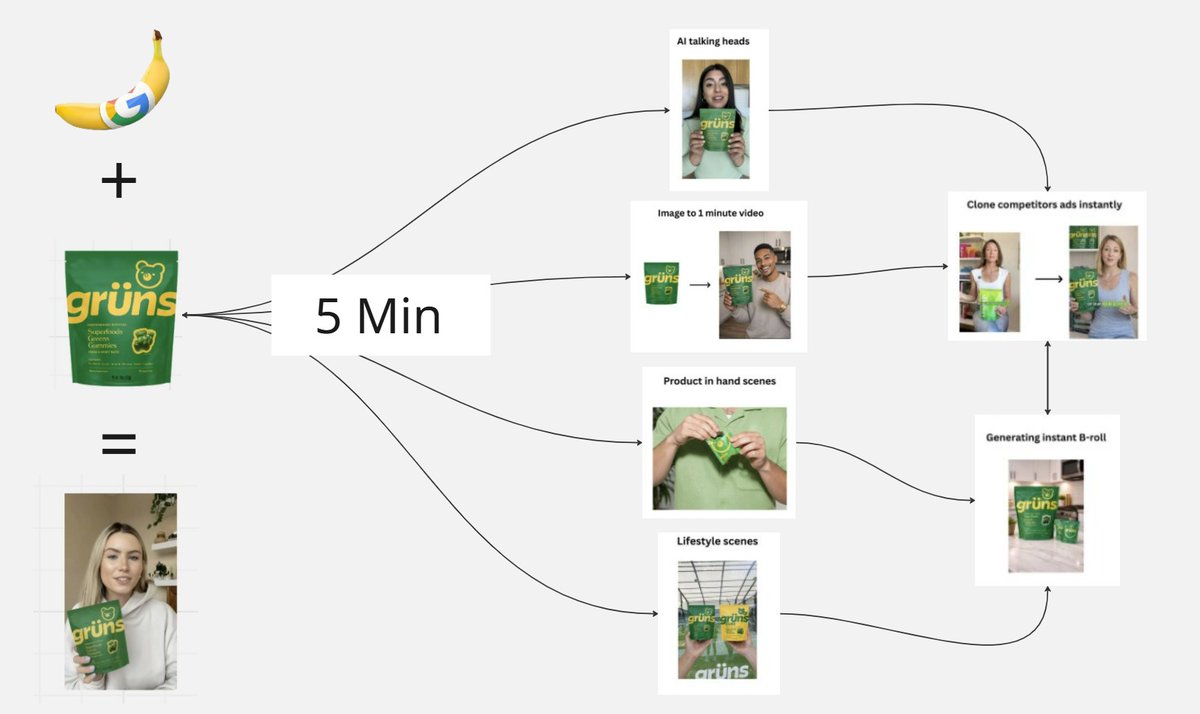
VEO 3.1 × Nano Banana × MakeUGC = $200K/month
AI UGC ads that actually convert.
Turn any product photo into winning UGC ads in minutes.
Paste ad → pick avatar → done.
Hooks → scripts → creator-style videos → iteration, fully automated.
UGC ads produced daily. Most people can’t tell it’s AI.
Want the agent + playbook?
Comment “UGC”
(must be following)
English

She's absolutely right
hooking viewers with strong emotion in the first 3 seconds can dramatically boost your views. Here's a simple guide to creating those powerful hooks for under $1.
follow + RT + comment "guide" and ill send send you the full framework
Franci@franci__ugc
why crying reactions get 6x more views than polished content let me break down the actual psychology + algorithm math tiktok's algorithm measures "watch time completeness" polished UGC: > scripted intro (user scrolls at 0.8 sec) > product demo (user scrolls at 2.1 sec) > avg completion: 23% crying reaction: > raw emotion hits immediately > viewer thinks "wtf is happening" > stays to find out why > avg completion: 89% that's a 3.87x completion rate difference but here's where it gets insane higher completion = algorithm pushes to more people more people = more comments asking "why is she crying" more comments = even MORE distribution it's a compounding loop one polish model's crying video: > $12 cost > 94% completion rate > 2.3M views in 4 days > 847 comments > client's polished version from last month: 180k views the algorithm doesn't care about production value it cares about human attention and nothing captures attention faster than genuine human emotion which is exactly why AI UGC will never work you can't fake that 0.3 second micro-expression that makes someone stop scrolling
English

Test your ads before you spend a single dollar
Comment "AI" to get access to the Bulk Ad Analyzer
Analyzes:
- Market sophistication
- Brand awareness levels
- Composition
- Clarity
- Asset batch visual/message diversity
Develops:
- AI Personas
- AI focus groups/feedback
Running all of our assets through an advanced version of this in 2026.
GIF
Peter Quadrel@Peter_Quadrel
Test your ads before you spend a single dollar With AI synthetic focus groups you can get feedback instantly A number of studies validate the accuracy (some at 90%) It's so accurate that Shopify just introduced them for CRO For ads they can provide a huge amount of context you'd normally be missing Helping to reduce strategist bias and see how the messaging stacks against your top personas Every ad we produce is going through a focus group before going live in 2026 It's backwards and forward testable which makes tuning straightforward. Method: Phase 1: Digital Ethnography We don’t use generic prompts like "Act like a Mom." Instead, the AI conducts a live "Digital Ethnography" study. It scrapes Reddit threads, Trustpilot reviews, CRM, forms, etc. to find Behavioral Signals. It then maps these behaviors to the Big 5 (OCEAN) Personality Traits & MBTI Result: A statistically calibrated "Digital Twin" of your actual customer. Phase 2: The Cognitive Simulation Agent A (System 1 - The Gut): Simulates the amygdala. It reacts in <0.5 seconds. Does the ad stop the scroll? Is it confusing? It gives a raw, visceral reaction. Agent B (System 2 - The Logic): Simulates the prefrontal cortex. It slows down. Does the offer make sense? Do I trust this brand? It critiques the logic. Agent C (The Method Actor): This agent adopts the specific Voice & Tone of the persona. It uses their slang, their fears, biases and the rest of the personality variables to synthesize the feedback. Phase 3: The Verdict (The "Score") We calculate a Blended Resonance Score Weighted by the persona’s specific psychology. High Neuroticism persona? Safety and trust triggers are weighted higher. High Openness persona? Visual novelty is weighted higher. This is just the start of a new era of ad optimization. We'll see win rates go up through 2026 with tools like this.
English