
Sierra Leone’s President Julius Maada Bio Delivers Historic Oxford Address on Democracy, Governance, and Africa’s Future
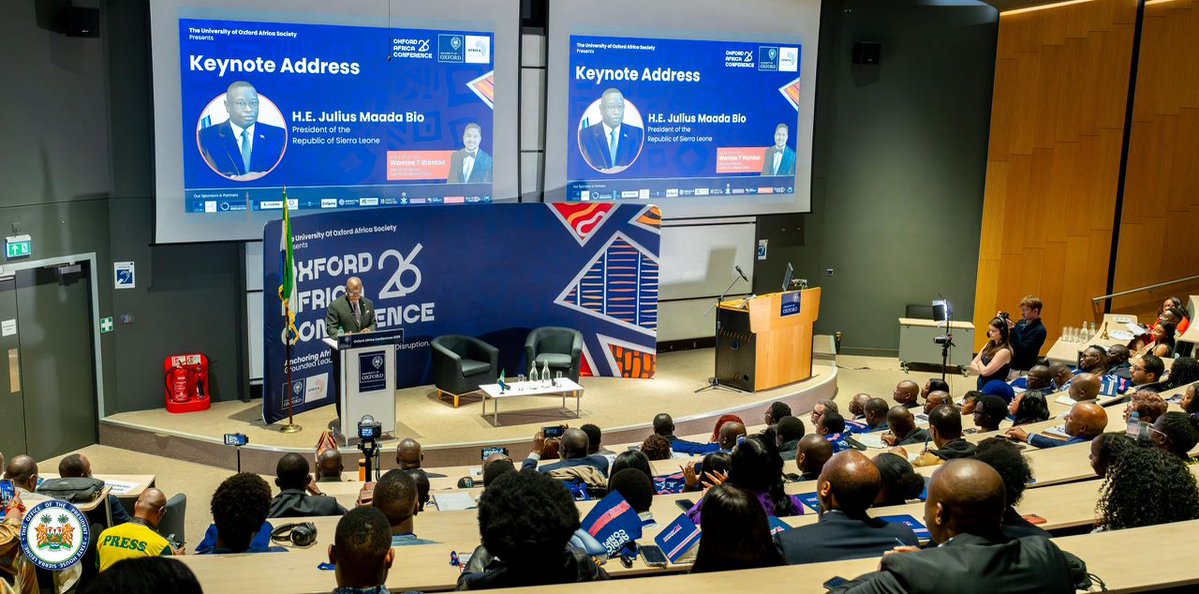
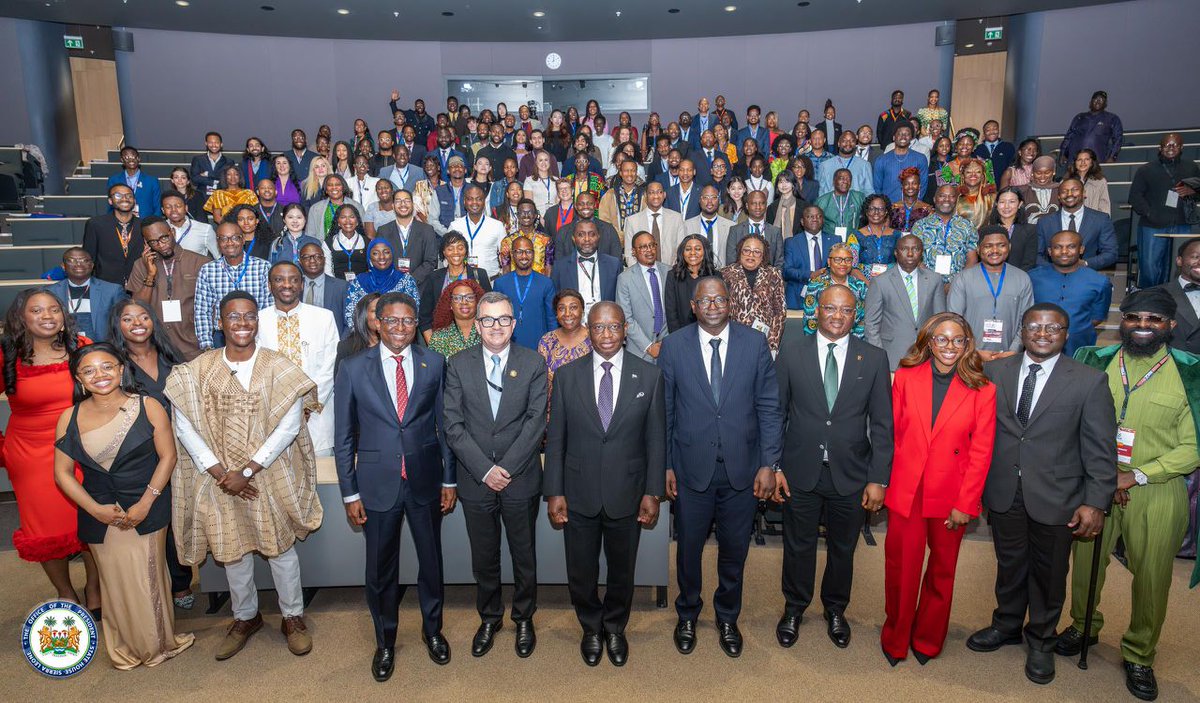
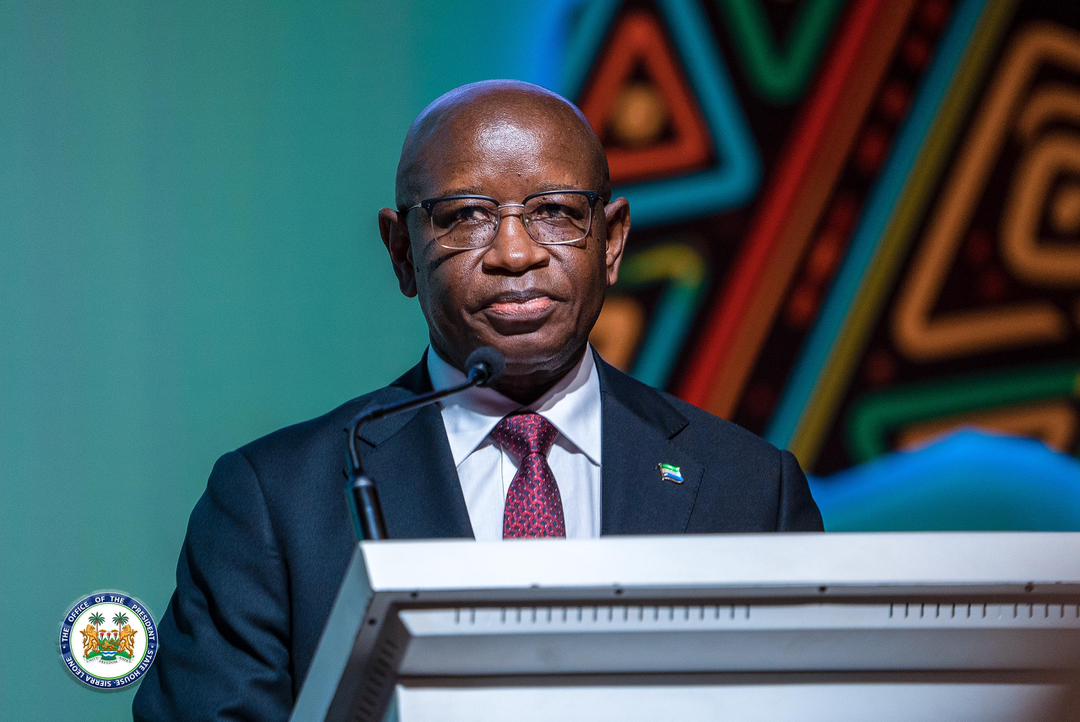
@UniofOxford, Oxford, England, 18 May 2026 - President of the Republic of Sierra Leone and Chairman of the @ecowas_cedeao Authority of Heads of State and Government, His Excellency, Dr. @julius_maadabio, has delivered a powerful and reflective lecture at the prestigious Oxford Postgraduate Distinguished Lecture Series, urging African leaders, institutions, and citizens to defend constitutional democracy amid growing coups and electoral uncertainty in West Africa.
Speaking at the University of Oxford on Monday, 18 May 2026, President Bio addressed postgraduate students, faculty members, diplomats, and academics on the theme: “Defending Constitutional Democracy in an Era of Growing Coups and Electoral Uncertainty in West Africa.”
In a deeply introspective and statesmanlike address, President Bio acknowledged the growing pressures facing democratic systems across West Africa, citing military coups, declining institutional trust, economic hardship, insecurity, and political instability as major threats to constitutional governance.
“Across our region, constitutional democracy is under pressure,” the President stated, noting that since 2020, West Africa has witnessed successive military coups in Mali, Guinea, Burkina Faso, Niger, and Guinea-Bissau.
Drawing from his dual experience as both President of Sierra Leone and Chairman of ECOWAS, President Bio emphasized that the greatest threat to democracy is not only military intervention, but also the gradual erosion of public trust in democratic institutions.
“The greatest threat to constitutional democracy in West Africa is not only the soldier who suspends the Constitution,” he declared. “It is also the slow erosion of public trust that makes citizens begin to doubt whether constitutional systems can still protect them, represent them, and improve their lives.”
The Sierra Leonean leader stressed that democratic erosion often begins subtly through weakened accountability, tolerated excesses, and the normalization of constitutional compromises, warning that such conditions create opportunities for unconstitutional actors to exploit public frustration.
President Bio also reflected candidly on Sierra Leone’s democratic journey and his own political evolution. He acknowledged his past role in military leadership before overseeing Sierra Leone’s transition to civilian rule in 1996, describing the experience as a defining lesson in the superiority of constitutional legitimacy over force.
“I first came to power through military rule,” he told the audience. “Twenty-two years later, I returned to leadership not through force, but through the ballot box. I learned that the hardest act of leadership is not taking power. It is limiting it.”
The President reaffirmed Sierra Leone’s commitment to constitutional order, noting that despite political tensions and disputed elections, democratic grievances in the country have continued to be addressed through legal and constitutional channels rather than violence.
Highlighting ongoing reforms, President Bio pointed to Sierra Leone’s Tripartite Steering Committee and broader electoral reform efforts aimed at strengthening public confidence in democratic institutions.
As Chairman of ECOWAS, President Bio reiterated his opposition to unconstitutional changes of government while also cautioning elected governments against weakening democratic systems from within.
“Military coups are wrong,” he said. “But if constitutional governments fail to govern responsibly, the potential for unconstitutional intervention increases.”
The President called on regional institutions to deepen preventive diplomacy, strengthen governance benchmarks, and confront democratic backsliding with the same urgency used to address military coups.


English