

Stephan40
218 posts

@AiWithliza It’s 33 - after multiplying the two no’s you add the difference between the two no’s.
It’s 29 if you multiply the two no’s and add 2 like done in the three example’s. But the difference in the three examples is a consistent 2.
Not so in d one being solved. The difference is 6.
English


@EmilyRose_X1 52751
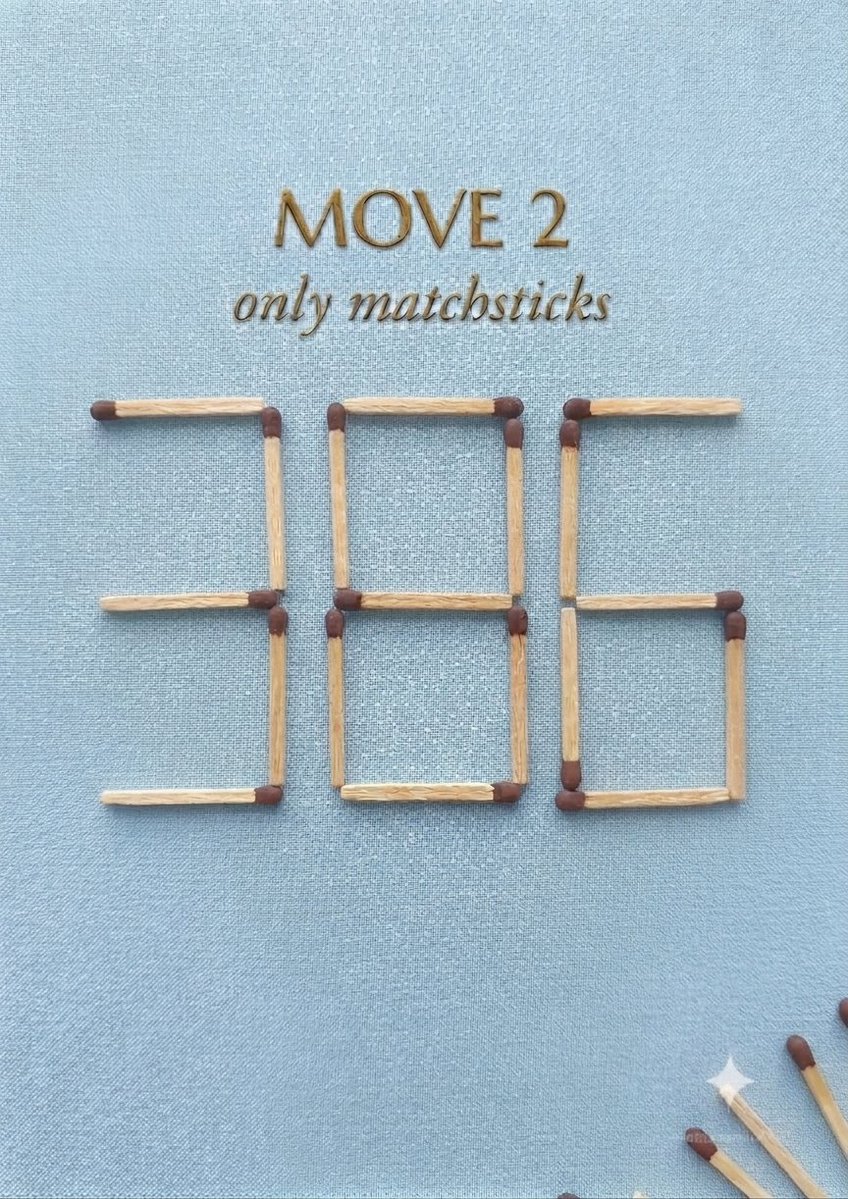
Take the upper right and lower left matchstick from 8 and put both as a 1 behind the 5 (former 8)
English

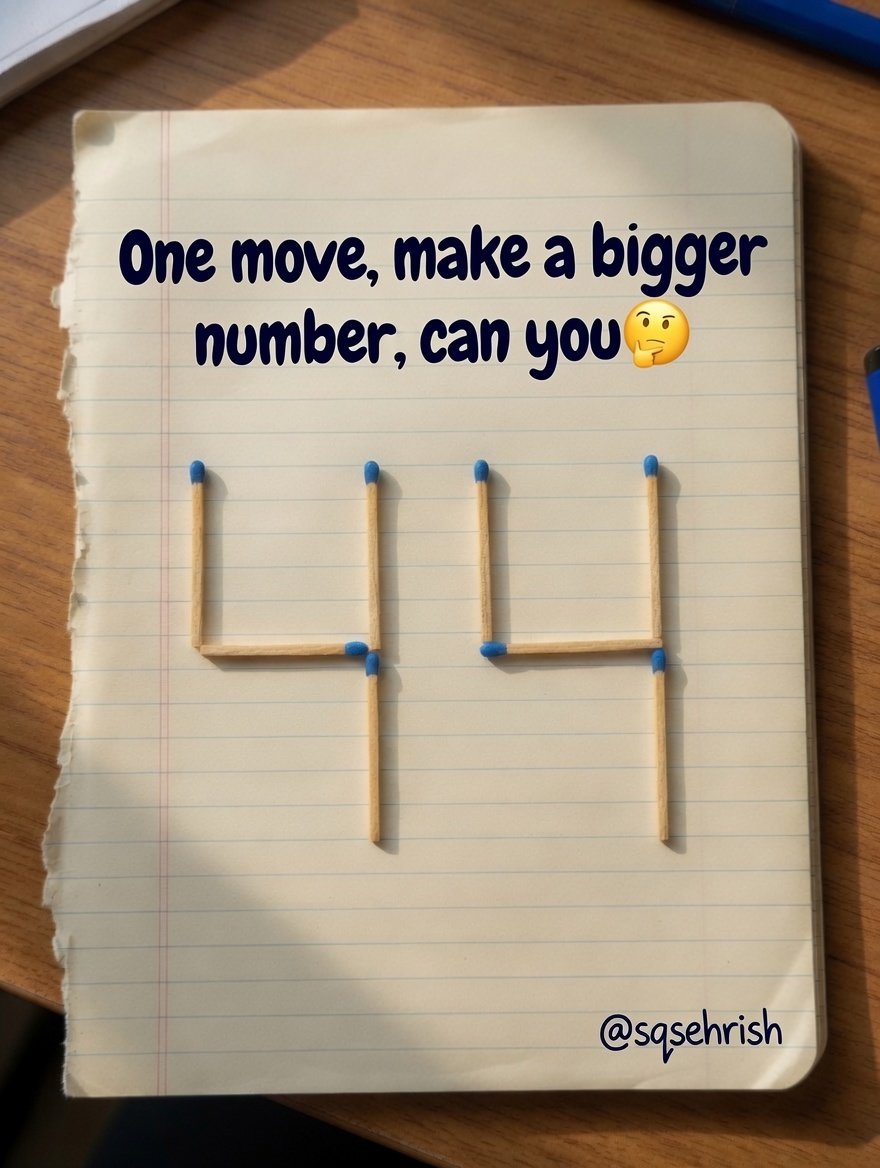
One move won't be enough. Two moves are all you get.
Move only 2 matchsticks to create the highest possible number.
🏆 Can you solve it?

English
@onemalaikaa @gerrnzfg But if you add the condition that there must be only three digits, then 999 is the largest number. Take the bottom-left matchstick from the 6 and move it to the top-right, and take the bottom-left matchstick from the 0 and place it in the middle.
English
@onemalaikaa @gerrnzfg Of course that’s possible! Take the top and bottom matchsticks from the 0 and add them as an extra 1 on the right.
English



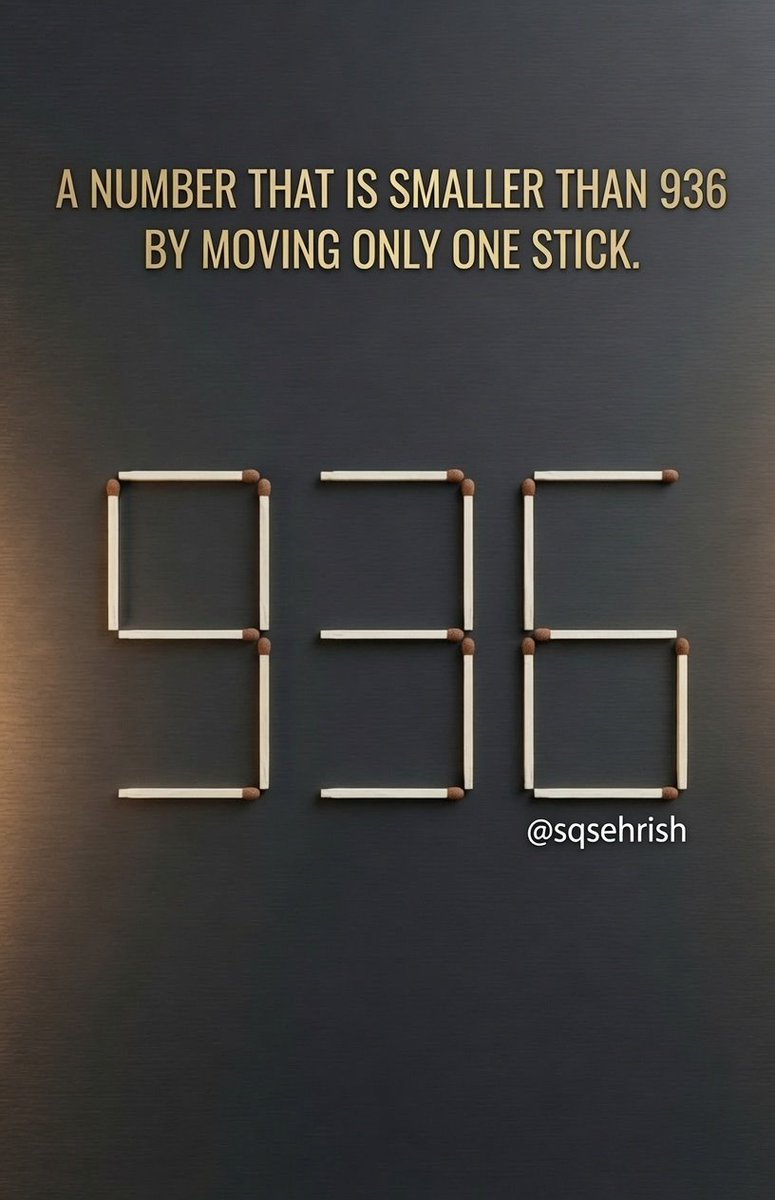
@SqSehrish 036 as smallest positive number
-935 as smallest number if negative numbers are allowed
English


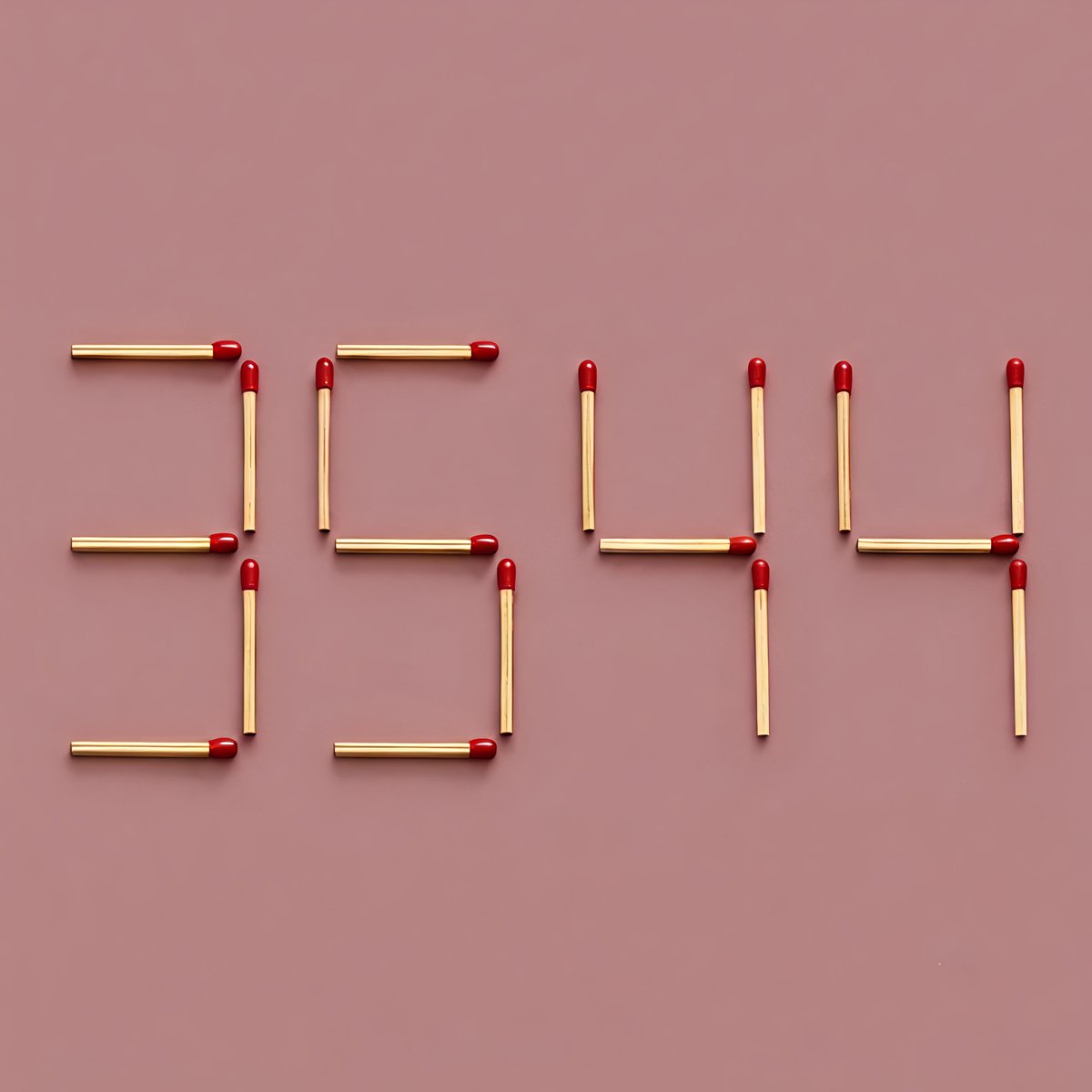


@America_love786 @proinexcel As there are only two examples given it’s an obvious solution to answer 24.
6*5+6=36
9*5+9=54
And then:
6*3+6=24
English


@MrSAAH @Kelly_Ichiro @belkiruyada That’s wrong! Look at line 3. It is
6x=18+12 = 30 —> x=5
And then x^2 + 5 = 30
English

@Kelly_Ichiro @belkiruyada 3(2x-4)=18
6x-12=18
6x=18-12
6x=6
x=6÷6
x=1 → x²+5 → (1)²+5 → 1+5 → 6✅
Deutsch


@SqSehrish 005 (smallest positive number) or -994 (smallest negative number)
English
