steven stubbe
2.4K posts
steven stubbe
@StevenS64817
I am married. Politically right economically, and a libertarian when it comes to personal rights and freedoms. Less government is not a bad thing.
Leduc, Alberta Katılım Temmuz 2024
167 Takip Edilen146 Takipçiler



Federal gun buyback program will likely miss mark ctvnews.ca/politics/artic…
English

Truss has gone full lunatic.

English


@krisster8 @ciciwanita It's still better than anything we have now. I will not vote for liberals or conservatives. They are nothing but NWO, WEF puppets. BUT I WILL BE VOTING TO SEPARATE FROM CANADA ON OCT 19TH
English


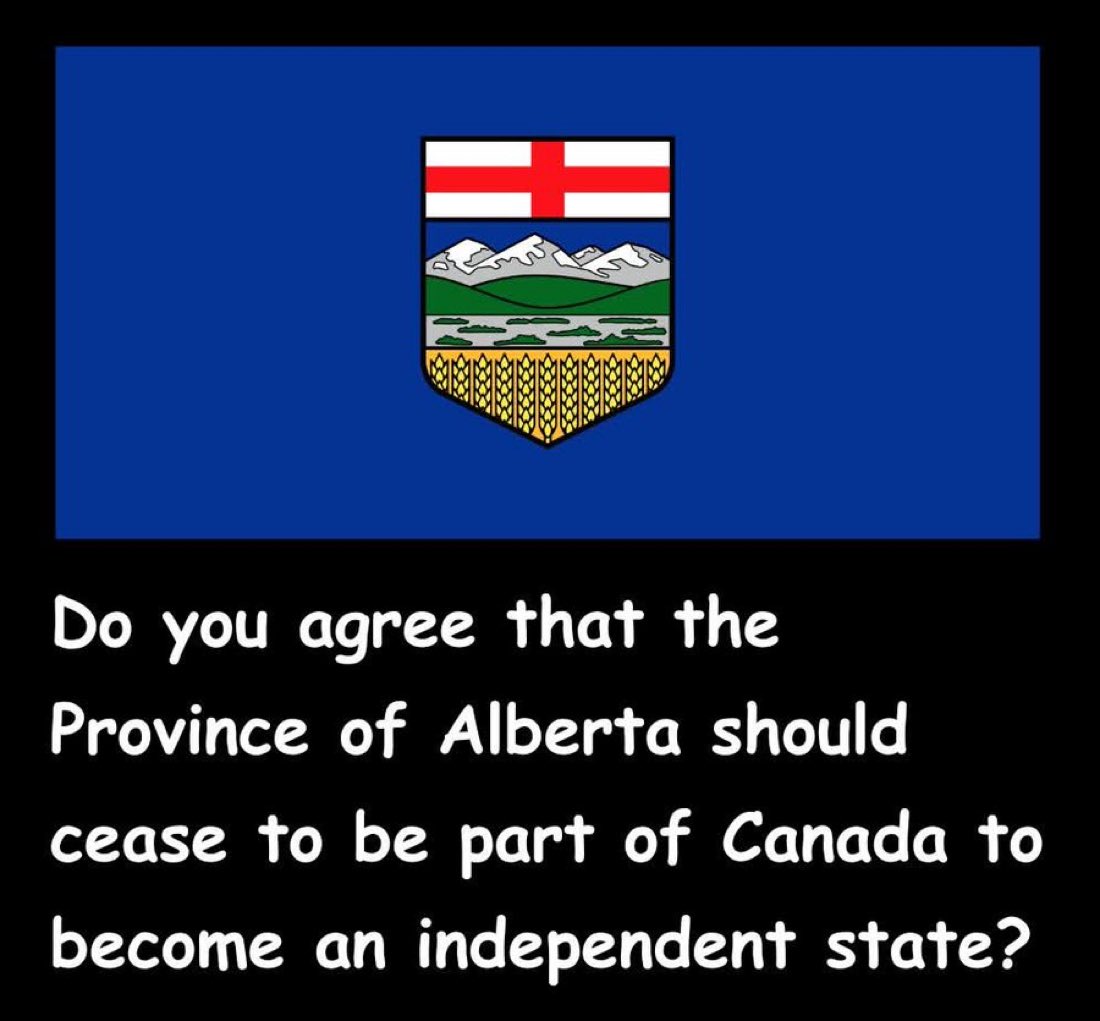
This is the question that many Albertans will have to ponder !
English
@paul186282 @JonFromAlberta A hell of a lot better than the current situation. And there's no argument that your tiny little brain could come up with that would make any sense
English

@JonFromAlberta A picture speaks a thousand words
Do you really think that your new leadership is going to be any better?
You best look at history
English

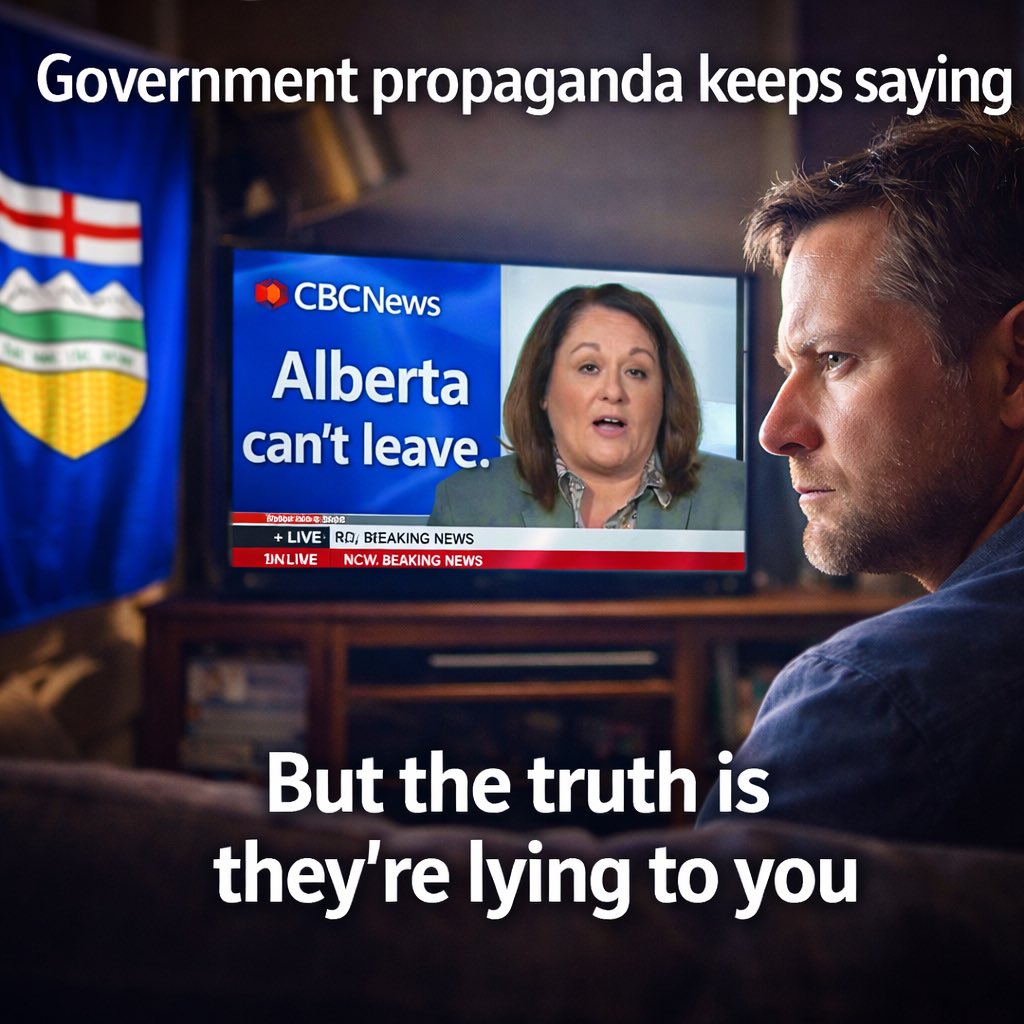
Everyone keeps hearing the same thing:
“Alberta can’t leave.”
You hear it on the news, from politicians, and repeated like it’s a settled fact.
But here’s the question almost nobody asks:
Have you actually checked for yourself?
Because when you look at the arguments, a pattern shows up. Not certainty. Not settled law. Just assumptions and worst-case scenarios presented as facts.
Let’s go through them.
⸻
1. “Indigenous groups would veto it”
This is presented as a simple stop sign.
Reality: Indigenous rights are protected and they must be part of negotiations. But there is no clear legal rule that gives a single group an automatic veto over a democratic decision by an entire province.
Rebuttal: This argument fails because it confuses “must be consulted” with “absolute veto.” Independence would require negotiation, not permission from one party.
⸻
2. “The federal government has the final say”
This gets repeated constantly.
Reality: Canada operates under constitutional law. A clear democratic vote creates pressure and obligation to negotiate. Ottawa cannot simply ignore it without triggering a major constitutional crisis.
Rebuttal: This argument fails because it assumes total federal control where none exists. A strong mandate forces negotiations. It does not get dismissed.
⸻
3. “The economy would collapse”
This is the fear argument.
Reality: There would be disruption, but Alberta has vast natural resources, strong exports, and a productive economy. Many countries with fewer advantages operate successfully.
Rebuttal: This argument fails because it replaces analysis with fear. Economic transition is not economic collapse, and Alberta has the fundamentals to stand on its own.
⸻
4. “Alberta is landlocked and couldn’t trade”
This sounds convincing until you look closer.
Reality: Many landlocked regions trade globally. Trade is governed by agreements, not just geography. Alberta already exports to global markets.
Rebuttal: This argument fails because it ignores how global trade actually works. Access is negotiated, and Alberta already participates in that system.
⸻
5. “Alberta couldn’t manage a currency”
This is framed as an impossible barrier.
Reality: Countries choose from multiple models. They can use an existing currency, create their own, or peg to another system.
Rebuttal: This argument fails because it treats a policy decision as a limitation. Currency is a choice, not a roadblock.
⸻
6. “Alberta would lose federal services and couldn’t replace them”
This assumes Alberta starts from nothing.
Reality: Albertans already fund these services through taxes. Independence would mean reallocating that money, not losing it.
Rebuttal: This argument fails because it ignores who pays for these services in the first place. Alberta already has the resources. The question is control, not capability.
⸻
Now look at the pattern.
You’re told it’s impossible.
You’re told it would collapse.
You’re told it can’t be done.
But when you actually examine the claims, they fall apart under scrutiny.
This isn’t about whether independence is easy. It isn’t.
It’s about whether it’s possible.
And clearly, it is.
So the real question is simple:
If even one of these arguments is incomplete or wrong, would you want to know?
Or are people just repeating what they’ve been told without ever checking?
At some point, Albertans need to stop accepting headlines as truth and start thinking this through for themselves.
English
@TreeSapR0cky @JohnCollins2x @JeffreyRWRath So, in 25 years, we'd be debt free, and Canada will be bankrupted and living in communism. Seems like a great trade-off to me. My kids are having a prosperous future, and your kids are starving in food lines. With social credit and digital id's.
English

@StevenS64817 @JohnCollins2x @JeffreyRWRath It’s so simple, yet so stupid and wrong.
Goodluck hahaha
English
steven stubbe retweetledi

Albertans aren't Canadian patriots anymore. They're Alberta patriots.
Zero federal income tax
CPP/UI cut in half
33-38% take-home pay increase
45% total tax reduction
Why wouldn't you vote for that?
stayfreealberta.com/how-and-where-…
#Ableg
English
@TreeSapR0cky @JohnCollins2x @JeffreyRWRath Why is it stupid and wrong? Illiterate for me? 9 billion of equalization payments go out of our province with no return to our province. 1.44 trillion debt (federal), let's say, 15% is Alberta's. 216 billion dollars. With the equalization payments, we'd pay it off in 25 years.
English
@JohnCollins2x @JeffreyRWRath We'll take the debt and be clear of it within a decade. Our share wouldn't be that much since we pay way more taxes than we get in return for provincial projects. Equalization payments we pay every year would wipe our share of the debt out fast
English

@JeffreyRWRath You’re forgetting Alberta’s share of the national debt. The rest of Canada is just going to let you off the hook?
English
steven stubbe retweetledi

steven stubbe retweetledi




steven stubbe retweetledi

steven stubbe retweetledi

They say Mark Carney’s popularity is 68%.
Is this true?
What is your appraisal of Carney?
Please share widely so we get leftist accounts voting too. I want to get an idea of the real level of support that he has.
English
steven stubbe retweetledi

And that is why #AlbertaIndependence is so important.
If you want change, if you want hope, if you want a future, the only option is for Alberta to leave Canada.
Canada is a failing state. The end won’t be pretty.
Let’s be like Slovenia and leave Yugoslavia before it’s ugly.
Jen Gerson@jengerson
The Liberals are going to win 250 seats. Largest majority in Canadian history. Nothing will ever change here.
English
steven stubbe retweetledi

@SatireSquadHQ I really hope the federal government keeps up this shit. It'll make Alberta separation a lot easier for people to decide to vote for separation!
English

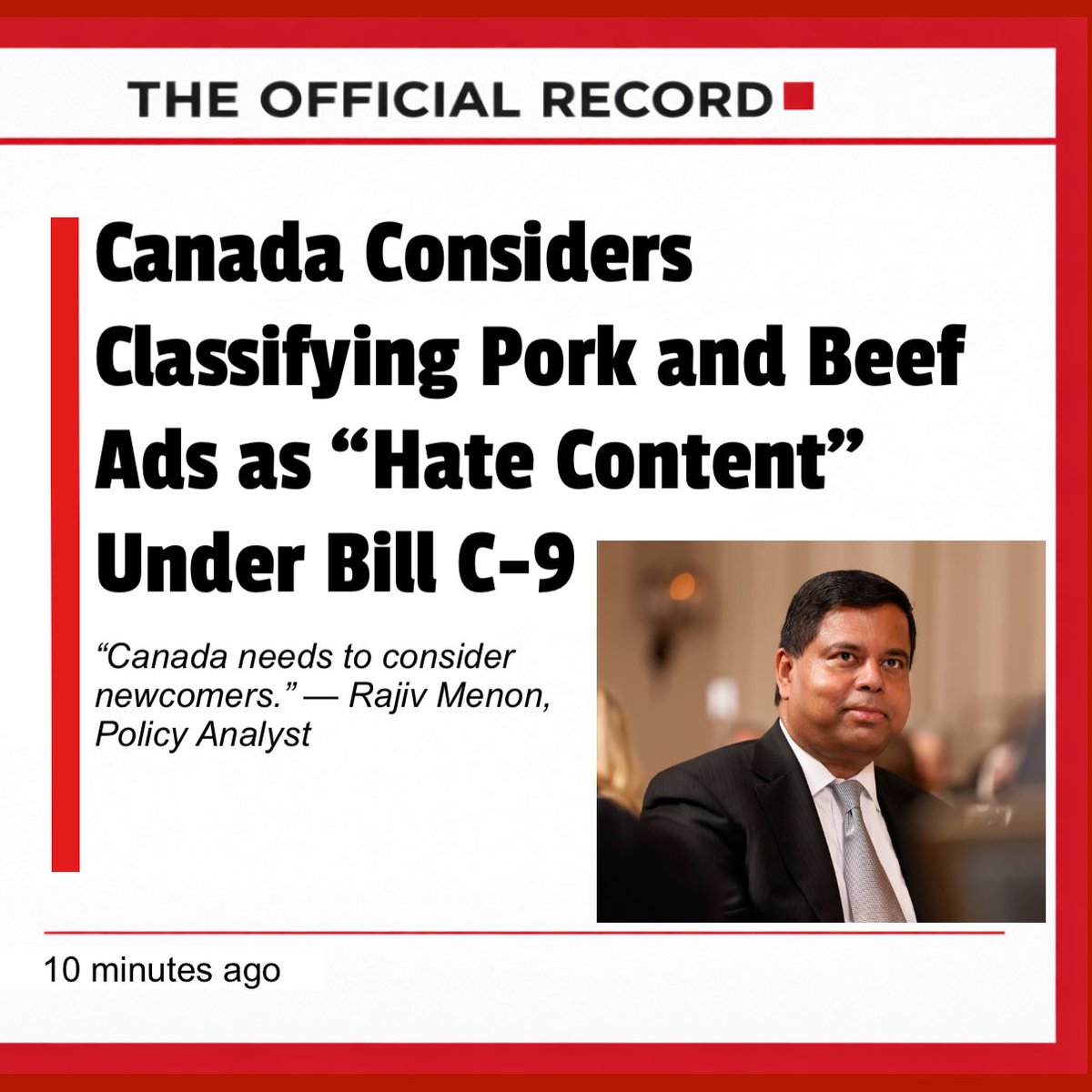
Canada Considers Classifying Pork and Beef Ads as “Hate Content” Under Bill C-9
“Nothing says progress like regulating what’s on your plate.”
Canada’s proposed Bill C-9 is raising new questions after critics warned its broad language could extend far beyond its original intent—potentially reaching something as unexpected as food advertising.
Under the bill’s framework, content deemed “harmful” or promoting exclusion could face increased scrutiny or restrictions. While originally aimed at addressing online harms, some analysts say the definitions are vague enough to open the door to wider interpretation—including industries tied to environmental, cultural, or ethical debates.
That’s where meat advertising enters the conversation.
With growing pressure from climate activists and advocacy groups, beef and pork production has increasingly been framed as environmentally damaging and, in some circles, culturally insensitive. Critics argue that promoting these products could, under an expansive interpretation of the law, be seen as endorsing harm—whether to the planet, certain belief systems, or marginalized perspectives.
“There’s a real concern that once you introduce subjective standards like ‘harmful content,’ the scope doesn’t stay contained,” one policy observer noted. “Today it’s online speech. Tomorrow it could be what you’re allowed to promote—or even consume.”
Supporters of the bill dismiss these concerns as exaggerated, maintaining that the legislation is narrowly focused and not intended to target lawful industries like agriculture. Still, opponents argue that similar assurances have accompanied past regulations that later expanded in scope.
Meanwhile, Canada’s agricultural sector is watching closely. The beef and pork industries contribute billions to the national economy, and any regulatory uncertainty around advertising could have ripple effects across producers, marketers, and exporters.
For now, no official policy has been introduced targeting meat advertising. But as Bill C-9 continues to be debated, critics say the real issue isn’t what the law explicitly says—it’s how far it could go once interpretation begins.
And in a country where even dinner might one day fall under regulatory review, the line between policy and parody is starting to blur.
English
steven stubbe retweetledi