Storyshares

6.6K posts

Storyshares banner
Storyshares

Storyshares

@StoryShares

Your pathway to literacy for older striving readers #decodablechapterbooks #adolescentliteracy

Philadelphia, PA Katılım Eylül 2013
2.4K Takip Edilen2.4K Takipçiler
Sabitlenmiş Tweet
Storyshares
Storyshares@StoryShares·
Have you seen Storyshares CEO Louise Baigelman's TEDxTalk yet? If not, what are you waiting for?! Hit the link below to watch—you won't want to miss the ending! youtube.com/watch?v=E3noZL…
YouTube video
YouTube
English
0
0
1
249
Storyshares retweetledi
Jamie Class
Jamie Class@JamieClass5·
Exactly, and that applies to intervention as well. Have to give a shout out here to @StoryShares a relatively new company designing their materials to be robust and grade appropriate for struggling older readers. I’m only on page 15 of one of their readers with my SpEd middle schoolers, and we’re already laying out a plot map, comparing characters, and discussing hyperbole and idioms found in the text in real time!
English
0
1
2
22
Storyshares retweetledi
Jamie Class
Jamie Class@JamieClass5·
Me! Me! I use @StoryShares in my intervention class (the full program) and start in the middle (Fluency) for my higher but still struggling middle school SpEd readers. Relatively new company, FANTASTIC decidable and hi/lo books - robust and age appropriate for struggling readers. EPIC materials. I just started after Thanksgiving.
English
0
1
1
223
Storyshares
Storyshares@StoryShares·
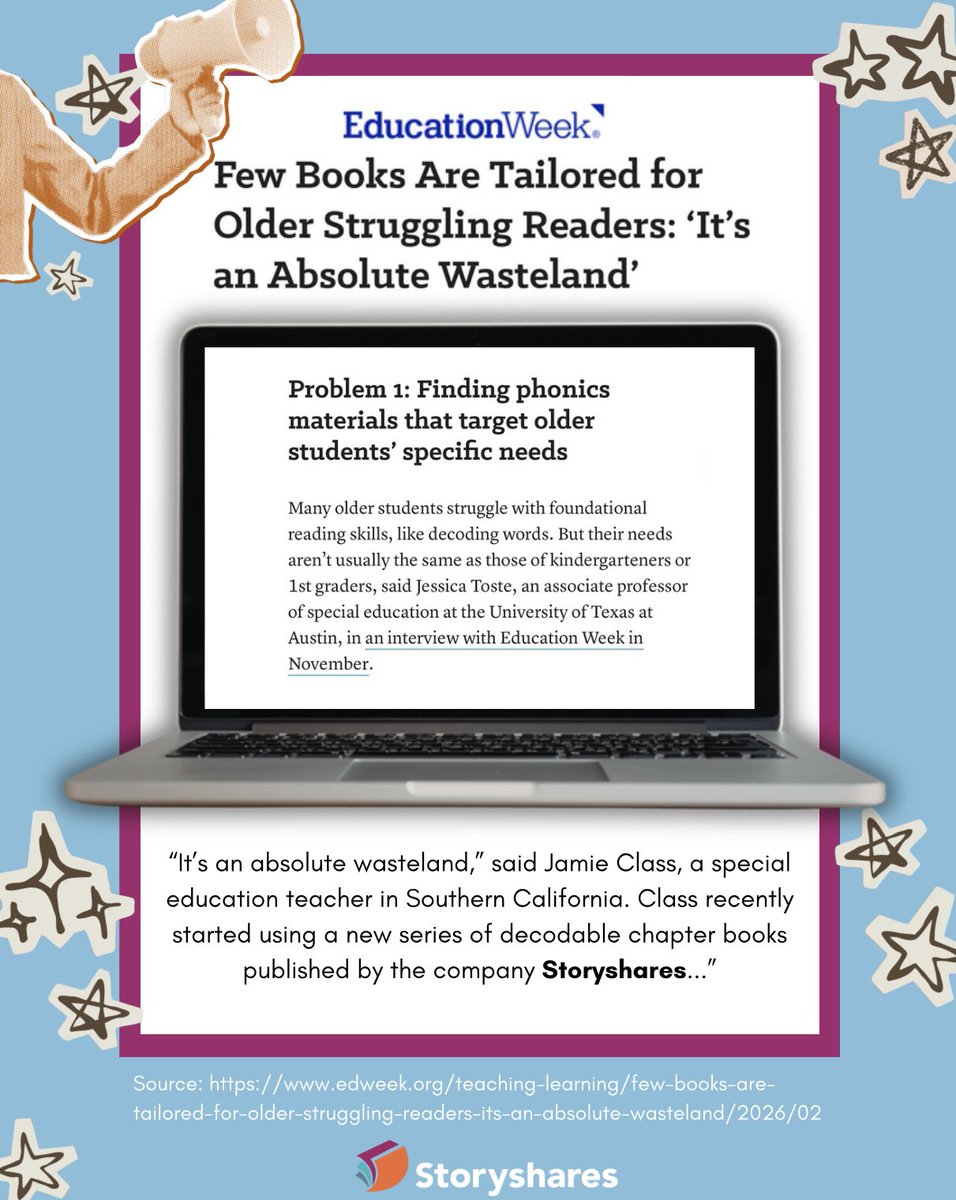
Older students building foundational skills deserve books that respect their age and interests. Storyshares creates decodable, age-appropriate chapter books that help restore confidence.💡📚✨ Read more here: edweek.org/teaching-learn…
Storyshares tweet media
English
0
0
0
12
Storyshares
Storyshares@StoryShares·
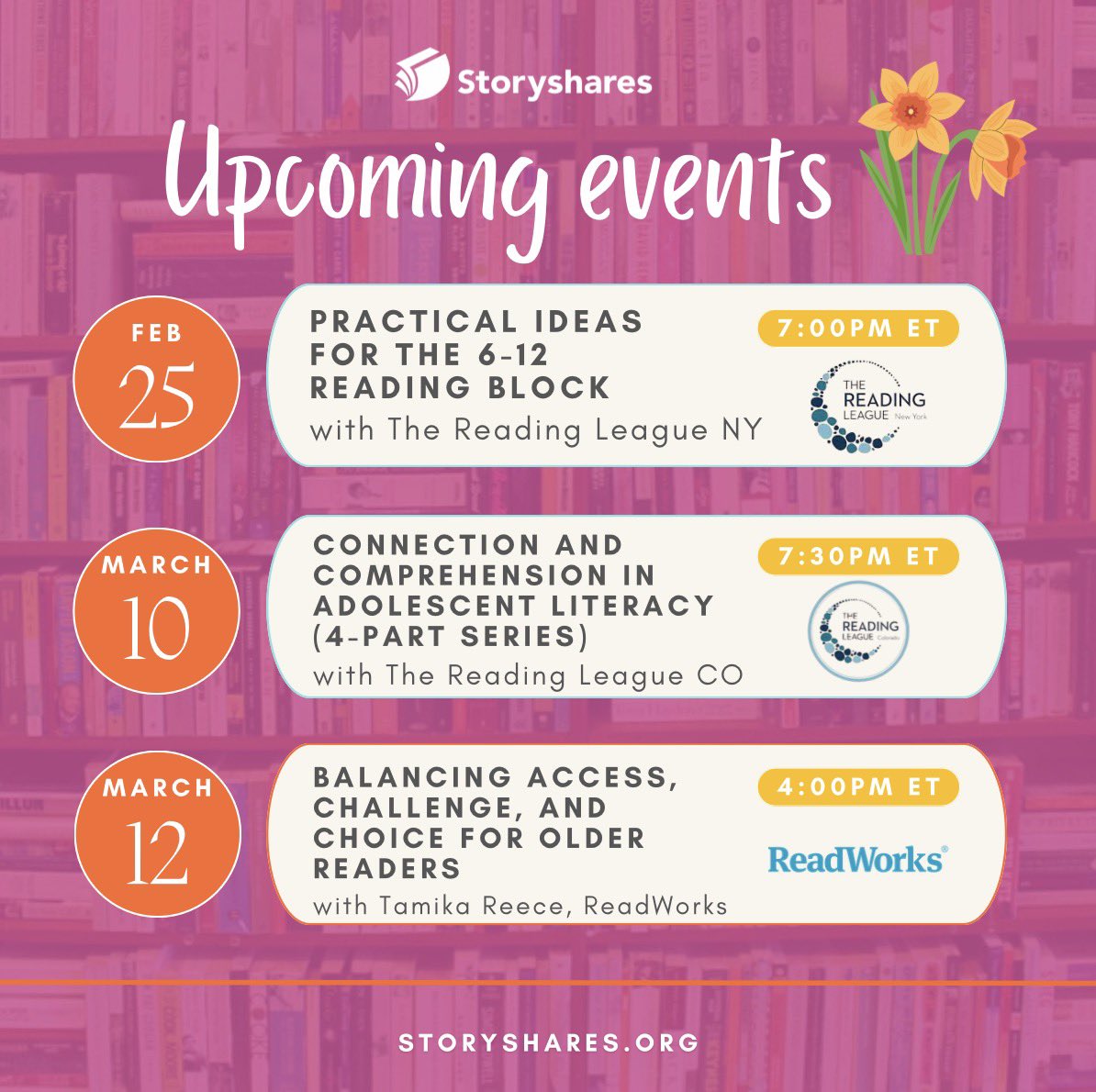
We’ve got 3 virtual events coming up this spring✨🌷 📖2/25 | 7PM ET – Practical Ideas for the Reading Block 📚3/10 | 7:30PM ET – Connection & Comprehension ✏️3/12 | 4PM ET – Access, Challenge & Choice Learn more and register here: storyshares.org/professional-l…
Storyshares tweet media
English
0
0
1
29
Storyshares retweetledi
Jamie Class
Jamie Class@JamieClass5·
I don’t think that is the problem- it’s the crazy Common Core State Standards. Reading instruction fades out in the 3rd-5th grades and districts march forward with non-readers, passing them along, because reading instruction is not “grade level curriculum.” We are supposed to “differentiate instruction.” No. I made noise until my principal let me do an intervention English period, and bought a great program designed for older readers. @StoryShares
English
1
1
3
77
Storyshares
Storyshares@StoryShares·
Adolescent literacy thrives on connection🤝📚  Join our 4-part Virtual Learning Series with The Reading League Colorado starting March 10! 🎤Dr. Paul Black ⏰7:30-8:30 PM ET Register here to learn more:     zeffy.com/en-US/ticketin…
Storyshares tweet media
English
0
0
0
26
Storyshares
Storyshares@StoryShares·
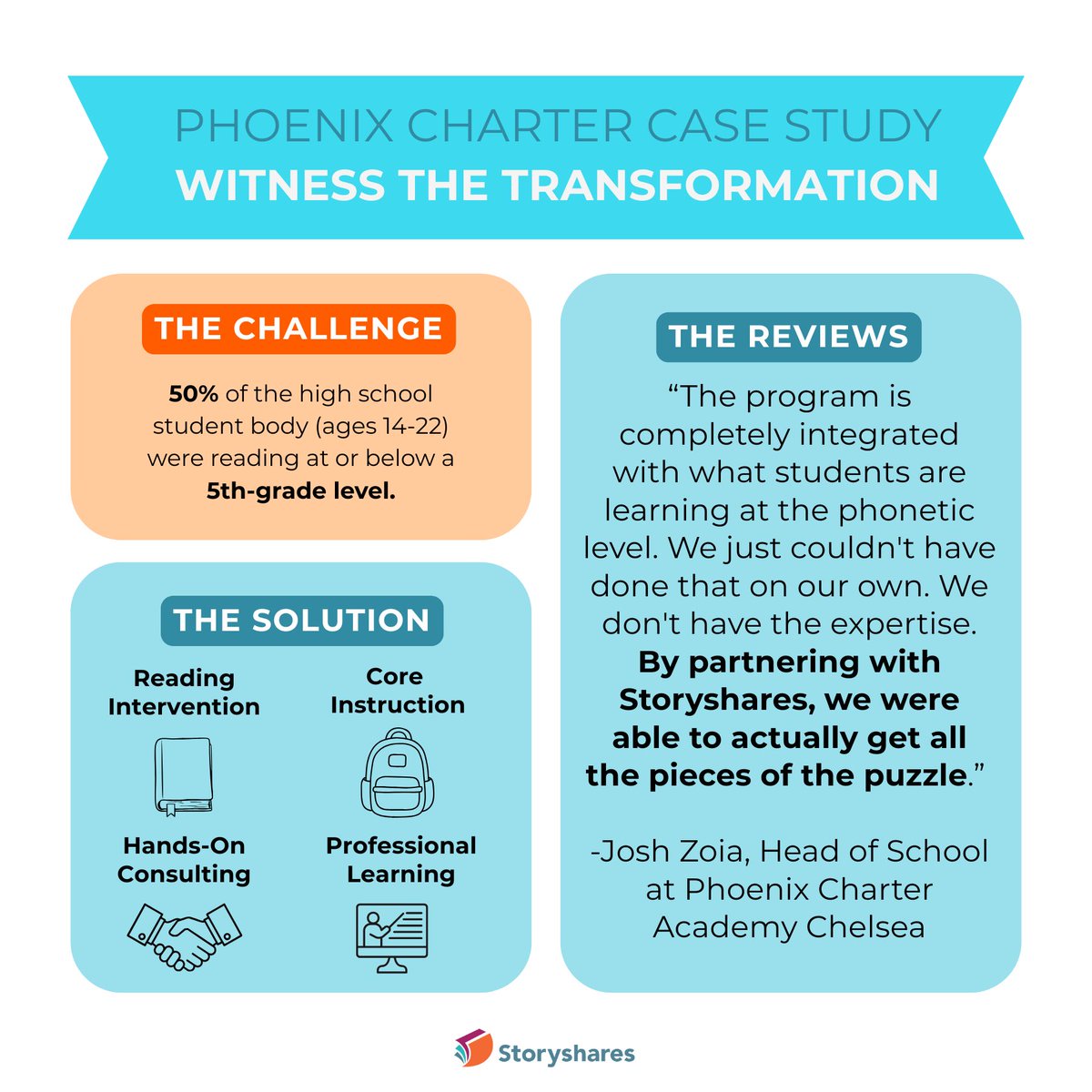
High schools aren’t supposed to teach kids how to read, but what happens when they have to? Phoenix Charter Academy did something to break this cycle. Together we worked to combat this crisis💡📚. Learn how to break the cycle with Storyshares HERE: share.hsforms.com/1_HW9aoVRR3anr…
Storyshares tweet media
English
0
0
1
53
Storyshares
Storyshares@StoryShares·
We’re so excited to partner with the Reading League NY on our upcoming webinar: “Beyond Silent Reading: Practical Strategies for the Reading Block in Grades 6–12.” 🗓 Wednesday, February 25 ⏰ 7:00 PM EST Join us live and register now: us02web.zoom.us/meeting/regist…
Storyshares tweet media
English
0
1
0
64
Storyshares
Storyshares@StoryShares·
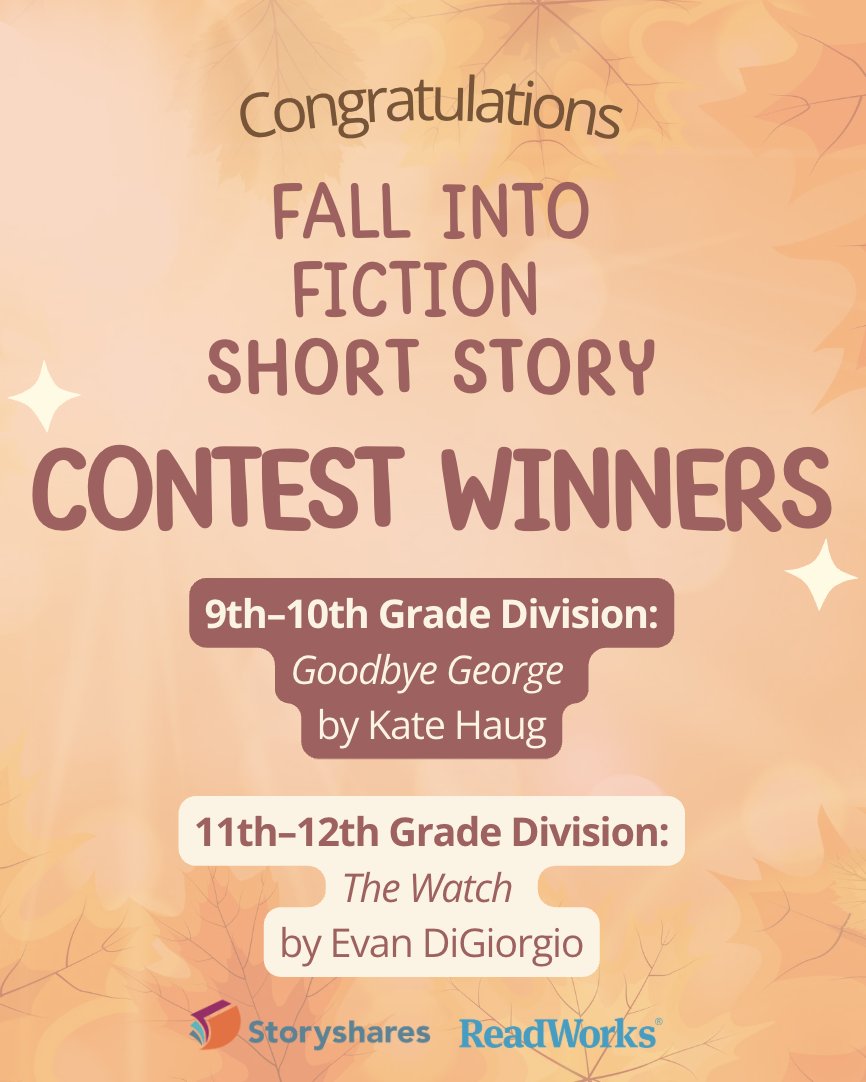
We are so excited to announce the winners of the Fall into Fiction Short Story Contest: 9th–10th Grade Division: Goodbye George by Kate Haug 11th–12th Grade Division: The Watch by Evan DiGiorgio Congratulations to the winner and all who submitted their work!
Storyshares tweet media
English
0
0
0
402
Storyshares retweetledi
Jamie Class
Jamie Class@JamieClass5·
After 5 years of nagging (and a parent threatened to sue), I finally got a reading program - @StoryShares - for my middle school SpEd students. Poor instruction is real. After weeks of fluency readings, teaching syllable types, and scooping phrases - I just had a student jump from a 3rd grade reading level to 8th grade reading level!!!
English
2
1
6
462
Storyshares
Storyshares@StoryShares·
This Thursday, December 11th: Family-School Partnerships for Adolescent Literacy @ 4PM EST! This is a must-attend event for educators and parents who want to transform the literacy journey for older students. Don't miss out! Register here: us06web.zoom.us/webinar/regist…
Storyshares tweet media
English
0
0
0
46
Storyshares retweetledi
Jamie Class
Jamie Class@JamieClass5·
I recently convinced my middle school principal to buy the @StoryShares intervention reading program for struggling older readers. It’s not district curriculum, I can only do 2 days/week. It’s very recently implemented, too soon to start tracking progress, but THEY ABSOLUTELY BEG ME EVERY DAY to pull out the program. My theory: Children WANT TO READ. They are ECSTATIC when given something that allows them to be successful. We need to put reading instruction back into the upper grades classroom, into Common Core for the older grades, and keep teaching them to read.
English
1
1
1
50
Ann Bauer
Ann Bauer@annbauerwriter·
If you're homeschooling and/or the parent of a tween (8-14), please drop a comment below or write to me: ann@storyaliz.com We want to find out exactly what makes kids love reading - and give it to them. Reluctant readers & voracious ones. Tell us everything. 🙏 for your help
English
173
14
245
16K
Storyshares retweetledi
Jamie Class
Jamie Class@JamieClass5·
I had a small win today. 8th grader with dyslexia. He’s been in my classes 2 years now. Last year I cobbled together teaching syllable types and phonological awareness games. This year they finally bought me @StoryShares reading intervention for older students. Today: 1. He read “honest” (including h sound) correctly, using syllable types. Then it clicked for him! “Does it say ‘onest’ (no h sound)?” Yeeeeeeeeeees! Victory lap!!!!!!
English
1
1
5
323
Niels Hoven 🐮
Niels Hoven 🐮@NielsHoven·
Why so many schools started telling kids to guess at words instead of sounding them out: In the 1960's a woman in New Zealand named Marie Clay thought that good readers read by guessing at whole words from context (the words around them, the letter they start with, or any pictures). This theory meant teachers wouldn't have to spend time drilling letter sounds, so it becomes very popular even though it's completely false. Marie Clay's Reading Recovery program spread across the US in the 1980s and 1990s. Marie Clay becomes an education mini-celebrity. Other programs begin to appear, selling these same "whole-word" guessing strategies to schools. Fountas and Pinnell (started by Irene Fountas and Gay Su Pinnell) is one of the most popular programs and convinces many schools to adopt the "3-cueing" strategy. In 3-cueing, students are told to use context, syntax, and pictures to guess at a word, instead of using the letters to sound it out. This "word guessing" approach becomes deeply embraced by the field of education. Lucy Calkins is the professor who founded the prestigious Teachers College at Columbia University in 1981. She believed that kids would learn to read and write naturally, the same way people learn to talk. This is a strange thing to believe, given that there are many, many people who can't read (1 in 3 fourth graders now can't read at a basic level) but almost no one who can't talk. Nevertheless, it becomes an incredibly popular belief and even today there are still teachers in my replies loudly claiming it's true. Lucy Calkins loves Fountas and Pinnell's approach, and she tells teachers that all they have to do is help students acquire a love of reading. Teachers don't need to drill letter sounds, or teach kids to sound out words. They just need to build cozy reading nooks, have a lot of books in their classroom, and read to their students. Obviously, this is an incredibly appealing idea, and through the 1990's and 2000's it sweeps through the field of education. Lucy Calkins becomes almost a cult-like figure and holds revival-style training institutes in churches. Her supporters call her books "bibles". Songs are written about her. But at the same time, neuroscience is advancing. New research and brain scans make it clear that Lucy Calkins, Fountas and Pinnell, Marie Clay, and all of their teachers that they trained are completely wrong. Trying to memorize whole words is briefly effective when a beginning reader only needs a few words, but quickly becomes an inefficient and ineffective way to read. It turns out that learning 44 English sounds is way more efficient that memorizing 100,000 English words (why did the field of education need decades of neuroscience research to tell them this?) When readers have a solid phonics foundation, their brains more easily map the connections between written words and their spoken forms (even when those written representations are imprecise like in English). With a phonics foundation, most readers only need to see a new word 1-4 times to remember it (this is called "orthographic mapping"), as opposed to trying to memorize every word as a separate "picture". So in 2000, George W Bush decides that schools should teach reading with methods that are supported by scientific evidence. Phonics actually becomes part of the Republican party platform. And of course this is where everything goes off the rails. Opponents of the phonics regulation said it was just a way to push money to political cronies. Some people decided that if the Bush administration was pushing phonics, they didn't want anything to do with it. Even today, progressive school districts tend to be much more opposed to phonics. Southern states (Mississippi, Louisiana, Tennessee, and Alabama) are switching to systematic phonics instruction and seeing good results, and progressive commentators are trying to explain those results away. The best reporting on this entire debacle is the recent podcast Sold a Story. It's won a number of awards and is actually driving legislative change by exposing the absurdity of the situation. If you want a quick video explainer, John Stossel also did a recent segment on the topic (I'm in it!) Ultimately, the important thing to remember is that "sounding out words" didn't disappear from schools because that's what people wanted. It disappeared because people weren't paying attention. Modern education policy (getting rid of phonics, banning middle school algebra, eliminating honors classes, prioritizing equalization instead of education) isn't happening because that's what families want. These policies happen when families and voters aren't paying attention, and if we want schools to switch their focus back to education and excellence, it will only happen if families and voters demand it.
English
124
456
3.7K
642.9K
Storyshares retweetledi
The Reading League North Carolina
The Reading League North Carolina@ReadingLeagueNC·
After reading the article “Teaching Adolescents to Read: It’s Not Too Late” by Dr. Louisa C. Moats we will connect key takeaways from the TRL Compass - Adolescent Literacy. We’ll be joined by guest collaborators from @StoryShares, who will help us unpack insights & implications.
English
0
1
1
46
Storyshares retweetledi
Share the Magic Foundation
Share the Magic Foundation@ReadWithMalcolm·
When kids read for just 20 minutes a day, they encounter 1.8 million words each year. That is 1.8 million new chances to dream bigger.
Share the Magic Foundation tweet media
English
0
2
4
198