StrategicCFO

57 posts

StrategicCFO banner
StrategicCFO

StrategicCFO

@StrategicCFO

Operator & investor. I help startups and scaleups grow faster & smarter and turn big dreams into big wins.

Palo Alto-NYC-Miami Katılım Ağustos 2024
131 Takip Edilen53 Takipçiler
StrategicCFO
StrategicCFO@StrategicCFO·
If this makes some people anxious, 2 things might help: 1. Read Stoicism. Focus on what you can control which is mostly your own thoughts and how you treat other people. 2. Or more extreme but incredibly sobering option. As they say in Eastern Europe: “Don’t anger God or He’ll take even this away.” Meaning be grateful for what you have. If you and your family are relatively healthy, if you have food on the table, a place to sleep, and some friends / loved ones, don’t complain too much, because things could get much worse. That usually helps.
Deedy@deedydas

The vibes in SF feel pretty frenetic right now. The divide in outcomes is the worst I've ever seen. Over the last 5yrs, a group of ~10k people - employees at Anthropic, OpenAI, xAI, Nvidia, Meta TBD, founders - have hit retirement wealth of well above $20M (back of the envelope AI estimation). Everyone outside that group feels like they can work their well-paying (but <$500k) job for their whole life and never get there. Worse yet, layoffs are in full swing. Many software engineers feel like their life's skill is no longer useful. The day to day role of most jobs has changed overnight with AI. As a result, 1. The corporate ladder looks like the wrong building to climb. Everyone's trying to align with a new set of career "paths": should I be a founder? Is it too late to join Anthropic / OpenAI? should I get into AI? what company stock will 10x next? People are demanding higher salaries and switching jobs more and more. 2. There’s a deep malaise about work (and its future). Why even work at all for “peanuts”? Will my job even exist in a few years? Many feel helpless. You hear the “permanent underclass” conversation a lot, esp from young people. It's hard to focus on doing good work when you think "man, if I joined Anthropic 2yrs ago, I could retire" 3. The mid to late middle managers feel paralyzed. Many have families and don't feel like they have the energy or network to just "start a company". They don't particularly have any AI skills. They see the writing on the wall: middle management is being hollowed out in many companies. 4. The rich aren’t particularly happy either. No one is shedding tears for them (and rightfully so). But those who have "made it" experience a profound lack of purpose too. Some have gone from <$150k to >$50M in a few years with no ramp. It flips your life plans upside down. For some, comparison is the thief of joy. For some, they escape to NYC to "live life". For others still, they start companies "just cuz", often to win status points. They never imagined that by age 30, they'd be set. I once asked a post-economic founder friend why they didn't just sell the co and they said "and do what? right now, everyone wants to talk to me. if i sell, I will only have money." I understand that many reading this scoff at the champagne problems of the valley. Society is warped in this tech bubble. What is often well-off anywhere else in the world is bang average here. Unlike many other places, tenure, intelligence and hard work can be loosely correlated with outcomes in the Bay. Living through a societally transformative gold rush in that environment can be paralyzing. "Am I in the right place? Should I move? Is there time still left? Am I gonna make it?" It psychologically torments many who have moved here in search of "success". Ironically, a frequent side effect of this torment is to spin up the very products making everyone rich in hopes that you too can vibecode your path to economic enlightenment.


English
0
0
1
20
StrategicCFO
StrategicCFO@StrategicCFO·
@deedydas Perfect time to start reading stoic teachings. “If you suffer pain because of some external cause, what troubles you is not the thing but your decision about it, and this it is in your power to wipe out at once.”
English
1
0
6
3K
Deedy
Deedy@deedydas·
The vibes in SF feel pretty frenetic right now. The divide in outcomes is the worst I've ever seen. Over the last 5yrs, a group of ~10k people - employees at Anthropic, OpenAI, xAI, Nvidia, Meta TBD, founders - have hit retirement wealth of well above $20M (back of the envelope AI estimation). Everyone outside that group feels like they can work their well-paying (but <$500k) job for their whole life and never get there. Worse yet, layoffs are in full swing. Many software engineers feel like their life's skill is no longer useful. The day to day role of most jobs has changed overnight with AI. As a result, 1. The corporate ladder looks like the wrong building to climb. Everyone's trying to align with a new set of career "paths": should I be a founder? Is it too late to join Anthropic / OpenAI? should I get into AI? what company stock will 10x next? People are demanding higher salaries and switching jobs more and more. 2. There’s a deep malaise about work (and its future). Why even work at all for “peanuts”? Will my job even exist in a few years? Many feel helpless. You hear the “permanent underclass” conversation a lot, esp from young people. It's hard to focus on doing good work when you think "man, if I joined Anthropic 2yrs ago, I could retire" 3. The mid to late middle managers feel paralyzed. Many have families and don't feel like they have the energy or network to just "start a company". They don't particularly have any AI skills. They see the writing on the wall: middle management is being hollowed out in many companies. 4. The rich aren’t particularly happy either. No one is shedding tears for them (and rightfully so). But those who have "made it" experience a profound lack of purpose too. Some have gone from <$150k to >$50M in a few years with no ramp. It flips your life plans upside down. For some, comparison is the thief of joy. For some, they escape to NYC to "live life". For others still, they start companies "just cuz", often to win status points. They never imagined that by age 30, they'd be set. I once asked a post-economic founder friend why they didn't just sell the co and they said "and do what? right now, everyone wants to talk to me. if i sell, I will only have money." I understand that many reading this scoff at the champagne problems of the valley. Society is warped in this tech bubble. What is often well-off anywhere else in the world is bang average here. Unlike many other places, tenure, intelligence and hard work can be loosely correlated with outcomes in the Bay. Living through a societally transformative gold rush in that environment can be paralyzing. "Am I in the right place? Should I move? Is there time still left? Am I gonna make it?" It psychologically torments many who have moved here in search of "success". Ironically, a frequent side effect of this torment is to spin up the very products making everyone rich in hopes that you too can vibecode your path to economic enlightenment.

English
1.1K
1.3K
16.4K
13M
StrategicCFO
StrategicCFO@StrategicCFO·
@realEstateTrent As a woman, I’d rather have my sister, mom or close girlfriend next to me. So if I had that as an option, I’d definitely be happy letting my partner go. Especially if he wants to go and it’s important for him.
English
0
0
0
113
StrategicCFO
StrategicCFO@StrategicCFO·
@Jason______A Been using Mint for 3 years. Travel across the US and the world (Europe, LatAm, Asia etc). Never had any issues. Had AT&T, Verizon, T-Mobile before. Haven’t noticed any difference in coverage. Paying $30 for unlimited.
English
0
0
8
2.2K
Jason Applebaum
Jason Applebaum@Jason______A·
HOLD UP .... Mint Mobile is like $20 bucks a month unlimited. Can pair it with 5G home internet for $45. Why am I paying T Mobile $200 for the same thing? I always thought Mint Mobile was for trap phones in the hood, never knew I could use an iphone with it. T Mobile owns Mint, so im getting the same exact service for 1/10th the cost.... Whats the catch here?
English
719
72
5.3K
2.4M
StrategicCFO
StrategicCFO@StrategicCFO·
@matthew_kruer When I’m in Silicon Valley, I do feel like AI is “eating the world.” Then I get on a call with pharma execs and they don’t even want to hear the word “AI”
English
0
0
0
147
Matt Kruer
Matt Kruer@matthew_kruer·
After a couple years of lurking on this platform trying to absorb all the AI, tech, and e-com content, I’ve decided to start posting. I’m an exec at a 150 year old consumer and professional cleaning products company. I see lots of content from tech cos and DTC brands about AI adoption, but rarely see anything from legacy operators like me sharing real life experiences of trying to implement these tools. I’m hoping sharing my experience will help me accelerate the journey.
English
44
9
412
105.4K
Rohit Mittal
Rohit Mittal@rohitdotmittal·
Industries with gatekeepers have a few common attributes: - lots of regulations - utility or commodity - old people in their jobs for a long time - no fundamental changes/disruption - relationship driven long sales cycle - no meritocratic product adoption - information asymmetry - fragmented decision making Building and scaling startups in this industry requires a different muscle and strong connections.
English
2
3
17
1.8K
StrategicCFO
StrategicCFO@StrategicCFO·
@eladgil Stayed at several hotels, incl. Fairmont and Ritz, but Kabuki truly stood out and pleasantly surprised me. Also, SF feels safer the past 1-2 months, but maybe it’s just me.
English
0
0
1
65
Elad Gil
Elad Gil@eladgil·
What are the best nice hotels in SF at which to stay? If you are optimizing for -Seeing the city (good food,... ) -Being safe (low crime, can actually walk out the door with minimal fear of random event) These may be two different spots. Suggestions?
Elad Gil tweet media
English
144
6
336
167.3K
StrategicCFO
StrategicCFO@StrategicCFO·
100% agree. Though in a world full of self-proclaimed experts, identifying the top 1% is challenging for many. Study history, read biographies, and surround yourself with people smarter than you (if not in real life, then through podcasts and books), stay focused and challenged, ignore the online noise - and you yourself will be in the top 1%.
English
0
0
1
66
Hiten Shah
Hiten Shah@hnshah·
The ability to recognize excellence in a field without firsthand experience is a superpower. If you have it, you skip the years of trial and error. You make better decisions. You move faster. You see things others don’t. Most people think you need experience to know what good looks like. They’re wrong. Excellence follows patterns. Once you learn how to spot those patterns, you can operate at a high level in any domain, even if you’ve never set foot in it. But most people never figure this out. They assume expertise is earned through time instead of insight. The best hiring managers don’t need to know how to code to recognize a world-class engineer. The best investors don’t need to be former founders to spot the next billion-dollar startup. The best taste-makers don’t need to be artists to know which designs will win. They all have something in common. They see what others miss. They break apart a field, find its hidden structure, and spot the signals that separate the best from the rest. Look at any field. The top 1% don’t just work harder. They think differently. They focus on things others ignore. They make decisions in ways that seem counterintuitive at first but are actually rooted in deep principles. This is where most people get it wrong. They assume greatness is about talent or luck. In reality, it comes down to a series of repeatable choices. If you want to recognize excellence without years of experience, your job is to find those choices. What do the best prioritize? What do they refuse to do? What do they see that everyone else is blind to? The first step is exposure. You can’t recognize world-class work if you’ve never seen it. Study the best. Not the most famous, but the people who consistently produce exceptional results. Compare good vs. great until the differences become obvious. The second step is asking the right people. Most people don’t know what makes them great. They just do it. But a few can break it down in ways that shift how you see the world. Find those people. The third step is using proxy indicators. If you don’t have firsthand experience, use external signals to guide you. Look at past performance. Pay attention to who top operators trust. Watch how the best in a field talk about their work. Patterns will emerge if you look in the right places. This isn’t about faking expertise. It’s about seeing reality more clearly than everyone else. People who can recognize excellence without direct experience move differently. They hire better. Invest better. Think better. They don’t get distracted by noise because they know what actually matters. They learn faster because they see the patterns others overlook. They make smarter decisions because they aren’t waiting for experience to show them the way. Most people go through life reacting to what’s in front of them. The ones who shape the future have a different skill. They know how to spot what’s great before anyone else does. Once you learn how to do that, everything changes.
English
16
29
180
22.1K
StrategicCFO
StrategicCFO@StrategicCFO·
@lennysan @turbotax ! Hands down the most user friendly tool for one of the most boring and complex tasks
English
1
0
2
340
Lenny Rachitsky
Lenny Rachitsky@lennysan·
What (digital) products do you consider the most well crafted / best designed? From a user experience perspective. This can be B2B SaaS, consumer, desktop, fintech—anything you think is just really well designed. (Working on something and curious what products bubble to the top here)
English
129
21
286
99.7K
StrategicCFO
StrategicCFO@StrategicCFO·
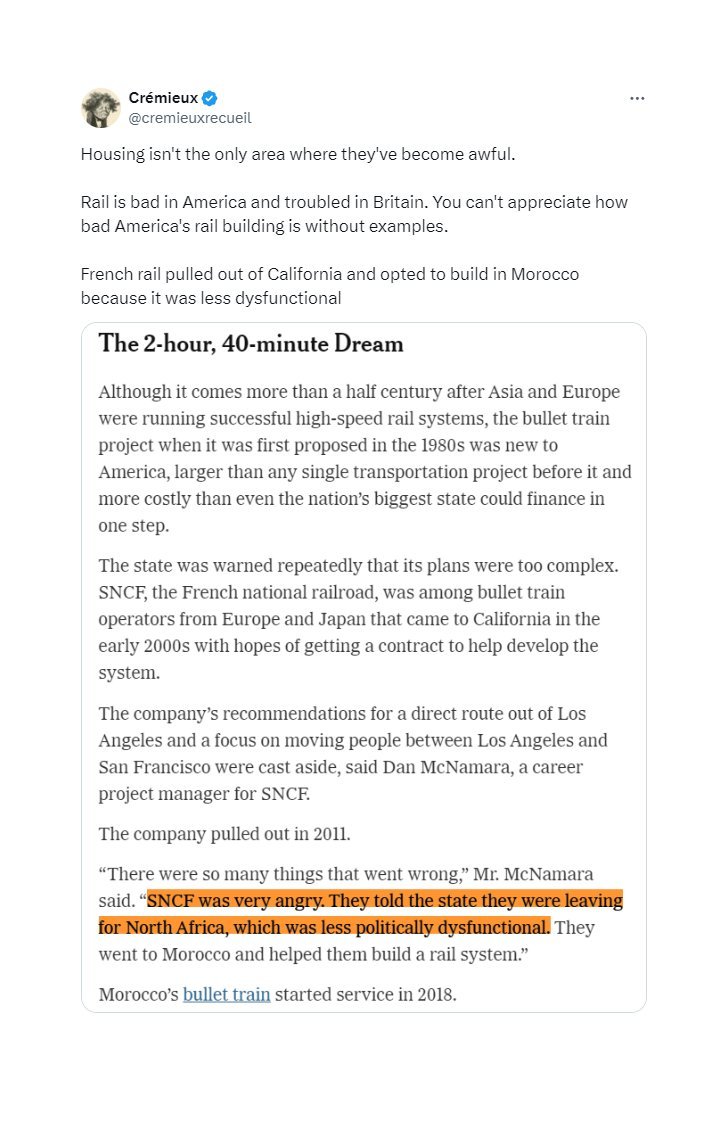
@cremieuxrecueil Impressed with what @GoBrightline has done in Florida - clean trains, safe stations, fast WiFi. Swiss quality. With all the innovation in Silicon Valley, it’s absolutely mind blowing that CA is far behind. And don’t even get me started on Caltrain…
English
0
0
0
53
StrategicCFO
StrategicCFO@StrategicCFO·
This 👇🏻 100% agree
Startup Archive@StartupArchive_

Sam Altman on the biggest mistake startup CEOs make when scaling a company “When you’re a Seed or Series A company, you spend a huge amount of effort recruiting, but almost no effort retaining talent — and that is [the right strategy] at the beginning. But if you don’t shift to viewing retaining talent as much of your job as recruiting talent, you eventually have some level of a disaster on your hands.” Sam recalls Mark Zuckerberg speaking at Y Combinator and saying he only hires people he’d report to if the roles were reversed. Sam reflects on this: “If you’re hiring people that are that good — which you should be doing — they have as many opportunities as you do… And so if you don’t make the role good enough that you yourself would stay in it, then you have a hard time retaining your best people for a long period of time.” Sam gives three pieces of tactical advice for CEOs who want to retain their best people: 1. Spend one-on-one time with your best people “The thing that your best 5-10 people crave the most is time with you, the CEO. And that is something that as people get busier, they spend less and less time on. Some of the best CEOs in our portfolio, every month they will take out for a one-on-one dinner or drinks or something each of their best 10 people. This is a huge time commitment. If you think about it, you only get 30 dinner slots in a month. It’s a really big thing to do. But I think it actually works because that is the thing these people really crave… They want you to ask them what you think they should be doing and listen to them and have a personal connection. That’s super important.” 2. Continually give them more responsibility “I think if you stop giving people more responsibility, they will eventually leave. If they get to take on new tasks every year or additional tasks every year, they’re happier.” 3. Proactively re-up their compensation “I think most founders are very bad about proactively re-upping — to the level that they should — their top 5-10 lieutenants.” Video source: @khoslaventures (2016)

English
0
0
0
84
StrategicCFO retweetledi
tyler hogge
tyler hogge@thogge·
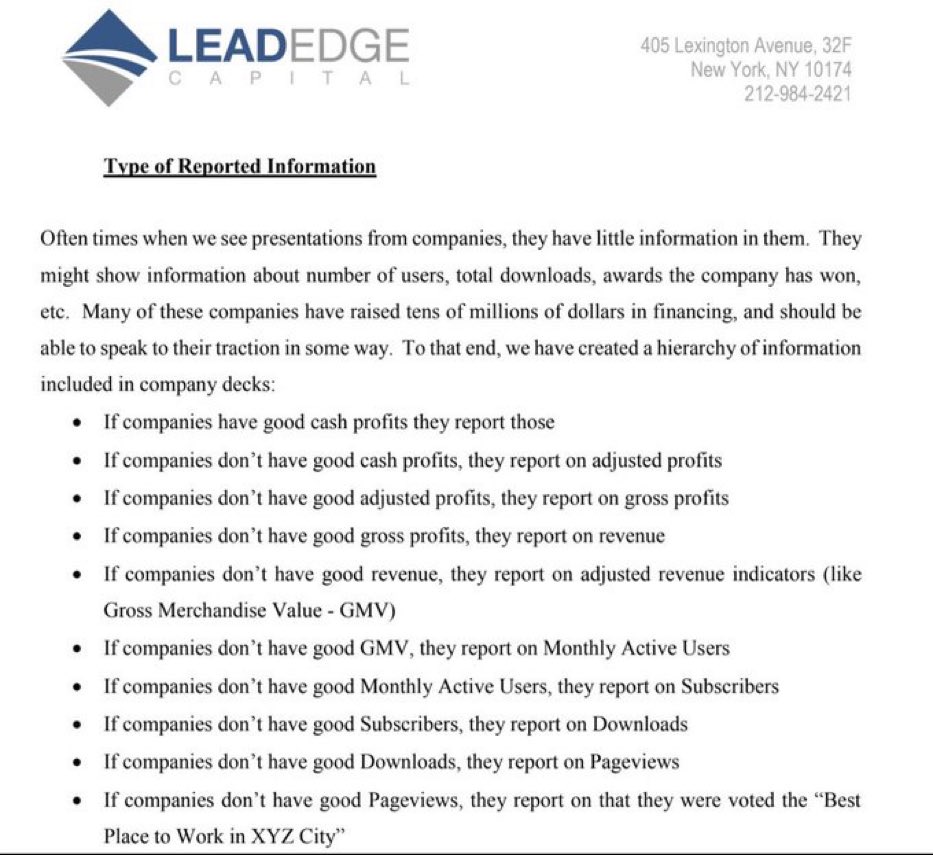
This remains one of the best investment memos of all time Especially true in startups too. (For example: They’re not burying the revenue number because it’s too good!)
tyler hogge tweet media
English
32
403
5.8K
597K
StrategicCFO
StrategicCFO@StrategicCFO·
@lennysan @naomigleit @Meta Absolutely love #4 - disagreeable givers. That's my philosophy too. Few things are as detrimental to a company’s success as agreeable takers, but unfortunately many leaders encourage that behavior without realizing the impact.
English
0
0
1
85
StrategicCFO retweetledi
Lenny Rachitsky
Lenny Rachitsky@lennysan·
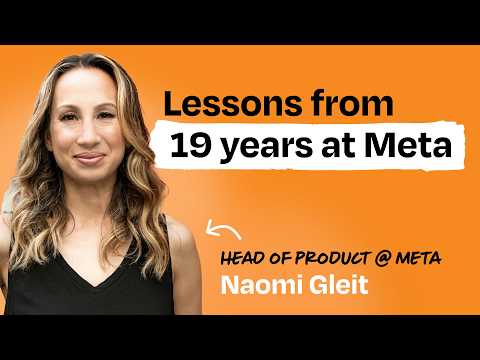
Naomi Gleit (@naomigleit) is head of product at @Meta, is the longest-serving executive at Meta other than Mark Zuckerberg, and joined as employee #29 back in 2005. She’s been at the center of some of the company’s most foundational products and teams, including Facebook’s early growth team, and in our conversation, Naomi shares: 🔸 The evolution of Facebook’s growth team 🔸 Leadership lessons and “Naomiisms” 🔸 Facebook’s activation and retention strategies 🔸 Tactics for creating extreme clarity 🔸 Lessons from working with Mark Zuckerberg 🔸 How she originally landed at Facebook 🔸 Advice for running effective meetings 🔸 Much more Listen now 👇 - YouTube: youtu.be/sTYuKgzZoL8 - Spotify: open.spotify.com/episode/06wYQk… - Apple: podcasts.apple.com/us/podcast/met… Thank you to our wonderful sponsors for supporting the podcast: 🏆 @pendoio — The only all-in-one product experience platform for any type of application: pendo.io/lenny 🏆 @TrustVanta — Automate compliance. Simplify security: vanta.com/lenny 🏆 @Get_Eppo — Run reliable, impactful experiments: geteppo.com Some key takeaways: 1. Don’t outsource your critical thinking. Whether it’s a two-hour brainstorming session or a solitary quiet hour, prioritize time to think about your strategies and decisions. 2. Your activation metric doesn’t have to be perfect. Choose something your team can rally around, like “7 friends in 10 days.” What matters most is that it gives everyone a common goal to work toward. 3. Remember the mantra “Pressure is a privilege.” When faced with high-stakes situations, acknowledge the opportunity that comes with it. Use the pressure as a motivation to elevate your performance, and embrace the challenges as a chance for growth. 4. When hiring, prioritize hiring “disagreeable givers”—people who are committed to the organization’s success but aren’t afraid to voice differing opinions. This diversity of thought can drive innovation and improve decision-making. 5. Create a central, canonical document for each project that outlines key information: work streams, owners, processes, and meeting norms. This ensures that everyone has access to the same information and can reference it as needed, reducing confusion and miscommunication. 6. When running meetings: a. Send an agenda with pre-read materials 24 hours in advance b. Use visuals to anchor discussions c. Present three options with a recommendation for decisions d. Real-time edit decisions and next steps e. Send follow-up notes within 24 hours
YouTube video
YouTube
English
11
26
176
66.6K
StrategicCFO
StrategicCFO@StrategicCFO·
“Part of the problem was the pandemic attracted a flock of outside investors to the space… These “tourist investors” don’t have a deep background in healthcare funding…” Made me think about AI-enabled influencers (aka “tourist experts”) who have been penetrating different fields… what will be the impact? 🤔 medtechdive.com/news/healthcar…
English
0
0
0
63
StrategicCFO
StrategicCFO@StrategicCFO·
Interesting survey from Federal Reserve Bank of Atlanta. CFOs are cautiously optimistic about 2025, but concerns about the overall economy have increased. While they expect continued revenue growth, revenue expectations for 2024 & 2025 have decreased since Q2: richmondfed.org/research/natio…
English
0
0
1
70
StrategicCFO
StrategicCFO@StrategicCFO·
@jasonlk and if you're not hot, you better master the art of sales. Without it, you probably have zero chance of raising funds.
English
0
0
0
68
Jason ✨👾SaaStr.Ai✨ Lemkin
Raising VC Capital is sales If you are hot, the VCs do the selling If not, you do the selling Just know which you are and don't mix it up
English
11
7
102
10.4K
StrategicCFO
StrategicCFO@StrategicCFO·
Most companies that raised at high valuations did so in 2021-early 2022, assuming a runway of ~ 3 years, so they need to raise soon again. But things have changed, and options are limited. Being a founder is incredibly challenging. Hope people stay strong, and that those with great products will find a way to survive.
English
1
0
2
2.7K
Tara Viswanathan
Tara Viswanathan@TaraViswanathan·
Very surprised at the number of founder friends who have quietly called in the last few days asking for advice on how to sell their company bc they raised at too high of valuations and are now in a state of purgatory. All are great founders with businesses that are doing many millions in revenue. We’re in for a wild next few years. 🫣 (Our deal was inbound and opportunistic so unfortunately don’t have helpful advice other than how to tactically navigate a great deal on the table — but very much feel for everyone. Running a company is HARD. 💙)
English
25
29
418
128.5K