Sabitlenmiş Tweet
Will Reeside
11.6K posts

Will Reeside
@StrngsdeReeside
F3 - Ball Boy, Husband, Father, Physical Therapist (DPT, OCS), Tiger, Pirate
Lexington, SC Katılım Ekim 2013
317 Takip Edilen289 Takipçiler
Will Reeside retweetledi

@hjluks It is not an exaggeration to say 85% (or more) of our patients would benefit from/need some form of physical or occupational therapy. For every patient that may need an operation I see 5 that don’t.
Send. Them. To. PT.
English
Will Reeside retweetledi

Martial arts grandmaster and action star Chuck Norris has died, his family said in a statement. He was 86.
Norris was a six-time undefeated World Professional Middleweight Karate champion. He founded the United Fighting Arts Federation, as well as a style of karate sometimes known as Chun Kuk Do.

English
Will Reeside retweetledi

The internet constantly tells women that men are terrible listeners because the second a woman starts venting about her day, the man immediately interrupts to offer a logical solution. We are taught to view this as him being dismissive, emotionally unintelligent, or invalidating our feelings.
The strict, unpopular truth is that to a man, fixing the problem is his absolute highest, most desperate form of empathy.
Women vent to connect; we want our partner to just sit in the dark with us and validate the emotion. But men are hardwired to view the woman they love being in distress as an active threat. When he immediately offers a spreadsheet, a strategy, or a solution to your problem, he isn't trying to silence you. His brain has recognized that something in the world is hurting his partner, and his immediate, visceral instinct is to assassinate the thing causing you pain.
We constantly shame men for "not just listening," completely ignoring the fact that his attempt to fix your life is his most profound declaration of love.
Asanwa.sol@Chizitere_xyz
What opinion about Men do you have that makes people feel like this?
English

The healthiest habit in America is quietly destroying millions of knees.
Walking 15,000+ steps a day builds your heart, your lungs, your endurance. It also loads the same five muscle groups in the same direction, 5.5 million repetitions per year, while the muscles responsible for keeping your knees from collapsing inward barely fire at all.
Your body moves in three planes. Sagittal (forward and back), frontal (side to side), and transverse (rotation). Walking is almost entirely sagittal. Quads, hamstrings, glutes, calves: all getting hammered. Your adductors, the five muscles along your inner thigh, work in the frontal plane. They stabilize the pelvis, keep the knees tracking straight, and prevent the femur from drifting into varus alignment under load. During level walking, they activate at a fraction of their capacity. Along for the ride.
Run that imbalance for a decade. The outer thigh gets progressively stronger. The inner thigh stays the same or atrophies. The knee joint, caught between two muscle groups pulling in opposite directions, starts absorbing asymmetric force with every single step. Cartilage wears unevenly. The medial compartment takes the hit first.
This is how knee osteoarthritis develops. Knee OA now affects roughly 23% of the global adult population. In the US alone, surgeons perform nearly 800,000 total knee replacements per year at $30,000 to $50,000 each. That number is projected to hit 3.5 million annually by 2030.
Patients with knee OA show 8 to 24% weaker hip abductor and adductor muscles compared to healthy controls. A longitudinal cohort study found that weaker hip muscles predicted faster OA progression. When the NHL gave players with weak adductors a 6-week strengthening program, injury rates dropped from 3.2 to 0.71 per 1,000 game exposures. 78% reduction from targeting one muscle group.
The doctor telling this person’s dad to walk less is treating the symptom. The imbalance is the disease. Copenhagen planks, lateral lunges, side-lying adductions. Fifteen minutes, twice a week. That’s the difference between a $40,000 surgery and a body that can actually handle its own mileage.
ris ꩜@sealmath
PSA TO WALKERS! my dad used to walk like 15-20k everyday and his outer thigh muscles are much stronger than his inner thigh muscles which puts a lot of strain on his knees. his doctor told him to not walk as much/climb stairs and his knees hurt 24/7. do inner thigh workouts guys
English
Will Reeside retweetledi

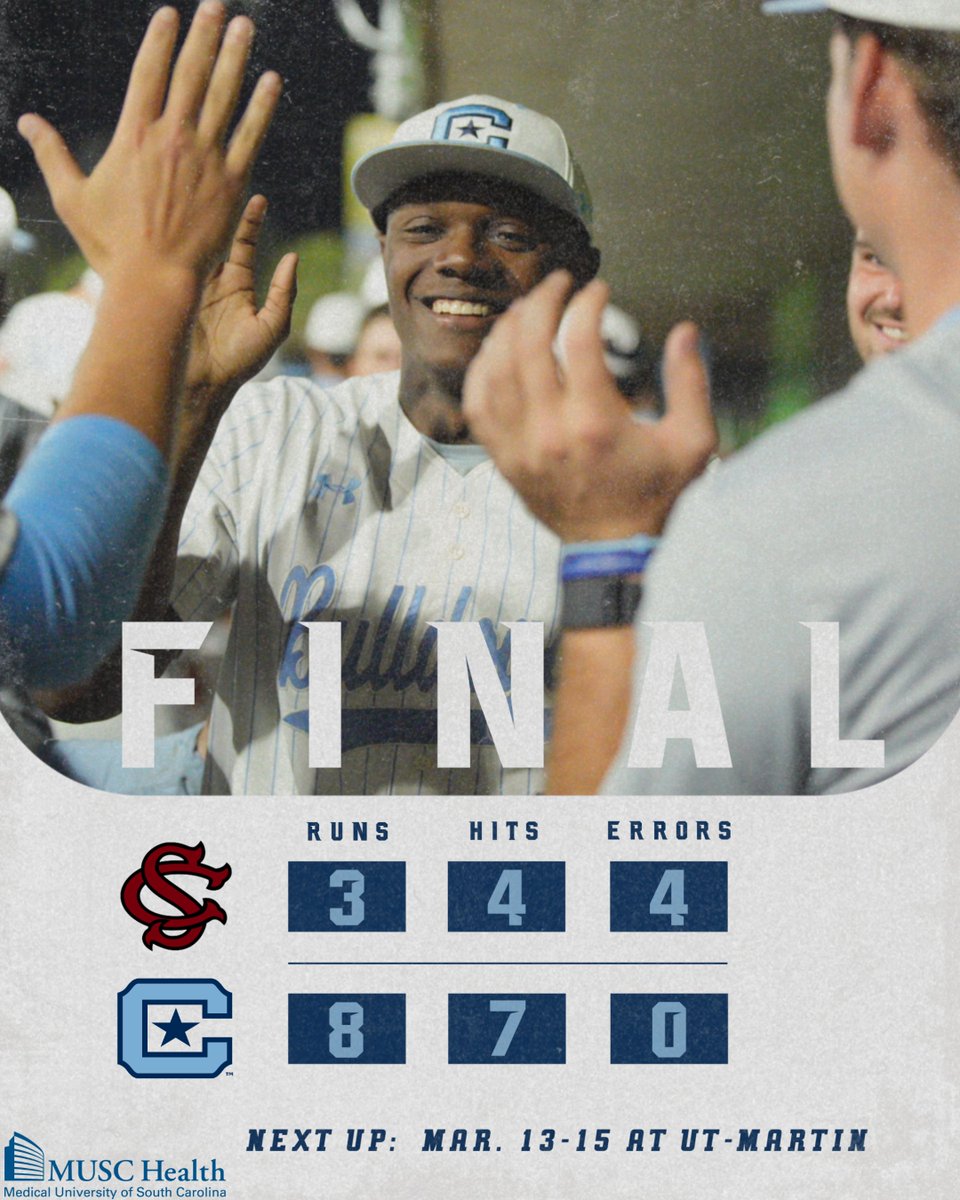
The Bulldogs take care of business in a major midweek clash against in-state adversary South Carolina, scoring an 8-3 victory over the visiting Gamecocks!
#jOURney

English
Will Reeside retweetledi

Will Reeside retweetledi

LeBron James last night fell to the ground writhing in pain, replay showed that he hit nothing of significance despite him grabbing both arms, and screaming as if he’d been hit by a car. He then exits the game.
Lakers go on a run, as they show a trainer working on his left arm. They cut the lead to 1, and LeBron suddenly gets worried that the Lakers look better without him, so he stops faking to reenter the game with a couple minutes left.
Lakers momentum is instantly zapped, and the team doesn’t score another basket until there’s 7 seconds left in the game. After the game he said that he “hit his funny bone”.
LeBron James isn’t a Top 10 NBA player— NEVER put his name in a sentence with Michael Jordan.
(Video via @famouslos32)
English

@heathradio Anything positive for the Braves would be welcomed at this point. Their window with Acuña is closing and Albies/Riley/Harris haven’t been spectacular.
English

I don’t get the rationale that the Braves must sign Lucas Giolito - “no excuses!” Is not thinking he’s all that good an excuse? 4.90 and 4.88 ERAs followed by a missed season - none of those count because last year he got hot in a 26 start season?
Jon Heyman@JonHeyman
nypost.com/2026/03/05/spo… MLB notes: Braves, Giolito, Bregman, Stanton, Suarez, more
English

@ryan_kantor I temper anything positive Dabo says at this point.
English

@StrngsdeReeside I know, but the fact that he kind of admittedly Sewell wasn't that great at guard and is better at center is... interesting. Not hyping Sadler either. Sounds like Ware is the RT so there's upside.
English

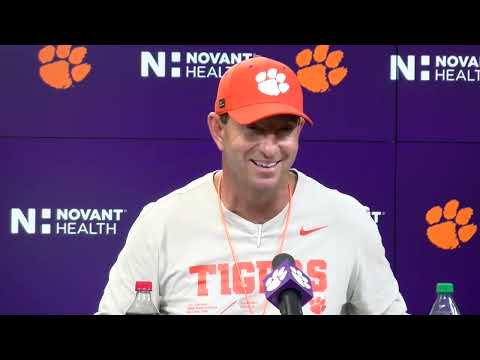
Ohhh no. Clemson O-line hype has officially begun. I hate that I’m being suckered once again. Starting be believe Easton Ware at RT and Grant Wise at RG with Sewell being better as a C than G could actually work. Darn you Dabo for getting my hopes up.
youtu.be/KyTXeJhnQPU?t=…

YouTube
English
Will Reeside retweetledi

You ever stumble onto a clip that reminds you what real American music sounds like?
That’s Doc Watson on guitar and Earl Scruggs on banjo playing Cripple Creek.
Doc Watson was blind.
Let that sink in.
No sight.
Just instinct, memory, and fingers that could outrun most guitar players alive.
Scruggs basically invented modern bluegrass banjo.
Watson’s flatpicking changed acoustic guitar forever.
Two Appalachian guys.
No auto-tune.
No smoke machines.
No backup dancers.
Just hands, strings, and decades of skill.
Different era.
Different standard.
How many musicians today could sit down with nothing but an instrument like that?
English
Will Reeside retweetledi

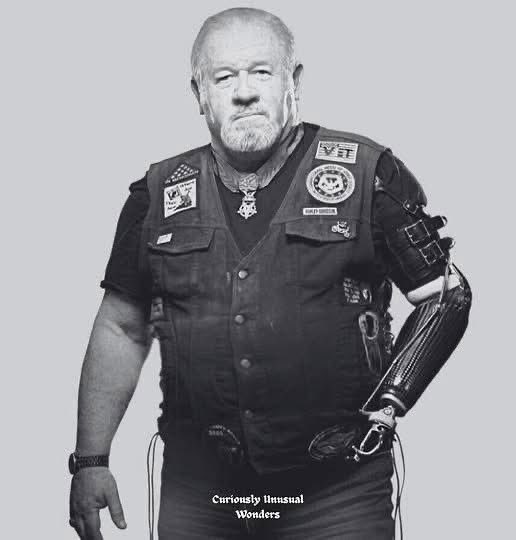
He tucked his severed arm into his waistband and kept firing—then what happened next will break you.
January 8, 1968. A rice paddy in Vietnam.
Twenty-year-old Gary Wetzel looked down at his body and saw the impossible.
His left arm was hanging by threads of flesh. His right arm was shredded. His chest was torn open. His leg was bleeding into the muddy water.
Two enemy rockets had just exploded inches from where he stood as a door gunner. The blast had hurled him out of his helicopter and into the paddy below.
Most men would have died from shock alone.
Gary Wetzel stood up.
His helicopter crew was part of the 173rd Assault Helicopter Company, inserting troops into what had become a kill zone. The moment they touched down, enemy fire erupted from every direction. Then the rockets came.
Now, bleeding out in a rice paddy, Gary realized something through the haze of agony: his machine gun was the only weapon still hitting the enemy position. American troops were pinned down. Men were dying. That automatic weapons emplacement had to be silenced.
And he was the only one who could do it.
Gary climbed back into his gun well.
He took his left arm—useless, nearly severed, hanging by skin and muscle—and tucked it into his waistband to get it out of the way.
Then, using his mangled right arm, he grabbed his machine gun.
And he opened fire.
The pain should have killed him. The blood loss should have knocked him unconscious. The shock should have shut his body down.
But Gary Wetzel kept firing.
He stayed at that gun until he eliminated the enemy emplacement that was slaughtering his brothers. Only then—only then—did he try to tend to his wounds.
He attempted to reach his aircraft commander, who was also badly hit. But his body had finally reached its limit. He collapsed, unconscious.
When he woke up—minutes or hours later, he couldn't tell—his first thought wasn't about survival.
It was about his crew.
Gary began dragging himself, inch by agonizing inch, across that rice paddy toward where his crew chief was trying to pull the wounded commander to safety.
He passed out from the effort.
He woke up.
He kept crawling.
When he finally reached them, Gary helped move the commander behind a dike. Then darkness took him again.
The next morning, rescue forces found Gary Wetzel barely alive. He'd been on the critical list for a week.
Doctors amputated his left arm in a field hospital. Infection set in. He needed another surgery in Tokyo, where physicians removed over 400 stitches and fought to keep him breathing.
But here's the part Gary remembers most.
While recovering in that Tokyo hospital, some of the men he'd saved—the soldiers whose lives he'd bought with his blood and his arm—found out he was there.
They walked up to his bed, one by one.
"Are you Gary Wetzel?"
"Yeah."
And they pulled out photographs. Wives. Children. Girlfriends waiting back home.
"Hey, man," they'd say, tears streaming. "Because of you, this is what I've got to go back to."
That's when Gary understood.
Not just in military terms—enemy eliminated, mission successful, lives saved.
But in human terms.
Families that would stay whole. Children who would grow up with fathers. Love stories that would continue. Futures that would happen.
November 19, 1968: President Lyndon B. Johnson pinned the Medal of Honor on Gary Wetzel's chest at the White House. He also received the Purple Heart and Air Medal. He was promoted to Specialist Four—a rank earned in the most brutal way imaginable.
After five months in hospitals learning to live with a prosthetic arm, Gary returned to South Milwaukee, Wisconsin. He went to work as a heavy equipment operator—a job that requires two hands.
Except Gary figured out how to do it with one and sheer determination.
He married Kathy. He raised a family. He lived quietly, never seeking attention.
But Gary Wetzel has never stopped serving.

English
Will Reeside retweetledi

One of the most persistent myths in fitness is that aging bodies must be protected from load (trust me, I hear it all day long). The opposite is true. Aging bodies must be prepared for it. Strength training is not a risk imposed on the system. It is a risk removed from the future. The risks associated with sedentary behavior far outweigh those of resistance training.
Link below for more...
English

@chapelfowler @EricMacLain He said the same thing about the safeties last year 🙄
English