Suraj H

4.8K posts

Suraj H banner
Suraj H

Suraj H

@Suraj_RH

▌│█║▌║▌║[ V⃝    O⃝    N⃝    ]║▌║▌║█│▌

India Katılım Haziran 2018
1.1K Takip Edilen184 Takipçiler
Suraj H retweetledi
PA13L0
PA13L0@Fluyeporlaweb·
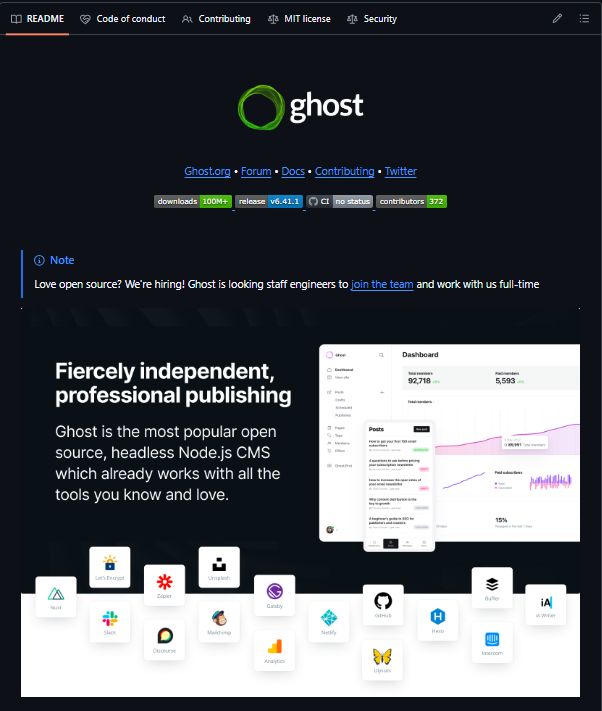
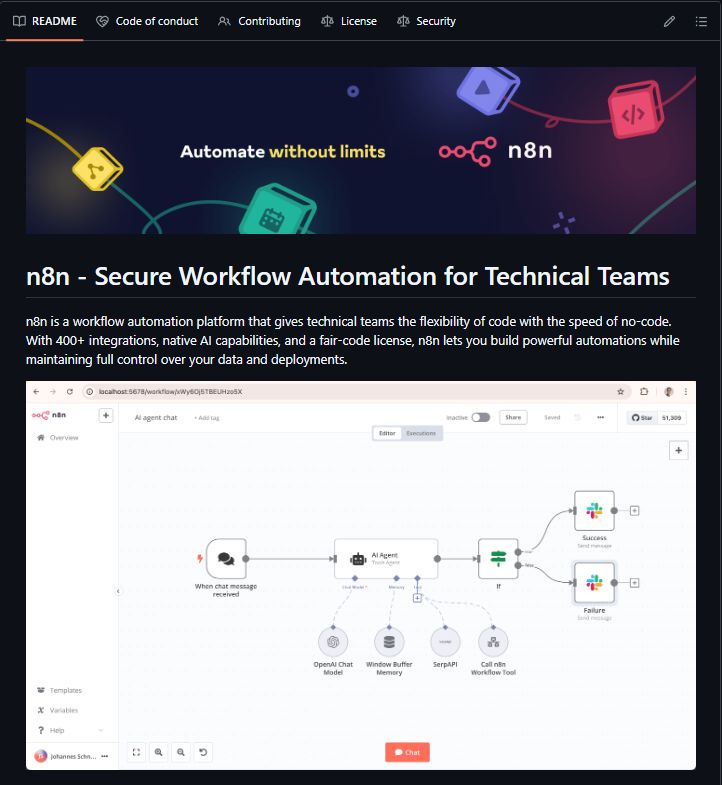
Todo lo que pagas en SaaS existe gratis en GitHub. Si usas Notion, Zapier, Airtable, Calendly, Mailchimp, Figma, Vercel, Linear, Typeform o Photoshop... hay un repo que hace lo mismo. Aquí tienes 30 ejemplos: Sin suscripción. Sin vendor lock-in. Sin perder tus datos si la empresa cierra o sube precios. 1. n8n → sustituye a Zapier / Make Automatización de flujos de trabajo. Self-hosteable. 100k+ estrellas. 2. NocoDB → sustituye a Airtable Base de datos con interfaz visual. Conecta con cualquier SQL. 3. AppFlowy → sustituye a Notion Workspace completo: notas, bases de datos, documentos. Local-first. 4. Cal.com → sustituye a Calendly Reservas de reuniones. Personalizable al 100%. Sin límite de eventos. 5. Listmonk → sustituye a Mailchimp Email marketing self-hosted. Sin límite de suscriptores. 6. Plausible → sustituye a Google Analytics Analytics sin cookies, sin rastreo, sin compartir datos con Google. 7. Docmost → sustituye a Notion / Confluence Wiki colaborativa para equipos. Simple y rápida. 8. Penpot → sustituye a Figma Diseño UI/UX en el navegador. Open source. Sin miedo a que Figma suba precios. 9. Coolify → sustituye a Vercel / Heroku Deploy de apps en tu propio servidor. Sin comisiones por tráfico. 10. Plane → sustituye a Linear / Jira Gestión de proyectos y sprints. Todo lo que necesita un equipo técnico. 11. Formbricks → sustituye a Typeform Formularios y encuestas. GDPR friendly. Sin límite de respuestas. 12. Directus → sustituye a Contentful CMS headless que conecta con cualquier base de datos existente. 13. Supabase → sustituye a Firebase Backend completo: base de datos, auth, storage, edge functions. 14. Appwrite → sustituye a Firebase Alternativa más simple a Supabase. BaaS completo self-hosteable. 15. Mautic → sustituye a HubSpot CRM y automatización de marketing completo. Para equipos con presupuesto cero. 16. Twenty → sustituye a Salesforce / HubSpot CRM CRM moderno, open source, con interfaz limpia. 17. Ghost → sustituye a Substack / Beehiiv Newsletter y blog con suscripciones de pago. Sin comisión por ingresos. 18. Umami → sustituye a Google Analytics Analytics minimalista y sin cookies. Dashboard limpio. 19. Excalidraw → sustituye a Miro / Lucidchart Pizarra colaborativa con estilo sketch. En el navegador. 20. Tldraw → sustituye a Miro Pizarra infinita en el navegador. Sin registro. 21. Jitsi → sustituye a Zoom Videollamadas sin cuenta, sin app, sin límite de tiempo. En el navegador. 22. Nextcloud → sustituye a Google Drive / Dropbox Almacenamiento, calendarios, contactos y más. En tu propio servidor. 23. Postiz → sustituye a Buffer / Hootsuite Programación de redes sociales. Multi-plataforma. Self-hosteable. 24. Infisical → sustituye a HashiCorp Vault / Doppler Gestión de secretos y variables de entorno para equipos. 25. Paperless-ngx → sustituye a DocuWare Gestión de documentos con OCR automático. Para digitalizar todo lo que tienes en papel. 26. PhotoGIMP → sustituye a Photoshop Patch para GIMP que replica los atajos y la interfaz de Photoshop. Gratis. 27. Presenton → sustituye a Gamma / Beautiful.ai Presentaciones desde un prompt. Exporta .pptx real. Self-hosteable. 28. Pi-hole → sustituye a cualquier bloqueador de anuncios de pago Bloquea anuncios en toda tu red doméstica a nivel DNS. Un Raspberry Pi es suficiente. 29. Vaultwarden → sustituye a 1Password / LastPass Gestor de contraseñas self-hosted compatible con clientes de Bitwarden. 30. Uptime Kuma → sustituye a UptimeRobot / Better Uptime Monitorización de servicios y uptime. Dashboard bonito. Sin límite de monitores. Todo open source. Todo activo y con mantenimiento. Todo lo que deberías conocer antes de pagar por algo. Guarda esto.
PA13L0 tweet mediaPA13L0 tweet mediaPA13L0 tweet mediaPA13L0 tweet media
Español
2
14
115
4.6K
Suraj H retweetledi
Paras Chopra
Paras Chopra@paraschopra·
My favorite way of interacting with Claude Code is to have it generate static HTML files as outputs (reports, explorations, code structure, mockups etc.) I wanted to iterate on the file by commenting in browser and having Claude update the output live. So, I built this Claude Skill👇 How it works: - Install Claude Code skill (ask it to clone repo) - Build an HTML page for anything (e.g. research coding agents and generate HTML report) - Ask it to make the page interactive That's it. CC will launch a localhost server and allow you to then leave comments on the page itself and once it updates, will give you a tour of changes. It's like Google Docs kind of comments/iteration but for HTML pages.
English
99
117
1.9K
189.1K
Suraj H retweetledi
Cathryn
Cathryn@cathrynlavery·
been starting to use codegraph in projects. It builds a local knowledge graph of every symbol, function, and connection in your code so agents can look things up instantly instead of grep-searching through thousands of files. ~35% cheaper · ~70% fewer tool calls · 100% local
Cathryn tweet media
English
20
42
534
42K
Suraj H retweetledi
Suraj Sharma
Suraj Sharma@suraj_sharma14·
If I had 6 months to become an Applied AI Engineer. I’d do this. Stage 1: Python + Production APIs FastAPI, async, error handling, webhooks, REST/GraphQL, third-party SDKs. Stage 2: LLM Fundamentals for Production Tokens, context windows, model routing, embeddings, cost/latency tradeoffs. Stage 3: Prompt Engineering + Structured Outputs System prompts, few-shot chains, Pydantic/JSON validation, prompt versioning, unit evals. Stage 4: RAG + Knowledge Grounding Chunking strategies, hybrid search, rerankers, vector DBs, metadata filtering, citation tracking. Stage 5: AI Workflows + Orchestration Tool calling, state machines, human-in-the-loop, retry logic, fallback chains, session memory. Stage 6: Build Production-Ready Apps Domain-specific copilots, automation pipelines, streaming UIs, graceful degradation, rate limiting. Stage 7: Evaluation + Reliability Accuracy scoring, hallucination detection, RAGAS/DeepEval, regression testing, A/B output validation. Stage 8: AI Infrastructure + Optimization vLLM, Ollama, quantization, KV caching, response streaming, token cost tracking, edge deployment. Stage 9: Deployment + Observability Docker, CI/CD, cloud hosting, distributed tracing, structured logging, alerting, canary releases. Stage 10: AI Security + Guardrails Input/output filtering, prompt injection defense, PII redaction, compliance checks, sandboxing. Stage 11: Open Source + Portfolio Ship end-to-end apps publicly, write architecture docs, record demo walkthroughs, publish eval reports. Stage 12: Apply Applied AI Engineer, GenAI Developer, AI Integration Engineer, LLM Solutions roles. Most people stay stuck watching tutorials. Builders get hired.
English
15
192
1.4K
88.8K
Suraj H retweetledi
Meng To
Meng To@MengTo·
I recorded a 27-min tutorial on how to prompt beautiful landing pages with animated images 2.0
English
35
156
1.7K
115.3K
Suraj H retweetledi
Suraj H retweetledi
Shaban
Shaban@shabanhr·
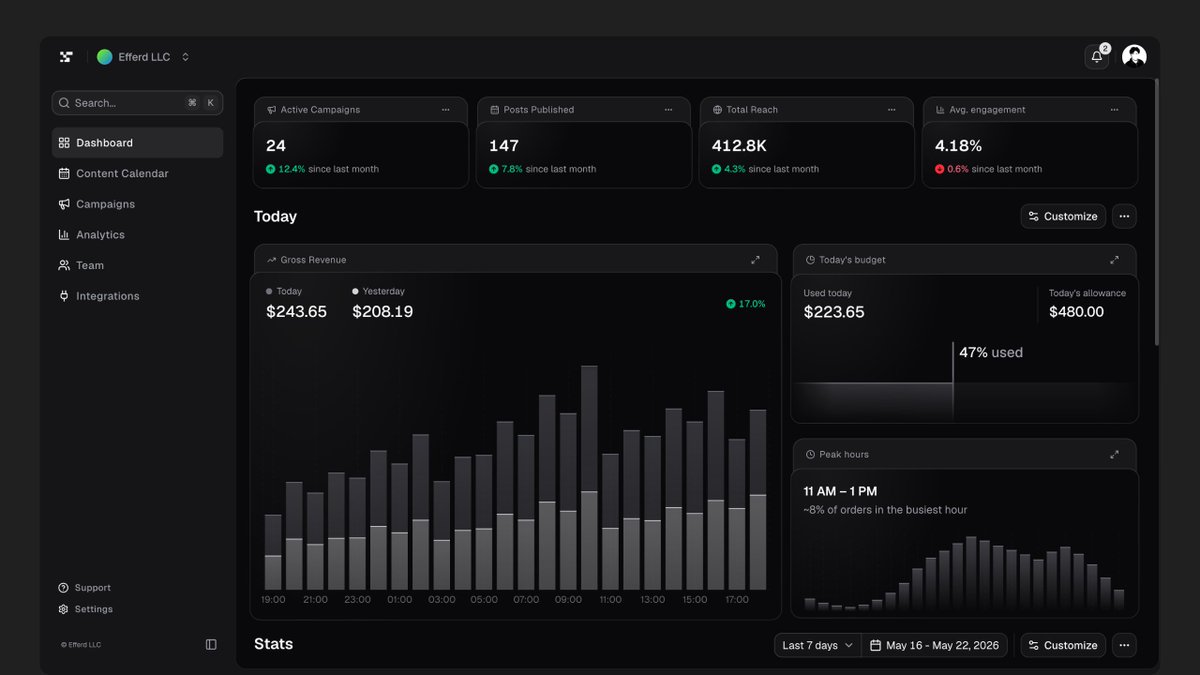
Introducing Dashboard Blocks! 🖤 The most demanded @shadcn blocks, engineered to help you ship beautiful analytics interfaces in seconds. • Registry ready • Native light & dark mode support • Fully compatible with @base_ui + @radix_ui • Agnostic to any icon library (@lucide_icons, @huge_icons, @tabler_io ... more) Stop spending days aligning charts. Grab them below 👇
Shaban tweet mediaShaban tweet mediaShaban tweet mediaShaban tweet media
English
43
74
1.4K
85.1K
Suraj H retweetledi
Manoela Ilic
Manoela Ilic@crnacura·
Big thanks to Tom Miller for this beautiful new tutorial on creating cinematic scroll-driven SVG map animations with GSAP 😊 Such a clever mix of SVG, MotionPath, ScrollTrigger, and lightweight storytelling techniques, all without relying on a map API: tympanus.net/codrops/2026/0…
English
12
49
730
31.7K
Suraj H retweetledi
Nitin.nn
Nitin.nn@NitinthisSide_·
Day 02 — Think Like a Backend Engineer Your Node.js server works perfectly after deployment. But after a few hours: → Memory keeps increasing → API becomes slower over time → Server eventually crashes → Restart fixes it temporarily → Then the same issue returns again What would you suspect? This is a classic sign of a Memory Leak. A memory leak happens when your application keeps holding references to data that is no longer needed, so the garbage collector cannot clean it. In Node.js, memory leaks often come from: → Large objects stored in global variables → Unbounded in-memory cache → Event listeners not removed → Timers/intervals running forever → Unclosed database connections → Large request payloads retained accidentally → Closures holding unnecessary references The dangerous part? Memory leaks usually don’t crash your app immediately. They slowly degrade performance until production breaks. A senior backend engineer would check: → Heap usage over time → Garbage collection behavior → Event listener count → Cache growth → Open DB/socket connections → Recent deployment changes → Heap snapshots using Chrome DevTools / clinic.js Possible fixes: → Set cache size limits → Remove unused listeners → Clear timers/intervals → Close DB connections properly → Avoid storing request data globally → Use streams for large data → Monitor memory before it becomes an outage Restarting the server is not a fix. It only resets the timer. #ThinkLikeABackendEngineer #NodeJS #BackendEngineering #SystemDesign
Nitin.nn tweet media
English
11
14
98
2.6K
Suraj H retweetledi
Nitin.nn
Nitin.nn@NitinthisSide_·
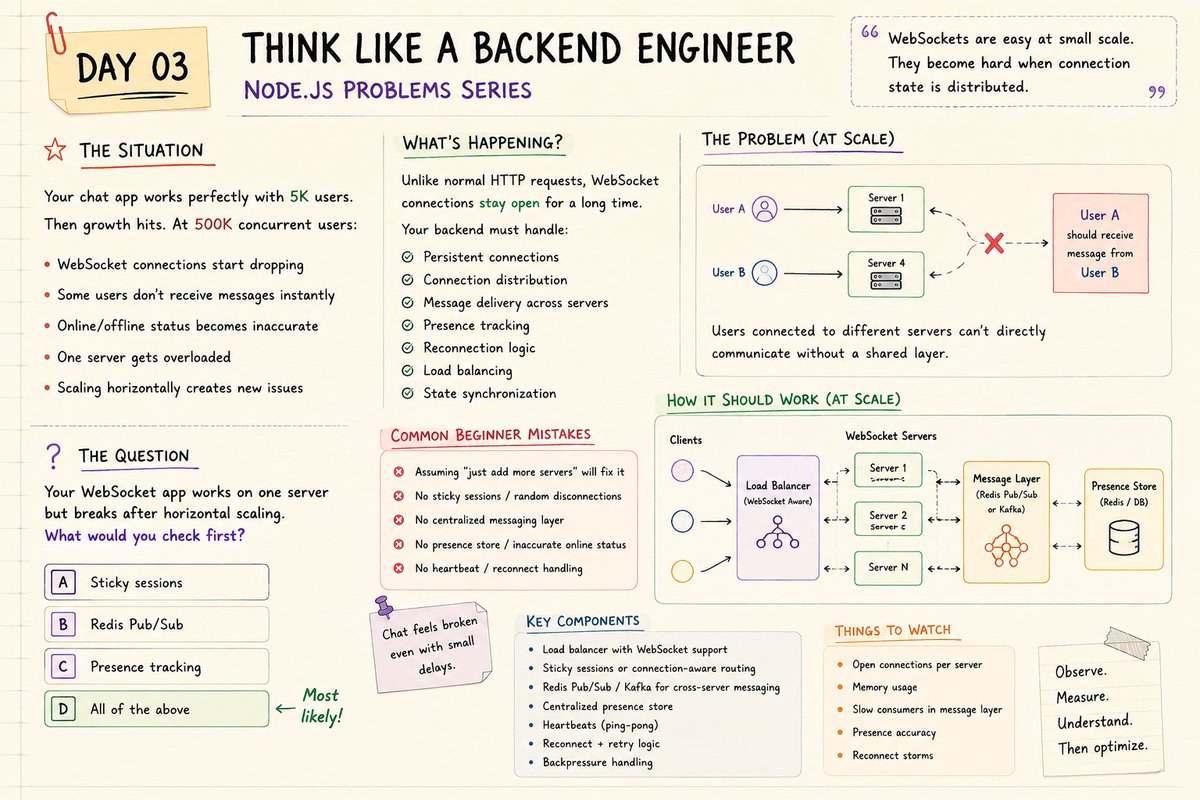
Day 03 — Think Like a Backend Engineer Your chat app works perfectly with 5K users. Then growth hits. At 500K concurrent users: → WebSocket connections start dropping → Some users don’t receive messages instantly → Online/offline status becomes inaccurate → One server gets overloaded → Scaling horizontally creates new issues What would you investigate first? This is a classic WebSocket scaling problem. Unlike normal HTTP requests, WebSocket connections stay open for a long time. That means your backend must handle: → Persistent connections → Connection distribution → Message delivery across servers → Presence tracking → Reconnection logic → Load balancing → State synchronization A common beginner mistake is assuming: “Just add more servers.” But with WebSockets, horizontal scaling needs coordination. If User A is connected to Server 1 and User B is connected to Server 4, messages must still reach the correct user. That usually requires: → Load balancer support for WebSockets → Sticky sessions or connection-aware routing → Redis Pub/Sub / Kafka for cross-server messaging → Centralized presence store → Heartbeats/ping-pong checks → Reconnect + retry logic → Backpressure handling Real systems like WhatsApp, Discord, Slack, and Telegram invest heavily in connection management because chat feels broken even with small delays. WebSockets are not hard at small scale. They become hard when connection state is distributed. Question for you: Your WebSocket app works on one server but breaks after horizontal scaling. What would you check first? A) Sticky sessions B) Redis Pub/Sub C) Presence tracking D) All of the above #ThinkLikeABackendEngineer #NodeJS #WebSockets #BackendEngineering
Nitin.nn tweet media
English
8
22
86
4.9K
Suraj H retweetledi
Nitin.nn
Nitin.nn@NitinthisSide_·
Day 04 — Think Like a Backend Engineer Your NodeJS API suddenly becomes very slow after a new feature launch. But here’s the strange part: → CPU usage looks normal → Memory usage looks fine → Database queries are optimized → No traffic spike happened Yet response time jumps from 100ms → 3s. What would you investigate first? One major suspect in Node.js systems is: Too much synchronous work inside the request lifecycle. Even when CPU doesn’t look “fully utilized,” synchronous operations can still block request handling and reduce throughput badly. Common hidden bottlenecks: → Reading large files synchronously → Heavy JSON parsing → PDF/report generation → Image processing → Calling slow third-party APIs sequentially → Large loops inside controllers → Await chains running one-by-one instead of parallel A very common beginner mistake is: “Async/await means everything is automatically optimized.” Not true. Bad async flow design can still create slow systems. A senior backend engineer would check: → Slow middleware chain → Sequential awaits → Event loop lag → Blocking sync APIs → Request tracing → External API latency → Large payload handling Example: ❌ Slow: await getUser(); await getOrders(); await getPayments(); ✅ Better: await Promise.all([ getUser(), getOrders(), getPayments() ]); Production performance problems are often caused by small inefficiencies repeated thousands of times. Fast APIs are rarely accidental. #ThinkLikeABackendEngineer #NodeJS #BackendEngineering #SystemDesign
Nitin.nn tweet media
English
11
7
83
3.3K
Suraj H retweetledi
Sumanth
Sumanth@Sumanth_077·
Open-source framework for building real-time voice AI agents! Pipecat is a Python framework for orchestrating audio, video, AI services, transports, and conversation pipelines. Voice-first architecture with pluggable components. What you can build: voice assistants, AI companions, multimodal interfaces, interactive storytelling, business agents (customer support, intake), and complex dialog systems. The framework handles speech recognition, text-to-speech, conversation logic, and real-time interaction. WebRTC and WebSocket transport built in. Ultra-low latency for natural conversations. Why Pipecat: • Voice-first: Integrates STT, TTS, and conversation handling in one framework • Pluggable: Supports multiple AI service providers for each capability • Composable pipelines: Build complex behavior from modular components • Real-time: Low-latency interaction with streaming audio/video Supported services: • Speech-to-Text: Deepgram, AssemblyAI, OpenAI Whisper, Groq, Azure, AWS, Google, and more • LLMs: OpenAI, Anthropic, Gemini, Groq, Mistral, Ollama, AWS, Azure, and more • Text-to-Speech: OpenAI, ElevenLabs, Deepgram, Cartesia, Azure, AWS, Google, and more • Speech-to-Speech: OpenAI Realtime, Gemini Multimodal Live, AWS Nova Sonic, Ultravox, Grok Voice Agent 10.3k+ stars on GitHub. I've shared link to the repo in the comments!
Sumanth tweet media
English
11
21
128
8K
Suraj H retweetledi
Alex Prompter
Alex Prompter@alex_prompter·
I just broke down the anatomy of the perfect SOUL. md file for AI agents. SOUL. md is the identity file every AI agent reads before it does anything else. Without it, your agent is just a raw LLM with no memory, no personality, and no boundaries. With it, your agent knows who it is, how to talk, what to refuse, and which tools to use. Here are the 9 sections that make a SOUL. md actually work: → Identity (who the agent IS, not what it does) → Values (decision-making when rules don't cover it) → Communication Style (tone, length, formality) → Expertise (specific tools and domains, not vague "knows things") → Boundaries (the immune system. Holds even under pressure) → Workflow (step-by-step process for every task) → Tool Usage (WHEN and HOW, not just which ones exist) → Memory Policy (what persists, what gets wiped) → Example Interactions (one good example beats 10 abstract rules) Most people write "Be helpful and professional." That describes nothing. Every AI already tries to do that. The agents that actually work have SOUL. md files with real opinions, specific limits, and concrete examples of what "good" looks like. A strong SOUL. md is 200-500 words. Shorter = sharper agent. Save this. You'll need it the moment you build your first agent.
Alex Prompter tweet media
English
34
191
1.3K
75.5K
Suraj H retweetledi
Simons
Simons@Simon_Ingari·
HR: We lost another senior employee today. CEO: What happened? HR: He resigned after receiving an external offer. CEO: That makes no sense. We could have matched it. HR: That is the issue. We were willing to pay a stranger 70% more for the same role, but would not give our existing employee even a 20% raise. CEO: External hiring is different. That is market pricing. HR: He noticed that too. CEO: We appreciated his loyalty. He had been here for years. HR: Yes. And during those years, he consistently exceeded expectations while being told to “wait for the next review cycle.” CEO: But budgets are complicated for internal employees. HR: Apparently not for external candidates. The new hire budget was approved in three days. His raise request sat for eight months. CEO: We had to stay competitive in the hiring market. HR: He was part of that same market. The only difference is that another company valued him before we did. CEO: So he left over salary? HR: Not just salary. He left because he realized loyalty was being rewarded less than leaving. CEO: That is unfortunate. HR: Yes. Companies will sometimes trust a candidate after a 45-minute interview more than an employee who already proved themselves for five years. CEO: So what are you saying? HR: If companies only recognize employee value after a resignation letter appears, then eventually employees will stop waiting to be appreciated internally. Sometimes the fastest way for an employee to get market value is to stop being your employee.
English
212
1.6K
9.6K
1.5M
Suraj H retweetledi
DevopsCube
DevopsCube@devopscube·
GitHub Actions + AWS Without Long-Lived Secrets? 🚀 Modern DevOps pipelines should not depend on hardcoded AWS access keys. Because leaked CI/CD credentials are still one of the biggest cloud security risks. That is where OIDC helps. Instead of storing AWS secrets in GitHub, your workflow gets short-lived, temporary credentials directly from AWS at runtime. - No static keys. - No secret rotation headaches. - Less blast radius if something goes wrong. In this blog, We will look at GitHub Actions OIDC AWS Integration using a step-by-step example that secures access to the AWS cloud. By the end of this guide, you will understand: - Why OIDC is a secure way to connect GitHub Actions with AWS - How GitHub’s OIDC integration works with AWS - A step-by-step method to set up OIDC using IAM roles - How to test the setup using AWS CLI and deploy to EKS with GitHub Actions workflows 𝗗𝗲𝘁𝗮𝗶𝗹𝗲𝗱 𝗕𝗹𝗼𝗴: devopscube.com/github-actions… 𝗡𝗼𝘁𝗲: A fully private GitHub Enterprise Server setup cannot use AWS OIDC unless AWS can access the GHES OIDC metadata endpoint over HTTPS #devops #GithubActions #OIDC #aws
DevopsCube tweet media
English
0
29
104
3.3K
Suraj H retweetledi
Tran Mau Tri Tam ✪
Tran Mau Tri Tam ✪@tranmautritam·
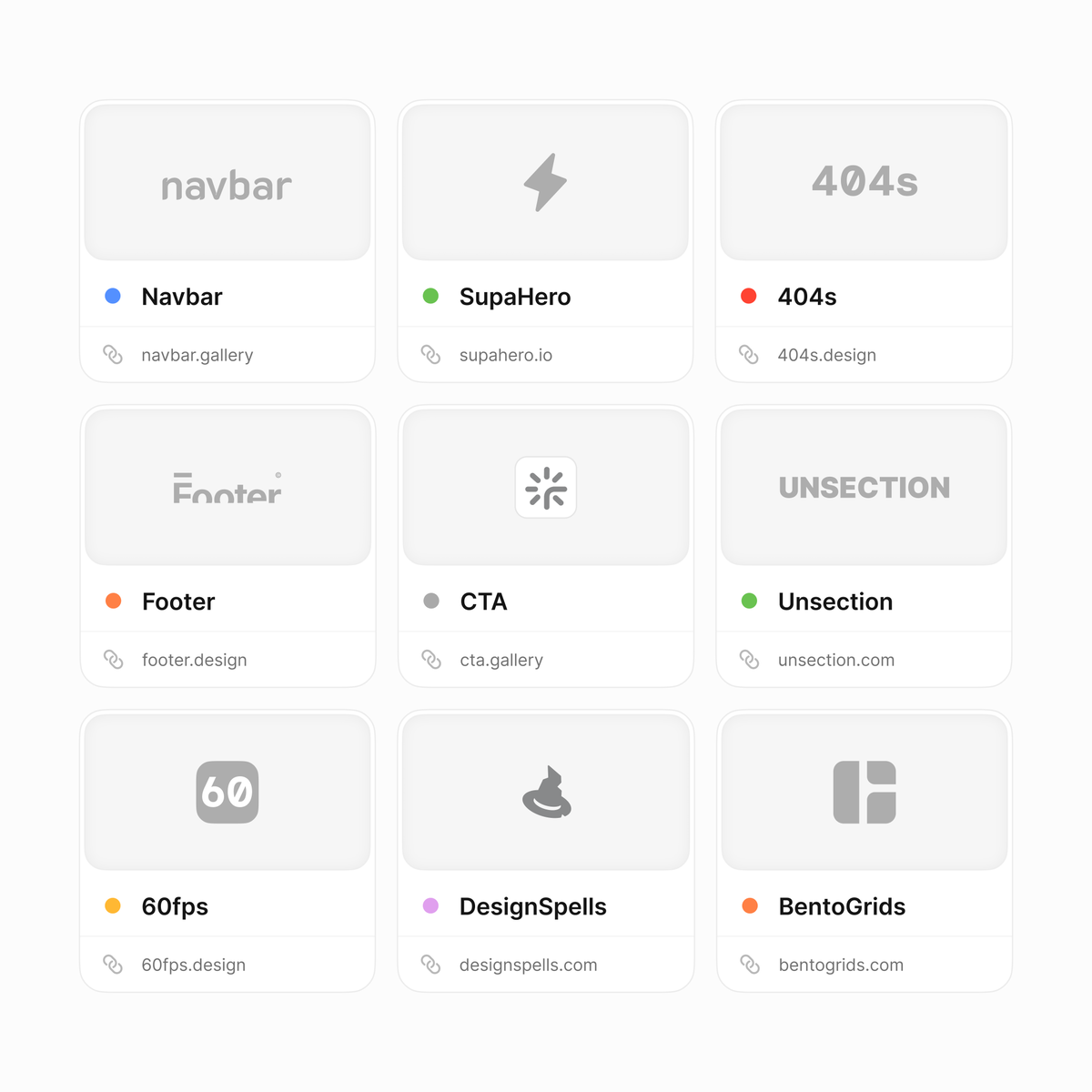
There's a gallery for navbars. For footers. Even 404s. Niche UI inspiration sites have quietly taken over my bookmarks. Save this, then tell me what's missing 🤔
Tran Mau Tri Tam ✪ tweet media
English
21
72
941
46.8K
Suraj H retweetledi
Tran Mau Tri Tam ✪
Tran Mau Tri Tam ✪@tranmautritam·
Full list 👇 Navbar Best navigation bars & menus navbar.gallery SupaHero Powerful hero section inspiration supahero.io 404s Creative 404 error page designs 404s.design Footer Clean & effective footer inspiration footer.design CTA High-converting call-to-action sections cta.gallery Unsection Thousands of website sections (heroes, CTAs, pricing & more) unsection.com 60fps Smooth UI animations & micro-interactions 60fps.design DesignSpells Magical micro-interactions & delightful details designspells.com BentoGrids Stunning bento grid layouts bentogrids.com ------------------------- Bonus: Rebrand Gallery Curated rebrands and visual identity redesigns rebrand.gallery Gridddy Beautiful pre-footer CTA gallery gridddy.framer.website One Page Love OG Real Open Graph / social card image examples onepagelove.com/og Saaspo Top SaaS & product landing page inspiration saaspo.com Landing.love Showcase of the best animated landing pages landing.love
English
4
12
133
5.9K