Sabitlenmiş Tweet
Susan Lindner | Innovation Storytellers
2.6K posts
Susan Lindner | Innovation Storytellers
@SusanLindnerIS
2022 Watch List for Women in Innovation | Podcast, Innovation Storytellers | Speaker, Coach, Consultant | Get your free Innovation Storytelling guide ⬇️
New York, USA Katılım Şubat 2008
2.2K Takip Edilen1.5K Takipçiler
Susan Lindner | Innovation Storytellers retweetledi

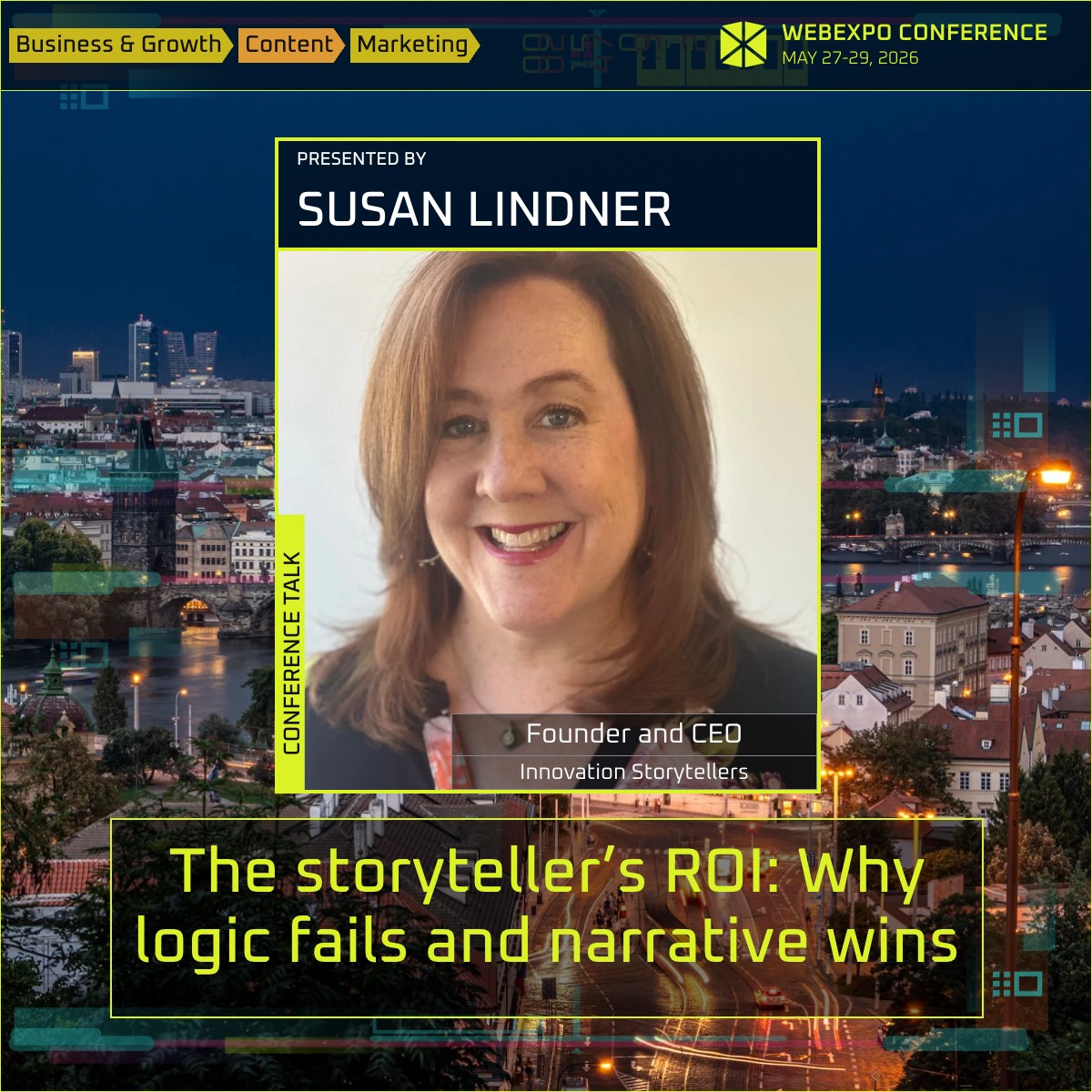
Your data is flawless. Your product is revolutionary. Your audience is bored. 🥱
@SusanLindnerIS will teach you her Innovation Storytelling method at WebExpo. Turn stakeholder resistance into alignment and ideas into action.

English

One of my favorite moments from my conversation with Anthony Reeves was his reflection on boredom, discomfort, and creativity. This clip is well worth a watch.
zurl.co/FJKBG
English

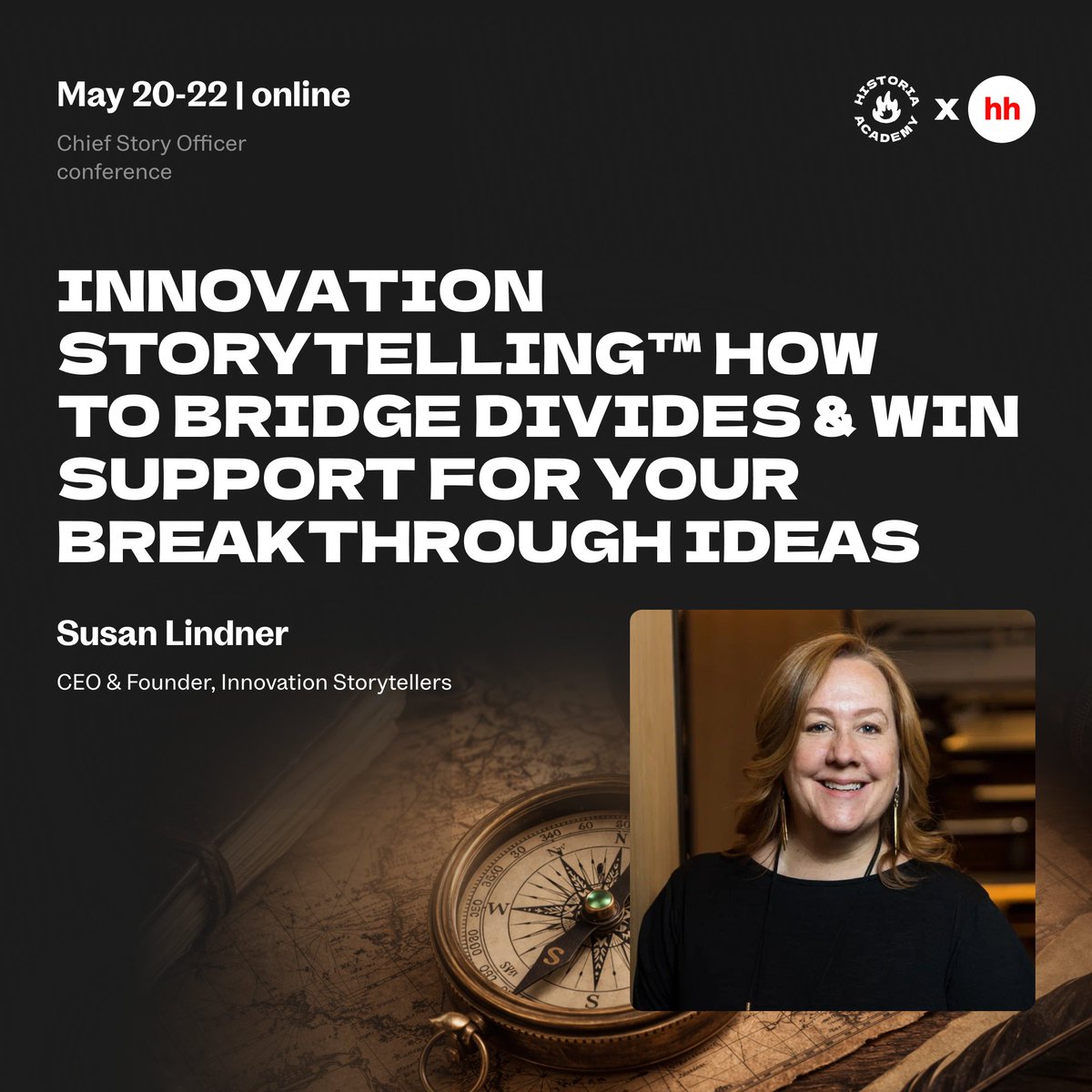
So excited to be speaking to #Russian business leaders and story lovers alike, thanks to Historia Academy. Join your fellow English and Russian speakers and me at the Chief Story Officer Conference here: lnkd.in/eBqmbhhbhttps:…

English

Joia Spooner-Fleming shared a story that challenges many of the assumptions we make about innovation.
How do you approach this in your organizations? How do you ensure your teams stay close enough to the customer to avoid solving the wrong problem?
zurl.co/FSKpK
English
Susan Lindner | Innovation Storytellers retweetledi

.@SusanLindnerIS joined us yesterday for one of our monthly members meetings to talk about storytelling as a tool for bridging divides and advancing your ideas.
Snippet below... full video available to IL members at:
innovationleader.com/data-and-templ…
English

I had a great conversation with Dan Toma and Diana Joseph about a mistake many companies are making with AI right now. Are businesses building AI into the company, or just creating another silo?
zurl.co/ogJKp
English
Susan Lindner | Innovation Storytellers retweetledi

@TejasKumar_ @SusanLindnerIS 🎟️ Get your ticket now 👉 webexpo.net/tickets/
Or read all about the workshops 👉 webexpo.net/prague2026/wor…
English
Susan Lindner | Innovation Storytellers retweetledi

3 experts. 3 workshops. One very well-spent Friday.
On May 29, we are running Premium Workshops with hands-on training in small, focused groups. AI engineering with @TejasKumar_ , storytelling with @SusanLindnerIS, content design with Michal Kessel Shitrit.
Limited capacity.☝

English

One of the biggest challenges for large organizations is that success can quietly become a limitation.
Are companies doing enough to look outside their own walls for what comes next?
zurl.co/d8JqJ
English

So we’re firing the objective scientists who help advise our government on scientific investments and policy. We are killing our own innovation.
Pubity@pubity
Donald Trump has fired the entire National Science Board, all 24 members, all at once. The board was responsible for deciding which scientific projects America should pursue and helping to direct the nation's technological future.
English

Are organizations truly ready to work with the smartest people outside their business, or are they still trying to compete with them?
zurl.co/ZEdd3
English

Is the Printing Press is the Greatest Innovation of all Time ? zurl.co/ofppn
English

I asked Neal Foard a question on the podcast that I pose to every guest: what is the story the world needs right now? His answer focused on something simple but often overlooked zurl.co/hziQy
English
Susan Lindner | Innovation Storytellers retweetledi

There's a physicist at Stanford named Safi Bahcall who modeled this exact principle and the math is wild.
He calls it "phase transitions in human networks." When you're stationary, your probability of a lucky event is limited to your existing surface area: the people you already know, the places you already go, the ideas you've already been exposed to. Your opportunity window is fixed.
When you move, your collision rate with new nodes in a network increases nonlinearly. Double your movement (new conversations, new cities, new projects) and your probability of a serendipitous encounter doesn't double. It roughly quadruples. Because each new node connects you to their entire network, not just to them.
Richard Wiseman ran a 10-year study at the University of Hertfordshire tracking self-described "lucky" and "unlucky" people. The single biggest differentiator wasn't IQ, education, or family money. Lucky people scored significantly higher on one trait: openness to experience. They talked to strangers more, varied their routines more, and said yes to invitations at nearly twice the rate.
The "unlucky" group followed the same routes, ate at the same restaurants, and talked to the same 5 people. Their networks were closed loops. No new inputs, no new collisions.
Luck isn't random. Luck is surface area. And surface area is a function of movement.
The lobster emoji is doing more work than most people realize. Lobsters grow by shedding their shell when it gets too tight. The growth requires a period of total vulnerability. No protection, no armor, soft body exposed to the ocean.
That's the cost of movement nobody posts about. You have to be uncomfortable first. The new shell only hardens after you've already moved.
ຸ@D9vidson
a moving man will meet his luck 🥀
English

@isaiahrmartin Waste reduction. Sure.
English

Are innovation teams evolving, or are they being pulled back into the core business? I’m curious how this is playing out in your organization.
zurl.co/gTl4U
English

I asked Rob Bearden three questions I ask every guest, and his answers said a lot about how he sees the world right now. I’m curious what you think. What is the most important innovation the world needs right now? zurl.co/pQh46
English