SymbionIQ Labs

459 posts

SymbionIQ Labs banner
SymbionIQ Labs

SymbionIQ Labs

@SymbionIQ

Augmenting Life | Helping you take control of your own health | Augmenting professionals | Open Health Infrastructure | @symbioniqfound | Founder @brandmania

Auckland, New Zealand Katılım Kasım 2014
1.7K Takip Edilen420 Takipçiler
Sabitlenmiş Tweet
SymbionIQ Labs
SymbionIQ Labs@SymbionIQ·
If it wasn’t obvious I will say it clearly here. We have pivoted out of the fitness hardware space about a year ago to focus entirely on preventive health data and AI digital twins.
English
1
0
8
287
SymbionIQ Labs
SymbionIQ Labs@SymbionIQ·
What most people miss: it's not just HAVING muscle. It's HOW you build it. Poor form = chronic inflammation = accelerated aging. That's why we focus on movement quality, not quantity. Stay healthy until we defeat aging. 💪
SymbionIQ Labs tweet media
English
0
3
5
14
SymbionIQ Labs
SymbionIQ Labs@SymbionIQ·
@DrDominicNg Small, repeated inputs showing up at a structural level, that’s where things get interesting.
English
0
0
1
225
Dr. Dominic Ng
Dr. Dominic Ng@DrDominicNg·
Eight weeks of mindfulness training was associated with increased hippocampal gray-matter concentration on MRI.
Dr. Dominic Ng tweet media
English
12
64
428
68.4K
SymbionIQ Labs
SymbionIQ Labs@SymbionIQ·
@DietDrsayajirao Legs are one of the largest inputs into the system. When they change, everything else tends to follow.
English
0
0
0
6
Dr.Sayajirao Gaikwad
Dr.Sayajirao Gaikwad@DietDrsayajirao·
Why training your legs is one of the most evidence-backed things you can do for health & longevity Leg muscles (glutes, quads, hamstrings, calves) make up the largest insulin-sensitive tissue mass in the human body. When you train them, you influence whole-body metabolism more than any other muscle group. 1) Insulin sensitivity ↑ ~20–40% Leg exercise increases GLUT-4 translocation independent of insulin, allowing muscles to absorb glucose efficiently for 24–72 hours. This directly lowers insulin resistance. 2) Post-meal glucose spikes ↓ ~30–50% Because of their size and glycogen capacity, legs act as the body’s primary glucose sink — critical for diabetes and pre-diabetes control. 3) Resting metabolic rate increases More leg muscle = higher basal energy expenditure. This makes fat loss biologically sustainable, not willpower-dependent. 4) Mitochondrial density ↑ ~15–25% Lower-body resistance training drives mitochondrial biogenesis, improving fat oxidation, metabolic flexibility, and cellular energy output. 5) Myokine release = systemic benefits Leg contractions release powerful signaling molecules: • IL-6 (exercise-induced) → anti-inflammatory • Irisin → fat oxidation & mitochondrial health • BDNF → brain health & neuroprotection 6) Endothelial function & nitric oxide improve Leg training enhances NO bioavailability, arterial compliance, and venous return → better blood pressure and vascular health. 7) Fall risk reduces significantly Lower-limb strength is one of the strongest predictors of balance and fall prevention, especially with aging. 8) Disability is delayed Leg strength directly predicts the ability to stand, walk, climb stairs, and live independently. 9) Mortality risk ↓ ~20–30% Cohort studies consistently show higher muscular and lower-body strength correlates with lower all-cause mortality. 10) Healthspan is preserved Strong legs protect mobility, metabolism, circulation, and autonomy ,the true biological markers of aging well. Loss of leg strength is one of the earliest signs of aging, long before disease appears. Leg training is not optional fitness. It is preventive medicine for metabolism, mobility, and longevity.
Dr.Sayajirao Gaikwad tweet media
English
12
53
423
21.6K
SymbionIQ Labs
SymbionIQ Labs@SymbionIQ·
Your body doesn’t warn you when movement goes wrong. It compensates. Until it doesn't. Most remote training misses this: → Videos teach eyes, not bodies → Zoom can't feel mistakes We're building real-time haptic feedback. Your body deserves better than guesswork.
English
0
0
5
17
SymbionIQ Labs
SymbionIQ Labs@SymbionIQ·
@drmarkhyman Morning light is one of the strongest regulators of circadian rhythm. Light exposure soon after waking helps synchronize the brain’s internal clock and support sleep quality
English
0
0
0
22
Mark Hyman, M.D.
Mark Hyman, M.D.@drmarkhyman·
Did you know that getting sunlight before 10 a.m. can help reset your circadian rhythm and improve sleep quality? Morning light acts as a powerful signal to your brain, helping synchronize your internal clock with the natural day–night cycle.
English
37
47
520
13.8K
SymbionIQ Labs
SymbionIQ Labs@SymbionIQ·
@drwilliamwallac Sleep loss affects multiple systems simultaneously. Hormonal signaling, glucose metabolism, appetite regulation, and muscle repair all shift in the wrong direction within days
English
0
0
0
31
William A. Wallace, Ph.D.
William A. Wallace, Ph.D.@drwilliamwallac·
Controlled sleep restriction studies consistently show the same pattern: restrict healthy adults to 4-6 hours a night, and within a week, cortisol, glucose tolerance, insulin sensitivity, muscle protein synthesis, appetite hormones, and testosterone all move in the wrong direction. No single marker tells the story. The tax is cumulative. Leproult & Van Cauter, JAMA, 2011; Buxton et al., Diabetes, 2010; Spiegel et al., Lancet, 1999; Saner et al., J Physiol, 2020; Zuraikat et al., Diabetes Care, 2024
William A. Wallace, Ph.D. tweet media
English
24
216
927
229.1K
SymbionIQ Labs
SymbionIQ Labs@SymbionIQ·
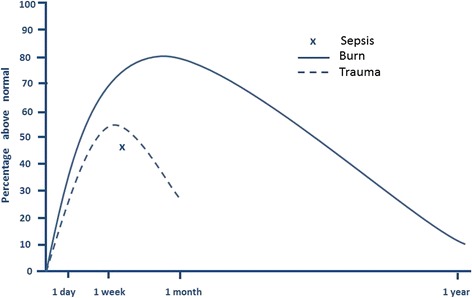
@siimland Extreme burns basically force the body into a hyper-repair state. Metabolism skyrockets, but so does tissue breakdown. It shows how tightly energy availability and recovery are linked to survival
English
0
0
1
120
Siim Land
Siim Land@siimland·
Burn wounds drive up your metabolic rate Severe burns can increase resting metabolism 40–100% above normal - and in extreme cases, over 2x normal Reasons: - need more energy for repair - massive surge in stress hormones that increase metabolic rate - mitochondrial uncoupling, creatine energy inefficiency - ongoing catabolism PMID: 28428966
Siim Land tweet media
English
13
10
92
12.7K
SymbionIQ Labs
SymbionIQ Labs@SymbionIQ·
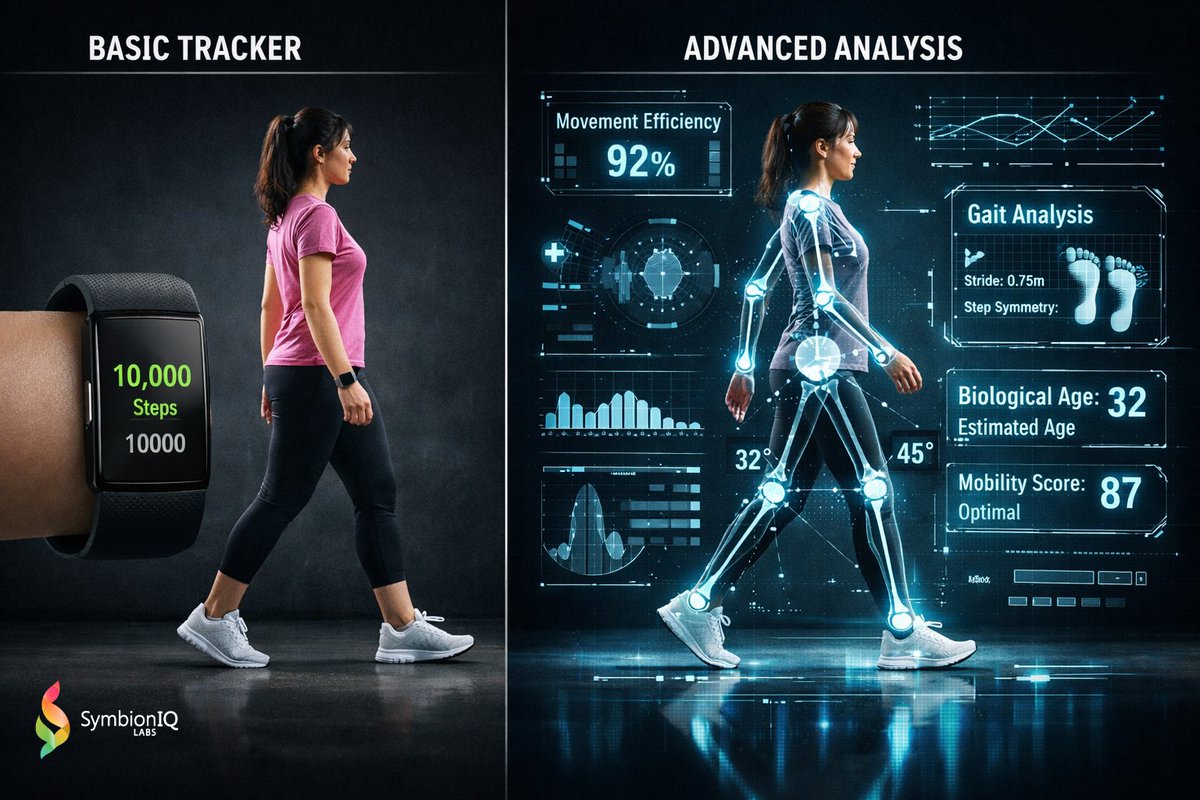
Movement quality is one of the most underrated biomarkers of aging. Not steps. Not "active minutes." How you move. Recovery patterns. Subtle changes. Bad movement accelerates biological aging. Good movement extends healthspan + lifespan. We're building tech to track it. 🧬
SymbionIQ Labs tweet media
English
1
0
4
25
SymbionIQ Labs
SymbionIQ Labs@SymbionIQ·
@kchambers4n8 Strength is capacity. Expression depends on how the nervous system coordinates it
English
0
0
1
9
Keith Chambers
Keith Chambers@kchambers4n8·
But the real goal is force transfer. Can you take the strength you build in the weight room and express it on the field? That’s where: • plyometrics • complex training • reactive drills become essential. Strength is potential. Speed is how fast you can use it.
English
2
0
1
40
SymbionIQ Labs
SymbionIQ Labs@SymbionIQ·
@drgabriellelyon Performance under pressure often reflects how much stress the system has learned to process
English
0
0
0
5
Dr. Gabrielle Lyon
Dr. Gabrielle Lyon@drgabriellelyon·
What if pressure is not something to avoid but something to harness? I’m joined by Danica Patrick, the most decorated woman in motorsports history, to discuss the psychology of performing under extreme pressure. We talk about the mindset that carried her through two decades of racing, the blind faith she developed early in her career, and how early exposure to competition helped condition her nervous system to stay focused in high-stakes moments. Watch here: bit.ly/3NuHz8r
English
2
1
20
2.1K
SymbionIQ Labs
SymbionIQ Labs@SymbionIQ·
@DrAndyGalpin Sleep disruption is rarely the first problem. It’s often the first signal people notice
English
0
0
0
68
Andy Galpin, PhD
Andy Galpin, PhD@DrAndyGalpin·
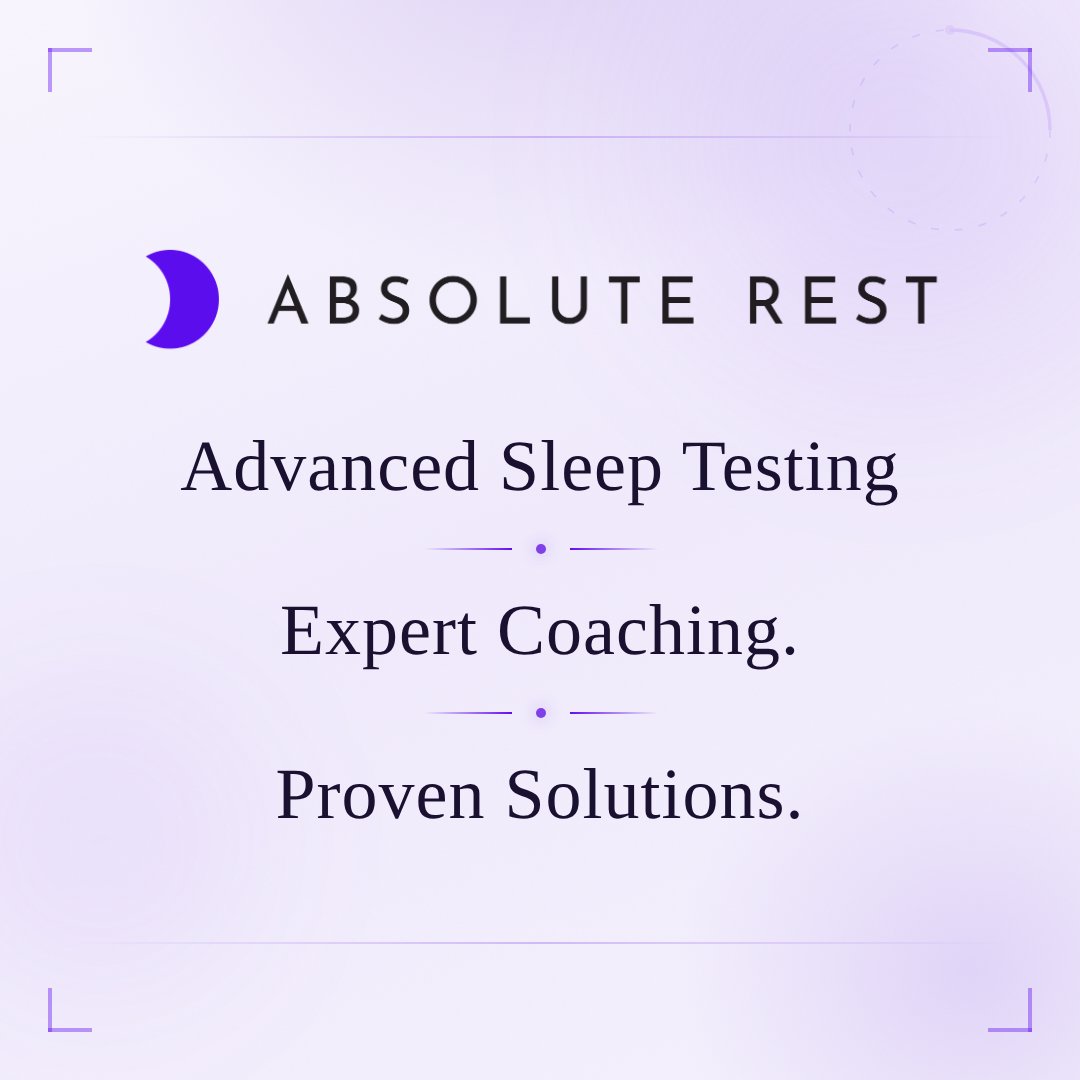
A few years ago, I was sitting in a closed-door meeting with some of the most elite minds in human performance on the planet. The topic: how do we actually optimize sleep for the world's highest performers? We went around the room. These were people responsible for astronauts, Tier 1 military operators, Olympic athletes, and billion-dollar executives. And the answer was the same from everyone: Consumer wearables OR a clinical sleep study in a creepy hospital. That was it. That was the ceiling. I've spent my career working with some of the most decorated athletes in history: UFC fighters, MLB All-Stars, Olympic medalists, Hall of Famers, etc. We have incredibly precise tools for just about everything for training, nutrition, recovery — but when it came to sleep, the most fundamental pillar of human performance, we were stuck choosing between a $300 tracker OR a single night wired up in a hospital so we could be told we may or may not have apnea and sent home with a CPAP machine. Both of those options share the same fatal flaw: they tell you that your sleep is bad. But THEY DON'T TELL YOU WHY - so they don't give you a real plan to fix or improve. That gap is what led me to co-found @Absolute_Rest with my partner, Josh Ruben, a neurotechnology entrepreneur who was running into the same wall while building eye-tracking diagnostic systems for NASA and the DOD. We asked ourselves a simple yet radical question: if you had an unlimited budget and wanted to build the world's most precise sleep-optimization system from scratch, what would it actually look like? Over the last five years, we've assembled an interdisciplinary team — sleep clinicians, neuroscientists, clinical psychologists, performance coaches — to build exactly that. Today, Absolute Rest combines AT-HOME & WIRELESS FDA-cleared clinical-grade hardware (as good or better than you'll find in any sleep hospital or research lab), advanced biomarker testing, environmental analysis, and world-class expert coaching into a single, end-to-end platform. What started as a bespoke program for elite athletes and executives has grown into something much bigger. We've now supported hundreds of clients from all walks of life who have one thing in common — they are done being told they're bad sleepers and ready to finally feel how sleep can go from an anchor to an advantage. I am grateful to those of you who've supported us thus far. HUGE things are coming soon with this remarkable company. absoluterest.com to learn more.
Andy Galpin, PhD tweet media
English
13
4
135
23.2K
Kristie Leong M.D.
Kristie Leong M.D.@DrKristieLeong·
Stairclimbing is an incredibly effective workout. When you climb stairs, you get dual cardio and strength benefits, targeting quads, glutes, hamstrings, calves, and core for muscle power and endurance. Plus, boosts in aerobic capacity of up to 17%. Climbing stairs also burns 20–50% more calories per minute than jogging due to constant vertical load. Tip: If climbing multiple flights of stairs is too intense for you at first, try this. Climb 2 flights, then walk down a flight to let your body recover. Then repeat. #StairClimbing #TakeTheStairs
English
9
36
210
8.9K
SymbionIQ Labs
SymbionIQ Labs@SymbionIQ·
Health problems don't announce themselves. They compound quietly until one day you can't ignore them anymore. We're building AI digital twins trained on YOUR data. to spot what's coming before it arrives. Follow for preventive health that actually prevents.
English
0
0
5
30
SymbionIQ Labs
SymbionIQ Labs@SymbionIQ·
@Rainmaker1973 Music is one of the few inputs that engages motor, memory, and emotion at once. That kind of cross-network activation is powerful
English
0
0
0
6
Massimo
Massimo@Rainmaker1973·
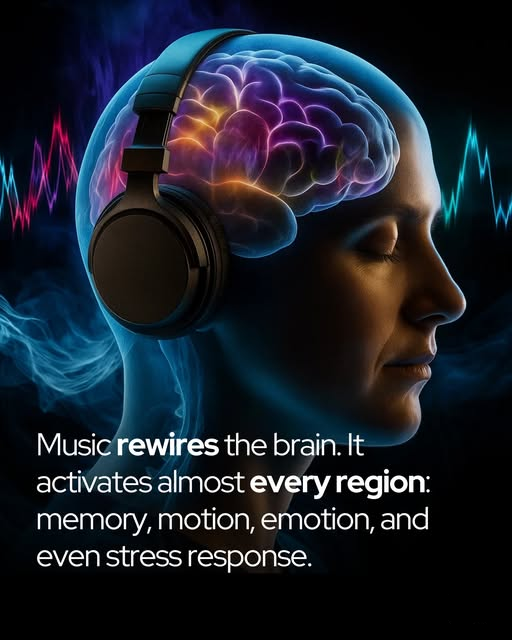
Your brain responds to music like it’s a survival tool. When music plays, almost the entire brain ignites. The motor cortex drives your body to the beat. The hippocampus ties melodies to memories. The amygdala unleashes waves of feeling. And in the orbitofrontal cortex—the brain’s reward and decision hub—the same circuitry that flares in OCD lights up with music’s cycles of tension and release.This overlap is no coincidence. It reveals how music hijacks our predictive wiring: we anticipate, we tense, we resolve, and dopamine floods in with relief and joy. The roots run deep. Early mammals survived by parsing every rustle; today that vigilance fuels standing ovations, film scores, and sing-alongs. In a crowd, heartbeats lock step. Strangers become kin. Music binds. Clinics now test its power: seizures quiet in epilepsy, gait steadies in Parkinson’s, memories flicker back in Alzheimer’s, mood lifts in depression. Even patients who no longer recognize a tune can still feel its pull.We aren’t merely equipped to hear music—we’re hardwired to crave it.
Massimo tweet media
English
76
428
1.4K
53.4K
Kristie Leong M.D.
Kristie Leong M.D.@DrKristieLeong·
With age, blood flow to the brain decreases b/c blood vessels produce less nitric oxide, a gas that expands blood vessel walls. Such disruptions contribute to changes in cognitive function that occur with age. The good news? Exercise increases nitric oxide & boosts blood flow to the brain. #Exercise #BrainHealth
English
17
33
149
4.1K
Kristen Jakobitz
Kristen Jakobitz@KristenJakobitz·
After 40, it’s not about how much you can lift; it’s about how slowly you put it down. Focus on the "eccentric" (lowering) phase of your movements. This phase causes the most micro-tears in the muscle, which signals the body to repair and grow stronger. It’s the most efficient way to fight sarcopenia without needing 2-hour gym sessions. #StrengthTraining #Over40Fitness #Wellness
Kristen Jakobitz tweet media
English
3
7
38
966
SymbionIQ Labs
SymbionIQ Labs@SymbionIQ·
Your health data is everywhere. Fitness apps. Labs. Wearables. Doctor visits. None of it talks to each other. We're building digital twin AI that connects the dots - in YOUR control. Follow to see where this goes.
SymbionIQ Labs tweet media
English
0
1
3
41
SymbionIQ Labs
SymbionIQ Labs@SymbionIQ·
Most health tech: "Here's your data." SymbionIQ Lab: "Here's what to do about it." Personalized. Computed. Actionable. Because we're not managing symptoms, we're defeating aging at the root.
English
0
0
2
24
SymbionIQ Labs
SymbionIQ Labs@SymbionIQ·
@louisanicola_ The system adapts to whatever input is repeated. scroll long enough, and novelty becomes baseline
English
0
0
0
7
Louisa Nicola
Louisa Nicola@louisanicola_·
Your Brain on Scroll Mode Scrolling social media feels harmless. But your brain is being trained in ways you do not notice. Here is what science says: 1. Dopamine is about motivation, not pleasure Every new post triggers a small dopamine release. This reinforces the habit loop and keeps you seeking the next hit. 2. Variable rewards are highly addictive Unpredictable likes, comments, and new content activate the same reward systems studied in behavioral addiction research. 3. Attention span adapts to input style Rapid content switching trains your brain for novelty, not depth. Studies link heavy media multitasking with reduced sustained attention. 4. Prefrontal cortex gets fatigued Constant switching taxes executive control, the system responsible for focus, planning, and impulse control. 5. Deep focus builds cognitive reserve Activities like reading, learning, and meaningful conversation strengthen neural networks linked to long-term resilience. Your brain optimizes for what you repeatedly do. Train it for depth, not for scroll. The question is simple: Are you building focus or feeding distraction?
English
7
6
56
3.6K
SymbionIQ Labs
SymbionIQ Labs@SymbionIQ·
@KarlApexFit Benchmarks measure output. they don’t always reveal how much compensation it took to pass
English
0
0
0
1.4K
Karl Matt Button │ Apex Fitness Adv.
7 fitness tests every man over 40 should be able to pass. Most can't do more than 3. Test yourself. Be honest. = Thread =
English
53
87
925
900.4K