Syriana Analysis

2.4K posts

Syriana Analysis banner
Syriana Analysis

Syriana Analysis

@SyrianaAnalysis

Syriana Analysis is an independent online outlet covering geopolitical crisis. Support us here: https://t.co/9a8qzWBxKG

Germany Katılım Ocak 2017
1 Takip Edilen21.4K Takipçiler
Syriana Analysis retweetledi
Kevork Almassian
Kevork Almassian@KevorkAlmassian·
PETE HEGSETH: “We negotiate with bombs.” That’s not a meme, it’s what the U.S. Secretary of War is proudly saying in public while American aircraft “loiter over Tehran,” as if diplomacy is something you do with a trigger in your hand. In this segment, I break down why the decapitation strike strategy failed: it was supposed to trigger panic and an uprising, but instead it pushed many Iranians — even opponents of the system — to rally around the nation once they connected the dots that this was a war of aggression, not “liberation.” Then Washington tried the familiar playbook: ethnic fracture — pushing Kurdish militias to break into Iran and spark civil conflict. Even they refused, basically saying: last time we fought alongside you in Syria, you dumped us — we won’t be cannon fodder again. And when the “inside destabilization” failed, the war logic shifted toward the only leverage left: energy and power points. But Iran’s message is: hit our energy infrastructure, and we hit the Gulf’s, and the world economy feels it immediately. If “negotiations” fail, how long before the blowback hits every U.S. base in the Gulf Monarchies?
English
14
104
373
15.5K
Syriana Analysis retweetledi
Kevork Almassian
Kevork Almassian@KevorkAlmassian·
If the United States fails to break Iran and Tehran comes out standing, Jolani’s Syria becomes a fragile project overnight, because this “new Syria” survives on American cover, Turkish leverage, and Gulf money, and all three will recalibrate the moment the U.S. is forced to accept it can’t dictate terms to Iran. Alastair Crooke argues that an Iranian survival — let alone an Iranian victory — would trigger a wider regional rebalancing, especially in the Gulf, because the energy and trade lifelines can’t be secured without eventually dealing with Iran. And when the Gulf recalculates, Syria recalculates. He also warns against the kind of “wild thinking” you hear in American circles that Hezbollah can be “managed” by pushing Jolani to the battlefield in the Bekaa. Crooke’s says that kind of escalation fantasy is exactly how empires get trapped in unwinnable wars. .@AWCrooke
English
14
328
1.1K
78.4K
Syriana Analysis retweetledi
Kevork Almassian
Kevork Almassian@KevorkAlmassian·
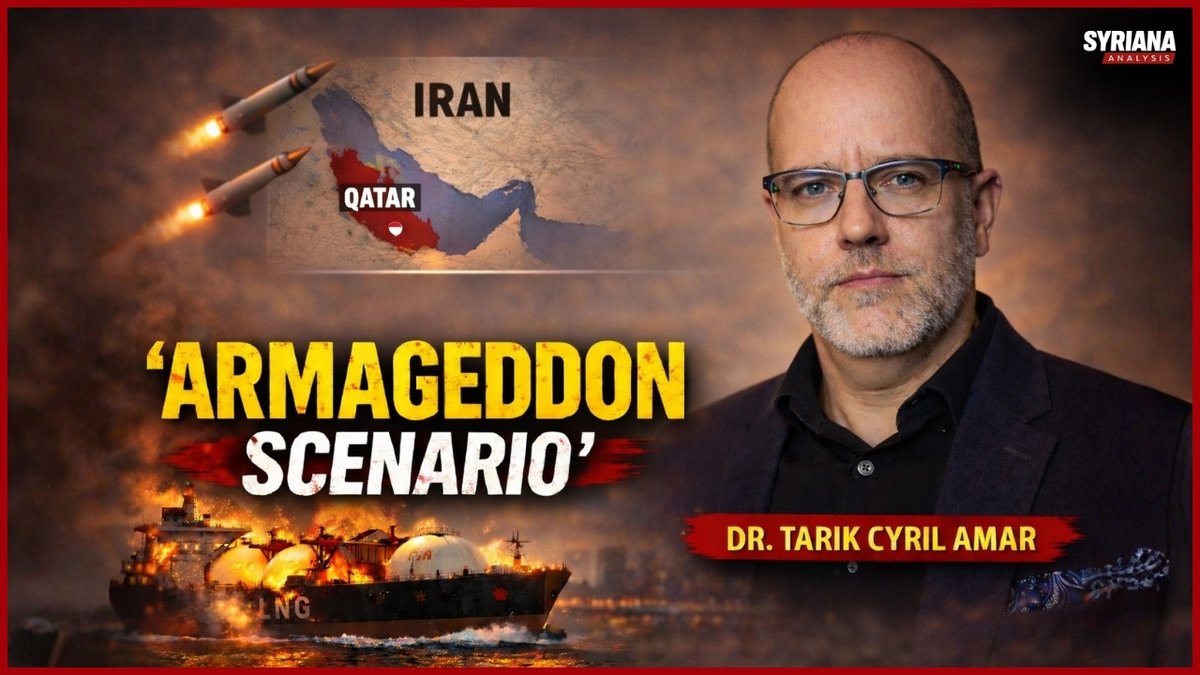
Prof. Tarik Cyril Amar: The Economist is wrong. Iran can “win” this war without invading anyone. .@TarikCyrilAmar
English
5
66
320
10.5K
Syriana Analysis retweetledi
Kevork Almassian
Kevork Almassian@KevorkAlmassian·
I was smeared for years for saying what Joe Kent just said openly on @scotthortonshow about Syria. Case closed: al-Qaeda served as the ground force of U.S. strategy.
English
49
909
3.1K
176.4K
Syriana Analysis retweetledi
Kevork Almassian
Kevork Almassian@KevorkAlmassian·
For decades, Gulf countries built their security doctrine on one assumption: American military protection is the ultimate insurance policy. But this war with Iran is exposing the brutal reality that Washington’s priority is Israeli security, not Gulf security, and the U.S. footprint in the Gulf is a magnet. Those bases were not “neutral.” They were used for years as staging grounds for planning, surveillance, logistics, and operations aimed at Iran. And once you use a host country’s territory as a launchpad, you turn that country into a front line whether it wants it or not. So the paradox for the GCC is that the very bases meant to protect them are what can pull them into retaliation, because Iran won’t separate the aircraft from the runway, or the missile from the base that enabled it. The Gulf is learning, the hard way, that outsourced security can become imported war.
English
26
195
689
44.9K
Syriana Analysis retweetledi
Kevork Almassian
Kevork Almassian@KevorkAlmassian·
Yes, the United States has its own interests in Iran — not only Israel’s — and one of the biggest is China. The argument is that if you control Iran, you can threaten the steady flow of cheap and reliable energy to China, thereby tightening the noose in the great-power competition. But, if the U.S. “needs” Iran’s energy for the AI race, why not do what China does — trade, invest, cooperate — instead of sanctioning, bombing, and trying to break the country? And that’s where the Israel factor comes in: the fact that Washington chose aggression over cooperation is itself an indicator that Israel’s strategic agenda is shaping this confrontation, because without Israel, there is no natural reason for permanent U.S.–Iran hostility at this intensity.
English
37
303
1K
29K
Syriana Analysis retweetledi
Kevork Almassian
Kevork Almassian@KevorkAlmassian·
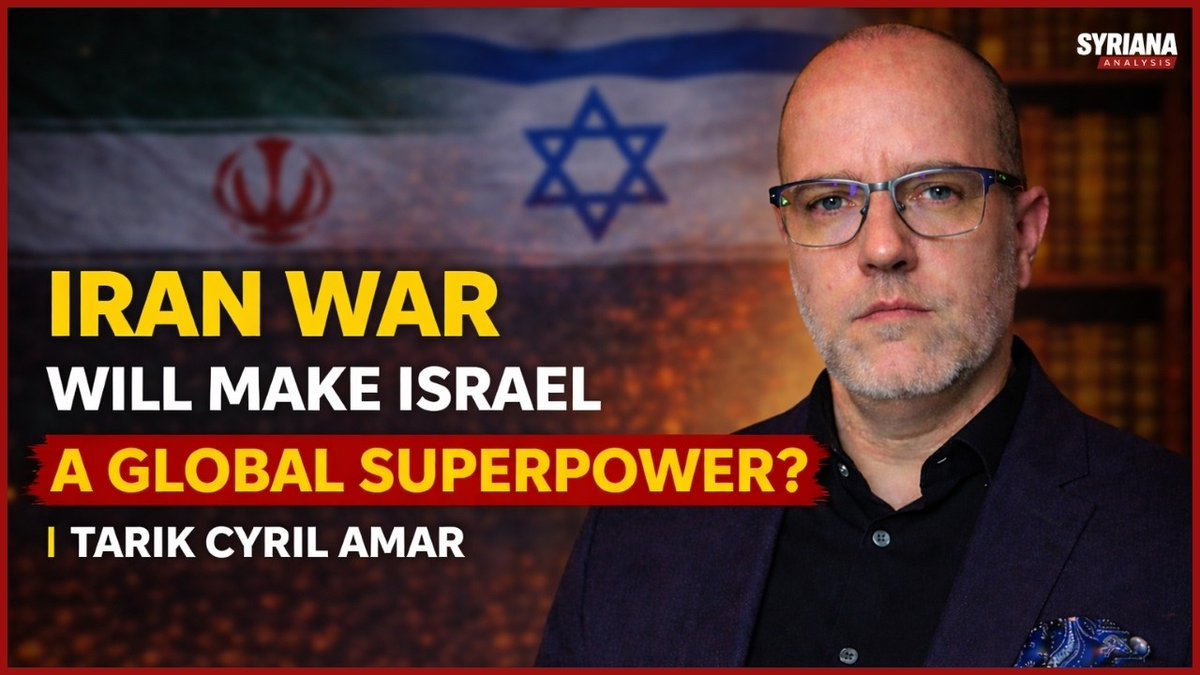
Professor Tarik Cyril Amar says the quiet part out loud in this segment: Israel isn’t a “great power” on its own. The only way it can act like one is by capturing U.S. military and foreign policy power. Tarik argues Netanyahu has worked on this project for decades — dragging the U.S. into a major war with Iran — and that previous administrations avoided it because they knew it was strategically insane. Watch this clip. It explains why so much of American politics now feels upside down, like Congress applauds a foreign leader more than it represents its own people. .@TarikCyrilAmar
English
26
282
848
37.9K