Tryston Beyrer

318 posts

Tryston Beyrer banner
Tryston Beyrer

Tryston Beyrer

@TABeyrer

Crop Nutrition Lead for Mosaic covering western North America. The opinions and positions expressed are my own and do not necessarily reflect those of Mosaic.

Wisconsin, USA Katılım Nisan 2018
588 Takip Edilen430 Takipçiler
Tryston Beyrer retweetledi

Jared Fender
Jared Fender@jfender7710·
I know that many have asked, but we finally have our 2025 strip-tillage trial published on our website! This trial focuses on the spring application timing, with the fertility x placement interaction within 16 hybrids. Any questions, please reach out! cropphysiology.cropsci.illinois.edu/wp-content/upl…
English

4
8
38
10.9K
Tryston Beyrer retweetledi
Dale Cowan CCA.On 4R NMS
Dale Cowan CCA.On 4R NMS@SCSAgronomy·
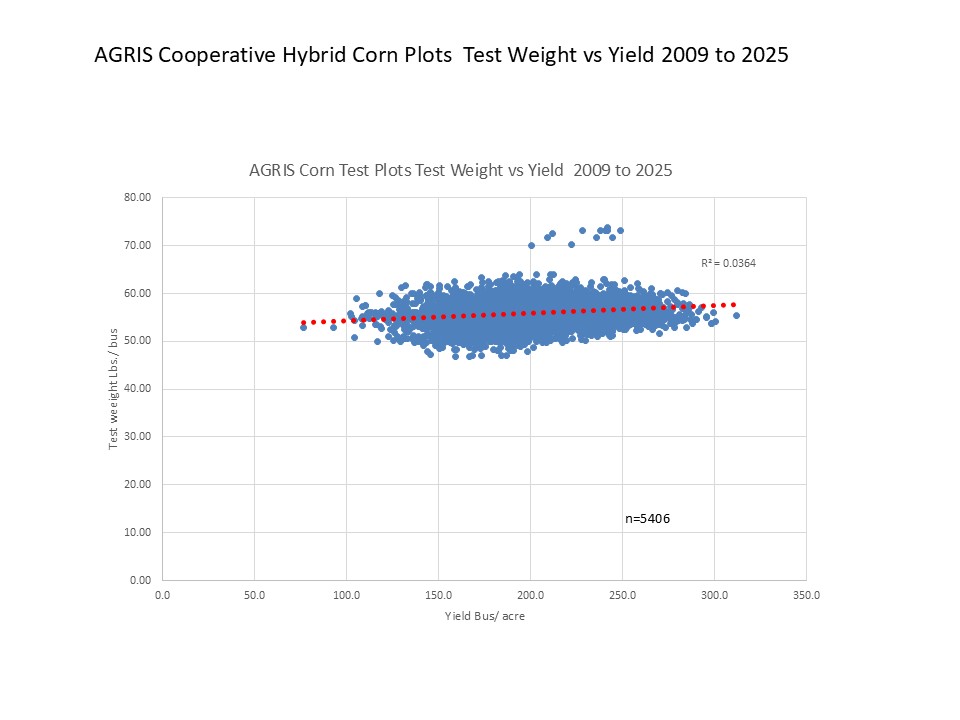
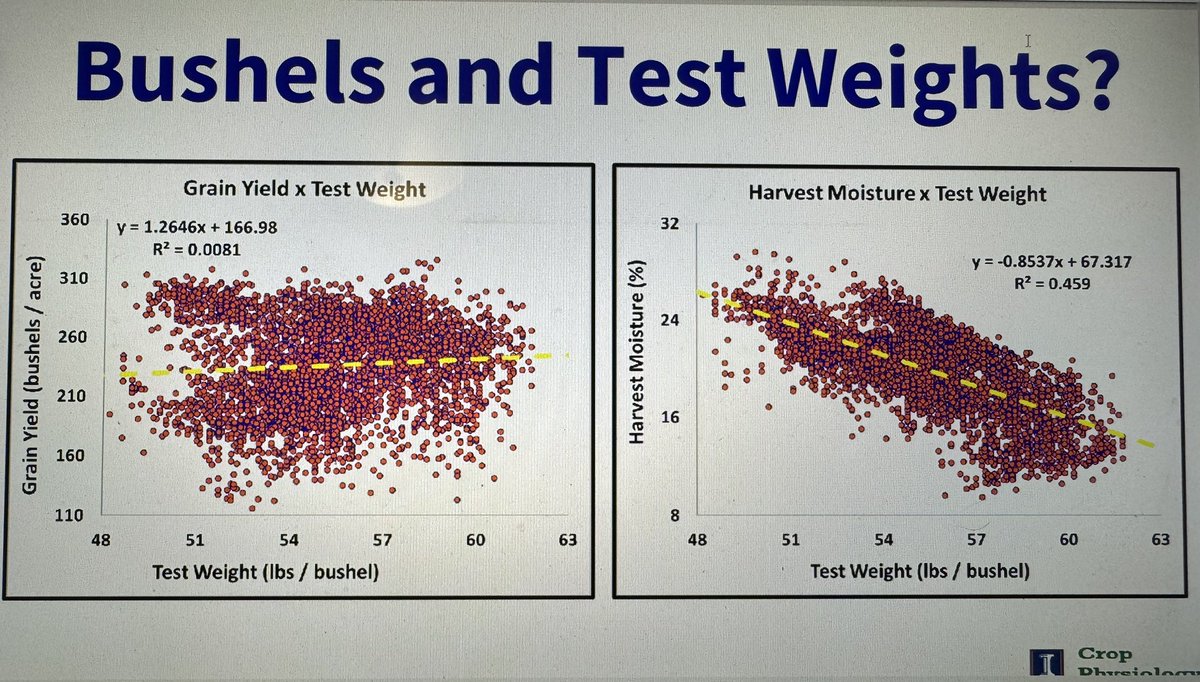
#agrisagronomy Test weight vs Yield on corn 2009 to 2025 AGRIS Test Plots. No correlation to yield. Test weight is not a yield component. It is weight of kernels that fit in a 1/2 Lt cup. It does indicate grain quality, grade and finish. 5406 data pts. Avg Yield 203, TW 55.6
Dale Cowan CCA.On 4R NMS tweet media
English
5
9
47
5K
Tryston Beyrer
Tryston Beyrer@TABeyrer·
@bandedagllc I had seen some other data that findings were similar to yours. I had wondered if since growth stages progressed more slowly (longer season) if soil mineralization was better able to match crop needs? Regardless, a lot of nutrient removal with the yield of earlier planting!
English
0
0
2
438
Banded Ag, LLC
Banded Ag, LLC@bandedagllc·
Interesting enough, beans ain’t that big on fall banded fertilizer either: Stripped NO Fertilizer: 98.42bu/ac Stripped w/ Fertilizer: 100.22bu/ac This was average of 4 replicated trials with and without fertilizer but ALL 30” rows were stripped last fall. I will be happy to send individual reps if requested but nothing earth shattering in any of them….
English
15
3
103
22.5K
Tryston Beyrer retweetledi
CropNutrition
CropNutrition@Crop_Nutrition·
Imbalanced nutrients can put your entire season at risk. ⚖️ Explore the risks of nutrient imbalances, and how they can affect crop growth with @TABeyrer, Crop Nutrition Lead.
English
0
1
3
153
Tryston Beyrer retweetledi
CropNutrition
CropNutrition@Crop_Nutrition·
Mining isn't our only job. ⛏️ After Mosaic mines a piece of ground, we return every acre to its natural state — creating an area for native species to thrive. Learn more about mine reclamation and explore one of our reclamation areas with @TABeyrer.🌎 #EarthDay
English
0
1
2
210
Chris K.
Chris K.@ChrisK_Banded·
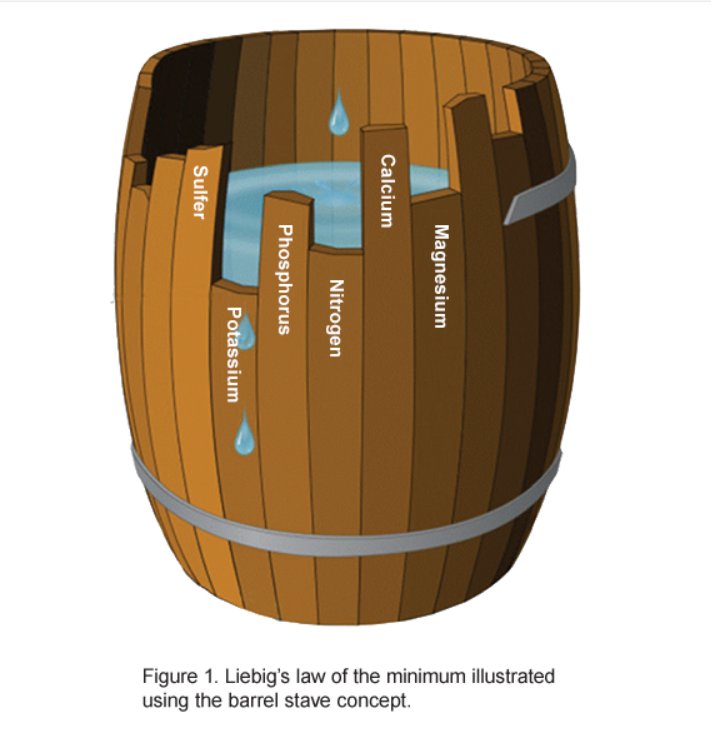
Justus von Liebig's Law of the Minimum states that crop yields are limited by the nutrient in least supply, right? Nope. While often interpreted as such, this is not correct, and while Liebig is attributed as the "Father of the Fertilizer Industry" and he promoted mineral nutrition via salts, he was not "anti-humus" or against the biological side of agriculture. The attached photo is a popular version of Liebig's Law of the Minimum, although he never presented his information as a barrel. The barrel is attributed to Hans Arnold von Dobeneck, and is also called Dobeneck's Tub in some countries. On most versions of the nutrient barrel, each stave is shown to represent a nutrient. The lowest stave marks max capacity, interpreted as max yield capacity. But is this accurate? Liebig first considered 3 nutrients for his Law: N, P, and K. At one point, Liebig thought all plant N came from the air, so air was added, as was moisture, temperature, soil conditions, humus, carbonic acid, ammonia, and more. Modern versions have added lots of additional staves, but understand that Liebig did not put all emphasis on nutrients. In his Principle of Agricultural Chemistry, Liebig numerically listed 50 "propositions" he held to be true regarding nutrition and chemistry of soils and plants. He summarizes them this way: "The nutrition, growth, and development of a plant depends on the assimilation of certain bodies, which act by virtue of their mass or substance. This action is within certain limits directly proportional to the mass or quantity of these substances, and inversely proportional to the obstacles or to the resistance which impede their action." This has been summarized into today's version of Liebig's Law of the Minimum. In later works, particularly his "Organic Chemistry in its Application to Agriculture and Physiology" (which is available as a free book online), Liebig heavily researches/discusses humus, manures, molds, yeasts, coals, nitrification, and many "biodynamic" topics. Liebig was far from the King of Fertilizer Salts. His work in that regard was that of a chemist, and he was attempting to solve food production concerns, as the quantities of available manure could not keep up with the needs of small farms and increasing populations. He repeatedly wrote of the fallow effect, where land can become unsuitable for one crop while being suitable for another, and by letting the land rest, it can again become suitable, especially with animal excrements (manures). In absence of manures, he speculated, then proved, that inorganic salts could satisfy the nutritional needs of plants. Is the Law of the Minimum useful? Absolutely. "A chain is only as strong as the weakest link" is a perfect rephrase of Liebig's concept. "Law" may be a stronger-than-appropriate word, but the concept of identifying and strengthening areas of weakness is an excellent method for improvement. Where one must be cautious is how you identify the shortest staves. A quick search online reveals that Liebig never attempted to put order of importance into the factors of production. These will vary widely, and even change through a single growing season based on temps, rainfall, crop, crop stage, etc. Liebig's Law should not be confused with ROI or Mitscherlich's Law of Diminishing Returns. Liebig was unable to quantify crop responses based on identified limitations, which is partly why B.E. Livingston wrote that the Law of the Minimum was "still quite incomplete logically." Liebig could not specify a quantity to overcome a deficiency, nor predict crop response. He was able to predict a LACK of response, though, which was impressive for his time. Don't apply what plants already have plenty of. Caveat here: Your soil test or tissue test may not reveal whether your plant has plenty of something or not. In summary, Liebig is popularly idealized as the villain of sustainable agriculture due to his inorganic mineral nutrition theory. Interestingly, he was also one of the pioneering chemists of organic chemistry. Liebig understood both sides of the humus vs inorganic debates that we've had for 100+ years. Like most things, they've been misconstrued and used for ideological purposes and/or product sales rather than as educational sources. The next time you see Liebig/Dobeneck's barrel on a sales flyer or in a presentation, I have this brief daytrip through ag history comes to mind, and helps put things into perspective. Thanks for making it to the end. @bandedagllc @RyanPriest11974
Chris K. tweet media
English
6
8
55
5.5K
Tryston Beyrer
Tryston Beyrer@TABeyrer·
@ChrisK_Banded Great info. Another interesting factoid is that Liebig wasn’t the first to introduce the law of the minimal, but was the one who claims fame for popularizing it. Carl Sprengel was the first to identify the theory of the minimum of nutrients in 1826.
English
1
0
3
197
Tryston Beyrer
Tryston Beyrer@TABeyrer·
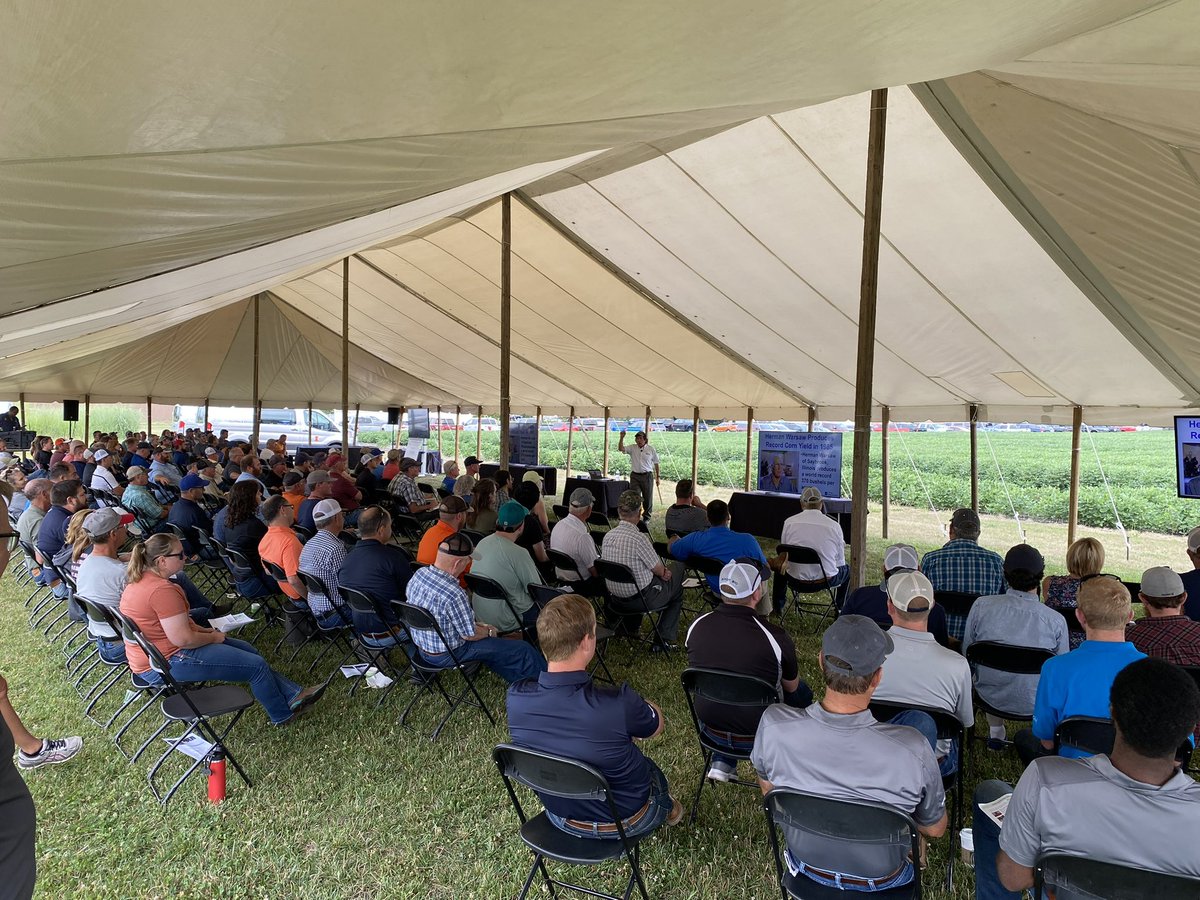
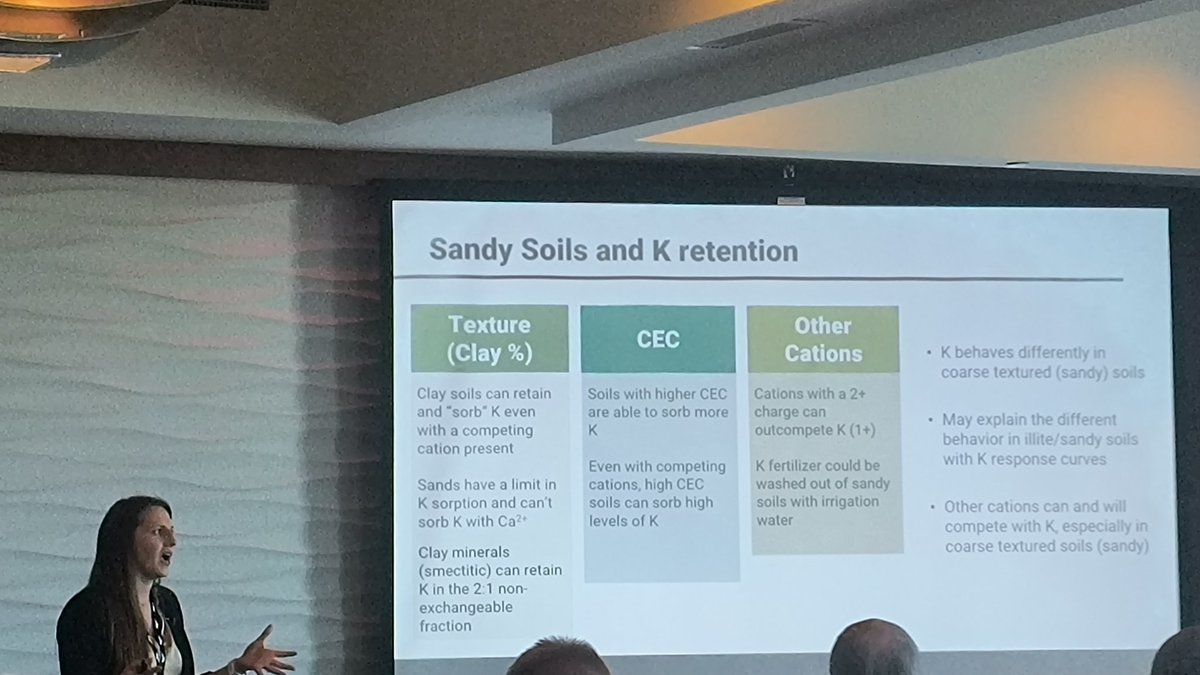
Great day digging deeper into potassium nutrition with @LeannaLeverich and TFI at The Mosaic Advanced Crop Nutrition Forum.
Tryston Beyrer tweet media
English
0
0
3
127
Tryston Beyrer retweetledi
Pioneer Troy
Pioneer Troy@deutmeyer_troy·
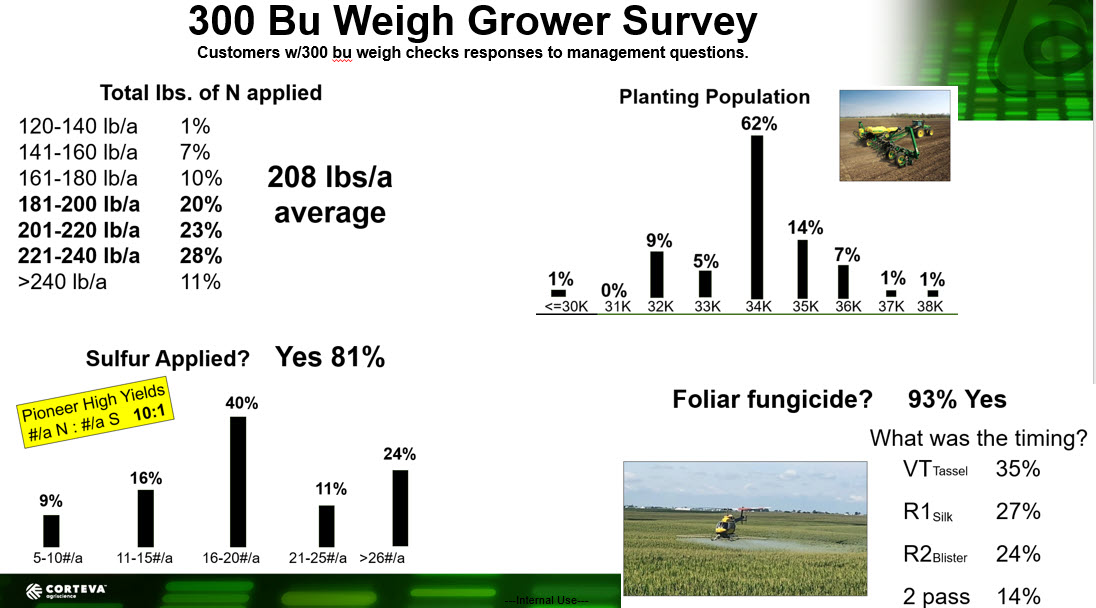
2024 Key Agronomy Lesson #4: Increased seeding rates & high nitrogen applications are not the "keys" to high yields. Balanced nutrition, uniform emergence, disease management/plant health and great soil biology are all critical components. Customer surveys from 300+ bu weighs in IA show 34K seeding rates and around 0.8 # N/bu will achieve very high yields if the other "components" are in place. Also 5 years of Pioneer Agronomy Seeding rate trials verify 33-34K is a very good spot to set your drop rate with the planter!
Pioneer Troy tweet mediaPioneer Troy tweet mediaPioneer Troy tweet media
English
3
8
78
8K
Tryston Beyrer retweetledi
Pioneer Troy
Pioneer Troy@deutmeyer_troy·
2024 Key Agronomy Lesson #3: P & K are ESSENTIAL for high yields & have a huge influence on Nitrogen Use Efficiency (NUE)! Blocks 3 & 4 of the Yield Pyramid. Have seen this for years on service calls vs happy customer soil tests. This year U of WI released study on nitrogen rate trials at different P &K levels. Check out the slide!! Adequate soil test levels produced 64 more bu/ac with 24 less #'s of Nitrogen!! Don't skimp on P & K!! ISU Chart shows yields are VERY stable at 225+ ppm K..
Pioneer Troy tweet mediaPioneer Troy tweet mediaPioneer Troy tweet media
English
1
9
49
4.8K
Tryston Beyrer retweetledi
CropNutrition
CropNutrition@Crop_Nutrition·
7️⃣ students at @IllinoisCropSci started #grow24 with 2️⃣ goals in mind: expand their knowledge and push their yields to the max. Now, the season is done, and they've all learned a bit, but just one (or two) have been crowned the #UofIYieldOdyssey24 champion bit.ly/4fxy3tm
English
0
1
1
154
Banded Ag, LLC
Banded Ag, LLC@bandedagllc·
Last day of 2024 harvest &man has it had its ups & downs. On a good note, my son was on fall break & got to run the new combine (which was the highlight of my day) & we ended the year on a field that has plagued me for a 300bushel average for years. Mission accomplished today.
Banded Ag, LLC tweet media
Banded Ag, LLC tweet mediaBanded Ag, LLC tweet media
English
5
0
48
4.9K
Tryston Beyrer
Tryston Beyrer@TABeyrer·
@Dusty42402999 Nice! This shows nearly double what i showed as i was on the conservative side not taking into account harvest loss.
English
0
0
0
52
Tryston Beyrer
Tryston Beyrer@TABeyrer·
Soybeans have been drying down rapidly. Pay attention to bean moisture and harvest loss. Timely harvest can help mitigate bu and $ loss that could be invested in other areas of the operation to improve profitability. We give up about 11 cents per bu for every % below 13%.
Tryston Beyrer tweet media
English
1
0
6
231
Tryston Beyrer retweetledi
CropNutrition
CropNutrition@Crop_Nutrition·
Each #harvest comes with a degree of soil nutrient loss, which varies based on crop and yield. Learn more about the nutrient uptake curves of different crops and why they're important to understand with Dr. Tryston Beyrer, Crop Nutrition Lead, West for The Mosaic Company.
English
0
2
3
232