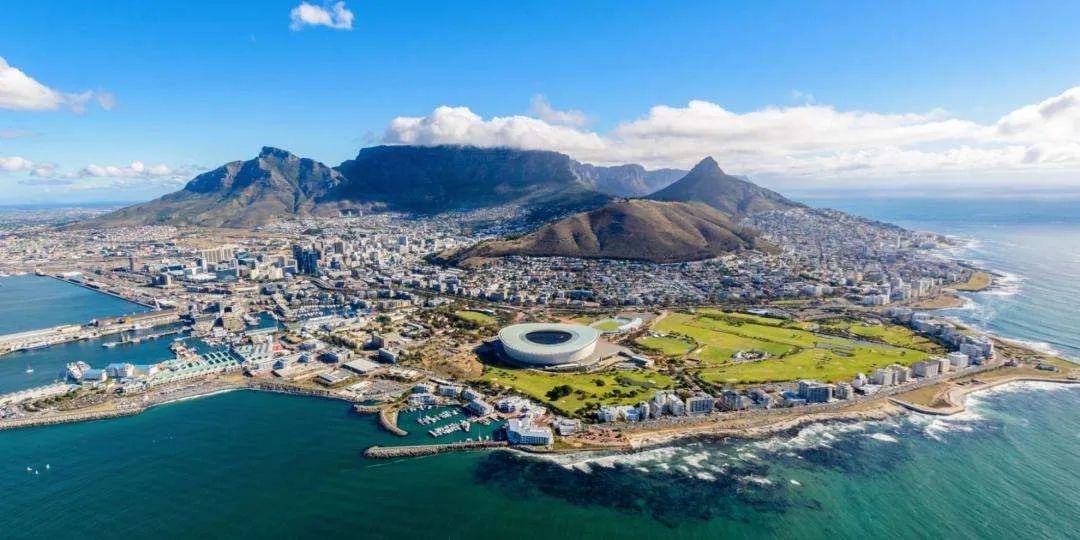
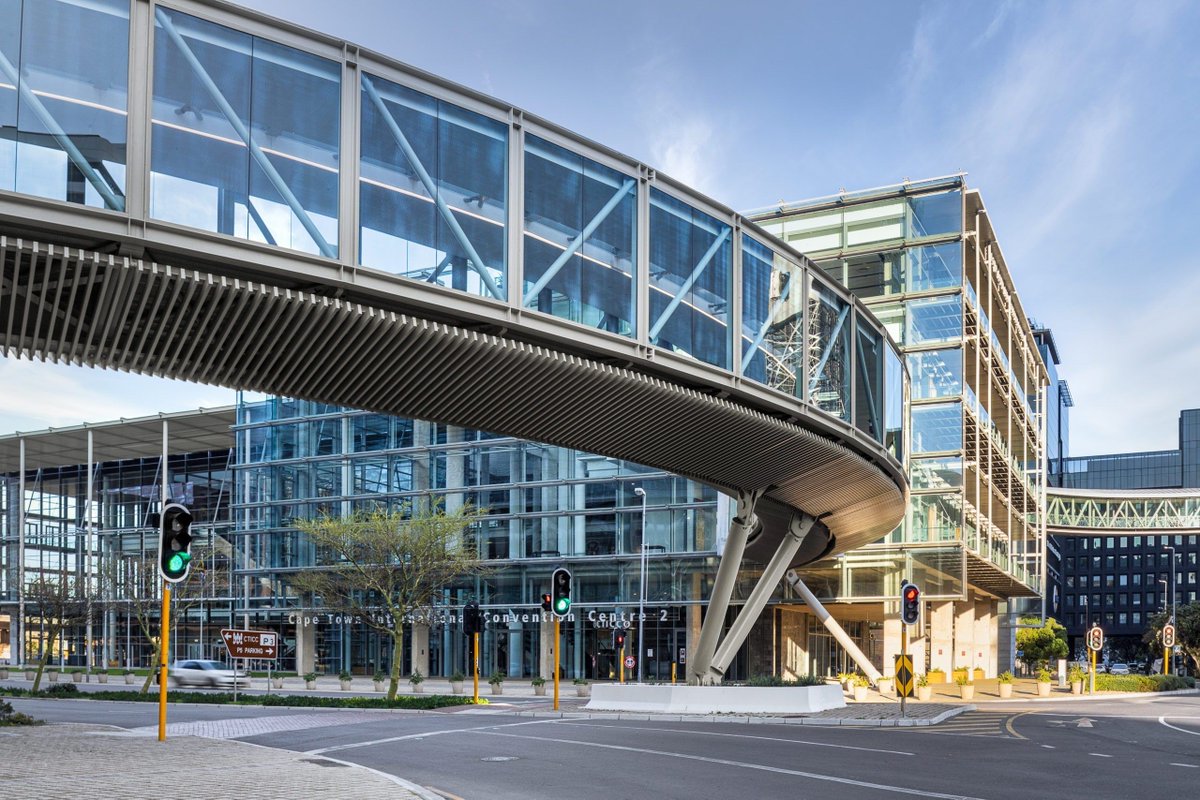
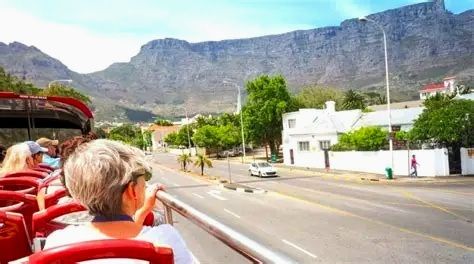
In early April, Africa’s business events industry will turn its attention to Cape Town as the city prepares to host Africa Travel Week, bringing together two of the continent’s most important travel trade platforms – ILTM Africa and WTM Africa.
Together, these events connect African destinations with global travel buyers, luxury travel planners, tourism operators and business events specialists, strengthening Africa’s positioning within the global travel trade.
Beyond the exhibition floor, Africa Travel Week reflects a broader shift in how the continent approaches the meetings, incentives, conferences and exhibitions (MICE) market. While Africa currently accounts for roughly three percent of global association meetings, platforms like these help destinations build buyer relationships, strengthen bidding capabilities and expand international demand.
For Cape Town, hosting Africa Travel Week reinforces the city’s role as one of Africa’s leading travel trade gateways, while strengthening partnerships that support the continent’s long term tourism competitiveness.
Explore Africa Travel Week here: buff.ly/P48NAtj#SouthAfrica#Tourism#Travel#TBCSA#MICE#BusinessEvents#CapeTown
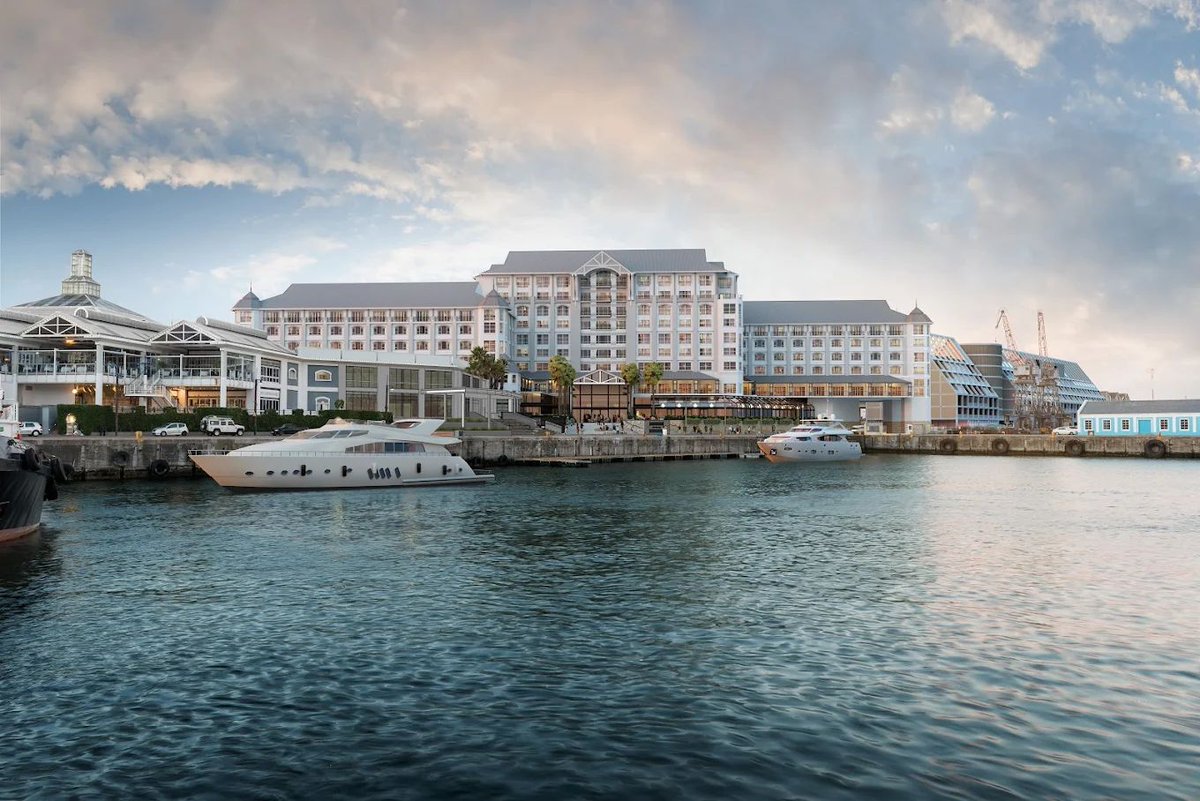
A perspective emerging in South Africa’s tourism sector is that new investment is increasingly focused on higher value hospitality experiences.
In an opinion piece published in the Mail & Guardian, Ash Müller, founder and managing director of “The Hospitality Collective” - suggests that parts of the tourism industry are shifting toward more premium offerings, including boutique hotels, aparthotels and upgraded mixed use tourism precincts.
The article points to continued investment activity across several tourism nodes, including the Western Cape, Johannesburg and KwaZulu Natal’s North Coast, where developers are repositioning properties and introducing new hospitality formats.
If this investment pattern continues, it could signal a gradual shift in parts of South Africa’s tourism sector from volume driven expansion toward higher value visitor experiences. You can read the linked article for the full opinion and examples discussed: buff.ly/lLTADz7#Tourism#SouthAfrica#Hospitality#Travel#TBCSA
Events tourism remains an important driver of visitor demand and economic activity across South Africa’s major destinations.
In Cape Town, more than 90 sporting, cultural, and entertainment events were scheduled during March, expected to attract around 300,000 attendees.
Signature events such as the Cape Town Cycle Tour, Absa Cape Epic, Cape Town Carnival, and the Cape Town International Jazz Festival form part of the programme - drawing both local and international visitors.
According to the City of Cape Town, four of the month’s flagship events alone have a combined economic impact estimated at around R1.8 billion, underscoring how major events support hotels, restaurants, transport services, and other tourism businesses.
You can read the City of Cape Town statement here: buff.ly/BQYsiFs#Tourism#BusinessTourism#MICE#Travel#TBCSA#CapeTown
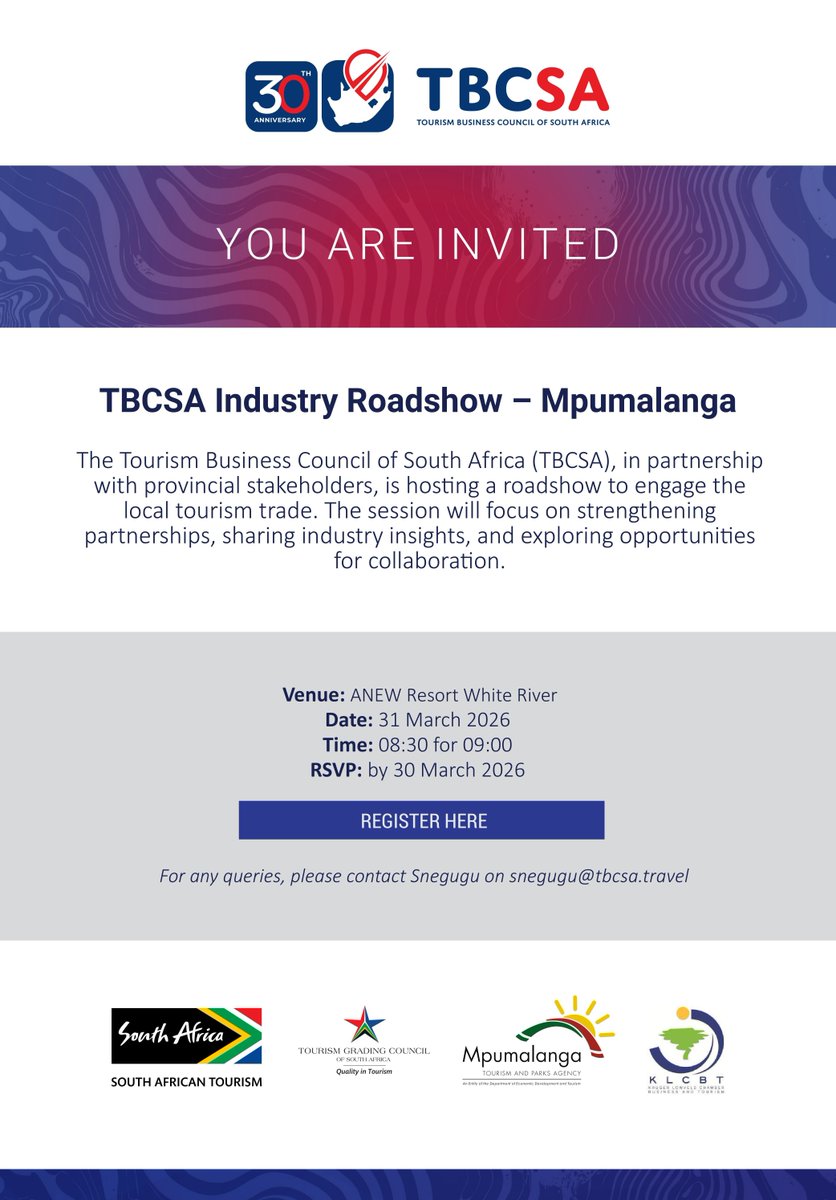
The Tourism Business Council of South Africa will host the Mpumalanga leg of its industry roadshows on 31 March 2026, bringing together tourism operators and stakeholders to engage directly on the realities shaping the sector in the province.
Mpumalanga remains one of South Africa’s most important tourism regions, anchored by globally recognised attractions and a strong domestic and international visitor market.
At the same time, the sector continues navigating issues ranging from infrastructure pressures and destination management to industry transformation and strengthening tourism value chains.
The roadshow provides a platform for tourism businesses to raise these priorities and ensure that industry perspectives help shape solutions to drive the sector forward.
The session will take place at ANEW Resort White River in Mpumalanga.
Tourism businesses operating in Mpumalanga are encouraged to participate. Register here: buff.ly/TTG1CKu
What key issues should the tourism sector in the province be addressing right now? Share in the comments.
#SouthAfrica#Tourism#Travel#TBCSA
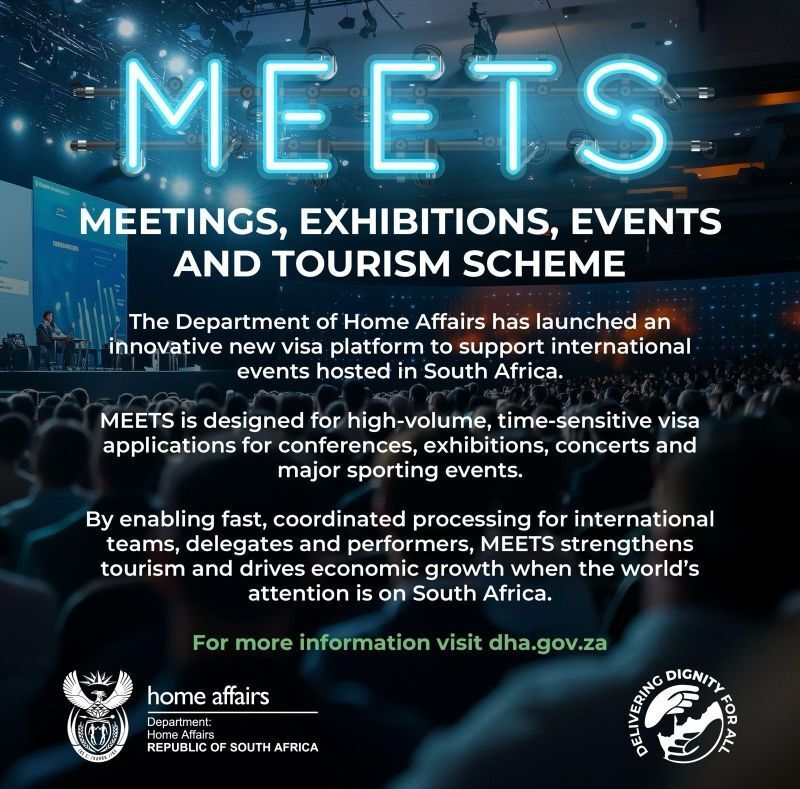
South Africa’s global events sector is set to benefit from the introduction of the Meetings, Exhibitions, Events and Tourism Scheme (MEETS) by the Department of Home Affairs.
The new visa mechanism is designed to support large international events hosted in South Africa by enabling secure processing of high volume, time sensitive group visa applications linked to conferences, exhibitions, sporting tournaments and major cultural events.
Global gatherings often require entire teams of delegates, performers, technical staff and event personnel to travel together within strict timelines. The MEETS scheme aims to streamline these processes through improved digital visa systems.
By strengthening visa efficiency for major international events, the initiative supports South Africa’s competitiveness as a destination for conferences, exhibitions and global gatherings.
Read the full announcement: buff.ly/EDFckvE#SouthAfrica#Tourism#Travel#TBCSA
Safari travel demand across Africa continues to grow, with travellers planning in advance and spending more on wildlife experiences.
According to the “State of Safari 2025” report by Go2Africa, global safari interest increased steadily between 2023 and 2025, reflecting sustained demand for nature-based travel across the continent.
Within this demand, South Africa remains the leading safari destination accounting for 24% of all enquiries in 2025, ahead of Kenya and Tanzania. Together, the three destinations represent nearly two thirds of total safari enquiries.
Traveller budgets are also rising. Average safari spend increased from US$6 500 per person in 2023 to US$8 625 in 2025, highlighting the continued value of safari tourism as a high yield segment.
The report also shows travellers increasingly building layered itineraries, combining wildlife experiences in destinations such as Kruger National Park or Limpopo with cities such as Cape Town, extending trips beyond the safari.
You can read the linked article for an overview of some of the insights from the report: buff.ly/KIbO8zK#Tourism#SouthAfrica#Safari#Travel#TBCSA
Following engagement with tourism stakeholders on the rapid growth of short term rentals, the Department of Tourism has published a draft “Code of Good Practice for Short Term Rentals” for public comment.
Short term rentals refer to private homes, apartments or rooms offered to travellers for short stays through digital platforms or direct bookings. Their growth has expanded accommodation choice for visitors and created new income opportunities for property owners.
At the same time, the expansion of this segment has raised important questions around responsible hosting, community impact, safety standards and alignment with municipal regulations, particularly as the tourism accommodation sector continues to evolve.
The draft code sets out guidelines for hosts, guests and booking platforms, aiming to promote responsible participation while supporting a balanced tourism accommodation environment.
Tourism stakeholders, businesses and members of the public are invited to review the draft and submit written comments before 12 May 2026: buff.ly/zvmbdlF#SouthAfrica#Tourism#Travel#TBCSA
South Africa’s tourism sector continues to rebuild international demand, with global travel trade engagement playing a key role in strengthening inbound travel flows.
Following this momentum, the destination used the recent ITB Berlin travel trade show to deepen partnerships with European tour operators and travel companies, strengthening distribution channels in one of South Africa’s most valuable long haul markets.
Europe remains a key source of leisure demand for South Africa’s tourism sector. Trade engagements with tour operators and travel buyers help convert destination interest into packaged travel products, supporting sustained inbound demand across accommodation, transport services, attractions and tour operators.
Germany continues to show strong growth, with visitor arrivals increasing to nearly 291,000 travellers in 2025, reflecting continued interest in South Africa’s wildlife, culture, and outdoor experiences.
You can read more in the linked article, which explores how South Africa is strengthening partnerships and expanding its presence in European source markets: buff.ly/bGwYgdD#Tourism#SouthAfrica#TBCSA#Travel#Europe#Africa
[SAVE THE DATE] The Tourism Business Council of South Africa will host the fifth edition of the TBCSA Tourism Leadership Conference from 27-28 October 2026 at Sun City Resort, North West province.
As the Tourism Business Council of South Africa marks 30 years of private sector leadership, the 2026 conference will focus on practical steps to strengthen destination competitiveness, unlock investment in tourism products, and support sustainable growth across the tourism value chain.
The conference brings together leaders from business, government, and industry organisations to engage on the actions required to support demand growth, improve operating conditions and position South Africa’s tourism sector for the next phase of expansion.
Full panel discussions, keynote speakers, and highlights from previous editions of the conference are available on the TBCSA YouTube channel. These sessions explore many of the issues shaping the sector today: buff.ly/hn02Cpl
Which tourism issues should the sector prioritise in the next phase of growth?
#SouthAfrica#Tourism#Travel#TBCSA
As South Africa approaches the late-March school holidays and the Easter travel period, the weeks ahead present an important window for domestic travel.
From coastal escapes and bush getaways to cultural festivals and family road trips, this time of year traditionally sees increased movement as families and travellers take advantage of the break to explore local destinations.
For tourism businesses across the value chain, from accommodation and attractions to transport services and tour operators, periods of increased travel demand highlight the importance of readiness across visitor services and experiences.
According to the latest Domestic Tourism Survey released by Statistics South Africa, South Africans undertook 25.8 million domestic overnight trips in 2023, generating approximately R57.9 billion in tourism expenditure.
As the upcoming travel window approaches, how do tourism businesses prepare for periods of increased movement, and how far in advance do travellers typically plan domestic trips or long-weekend getaways? Share in the comments.
#SouthAfrica#Tourism#Travel#DomesticTravel#TBCSA
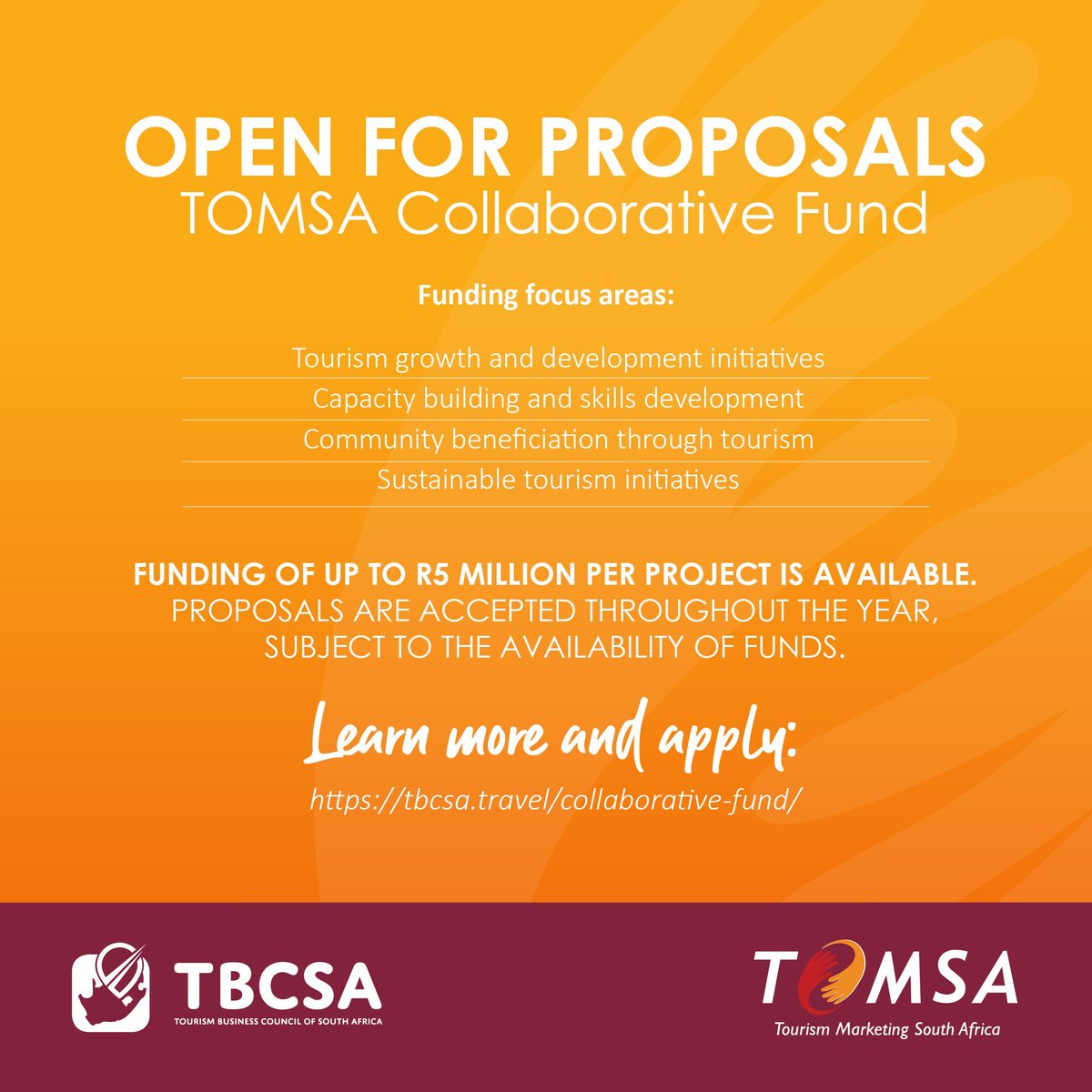
Tourism stakeholders are invited to submit proposals to the TOMSA Collaborative Fund, which remains open throughout 2026.
The Fund supports collaborative initiatives that contribute to the growth and development of South Africa’s tourism sector and deliver measurable socio-economic impact.
Funding is available for projects aligned with key tourism priorities, including:
• Tourism growth and development initiatives
• Capacity building and skills development
• Community beneficiation through tourism
• Sustainable tourism initiatives
The TOMSA Collaborative Fund provides financial support for qualifying projects, with funding of up to R5 million per project, subject to the availability of funds.
Tourism Marketing South Africa (TOMSA) is a private-sector led initiative funded through a voluntary 1% tourism levy collected by participating tourism businesses to support destination marketing and sector development initiatives.
For full eligibility criteria and submission details, visit: buff.ly/axthDbe#SouthAfrica#Tourism#TBCSA#TOMSA#TourismDevelopment
Business tourism remains a key driver of South Africa’s tourism economy, supporting investment, trade relationships and year-round travel demand.
In Cape Town, the impact of this segment is evident. Business tourism contributed R745.1 million directly to the local economy in the past financial year, while conferences, exhibitions and corporate events continue to support accommodation, transport services, restaurants and attractions across the tourism value chain.
The latest International Convention and Conference Association report shows that Cape Town hosted 58 international conferences in 2024, attracting more than 41,000 delegates and contributing significantly to the destination’s global profile.
Business tourism has the potential to support travel beyond the meeting room, with many delegates choosing to extend their stays and explore local experiences.
As destinations compete globally for conferences and events, business tourism remains a key driver of economic activity, investment linkages and international destination positioning. Read more: buff.ly/be3jScn#SouthAfrica#Tourism#BusinessTourism#MICE#Travel#TBCSA#CapeTown
Parliament has called for urgent corrective measures to address the long-standing backlog in tour operator licences issued by the National Public Transport Regulator (NPTR).
The intervention follows a briefing to the Portfolio Committee on Tourism, where members raised concerns about delays in licence approvals and inconsistent enforcement that have disrupted tourism transport operations.
Tour operators play a critical role in South Africa’s tourism ecosystem, enabling visitor mobility between destinations, accommodation establishments and attractions.
Industry stakeholders have welcomed the committee’s intervention. As SATSA Chairperson Oupa Pilane noted:
“Over the past decade, agreements between stakeholders and the Department of Transport were often reached but not effectively implemented, leaving operators facing recurring uncertainty and financial losses.”
Parliament has called for the expedited appointment of the NPTR Board, increased processing capacity and automation of the licensing system to clear outstanding applications. Read the Parliament press release: buff.ly/KRy7YDR#SouthAfrica#Tourism#Travel#TBCSA
One of the recent initiatives supported through the TOMSA Collaborative Fund is the eThekwini Tourism Safety Plan in Durban.
The initiative focuses on strengthening safety across key tourism areas along Durban’s coastline, improving coordination between tourism stakeholders and law enforcement partners in high-traffic visitor zones.
Additional operational resources provided through this funding will support patrol visibility and response capacity in high-traffic tourism areas, helping to create a safer and more welcoming environment for visitors.
The initiative forms part of TOMSA’s broader investment in programmes that enhance tourism infrastructure, partnerships and sector resilience.
TOMSA is a private-sector initiative funded through a voluntary 1% tourism levy collected by participating tourism businesses and administered by TBCSA. The levy supports destination marketing, while the TOMSA Collaborative Fund supports industry initiatives that strengthen the tourism sector. Learn more: buff.ly/axthDbe#SouthAfrica#Tourism#TBCSA#TOMSA#TourismSafety#Durban
According to the South African Tourism Departure Survey (2025), 91% of international travellers to South Africa experience only one province during their trip.
The survey shows notable variation across markets. Multi-province travel is more common among visitors from the Americas and Australasia, while travel from many other source markets remains concentrated in a single destination.
This pattern reflects how travel through the country is often structured. South Africa’s tourism experiences extend across all nine provinces, yet visitor activity frequently concentrates in a limited number of well-known destinations.
Insights such as the Tourism Departure Survey help the sector better understand travel patterns, which can support efforts to highlight the broader range of regions that form part of South Africa’s tourism offering. Read more: buff.ly/cJkqabr#SouthAfrica#Tourism#Travel#TourismGrowth
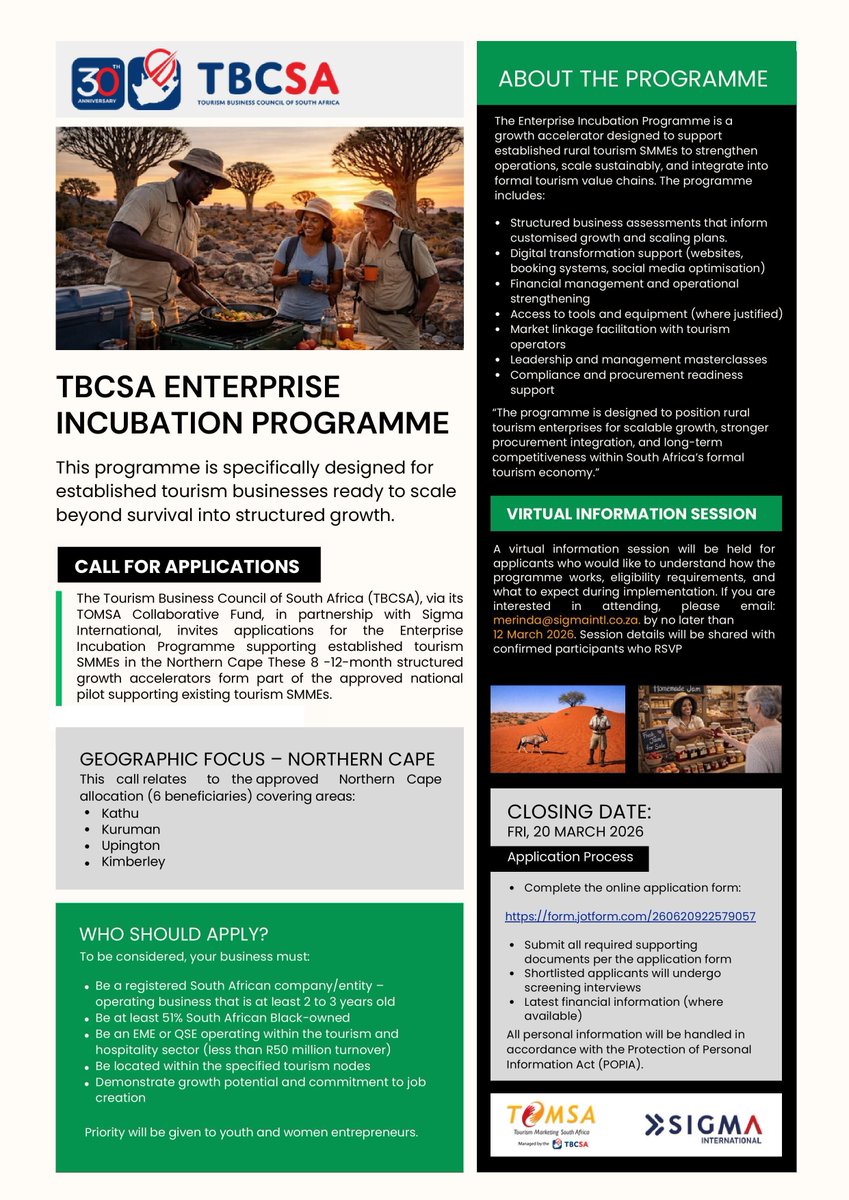
Tourism businesses in the Northern Cape are encouraged to apply for the TBCSA Enterprise Incubation Programme, a structured initiative supporting the growth of tourism SMMEs through the TOMSA Collaborative Fund.
The programme forms part of a national pilot designed to help established tourism enterprises move beyond survival and into structured, scalable growth through targeted business development support.
Participating businesses will benefit from customised growth planning, digital platform development, financial management strengthening, compliance readiness and market linkage opportunities within the tourism value chain.
This call focuses on tourism enterprises operating in Kathu, Kuruman, Upington, and Kimberley, supporting regional tourism development and enterprise growth in the province.
Applications close 20 March 2026: buff.ly/1omk0Mu#SouthAfrica#Tourism#TBCSA#TourismDevelopment#NorthernCape
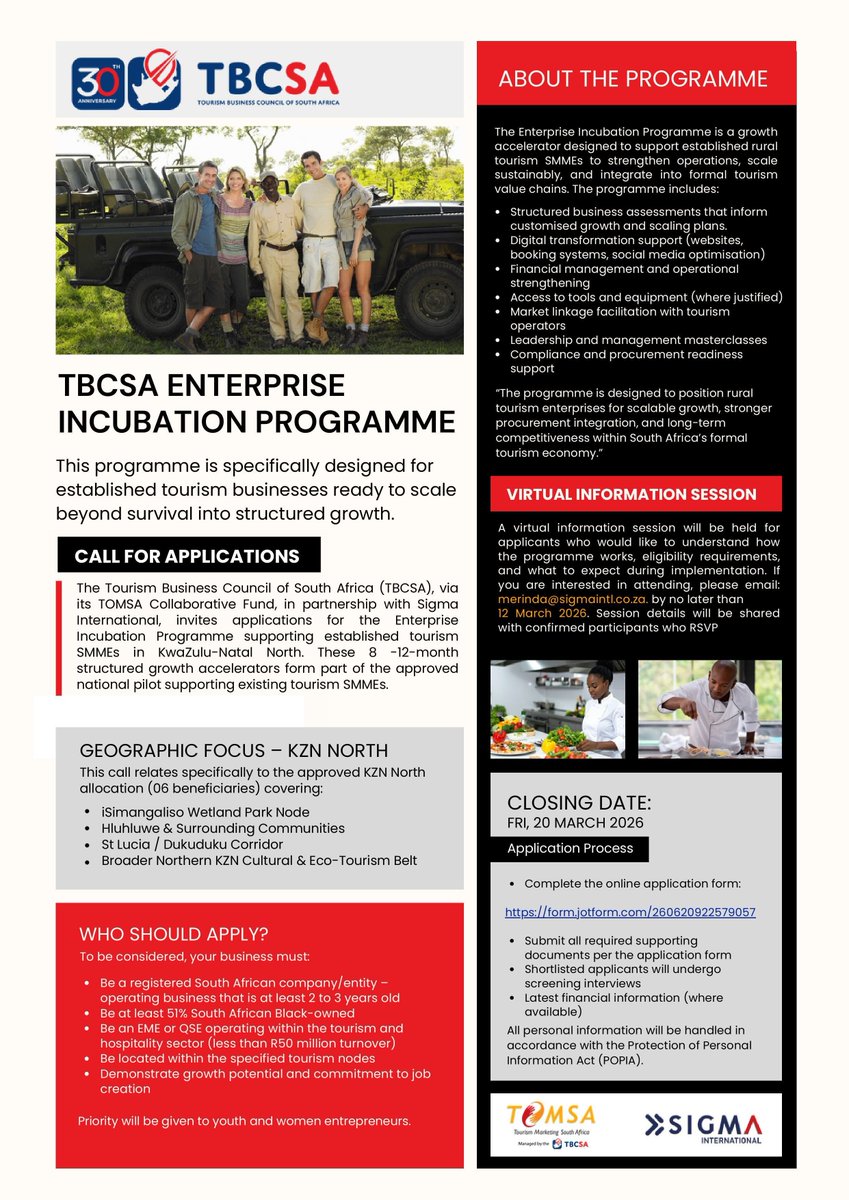
Tourism SMMEs in northern KwaZulu-Natal are invited to apply for the TBCSA Enterprise Incubation Programme, supported through the TOMSA Collaborative Fund and implemented in partnership with Sigma International.
The programme is designed to support established rural tourism businesses to strengthen operations, scale sustainably, and integrate into formal tourism value chains. Participating enterprises will receive structured support including digital transformation assistance, financial management strengthening, leadership masterclasses and market linkage opportunities with tourism operators.
This call focuses on tourism enterprises operating within the northern KwaZulu-Natal tourism belt, including areas around iSimangaliso Wetland Park, Hluhluwe, St Lucia and surrounding communities.
Eligible businesses must be established tourism SMMEs with demonstrated growth potential and a commitment to job creation. Priority will be given to youth and women entrepreneurs.
Applications close 20 March 2026: buff.ly/1omk0Mu#SouthAfrica#Tourism#TBCSA#TourismDevelopment#KZN
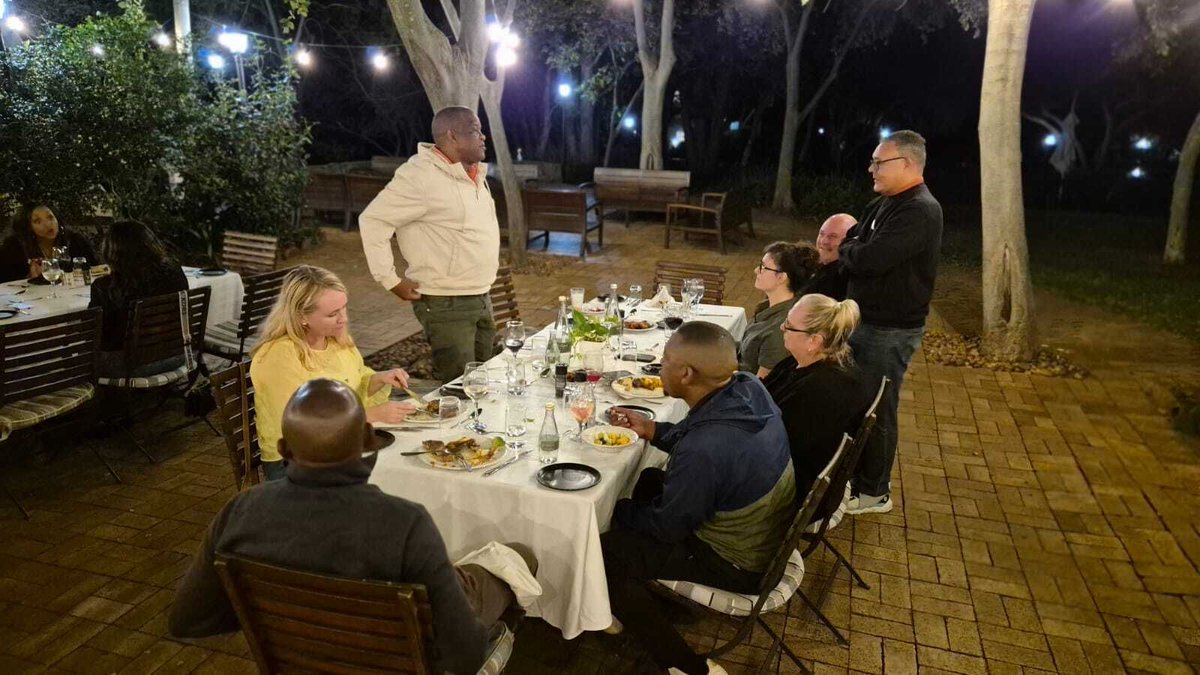
The Board of the Tourism Business Council of South Africa has convened for its annual strategic planning session taking place from 4 to 6 March.
The session brings together TBCSA’s governing leadership, representing key segments of the tourism sector, to review the organisation’s mandate and shape the strategic direction that will guide TBCSA’s work over the next three years. Discussions will focus, among other matters, on the operating environment for the tourism sector, the priorities required to strengthen tourism’s contribution to economic growth, and the global tourism landscape.
The programme began with a welcome dinner on the evening of 4 March, providing an opportunity for board members to connect ahead of the working sessions.
As TBCSA marks its 30th year in 2026, the outcomes of the session will inform the organisation’s strategic priorities and initiatives for the next phase of its work.
#TourismLeadership#Tourism#TBCSA#Travel#SouthAfrica
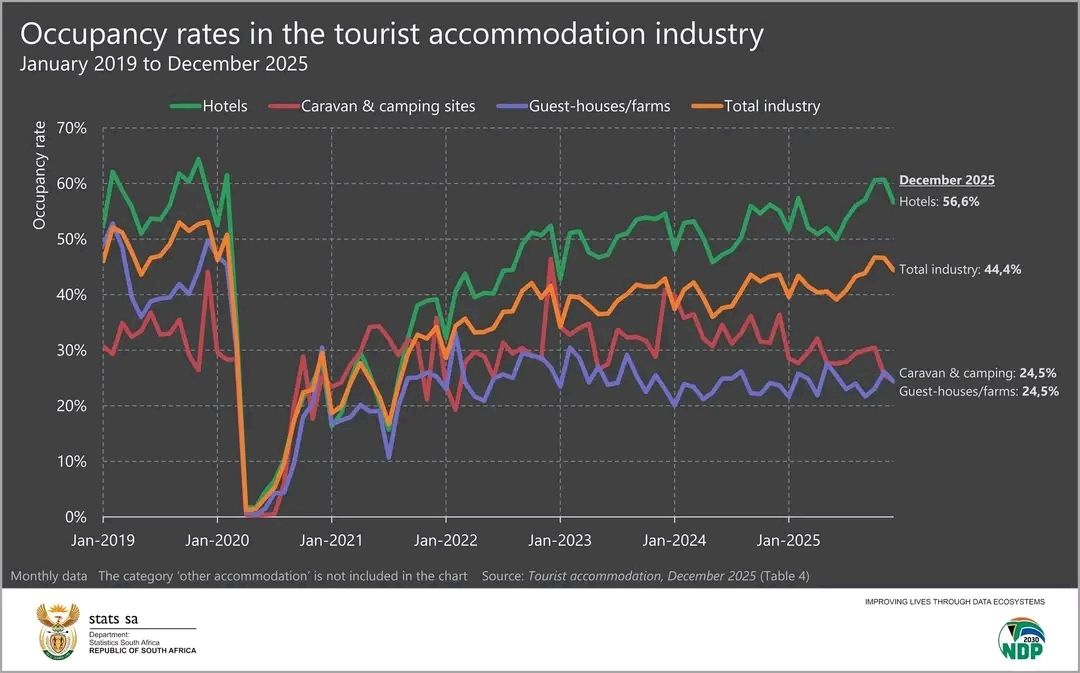
South Africa’s accommodation sector closed 2025 on a steady note, with income rising 3.9% year on year in December, according to Statistics South Africa’s latest Tourist Accommodation release.
Notably, that growth was evenly split between a 1.9% increase in stay unit nights sold and a 1.9% rise in average income per stay unit night.
A stay unit night refers to one room, site or unit occupied for one night. The December outcome therefore reflects a combination of higher occupancy and measured rate increases across the sector.
Explore the full release for detailed breakdowns by accommodation type: buff.ly/vYqO6Tq#SouthAfrica#Tourism#Travel#TBCSA
The Department of Home Affairs has invited eligible domestic event organisers to apply for participation in the MEETS visa scheme.
MEETS, short for Meetings, Events, Exhibitions and Tourism Scheme, enables accredited organisers to facilitate group visa applications for international delegates attending major conferences, exhibitions and sporting events hosted in South Africa.
Through a secure digital platform, qualifying organisers can submit applications online, subject to defined criteria and a formal Memorandum of Agreement with Home Affairs.
Participation is based on a points system, requiring applicants to meet regulatory, compliance and capacity thresholds.
The scheme aligns with other Home Affairs digital reforms, including the STAGES visa, the Trusted Tour Operator Scheme and the Electronic Travel Authorisation rollout.
Read more in the linked article: buff.ly/45B66jz#SouthAfrica#Tourism#MICE#Travel#TBCSA