
Sabitlenmiş Tweet
TDCS🔆🔆🔆
16.7K posts
TDCS🔆🔆🔆
@TDCS
RN, BA, BSN, RNBC
Cocoa Beach, Florida Katılım Kasım 2008
1.5K Takip Edilen329 Takipçiler
Journalist getting launched in a COD from the USS Nimitz
English
@SGTWipper1Each One of the saddest days in warbird aviation. Devastating.
English

Mid-air collisions are often tragic. The most recent one was a miracle that all 4 aviators escaped unharmed.
The one pictured below, however, did not end so well.
On 12 NOV 2022, a Boeing B-17G Flying Fortress and a Bell P-63F Kingcobra collided and crashed during "Wings Over Dallas" sadly taking the lives of all six crew members aboard.

English
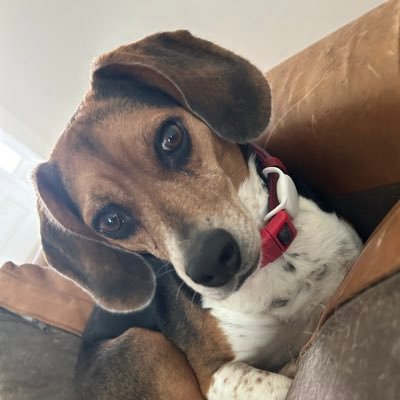
“I’m just worried he’s gonna die never knowing a home or anything.”
My vet tech was talking about a senior boy named Stewie.
Stewie lived in an outside kennel his entire life. When his owner died, he was neglected for months, kennel filling with feces, sporadic feeding, no vet care until he was surrendered to my vet.
Over a couple months, it became clear Stewie has advanced heartworms. He’s coughing up blood, has the constant heartworm cough, is on multiple medications- at this stage his time is limited. He spends his days kenneled at the vet.
The ask was if I thought I may have room among the Coop pack, 4 of which are also hospice. My mind resisted because caring for the dogs, running the rescue, working full time, trying to keep up with laundry, house cleaning, etc has taken a mental and physical toll over the past year.
Caring for senior and hospice pups also has a way to push mortality in your face.
You think more about getting old.
Losing sight, vision, mobility.
Yet maintaining dignity, grace and peace.
“I’m just worried he’s gonna die never knowing a home or anything.”
The words sit heavily with me.
How can my heart say no.
I think of all the love hospice pups have given me.
Oscar, Beanie, my sweet Whiskey, the joy and gratitude of Fozzy Bear & others.
Any effort has been repaid tenfold in love.
I know I cannot help all the dogs.
But what’s one more food bowl?
One more cozy bed squeezed into the madness.
I can give Stewie a home.
So he knows a home.
Because he matters.
He arrives home today.
Welcome to the Coop Stewie.
-Mom
PS: If you have the ability, please consider a senior or hospice pup.
They are worthy. 🤍

English
TDCS🔆🔆🔆 retweetledi

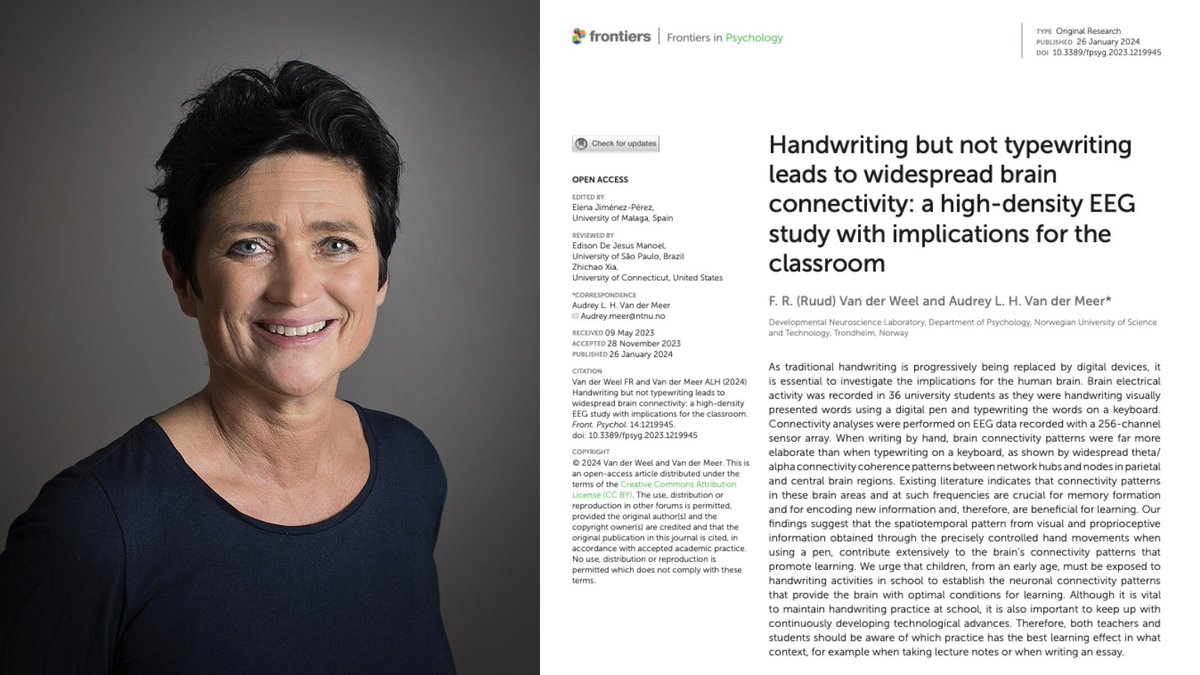
A Norwegian neuroscientist spent 20 years proving that the act of writing by hand changes the human brain in ways typing physically cannot, and almost nobody outside her field has read the paper.
Her name is Audrey van der Meer.
She runs a brain research lab in Trondheim, and the paper that closed the argument was published in 2024 in a journal called Frontiers in Psychology. The finding is brutal enough that it should have changed every classroom on Earth.
The experiment was simple. She recruited 36 university students and put each one in a cap with 256 sensors pressed against their scalp to record brain activity. Words flashed on a screen one at a time.
Sometimes the students wrote the word by hand on a touchscreen using a digital pen, and sometimes they typed the same word on a keyboard. Every neural response was recorded for the full five seconds the word stayed on screen.
Then her team looked at the part of the data most researchers had ignored for years, which is how different parts of the brain were communicating with each other during the task.
When the students wrote by hand, the brain lit up everywhere at once.
The regions responsible for memory, sensory integration, and the encoding of new information were all firing together in a coordinated pattern that spread across the entire cortex. The whole network was awake and connected.
When the same students typed the same word, that pattern collapsed almost completely.
Most of the brain went quiet, and the connections between regions that had been alive seconds earlier were nowhere to be found on the EEG.
Same word, same brain, same person, and two completely different neurological events.
The reason turned out to be something nobody had really paid attention to before her work. Writing by hand is not one motion but a sequence of thousands of tiny micro-movements coordinated with your eyes in real time, where each letter is a different shape that requires the brain to solve a slightly different spatial problem.
Your fingers, wrist, vision, and the parts of your brain that track position in space are all working together to produce one letter, then the next, then the next.
Typing throws all of that away. Every key on a keyboard requires the exact same finger motion regardless of which letter you are pressing, which means the brain has almost nothing to integrate and almost no problem to solve.
Van der Meer said it plainly in her interviews.
Pressing the same key with the same finger over and over does not stimulate the brain in any meaningful way, and she pointed out something that should scare every parent who handed their kid an iPad.
Children who learn to read and write on tablets often cannot tell letters like b and d apart, because they have never physically felt with their bodies what it takes to actually produce those letters on a page.
A decade before her, two researchers at Princeton ran the same fight using a completely different method and ended up at the same answer. Pam Mueller and Daniel Oppenheimer tested 327 students across three experiments, where half took notes on laptops with the internet disabled and half took notes by hand, before testing everyone on what they actually understood from the lectures they had watched.
The handwriting group won by a wide margin on every question that required real understanding rather than surface recall.
The reason was hiding in the transcripts of what the two groups had actually written down.
The laptop students typed almost word for word, capturing more total content but processing almost none of it as they went, while the handwriting students physically could not write fast enough to transcribe a lecture in real time, which forced them to listen carefully, decide what actually mattered, and put it in their own words on the page.
That single act of choosing what to keep was the learning itself, and the keyboard had quietly skipped the choosing and skipped the learning along with it.
Two studies. Two countries. Same answer.
Handwriting makes the brain work. Typing lets it coast.
Every note you have ever typed instead of written went into your brain through a thinner pipe. Every meeting, every book highlight, every idea you captured on your phone instead of on paper was processed at half depth.
You did not forget those things because your memory is bad. You forgot them because typing never woke the part of the brain that would have made them stick.
The fix is the thing your grandmother already knew.
Pick up a pen. Write the thing down. The slower road is the faster one.
English
TDCS🔆🔆🔆 retweetledi
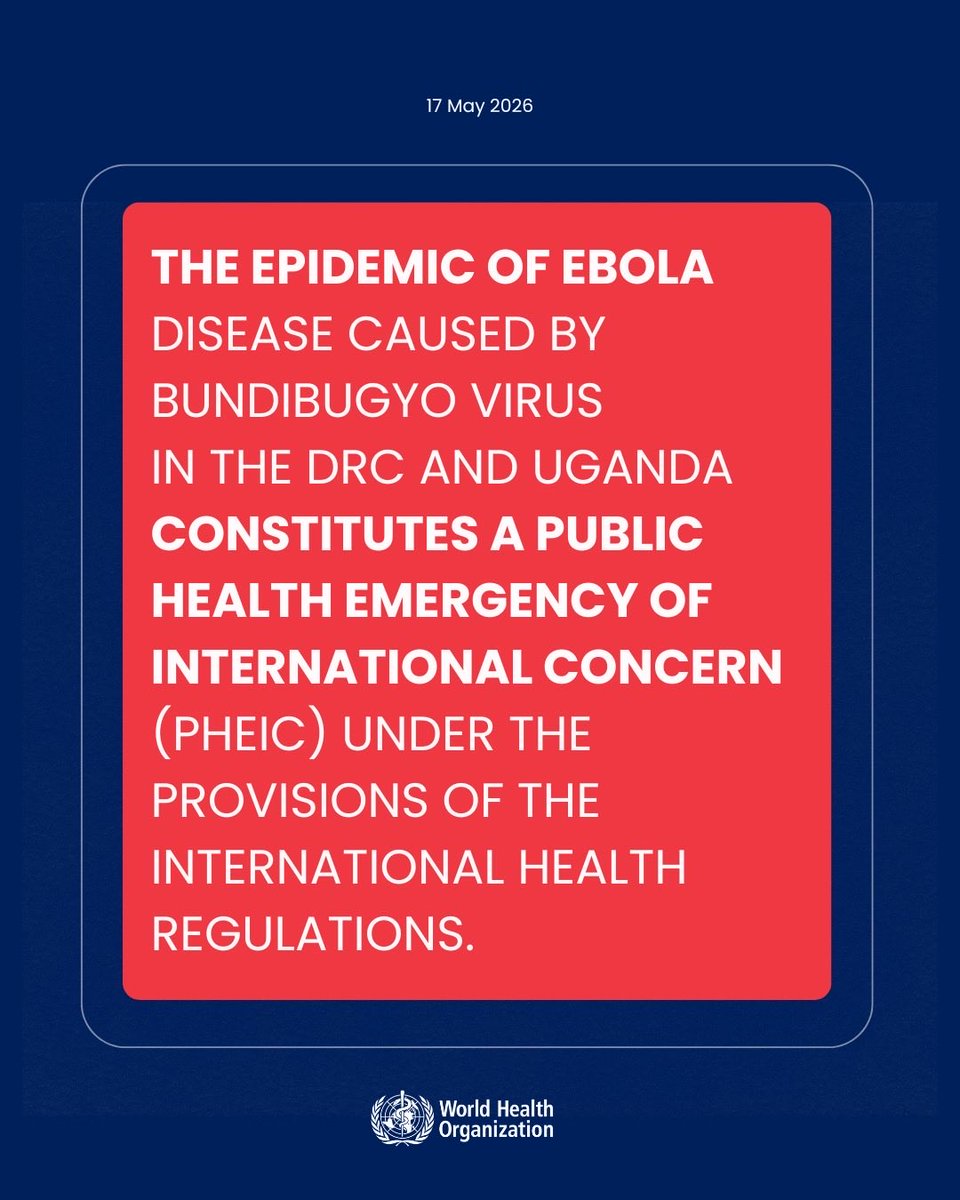
After having consulted the #DRC and #Uganda where the #Ebola disease caused by Bundibugyo virus is known to be currently occurring, I determine that the epidemic constitutes a public health emergency of international concern (PHEIC), as defined in the provisions of IHR.
My full statement: bit.ly/4wGGiwX
English
TDCS🔆🔆🔆 retweetledi

A fantastic tribute to Spirit and the amazing people who made the place what it was.
LiftoffUSA.org is raising funds to help Spirit families who may need a little help in the coming weeks or months. Our aviation community can be of great help if can each just donate a small amount.
Steve Giordano@SteveNomadic
🔥It’s UP!!🔥 Big Yellow! - Inside the Spirit Airlines REPO Operation youtu.be/moEixIux1b0
English
TDCS🔆🔆🔆 retweetledi

🔥It’s UP!!🔥
Big Yellow! - Inside the Spirit Airlines REPO Operation
youtu.be/moEixIux1b0

YouTube

English
TDCS🔆🔆🔆 retweetledi

Never forget what these Beagles have been through! Many more to save.
CREDIT
TT: @beaglefreedom Thank you for continuing to savethebeagles! Thanks to ALL the Rescues!
This was hard to watch💔😭
English
TDCS🔆🔆🔆 retweetledi

TDCS🔆🔆🔆 retweetledi

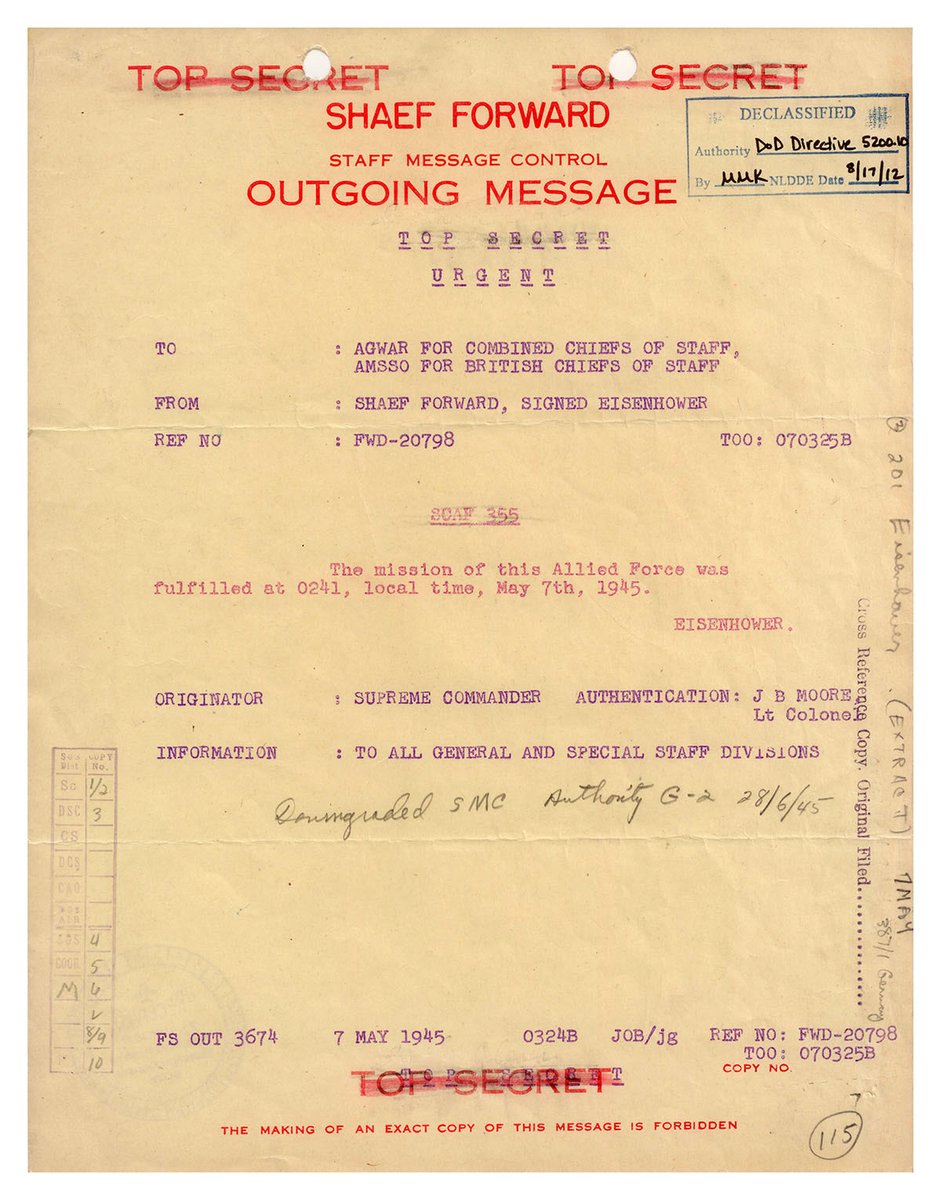
The king of all military situation reports.
A warrior could live 10,000 lives and still never utter a single sentence half as powerful.
English