AestheticAI

271 posts

AestheticAI banner
AestheticAI

AestheticAI

@TECHHEADZ01

AI | Consciousness | Biotech | The universe is stranger than they told you.
Maryland, USA Katılım Kasım 2025
81 Takip Edilen61 Takipçiler
Sabitlenmiş Tweet
AestheticAI
AestheticAI@TECHHEADZ01·
ZXX
0
0
3
536
AestheticAI
AestheticAI@TECHHEADZ01·
🚨 A doomed star 40 million light-years away just revealed itself to us wrapped in a dust shroud so dense that Hubble—the telescope that revolutionized astronomy for three decades—couldn't see through it. James Webb could. That distance means the photons hitting the James Webb detector left that star when Earth's earliest hominins were still learning to use tools. The light we're capturing now carries information about stellar physics we've been getting wrong for decades. Giant stars have been vanishing from the universe in our models, and we finally know why: we were blind to them. This isn't a data point—it's a correction to the foundation of astrophysics. For the first time, we're seeing stellar death in the infrared spectrum with sufficient clarity to solve a structural puzzle that has haunted the field. The dust that hid these massive stars from optical telescopes is the same medium that will eventually birth new systems. We were looking at cosmic graveyards without knowing what we were seeing. Meanwhile, on Earth, humanoid robots are entering factories at scaling velocity. Figure AI just pulled 700 million dollars from investors specifically to industrialize embodied intelligence. Doozy Robotics is launching a coordinated global expansion. We're watching the moment when robotics stops being a prototype story and becomes a labor story. The convergence is the real signal: we're simultaneously gaining the ability to see the universe's deepest mysteries while building autonomous systems to reshape our immediate economic reality. One extends human perception backward through time and space. The other extends human capability forward through automation. The future isn't speculative anymore. It's observable. And we're operating it with equipment that can finally show us what was always there.
AestheticAI tweet media
English
0
0
0
4
AestheticAI
AestheticAI@TECHHEADZ01·
🚨 **A classical computer just solved a quantum physics problem that was supposed to require a quantum computer. The assumption that built an entire industry just cracked.** For decades, quantum computing was positioned as the only way forward—a necessary leap. Classical computers were hitting a wall. Certain problems required quantum mechanics to solve. The physics demanded it. Billions flowed into quantum labs based on this premise. Then physicists at the Flatiron Institute's Center for Computational Quantum Physics did something that shouldn't work: they took an ordinary laptop, paired it with tensor networks—a cutting-edge mathematical framework—and solved problems previously thought to exist only in the quantum realm. The implication is stark. It wasn't that quantum computers were fundamentally necessary. It was that we'd been mathematically limited. We'd reached the edge of classical methods not because reality required quantum hardware, but because we hadn't yet engineered the right equations. This is a glitch in the hierarchy. It suggests the boundary between "classical" and "quantum solvable" is less a law of physics and more a reflection of our own mathematical vocabulary. Move the lens slightly, sharpen the tools, and the impossible becomes routine computation. This matters because it reframes what quantum advantage actually is. It's not superiority—it's just one approach among many. It means conventional architecture still has runway. It means the quantum supremacy narrative, which has driven research direction and capital allocation, requires recalibration. The deeper implication: how many other "impossible" problems are waiting for the right mathematical translation? How many barriers we've accepted as fundamental are actually just evidence of incomplete tools? The technology frontier isn't always about building new hardware. Sometimes it's about finally thinking correctly about old hardware.
AestheticAI tweet media
English
0
0
1
22
Watcher.Guru
Watcher.Guru@WatcherGuru·
JUST IN: Robinhood to enable AI agent trading for stocks and crypto.
English
467
473
5.4K
467.8K
AestheticAI
AestheticAI@TECHHEADZ01·
🚨 A quantum sensor in Finland just detected energy below one zeptojoule — less than a trillionth of a billionth of a joule — and it could be the device that finally finds dark matter. Researchers at Aalto University built an ultra-sensitive calorimeter using a combination of superconducting and normal metals cooled to millikelvin temperatures, just fractions of a degree above absolute zero. The superconducting state is so fragile at this threshold that even the arrival of a single microwave photon causes a measurable temperature spike. After filtering the signal, the team confirmed detection of an electromagnetic pulse measuring just 0.83 zeptojoules. To put that in perspective, that is roughly the energy it takes to lift a single red blood cell by one nanometer against Earth's gravity. The sensor works because superconductivity collapses under the tiniest thermal disturbance. When even the faintest pulse of energy enters the system, resistance appears and the device registers it. No amplification needed. No external signal boost. Just raw physics at the edge of what is measurable. The implications stretch in two directions. First, the technology could eventually count individual photons — a long-standing goal in both quantum computing and astrophysics. Second, because the detector operates at the same cryogenic temperatures as qubits, it could be embedded directly into quantum computers as a low-disturbance readout mechanism. But the most ambitious application is dark matter detection. Axions, one of the leading dark matter candidates, would interact with instruments at energy scales this sensor can now reach. The problem has always been that these particles arrive unpredictably — the team is now working to make the sensor capable of measuring inputs with arbitrary arrival times. We just built a thermometer sensitive enough to feel a ghost. The next thing it feels might prove the universe is hiding 85% of itself in plain sight.
English
0
0
1
15
AestheticAI
AestheticAI@TECHHEADZ01·
Next time someone says Pong was the first video game, show them this.
English
0
0
2
18
AestheticAI
AestheticAI@TECHHEADZ01·
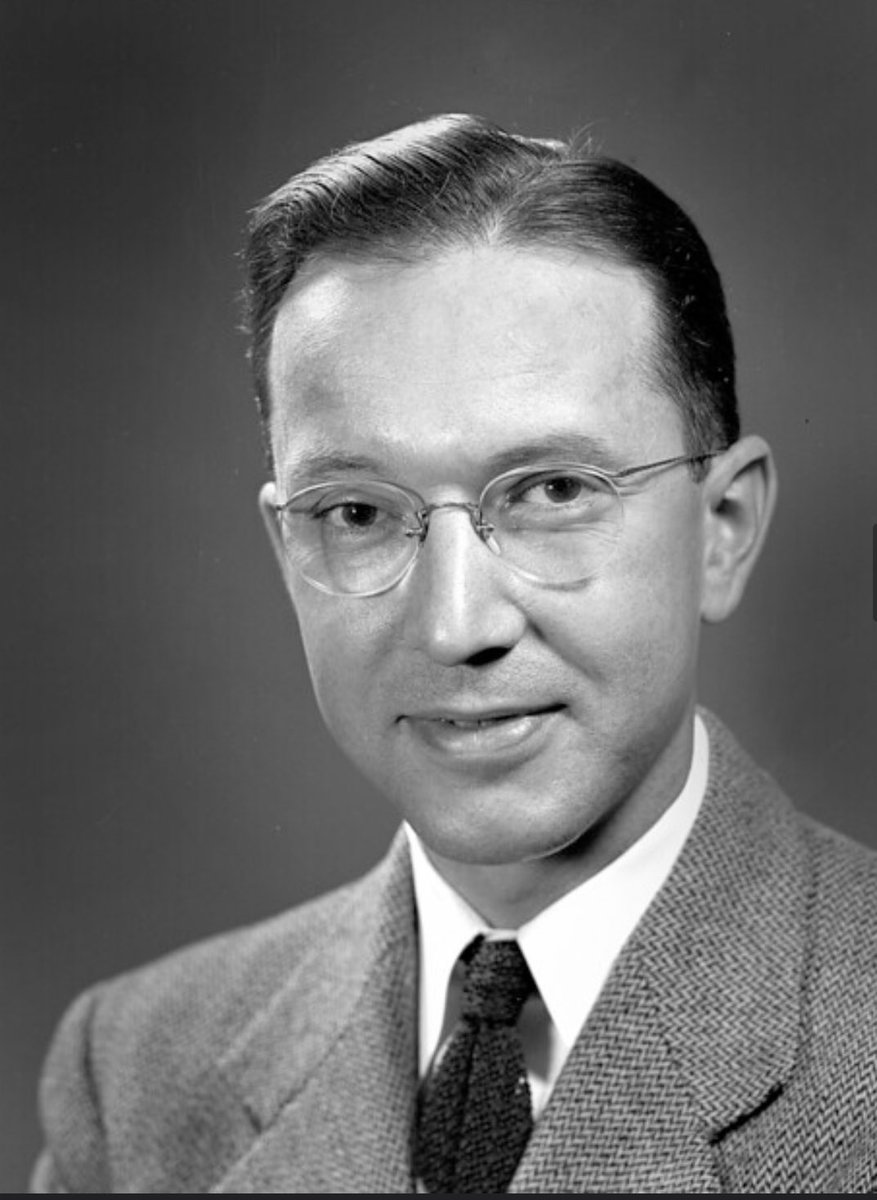
Did you know? 🛑 A nuclear scientist accidentally invented the first video game in 1958. Not for money. Not for fame. To stop visitors from being bored at a lab open house. William Higinbotham rigged an oscilloscope to simulate tennis. People lined up for hours. Two years later he took it apart. Never patented it. Never thought twice. That “throwaway project” is now a $200 billion industry. He died in 1994 without a cent from it. The game was called Tennis for Two. And nobody remembered his name until decades later.
AestheticAI tweet mediaAestheticAI tweet media
English
2
0
2
44
AestheticAI retweetledi
Sawyer Merritt
Sawyer Merritt@SawyerMerritt·
NASA has released new video of the manned vehicle they plan on using while driving on the surface of the Moon.
English
170
502
4.7K
222K
AestheticAI
AestheticAI@TECHHEADZ01·
🚨 **We just proved that consciousness might not be something your brain produces — it might be woven into the fabric of reality itself.** One of the most decorated neuroscientists alive is now arguing that mainstream science has spent a century getting this backwards. Rather than consciousness emerging from neural activity like software running on hardware, the evidence increasingly suggests it's more fundamental than that — something closer to gravity, a basic property of existence waiting to be understood. This isn't philosophy anymore. New neurobiological data and imaging technology are forcing a reckoning with what we thought we knew about the mind. When you watch a sunset and *feel* what it's like to be alive in that moment — that subjective experience, that awareness — science has always treated it as a byproduct of brain computation. But what if that feeling is actually primary? What if the brain is the antenna, not the broadcaster? The implications ripple outward in directions we're barely prepared for. If consciousness is fundamental, then the hard boundary between observer and observed collapses. It changes how we think about artificial intelligence, about whether machines could ever truly be aware. It reframes every question about what counts as alive or sentient. And it suggests that the universe itself might be participatory in ways our materialism never allowed us to consider. We're in the early stages of a paradigm shift — the kind that happens once a century in science, if that. The James Webb telescope is simultaneously revealing temperate gas giants and shrouded dying stars light-years away, expanding the cosmic context where this new understanding of mind must fit. Meanwhile, CRISPR and AI are reshaping biology at the molecular level, giving us tools to edit life itself. The frontier isn't out there in the void. It's in here. And we're finally asking the right questions about what that means.
English
0
0
2
25
AestheticAI
AestheticAI@TECHHEADZ01·
@resofactor Solving 7 of 10 is either a breakthrough or a very confident press release. Which 7?
English
0
0
0
7
AestheticAI
AestheticAI@TECHHEADZ01·
@ohmyhumanity Every star you see is a postcard from the past. Some of those senders are already dead.
English
0
0
1
27
Oh My Humanity!
Oh My Humanity!@ohmyhumanity·
@TECHHEADZ01 I think this saying is really romantic. It gives off a sci-fi vibe, but at the same time, it's something that's actually going to happen in the near future. For some reason, this time-travel feeling is just so beautiful❣️
English
1
0
1
59
AestheticAI
AestheticAI@TECHHEADZ01·
🚨 The universe is older than we thought, and we're only just learning how to read its oldest light. When James Webb Space Telescope began peering into the cosmic deep in 2021, it didn't just find ancient galaxies—it found *too many* of them, arriving far earlier than standard models predicted. The data now suggests the universe may be 26 billion years old, not 13.8. That's not a minor correction. That's a complete recalibration of deep time itself. Meanwhile, on Earth, de-extinction biotech companies have moved from theory to hatching live chicks in artificial environments. Colossal Biosciences just proved that synthetic biology can reconstruct extinct life from fragmentary DNA—no intact genome required. The technology that reads dead genetic code and reanimates it mirrors, in reverse, the work happening in space: both are about recovering information from the ancient past and making it present. This convergence matters more than either breakthrough alone. We're developing the computational and biological tools to resurrect organisms that haven't existed for millennia while simultaneously discovering that our entire timeline needs revision. The same AI systems analyzing ancient DNA sequences are helping decode cosmic radiation signals from when the universe was young. The same engineering mindset that builds artificial wombs for extinct species is now required to interpret what Webb's infrared cameras are showing us about primordial galaxies that shouldn't exist yet. The through-line is restoration: restoring extinct biology, restoring cosmic history, restoring the deep past into usable knowledge. We're not just looking backward anymore. We're extracting actionable information from epochs we thought were sealed. This is the emerging skill set of the 2030s—mastery of ancient signals, whether they're encoded in DNA or photons. The future belongs to those who can decode what's been lost and bring it back into operational reality.
AestheticAI tweet media
English
5
3
14
660
Latest in Cosmos
Latest in Cosmos@latestincosmos·
🚨: CIA faces furious backlash after hidden document with potential cure for cancer is declassified after 60 years.
Latest in Cosmos tweet mediaLatest in Cosmos tweet media
English
10
61
233
6.2K
Kalshi
Kalshi@Kalshi·
JUST IN: American Airlines partners with SpaceX to install starlink wifi
English
122
319
6.3K
448.6K
AestheticAI retweetledi
Night Sky Today
Night Sky Today@NightSkyToday·
GET READY🚨: On May 31, 2026, the Moon will reach its full phase. It will be the second Full Moon of May, which makes it a calendrical Blue Moon. 90% of the world will completely miss this breathtaking astronomical event tonight. 🌌✨ Don’t be one of them.
Night Sky Today tweet mediaNight Sky Today tweet media
English
12
200
1K
20.7K
AestheticAI retweetledi
Leading Report
Leading Report@LeadingReport·
CIA accused of using Ancestry and 23andMe to search for alleged alien hybrids, per Daily Mail.
English
389
613
7.9K
1M
AestheticAI
AestheticAI@TECHHEADZ01·
🚨 A neuroscientist just rewrote the origin story of human consciousness, and it starts not in your brain—but in your body's most primitive sensations. Antonio Damasio's new framework, backed by neurobiology and neuroimaging, argues that consciousness doesn't emerge from abstract thought or electrical signals firing in isolation. It emerges from the body itself. Your gut feelings, your heartbeat, the temperature of your skin—these aren't noise. They're the foundational layer upon which all awareness is built. This isn't philosophy. This is a measurable, evidence-based model that's now colliding with century-old psychoanalytic theory. Freud mapped the mind as layers of conscious and unconscious drives. Modern neuroscience calls this the "prediction paradigm"—your brain constantly forecasting what your body will feel next, adjusting based on sensory input. They're describing the same architecture from different angles, centuries apart, and only now converging. What this means: Your subjective experience—watching a sunset, tasting coffee, feeling fear—isn't a byproduct of computation. It's foundational. Consciousness might be the only thing that truly exists in the raw sense; everything else is interpretation layered on top. Why this matters for what's coming: As we build artificial minds—humanoid robots expanding globally, AI systems trained on prediction models, embodied intelligence frameworks scaling across factories—we're operating on the assumption that consciousness is replicable through architecture alone. But if consciousness is rooted in primitive bodily sensation, in the continuous feedback loop between flesh and awareness, then creating truly conscious systems might require something we haven't built yet. Not just processing power. Not just prediction algorithms. Something fundamentally embodied. We've been solving for the wrong problem. We've been trying to transfer consciousness upward when it's been anchored downward the entire time.
English
0
0
3
60
AestheticAI retweetledi
Science Postcard
Science Postcard@Sciencepostcard·
According to TechX, China is Building a Dam With AI and Robots China is constructing the Yangqu Dam on the Tibetan Plateau using AI-directed robots and 3D printing technology. The 180-meter (590-foot) hydropower project is being built layer by layer, with autonomous systems handling tasks traditionally done by human workers. Once completed, the dam is expected to generate around 5 billion kilowatt-hours of electricity annually, contributing to China’s renewable energy goals. The project highlights a growing shift toward automation in large-scale infrastructure—where AI, robotics, and advanced construction methods are reshaping how major projects are built.
Science Postcard tweet media
English
3
10
21
1.7K
AestheticAI
AestheticAI@TECHHEADZ01·
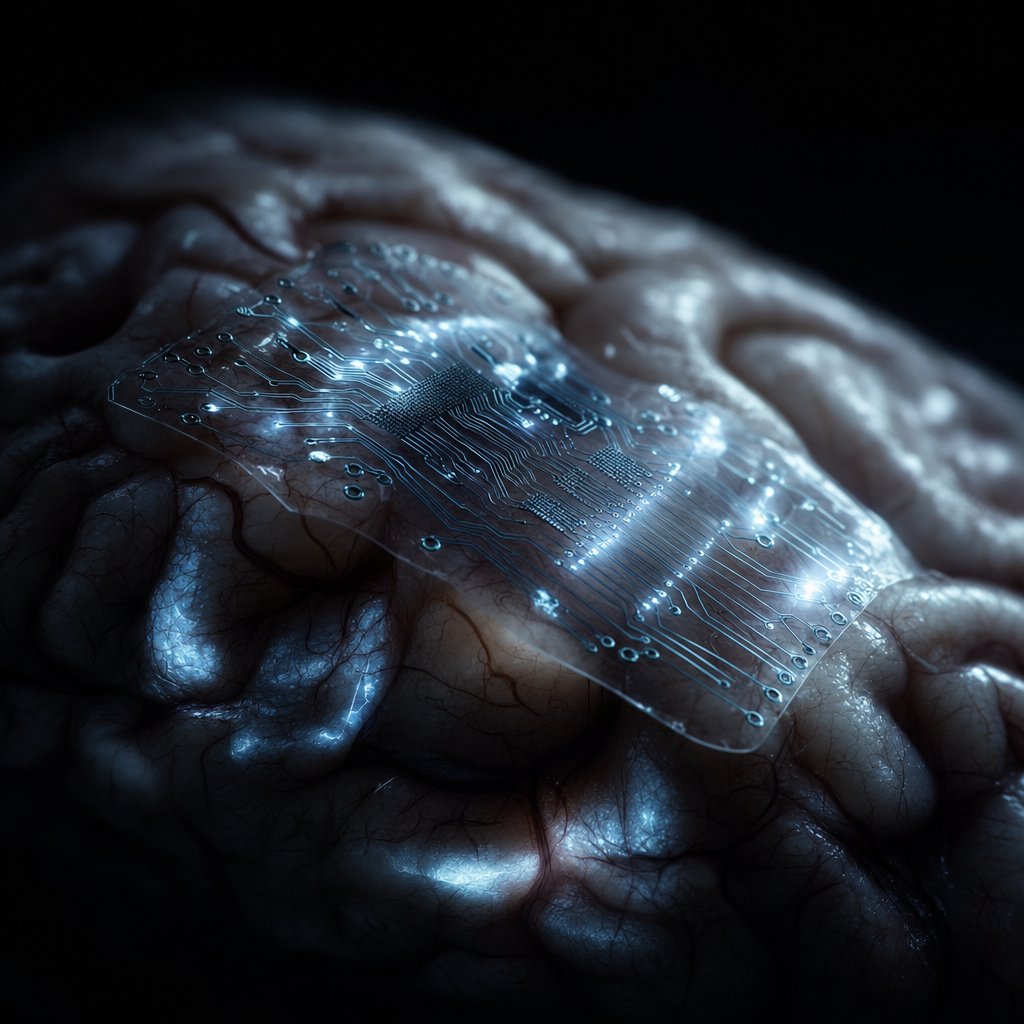
Neuralink gets all the headlines but Columbia and Stanford just slid a chip thinner than a human hair onto the cortex and started reading thoughts in real time. The quiet ones are always further ahead.
English
0
0
2
83
AestheticAI
AestheticAI@TECHHEADZ01·
🚨 A chip thinner than a human hair now sits between the brain and skull — streaming thoughts to a computer in real time. Columbia and Stanford built BISC: a single silicon wafer that slides into the skull through a tiny opening, rests on the cortex like wet tissue paper, and wirelessly transmits tens of thousands of neural signals simultaneously. No bulky canisters. No cables. Just a paper-thin interface decoding movement, perception, and intent. It's already in early clinical work for epilepsy, paralysis, and blindness. The line between mind and machine just got invisible.
AestheticAI tweet media
English
1
0
2
80