
T.K. Small retweetledi
T.K. Small
5.9K posts

T.K. Small
@TK_Small
Atty. since 94, practicing Government Affairs, Healthcare Policy & Disability Law. 2022 NRI Burke to Buckley Fellow #PracticalConservatism & #AccessibleFreedom
Brooklyn, New York Katılım Ekim 2011
602 Takip Edilen658 Takipçiler

@DavidBahnsen @mcuban @PalmerLuckey
You guys are all smart, but what always gets left out of these healthcare discussions is a real-world appreciation of the issue. As someone who has a complex neuromuscular disability, I have been on Medicaid my entire adult life (40+ years). Between customized motorized wheelchairs, round-the-clock care, and medicine, the government has spent millions. If I had more control over how the dollars get spent, I am confident I could negotiate better prices and better outcomes for myself. My ideal healthcare system would be a block grant to the individual, instead of to the state.
David L. Bahnsen@DavidBahnsen
Mark - everything you’re saying is presupposing the government collaboration of the vertical integration and market penetration of the big players. Saying it wouldn’t work w/ govt out based on how it has worked w/ govt in is arguing against something that doesn’t exist. The reason @PalmerLuckey is right is because we know this works in EVERYTHING ever concocted in history - the underlying first principles of competition and incentives - when divorced from regulatory capture that can only exist bc of govt involvement!!
English
T.K. Small retweetledi

WARNING: “We haven’t had problem in 15 years or more…at some point there will be forced reckoning.”
A few weeks ago Fmr @GoldmanSachs Chairman & CEO @LloydBlankfein – a true titan of finance – joined The Master Investor Podcast and shared lessons from his life, including the American Dream, actionable career advice, what makes a great trader & lessons from the 2008 financial crisis with some worrying warnings for today.
LESSONS FROM 2008: “If I was still managing the risk of a big institution today I'd be very, very concerned about something that could trigger [a blaze] and I think this is a good time to look for the spark. Could the spark be private equity? Could it be private credit? Could it be the price of oil suddenly doubling? It could be any of those things & the world might absorb that at any other time except we haven't had a problem in 15 years or more. At some point there'll be a forced reckoning.”
ART OF GREAT TRADE: “Traders are a lot like good poker players. Over your life, statistically you're going to get the same amount of good hands & bad hands that anybody else will get but somehow the good poker player always wins and the poor poker player always loses. Why is that? One will play the cards better…get out of a bad position quicker and let his opportunity run in a good position. The future is very hard to identify, but I noticed the people who are very good traders are the people who react the quickest to changes.”
CAREER ADVICE: “In order to do a good job, you need the enthusiastic support of the people who are your subordinates. I didn't always make myself so friendly to the people around me. If I'd known I was going to grow so senior in the firm, I would've been a lot nicer to people on the way up because then I would've had to spend much less of my time apologising to them. Once I got to those positions, I needed their support as I moved up the letterhead.”
Timestamps:
0:00 Intro
2:49 The advantage of low expectations
5:10 Feeling insignificant
6:52 The American Dream
8:15 J. Aron vs Goldman Sachs
11:16 The art of being a great trader
13:21 Traders vs Investment Bankers
16:25 Memories of 2008 Financial Crisis
20:28 “You can’t recover from being dead”
22:26 Déjà vu today from 2008?
26:13 A reckoning is coming
28:28 US government debt risks
30:00 US economy has strong culture
34:10 London as a financial centre
36:22 I started life as a gold trader but it didn’t make me a gold bug
37:52 I am mostly in equities
39:10 You need support of subordinates not grudging cooperation
42:45 Suck it up and stick it out
45:27 Don’t get deluded by your own self importance
47:53 Worrier not a warrior
51:55 Optimism is generally justified
English

We took inspiration from NSYNC for this budget satire in last night's show.
"It's Gonna be May"
@RobertGavinBN @_rebeccaclewis @SamuelKingNews @jack_arpey
English
T.K. Small retweetledi

Mr. Yuval Levin, Senior Fellow @AEI, reflects on the role of Congress:
"If we're going to have a politics in which deliberation plays a central role, we have to have a politics in which Congress plays a central role. That part can only be played by a plural institution that is both representative and deliberative, and that is what Congress is designed to be."
…
"We are living in a political moment where the deepest differences do not get worked out, and we've persuaded ourselves that this is because we're polarized, or it's because we're divided, or it's social media. We're not more polarized than the America of the late eighteenth century. We're not more divided than the America of the mid-nineteenth century. These technologies have not changed human nature or the character of politics. The core institution of our system now does not want the role it is assigned, and that is what has to change."
English
T.K. Small retweetledi

@hicasamadim The answer is 3. All the other options either have blockages or openings.
English
T.K. Small retweetledi

Bill Ackman went on a fishing trip in the Tierra del Fuego, Argentina.
His guide was so impressive that Ackman offered him a job at Pershing Square — one of the world's most powerful hedge funds.
The only condition: read 12 books before your first day.
Here are those 12 books. And why Ackman swears by them. 🧵

English

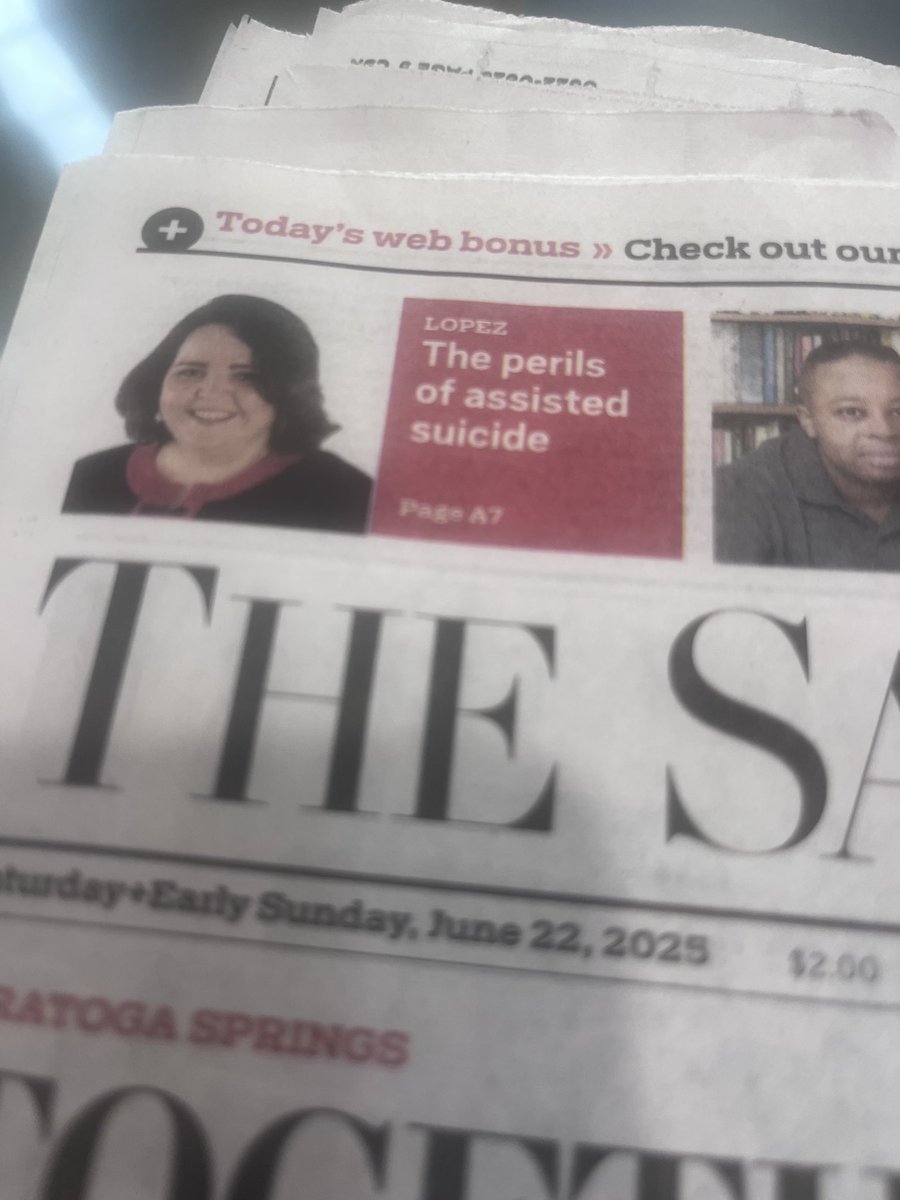
@kathrynlopez Thank you for bringing this to my attention! The person in the photo was on a radio show that I used to co-host years ago.
English
T.K. Small retweetledi

If Republicans in Congress want to reduce healthcare costs, they’ll use their next budget reconciliation bill to curb this 340B abuse. wsj.com/opinion/340b-d… via @WSJopinion
English

5 Ways To Invest in Latin America’s Energy Boom barrons.com/articles/energ… via @BarronsOnline
English

The single biggest problem in state governance is the political dominance of public unions. Several states are now pressing reforms that curb their coercive hold over their members. wsj.com/opinion/public… via @WSJopinion
This can't happen soon enough…!
English
T.K. Small retweetledi

Winston Churchill fought his depression with bricks. He'd lay them for hours at his country home in Kent. He joined the bricklayers' union. And in 1921 he wrote about why it worked. It took psychology another 75 years to catch up.
He called his depression the "Black Dog." It followed him for decades. His method for fighting it back was as basic as it sounds: laying brick after brick, hour after hour.
Churchill spelled out his theory in a long essay for The Strand Magazine. People who think for a living, he wrote, can't fix a tired brain just by resting it. They have to use a different part of themselves. The part that moves the eyes and the hands. Woodworking, chemistry, bookbinding, bricklaying, painting. Anything that drags the body into a problem the mind can't solve by itself.
Modern psychology now calls this behavioral activation. It's one of the most-studied depression treatments out there. Depression sets a behavior trap. You feel bad, so you stop doing things, and doing less means less to feel good about. Feeling worse makes you do even less. The loop tightens until you can't breathe inside it.
Behavioral activation breaks the loop from the action side. You schedule the activity first, even when every part of you doesn't want to. Doing it produces small rewards: a wall gets straighter, a painting fills in, a messy room gets clean. Those small rewards slowly rewire the brain. Action comes first, and the feeling follows.
Researchers at the University of Washington put this to the test in 2006. They studied 241 adults with major depression and compared three treatments: behavioral activation, regular talk therapy, and antidepressants. For the people who were most severely depressed, behavioral activation matched the drugs. It beat the talk therapy. A 2014 review of more than 1,500 patients across 26 trials backed up the result.
Physical work like bricklaying does something extra on top of this. It crowds out rumination, the looping bad thoughts that grind people down during the worst stretches of depression. Bricklaying needs both hands and gives feedback brick by brick: each one is straight or crooked. After an hour you can see exactly how much wall you built. No room left for the mental chewing.
The line George Mack used in his post, "depression hates a moving target," is good poetry. The science behind it is sharper. Depression hates a brain that has somewhere else to be.
English
T.K. Small retweetledi