Sabitlenmiş Tweet

After five incredible years building BTC Frontier Fund, backing 80+ companies, and investing across the Bitcoin ecosystem, the fund reached the end of its deployment period last year.
That is a major milestone. We set out to invest in a generation of Bitcoin founders, we deployed the capital, and now the fund naturally entered its next chapter: supporting the portfolio and continuing to be good stewards for our LPs.
As that chapter evolved, I started thinking seriously about where I wanted to put my energy next.
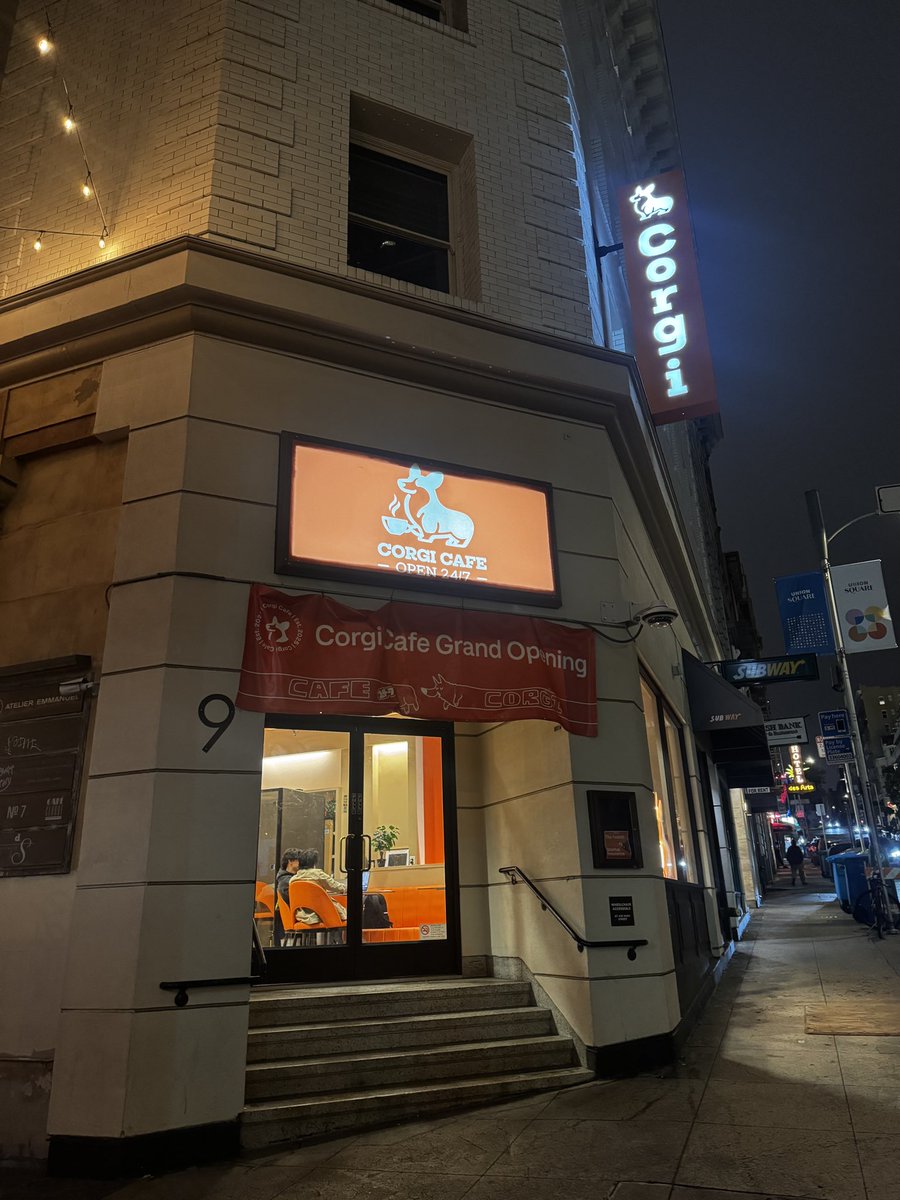
I’ve decided to accept a new role at Corgi Insurance @UseCorgi as Head of Cafe Expansion.
Part of why I took this role is San Francisco. In SF the capital is flowing, the energy is high, and founders are everywhere. People are genuinely optimistic about the future and the Corgi Cafe is packed late into the night.
But the biggest reason is that Corgi is the most exciting company I’ve come across in a long time.
Insurance is a bigger market than banking, payments, and credit card, combined. Large Language Models (i.e. AI) fundamentally disrupt both the business's cost structure and distribution by orders of magnitude.
Corgi has raised $378M in two years and recently reached a $2.6B valuation, but its current recurring revenue has already outgrown that number.
I’ve worked alongside founders who built billion-dollar companies before. Based on what I’ve seen so far, @nico_laqua and @emily_yuan_ have the talent to go many levels higher.
Corgi's culture is an 11/10. Seeing it up close has permanently changed me. It's insanely intense, but people are happy, paid well, and empowered to do work they could not do anywhere else. It feels like a generational company.
Director of Cafe Expansion also feels like a role built for me.
My whole career has been focused on building communities and helping founders. That was true at Lean Startup Machine, through the many accelerator programs I've run including Bitcoin Frontier Fund.
Building Ralf's Game Club taught me something else: I love physical spaces. I love operations. I love building with my hands. I love turning an idea into a place people can actually walk into.
Corgi Cafe brings all of that together. It sits at the intersection of startups, community, hospitality, operations, and third spaces. The job market is being reshaped in real time, and a lot of people are being left to figure it out alone. We need more places that help people find work, start companies, meet collaborators, and build a path forward.
WHY IS AN INSURANCE STARTUP BUILDING CAFES? 🤔
My role is not just to open a few cafes, but to open 100 in the next 6 months. The ambition is to have more Corgi Cafes than Starbucks in the coming years.
So why does an AI insurance company want to build cafes? I initially saw it as an obvious community and brand play. But Nico and Emily showed me there is a much deeper link between cafes and insurance.
In 1688, Lloyd’s Coffee House opened in London as global trade expanded. Shipowners, merchants, captains, brokers, and underwriters gathered there because maritime commerce involved enormous risk: storms, piracy, war, shipwrecks, and cargo that might never arrive.
People came for coffee, but they returned because it was where they found information, relationships, and counterparties. They learned which ships were sailing, what they carried, which routes were dangerous, and who was willing to take on risk. Over time, those repeated conversations became insurance infrastructure. Lloyd’s evolved into Lloyd’s of London.
Lloyd’s was not created because someone decided a coffee shop should sell insurance. It emerged because people making consequential bets were already gathering in one trusted place. The coffee house made it easier to meet, share information, build trust, and price risk.
That is the comparison to Corgi Cafe.
Corgi Cafe is not a novelty attached to an AI insurance company. It is a physical place where Corgi can show up in people’s daily lives, inside the communities and neighborhoods we serve. It creates familiarity before someone needs insurance. It turns an insurance company from a website or policy into a place with real people, relationships, and a role in the community.
The technology is different. Lloyd’s used shipping reports, reputation, and early underwriting. Corgi uses AI to make insurance faster, smarter, and easier to access.
But the underlying idea is the same: insurance works best when it is close to the people taking risks.
WE ARE HIRING ✍️
Corgi is expanding rapidly, and I’m looking for exceptional people ready to help build something that matters.
Startup experience, founder DNA, high integrity, and a relentless work ethic are mandatory.
If you that sounds like you, reach out to me at t [at] corgi [dot] com.
FINAL THOUGHTS 🧡
BTC Frontier Fund will always be part of my story.
I’m grateful for every founder, LP, builder, and friend who believed in me and shared that journey. We built something real together. We backed more than 80 companies, supported a generation of Bitcoin founders, and created relationships I expect to carry for the rest of my life.
I’m proud of that work, and I remain committed to the portfolio and the people behind it.
This new chapter does not erase the last one. It builds on it.
Everything I learned led me here. I’m excited to bring those lessons to Corgi, help build the next generation of places where people can meet, work, start companies, and create what comes next.
Onward.
English