Trinity Presbyterian Cork retweetledi
Trinity Presbyterian Cork
3.4K posts

Trinity Presbyterian Cork
@TPChurchCork
Jesus is Lord. Sundays 11:45ish. All welcome. Tweets by Rev Cronin.
Little William St, T23 XR63 Katılım Mart 2014
326 Takip Edilen218 Takipçiler
Trinity Presbyterian Cork retweetledi

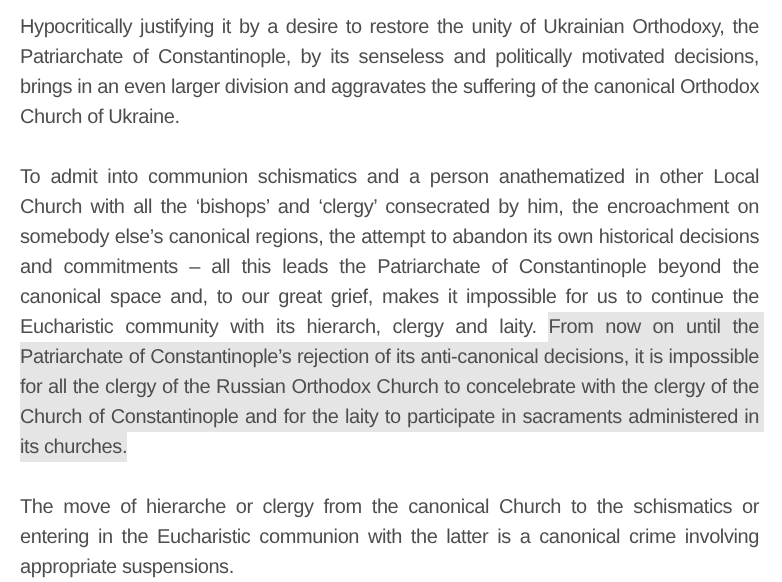
I find it strange that so many Eastern Orthodox I know seem to be totally unaware that the Patriarchate of Moscow is formally not in Communion with the Patriarchate of Constantinople.
Of all EO Christians, those under Moscow are roughly 50% of all Eastern Orthodox worldwide.
Now, only 2-3% of all EO Christians are directly under the Patriarch of Constantinople (including, notably, the Greek Orthodox Church in the US, ACROD, and Mount Athos). But until 2018, the Constantinopolitan Patriarch was considered the "primus inter pare," or "first among equals" after the Great Schism of 1054.
This is to say that the Patriarch who held the highest place of honor amongst all EO Patriarches -- and who held the position for nearly 1,000 years, from 1054 to 2018 -- is no longer in full Communion with roughly half of all Eastern Orthodox Christians on earth.
It's also to say that roughly half of all EO Christians cannot receive communion at 19 out of 20 Monasteries at Mount Athos -- which is arguably the most spiritually significant place in Eastern Orthodoxy outside the holy land.
To complicate matters further, the breakage in communion only goes one way. ROC-aligned Christians are instructed not to receive Communion at Constantinople-aligned Churches (such as GOARCH, ACROD, and most of Mount Athos) but faithful who come from Constantinople-aligned Churches CAN receive at ROC Churches... of course, enforcement varies wildly, and the old rule of "ask your Priest," (the EO answer for practically everything) seems to be the default...
In all truth, it's an absolute mess, and it's a mess about which most EO laymen seem to be blissfully unaware.
That's probably spiritually healthy for a layman. But when non-EO Christians ask questions like "which Orthodox Church?" or point to politicized factions, disorganized intercommunion, or a habit of splintering in the EO world -- no Eastern Orthodox Christian should be particularly surprised.
And I find that cradle Eastern Orthodox generally are not surprised. It's only the converts who seem to be indignant that anyone outside the EO world would think these giant divisions and complicated breakages are at least a little strange.

English
Trinity Presbyterian Cork retweetledi

@redeemed_zoomer grok.com/share/c2hhcmQt…
I asked grok to put " an apologetical narration" into modern English.
It's the first tract asking for toleration of different churches. The birth of independencey which of course leads to denominationalism..
English

@D_60W @redeemed_zoomer We are Irish. And protestant.
English

@redeemed_zoomer There is no such thing as "Irish Protestants". Occupying Ireland doesn't make you Irish.
English
Trinity Presbyterian Cork retweetledi

The school textbooks tell you the settlers crossed the Atlantic for religious freedom.
Some of them did, partly. What the textbooks leave out is the thing that sits in the actual letters, in the sailors' accounts, in the merchant pamphlets circulating in English ports from the 1580s onwards: a major reason people came to America was the wild game. Meat you could take. Meat nobody owned. Meat that walked into camp.
For a population legally separated from the animal for five hundred years, this was the whole pitch.
Consider what they were leaving.
A family in a Devon cottage in 1618 eats pottage. Oats, barley, an onion, whatever greens grew near the back door. No meat in it this week. No meat in it last week. There will be meat in it on Christmas Day, God willing, if the chicken is still alive by then. The deer in the forest at the end of the lane have been the king's property under the Forest Laws since 1066. Taking one is a hanging offence. The father has never taken one. His father never took one. The institutional memory of not taking one goes back five hundred and fifty-two years.
Then the stories arrive. From sailors. From ship's captains. From merchants returning through Bristol and Plymouth.
The birds come in flocks that darken the sky for three days. Not an afternoon. Three days. Passenger pigeons in numbers later estimated at three to five billion in a single flock, making a sound early settlers compared to the roar of a river that refused to stop. A man with a net could take five hundred in an afternoon. The king of England had no claim on the sky over Massachusetts.
The rivers, the captains said, ran so thick with salmon that the water appeared to boil. The deer walked into camp, looked at the fire, and were shot. The oysters on the Atlantic shore came the size of dinner plates, piled in reefs you could lean over the side of a boat to harvest. Turkeys weighing thirty pounds stood in clearings with the fearlessness of an animal that had never been hunted by anything on two legs. Bison herds on the plains took four hours to cross a ford.
And nobody, crucially, owned any of it.
The father in Devon lies awake that night thinking about the sky going dark for three days. He is also thinking about religious freedom. Theological persecution was real. The Mayflower passenger list included genuine dissenters. That was part of it. It was not, for most of them, the biggest part.
The biggest part was that the animals in the captain's story belonged to nobody, and the family had been watching animals that belonged to somebody else walk past their cottage for twenty generations.
Between 1620 and 1640, roughly 20,000 people made the crossing. By 1700, 250,000. By 1900, fifty million Europeans had crossed, most of them peasants from cultures where meat had been restricted for centuries, most of them arriving within the first generation at a standard of eating their grandparents would not have believed.
A labourer in Pennsylvania in 1750 was eating more meat per week than an English nobleman had eaten in 1450. An Irish emigrant's grandchild in Boston in 1900, whose great-grandmother had starved in 1847 while Irish cattle were shipped past the coffin ships to English markets, was eating steak on a Tuesday and not thinking about it.
At the centre of the great migration was hunger. Specifically, hunger for meat. Enforced since 1066, reinforced by Enclosure for another four hundred years, reinforced by the quiet understanding that the venison belonged to the lord and the pottage belonged to you.
They crossed an ocean because, finally, you could go somewhere the deer walked into camp and the pigeons blocked out the sun and nobody had a legal claim on any of it.
You could eat like a lord without owing a lord anything.
They crossed an ocean for that.
And having got to it, they did not give it back.

English
Trinity Presbyterian Cork retweetledi

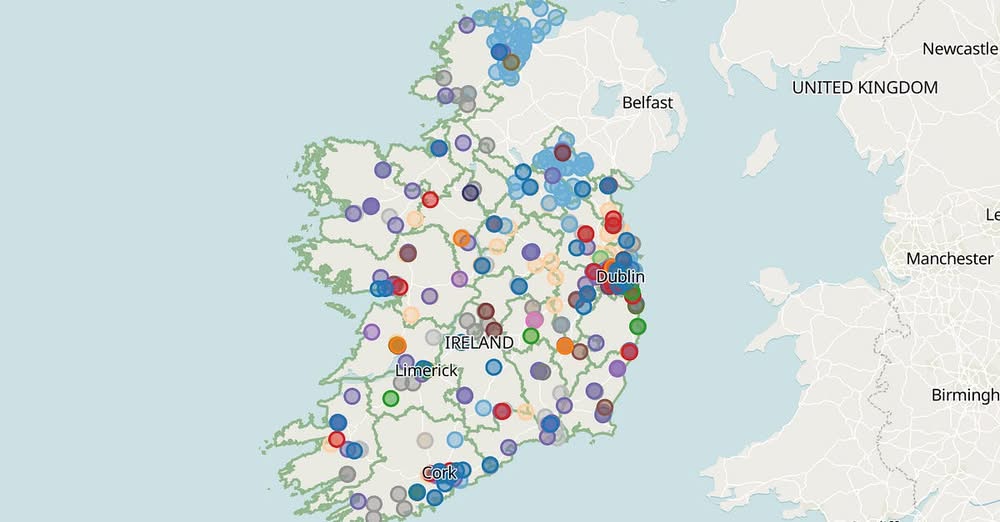
@jonnypollock What is the criteria for getting listed as 'Pentecostal'?
(Who should all join CCI !)
English

@jonnypollock 80 independent evangelicals!
They should all join the ABCI. (probably some can't, but I suspect most could.
English
Trinity Presbyterian Cork retweetledi

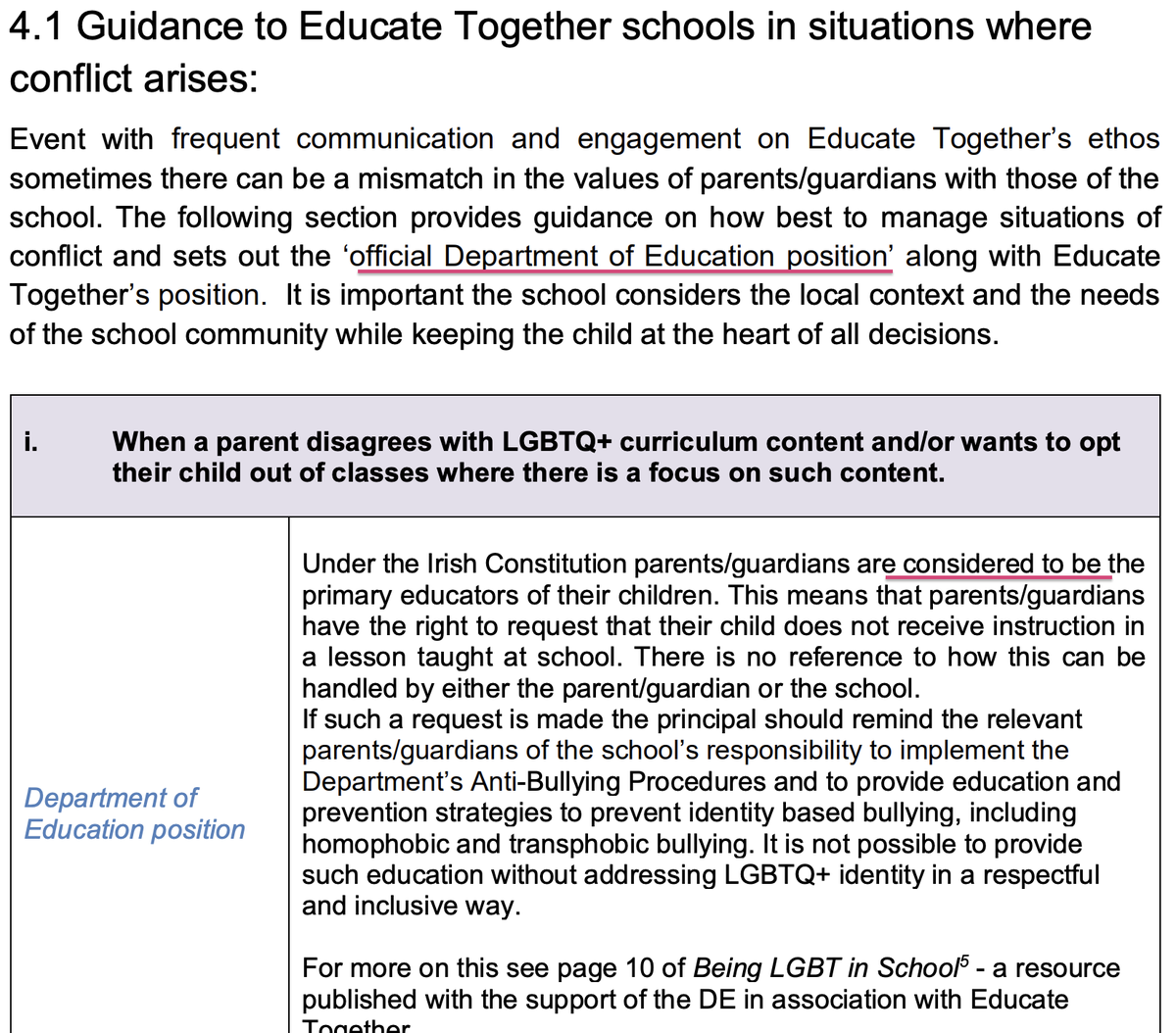
The Educate Together Ethos Guidance - Shocking from a parent's perspective.
Educate Together states that in the Irish Constitution parents are “considered to be” their children’s primary educators — and that this is the official position of the Department of Education.
That might need to be clarified @1Hildegarde
Parents, they say, 'have the right to request' opt-outs, rather than having a right to the opt-out itself.
Teaching LGBTIQ+ issues cannot be avoided because of the anti-bullying policy (can never escape that kindness), and that principals should 'remind parents' of the school’s responsibility to implement this. Astonishing!
This is all from just one paragraph in the 29 page document! ⬇️
@Education_Ire @EducateTogether can you share the documents that back up these claims?
Link to document and ET below.


English
Trinity Presbyterian Cork retweetledi

A parasite that has been eating people for 3,500 years is about to be wiped off the planet. It infected 3.5 million people in 1986. Last year, it infected 10. And I have not seen it make a single front page.
It is called Guinea worm. You drink contaminated water from a pond in a poor village. A year later, a worm up to three feet long starts coming out of your leg through a burning blister. There is no pill that stops it and no surgery that works. You wrap the worm around a stick and pull it out slowly, over days or weeks, inch by inch. If you rush, the worm breaks inside you and causes a fresh infection.
Guinea worm is ancient. Preserved worms have been pulled out of Egyptian mummies from around 1000 BCE. The Ebers Papyrus, an Egyptian medical scroll from 1550 BCE, describes pulling the worm out with a stick. For three and a half thousand years, that was the best humans could do.
Then in 1986, public health workers decided to kill the parasite off. They had no vaccine and no drug. What they had was cheap cloth water filters and a small army of volunteers willing to walk from village to village for decades.
The plan was simple. Give everyone who drinks from a pond a cloth filter to strain out the tiny water fleas that spread the parasite. Then send volunteers walking house to house, year after year, teaching people how to use the filters and keeping anyone with an emerging worm out of the water.
It worked. From 3.5 million cases a year to 10. Four were in Chad, four in Ethiopia, two in South Sudan. The other four countries where the worm used to be common, Angola, Cameroon, the Central African Republic, and Mali, had zero human cases for the second year in a row. The World Health Organization has already certified 200 countries as Guinea worm free. Six are left.
The last hurdle is dogs. Cameroon had 445 infected animals last year and Chad had 147, so a lot of the remaining work is on animals, not humans. Strays get leashed, and crews treat ponds to kill any remaining worms. The campaign keeps watching until the number hits zero.
When Guinea worm hits zero, it becomes the second human disease ever erased from the planet. The first was smallpox. It will also be the first parasite humans have ever wiped out, and the first disease ever ended without a single dose of medicine. Volunteers walked village to village with cloth filters for 40 years. Now a plague from the age of the pharaohs is about to be gone.
ً@prinkasusa
Give me the kind of good news from around the world that nobody ever talks about... but should.
English
Trinity Presbyterian Cork retweetledi