Tabloid Witch on Horror Film Aesthetics

299 posts

Tabloid Witch on Horror Film Aesthetics

Tabloid Witch on Horror Film Aesthetics

@TabloidWitch

The Tabloid Witch Awards horror film contest was founded in 2004. Read her story in "Horror Film Festivals and Awards" by Thomas M. Sipos (McFarland 2012)

Santa Monica, CA Katılım Kasım 2025
85 Takip Edilen63 Takipçiler
Sabitlenmiş Tweet
Tabloid Witch on Horror Film Aesthetics
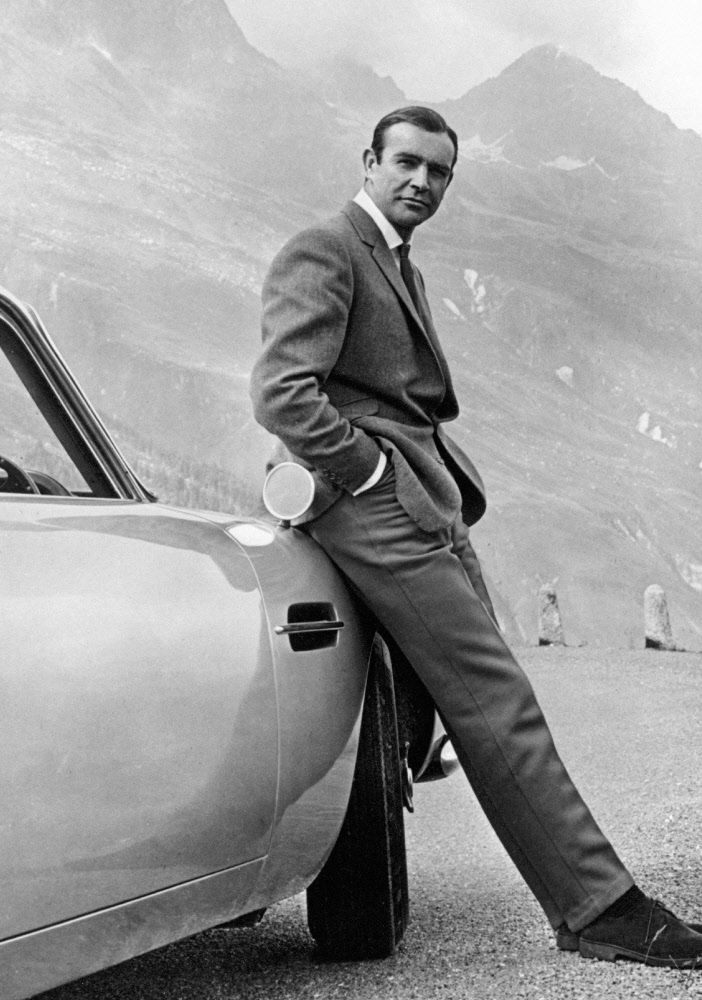
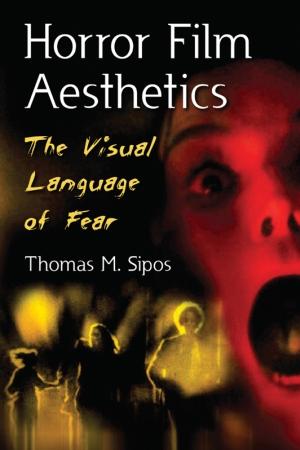
Characters Are the Car in Horror's Rollercoaster Characters hook an audience. Readers remember Sherlock Holmes and James Bond even if they forget the plot points or dramatic details. What is character? Writing + acting = character. The most memorable characters from classic films and TV shows are created by chemistry. The chemistry that occurs when the right actor meets the right part. This is why it's been said that 90% of directing is casting. What has this to do with scripting a horror film? When I first saw Dawn of the Dead it blew me away. I was in my teens and had never before seen such gore. But after decades of horror, I'm bored by gore. Actors in bad makeup eating bloody intestines put me to sleep. I think this is why so many zombie comedies are being shot. Hardcore horror fans are jaded. At a certain point, gore alone looks silly or sordid, rather than scary or shocking. Filmmakers can try to "push the gore envelop," but I'm not sure there's anywhere left to go. How then to engage audiences for your latest horror film? Character. Horror films have been compared to rollercoasters. To which I'll add: characters are the car. A great character engages an audience. Audiences sympathize and empathize with the character, getting into the character's skin so they can "suspend disbelief" and enter the character's world, being shocked and frightened by whatever shocks and frightens the character. Effective characters take audiences for a ride on the coaster. Ineffective characters leave audiences standing on the ground, outside the story and looking up at the coaster. They see it twisting and turning, but they're not on board experiencing the thrill of the ride. How to create an effective character, one who engages an audience? Audiences should care about the character, but that is not to say the character must be likeable. =================== For more about creating an effective horror story, especially on film or video, see my book, Horror Film Aesthetics: Creating the Visual Language of Fear. amazon.com/exec/obidos/AS… #HorrorWriting #HorrorScriptwriting #HorrorScreenwriter #HorrorFilmmaker #HorrorFilmAesthetics #HorrorFilmmaking
Tabloid Witch on Horror Film Aesthetics tweet media
English
0
0
1
798
Carnival of Horror
Carnival of Horror@HorrorCarnival·
Out of these 1997 movies, which one is your top pick?
Carnival of Horror tweet media
English
176
43
369
20.5K
Horror Historian
Horror Historian@HistorianHorror·
The House Where Evil Dwells was released #OTD in 1982 🎬
Horror Historian tweet media
English
2
0
8
218
House of Dracula (☥𝐃𝐁)
Horror Express (1972) The film gained Inspiration by John W. Campbell's "Who Goes There?" Novella. (Same as The Thing 1982 which sticks more closely to the book). Do not let the dubbing fool you, this is an outstanding film.
House of Dracula (☥𝐃𝐁) tweet media
English
11
40
236
4.5K
SpyHards - A Spy Movie Podcast
Delete one #JamesBond film forever… 💎 Diamonds Are Forever 🧬 Die Another Day 💔 No Time To Die 🎣 A View To A Kill Which one are you sacrificing? 🍸
SpyHards - A Spy Movie Podcast tweet media
English
452
27
291
59.3K
Tabloid Witch on Horror Film Aesthetics
@the_swap_shop1 Ripley isn't a cartoonish Mary Sue who knows all, and does all effortlessly. Ripley is complex, courageous yet not foolhardy. She seeks to avoid danger. She's not prone to bragging.
English
0
0
1
30
Tabloid Witch on Horror Film Aesthetics
This book lays to rest one myth: that horror films get no respect. It's a widespread myth, promulgated probably without much thought, repeated because everyone else repeats it. I've heard it at horror conventions. I've heard it from horror artists. I've come across a number of horror film festivals that lament that horror is an ignored, shunned, and disrespected genre -- and so such-and-such festival was founded to finally give horror its due. Forgotten, by who? Not by the major studios, which recognize that horror is big box office. Ignored, how? The entertainment news media and academic presses both generously cover horror. Sure, Oscar usually overlooks horror, at least for its major award categories. But horror is not starved for awards. Horror has dozens of prizes and plaques and trophies seeking to honor the genre. Several of them claim to be "the Oscar of horror," but it would perhaps be more accurate to say that horror has many Oscars. I doubt that any genre has as many film festivals devoted to its celebration and promotion. Far fewer festivals are devoted to science fiction or fantasy -- and most of those welcome (and are sometimes dominated by) horror. Indie film festivals outnumber horror festivals. (Probably, I'm actually not certain.) But again, horror is welcome even at the more prestigious indie festivals. So let's forever end the myth that horror is forgotten, ignored, or unappreciated. Horror has many suitors. She is a darkly alluring lady who's dropped her handkerchief, whereupon a throng of admirers crowd about her to offer assistance. Horror doesn't need any more dance requests, or bouquets, or expensive gifts. She needs help in keeping track of the many she's already received. Hence this book. It has three parts. First, a text portion examines horror film festivals from around the world, offering tips and insights to filmmakers and festival directors alike. Second, there is a directory of horror film festivals and awards, past, present, and prospective. And finally, a roster of horror's many festival and award winners. It's an extensive list, forming the largest part of this book, and offering overwhelming evidence of all the honors available to horror films (and TV shows) and to those who create them. Unlike Oscar or Emmy, it's especially important to record horror's many award winners, because, though horror film festivals are numerous, they are also ephemeral. If their winners are not recorded in some permanent form, and soon, they'll begin disappearing down a memory hole. Some of them are already lost to history. A few of today's genre film festivals date back to the 1960s, but the real flowering of horror film festivals occurred during the 2000s. Most of the festivals in this book's directory were founded after 1999. Ten years is old for a horror film festival. I suspect several factors contributed to the 2000s horror film festival boom: 1. the rise and success of indie film festivals in the 1990s; 2. the spread of inexpensive production equipment, creating a flood of horror films seeking promotion and distribution; 3. the growth of the internet and social networking, making it easier to promote both films and film festivals. The internet has both blessed and cursed horror filmmakers. Cyberspace fueled the horror film festival boom, but it was also the sole repository for many of their winners lists, either on festival websites, or as reported by online genre magazines. Cyberspace offers speed and breadth, but not permanence. Festivals and online magazines die. Their urls and web hosting agreements expire; the webpages listing the festival winners vanish. Adding to the researcher's frustration, some festivals only list their more recent winners online. They update, but don't archive. In some such cases, festival directors helpfully emailed me their lists of past winners. In other cases, I hunted for orphaned webpages listing previous winners, Googling or guessing at the likely urls. Directors of defunct festivals, when I found them, sometimes seemed indifferent about locating their old records, and had to be politely prodded every few months. A director of a festival that was still running had no records of his earlier winners, and could not remember them. A few former festival directors may have lost interest in their festival's history, but the winning filmmakers (and cast and crew) care deeply. So too the fans, I think. It takes much effort and expense to complete a film, enter a festival, and actually win. The winners deserve to be memorialized in a permanent record. This book is that record. Why are horror film festivals so ephemeral, their winners so easily forgotten? Partially because horror festivals, like horror films, are a largely indie, grassroots phenomenon. Yes, some festivals have grown up and turned corporate. They are old, well-established, profitable, and professional. They keep good records. But other festivals are young, impoverished, labors of love, run by a group of friends or even one person. If that person feels overwhelmed and quits, the festival dies. It can't happen to Sundance or Cannes, with their big budgets and boards of trustees and directors, but grassroots horror festivals live more tenuously. This book's text portion incorporates interviews with some two dozen horror film festival directors. This "behind the scenes" look should help horror filmmakers make better films, and take fuller advantage of their festival experiences. It should also assist film festival directors, both current and aspiring. I expect many new horror film festivals will be started over the coming years. At Amazon: amazon.com/exec/obidos/AS… #HorrorFilmAward #HorrorFilmAwards #HorrorFilmFestival #HorrorFilmFestivals
Tabloid Witch on Horror Film Aesthetics tweet media
English
0
0
0
59
Tabloid Witch on Horror Film Aesthetics
This is a book about horror film aesthetics. That sounds abstract and theoretical, but quite the contrary, this book is intended to be pragmatic. A practical and useful guide for aspiring horror filmmakers. This book analyzes how various cinematic tools -- acting, makeup, costuming, set décor, framing, photography, lighting, editing, and sound -- have been used by past films to effectively (or in some cases, ineffectively) create horror on screen. "This book is an 'aesthetic how to' guide for horror filmmakers. Not to help them copy past films, but rather, to spark their imaginations. To expand their understanding of the horror genre -- its nature and appeal to viewers -- and their appreciation for the full creative potential of their film and video equipment. Aspiring filmmakers often read technical manuals to learn what the buttons on their cameras do, but they don't bother to learn how to use those buttons creatively. I know this as a horror film fan, critic, and journalist, and also from screening films for the Tabloid Witch Awards horror film contest and festival, which I founded in 2004 and continue to manage. This is not a book about how to use film and video gear.  This is a book about how to use film and video gear effectively. In a way that conveys your horror story and themes in a clear, entertaining, and frightening manner. Student and independent filmmakers should find this book useful, but it is also intended for the hardcore fan. I hope this book will enable fans to 'see things' in horror films they may have previously missed, and thus gain a deeper appreciation for the genre. An appreciation that leads to greater viewing pleasures. On Amazon: amazon.com/exec/obidos/AS… #HorrorFilmAesthetics #FilmAesthetics #HorrorFilmmaking #HorrorFilmmakers #IndependentFilmmakers #IndependentFilmmaking #Aesthetics
Tabloid Witch on Horror Film Aesthetics tweet media
English
0
0
0
79
Tabloid Witch on Horror Film Aesthetics
@HistorianHorror Sometimes you wonder why producers bother to buy the TV rights to a film, only to produce a TV show wholly unrelated to the film. Friday the 13th: The Series had nothing to do with the film franchise. Although in that case, I thought the TV series was much better.
English
0
0
1
24
✒️
✒️@Literariium·
✒️ tweet media
ZXX
5
556
3.4K
56.4K
Tabloid Witch on Horror Film Aesthetics
Stephen King wrote in Danse Macabre that most horror anthology series, such as the original Twilight Zone and Outer Limits, have about 1/3 great episodes, 1/3 okay, and 1/3 duds. But The Hunger series had very few gems, and mostly duds. It had an opening narrator (they went through several) who tried to explain how the hunger theme applied to the upcoming episode. A hunger for money, drugs, sex, etc. But they soon ran out of interesting things people might hunger for. The "themes" became repetitive, the the opening narrations became vague and arbitrary, trying to shoehorn the story into the "theme." The narrations were also pretentious. The whole series felt pretentious, which happens when producers strive to be profound, but fail to deliver. The series, being on cable TV, also tried to distinguish itself by offering more explicit sex and violence than one could find on broadcast TV at the time.
English
1
0
1
16
Tabloid Witch on Horror Film Aesthetics
As of May 1, 2026, the Tabloid Witch has received 158 horror film entries for 2026 awards consideration: 15 features and 143 shorts. Entries have come from Albania, Argentina, Belgium, Brazil, Canada, China, Egypt, Estonia, France, Germany, Ghana, Greece, Hong Kong, Hungary, Indonesia, Iceland, India, Israel, Italy, Mexico, Netherlands, New Zealand, Philippines, Poland, Portugal, Saudi Arabia, Serbia, Singapore, South Korea, Spain, Taiwan, Thailand, Turkey, Ukraine, the United Kingdom, and the United States. Details on how to submit your horror film for 2026 are at: TabloidWitch.com. The entry deadline is August 31, 2026. #HorrorFilmContest #HorrorFilmContests #HorrorFilmAward #HorrorFilmAwards
Tabloid Witch on Horror Film Aesthetics tweet media
English
0
0
1
96
Tabloid Witch on Horror Film Aesthetics
It's a sign of appreciating a unique cinematic vision, a truly independent and outre voice. Many filmmakers are praised for it, but few earn such praise. Matt Farley's cinematic style is as unique as that of a David Lynch or Hal Hartley. Concerning such artists, you either get them or you don't.
English
1
0
1
48
Emir Han
Emir Han@RealEmirHan·
Pierce Brosnan says his James Bond movies were 'never good enough' “The violence was never real, the brute force of the man was never palpable. It was quite tame.” “I have no desire to watch myself as James Bond. 'Cause it's just never good enough. It's a horrible feeling."
English
607
89
3.3K
1M