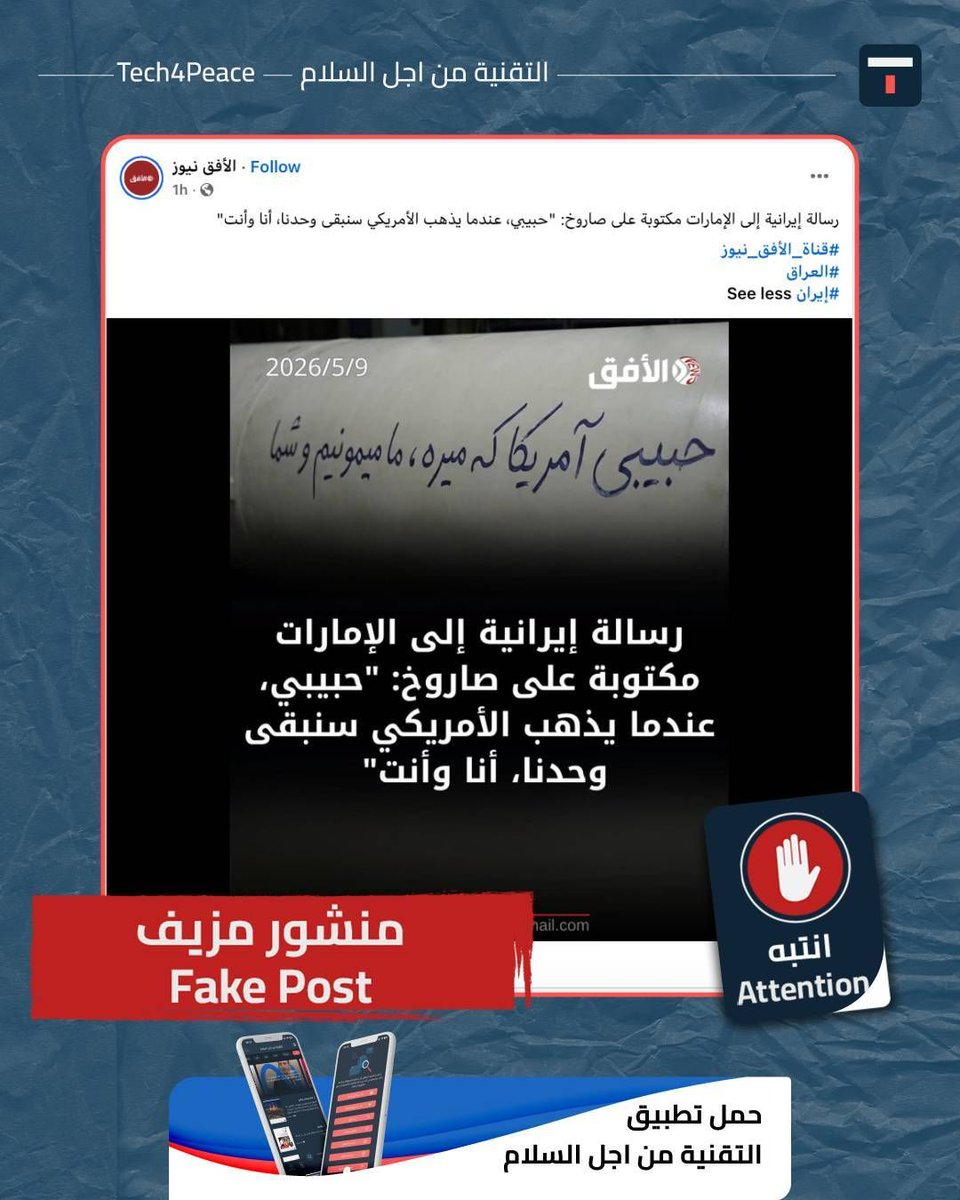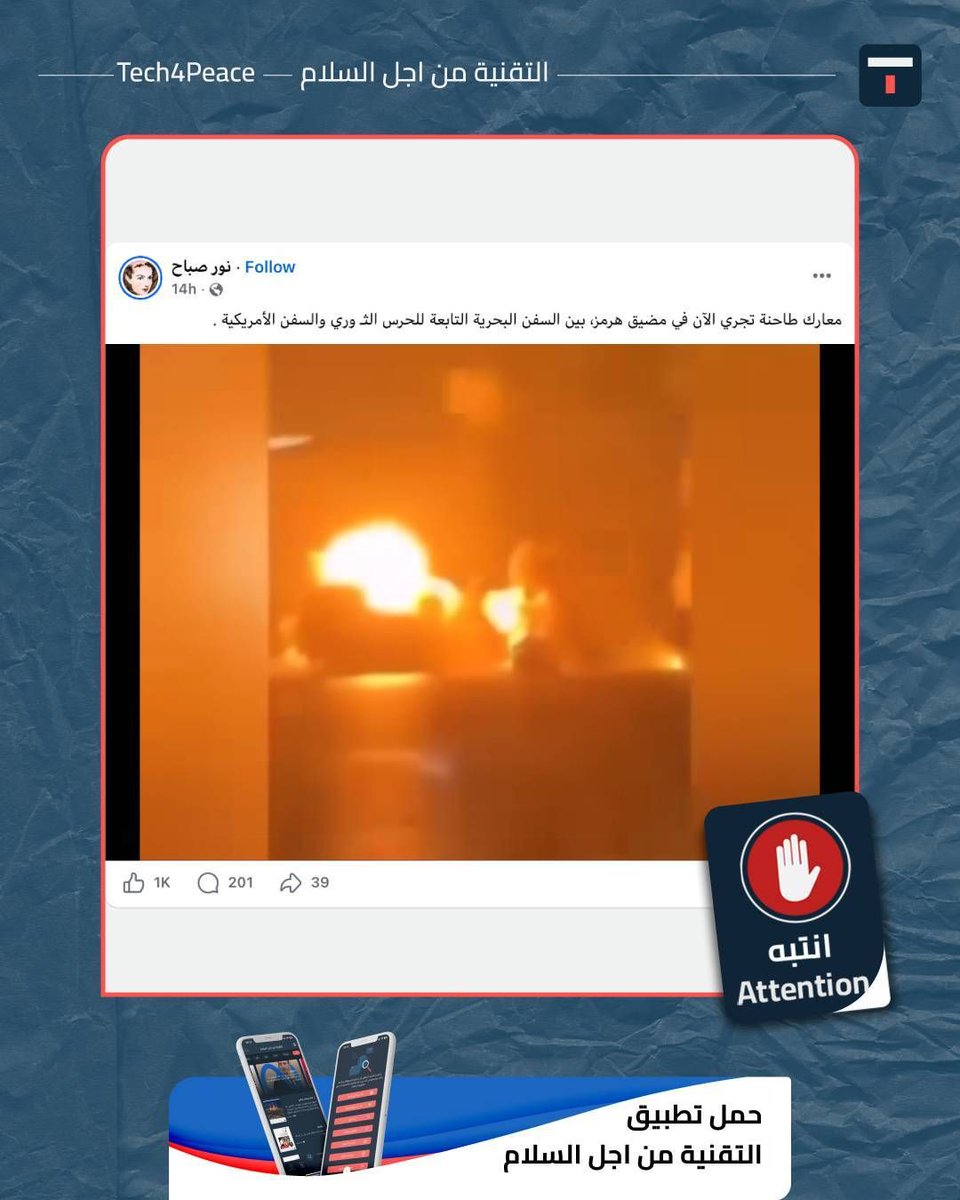

#attention...
#fake_news...
A report circulating on social media claims that “due to the Iranian-Zionist-American war and the flight ban over areas of Iraq, including Basra, flights spraying chemtrails in Iraqi airspace have ceased, leading to a return to normal conditions in Iraqi skies—characterized by heavy rainfall—especially in March.”
#The_Truth:
There are no reliable scientific or security reports proving the existence of an international conspiracy targeting Iraq through the release of substances into the atmosphere. These claims fall under the category of conspiracy theories circulating on social media without any scientific evidence. Furthermore, there is no scientific substance known as “chemtrails.” as aircraft contrails are not chemical substances, and these contrails do not control the formation or fall of rain. Rather, changes in rainfall are linked to known climatic factors such as temperature, humidity, and atmospheric pressure systems. Therefore, this claim is false and is classified as misinformation with no scientific basis.
The idea of “chemtrails” began to emerge in the late 1990s in the United States, following the publication of a 1996 U.S. Air Force report on weather modification capabilities. Although there are limited and proven technologies in this field, some people exploited these reports to accuse governments of spraying mysterious substances from aircraft. This claim later evolved into the assertion that the contrails left by aircraft are “chemtrails,” especially in cases where this trail persists in the sky for a long time or takes on cloud-like shapes, which proponents of this theory considered evidence of a secret project, despite the lack of any scientific proof to support this.
In contrast, there is no scientific evidence for the existence of a substance called “chemtrails” being sprayed from airplanes for the purpose of climate control, and no competent scientific authority has confirmed this claim.
Furthermore, the trails seen behind airplanes are scientifically known as “contrails,” a natural phenomenon resulting from the condensation of water vapor in airplane exhaust when it encounters cold air in the upper atmosphere. These trails form according to well-known physical laws, and their shape and duration vary depending on temperature and humidity.
Aircraft engine exhaust consists of water vapor and carbon dioxide (CO₂) as well as other emissions resulting from fuel combustion, such as sulfur oxides (SOx), hydrocarbons (HC), and fine particulate matter. Since aircraft fly at high altitudes where temperatures drop significantly, the hot exhaust interacts with the cold air, sometimes leading to the formation of a visible cloud resembling white streaks. This phenomenon is similar to what we see when exhaling in cold air or when car exhaust appears in winter.
As for the impact of aviation on rainfall, there is no scientific evidence directly linking a ban on flights in a specific region to an increase or decrease in rainfall, as precipitation depends on a complex interaction between temperature, humidity, atmospheric pressure, and wind patterns. and reports from the Intergovernmental Panel on Climate Change (IPCC) indicate that changes in precipitation rates are primarily linked to global climate change, not aviation activities.
As for the causes of rainfall changes in Iraq, climate studies indicate that the Middle East, including Iraq, is experiencing a decline in rainfall due to climate change and rising temperatures. Iraq is also facing a sharp drop in the water levels of the Tigris and Euphrates rivers, which are the lifeline for more than 90% of the country’s population, This is due to a combination of factors, including climate change and reduced precipitation, as well as water policies in neighboring countries, such as the construction of dams at the headwaters of rivers, which has reduced Iraq’s water share. United Nations reports indicate that Iraq is among the countries most affected by climate change globally.
#it_ends_with_us
#Tech4Peace
#T4P

English