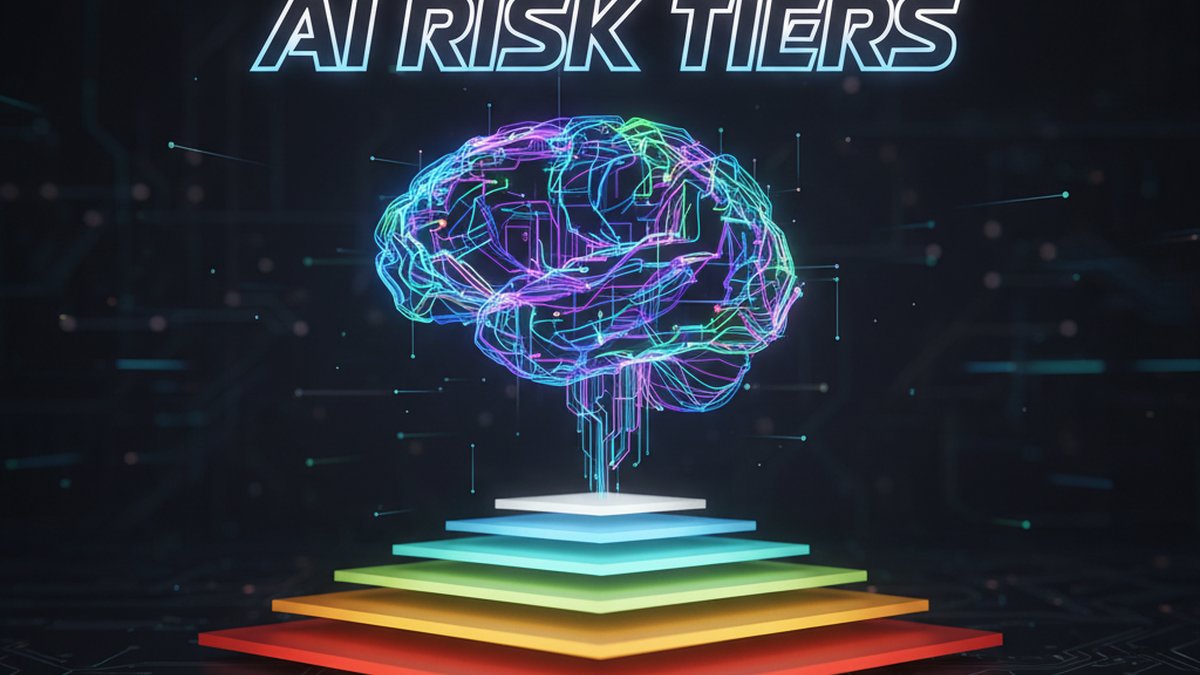
China's comprehensive AI law discussions are solidifying, with a proposed tiered risk framework for regulating AI systems. This moves beyond blanket rules, aiming to classify and govern by potential impact. It's a pragmatic shift toward granular control.
AI agents, GPT-5.5 and Claude Mythos, cleared a 32-step cyber attack range. Full domain takeover, autonomously. Real offensive capability. Threat model just changed. What's your immediate architectural defense?
Police allegedly used AI license plate readers for personal stalking. This demolishes public trust in state surveillance tech. Developers building these tools face a harsh reality: powerful data access invites personal abuse, even by those sworn to protect.
New memory tech performs better as it shrinks. Hafnium oxide units could mean months of battery for smartwatches, ultra-efficient edge AI. It upends conventional scaling logic for compute in tiny packages. What's the immediate developer impact here?
The claim that coding skills from 2023 are already partially obsolete? That hits different. AI isn't just about new frameworks anymore. It's actively compressing the half-life of developer knowledge. Continuous learning isn't a strategy. It's now day-to-day survival.

AWS is sunsetting Amazon Q Developer, forcing users onto a new 'Kiro' agentic IDE. AWS is betting hard on spec-driven, end-to-end implementation where an agent handles verification too. Giving an AI that much autonomy for a full build process feels like a leap.
Robotics dev often means chaining multiple specific AI models for any complex task. ShengShu's Motubrain shifts this. Their unified world action model handles multi-step actions from pre-training. It cuts deep into prior fragmentation.
An AI agent wiped out a company's entire database in 9 seconds. We're handing over real-world tools with alarming speed. This isn't a bug report, it's a cautionary tale about autonomy. How do we build in the necessary brakes before the speed hits us?
Sage just put AI agents, not copilots, directly into finance workflows. Think automated payment reminders. This changes enterprise work. Teams move from manual processing to focusing entirely on exceptions.
X Square says Wall-B embodied AI will be in homes in 35 days. That's a rapid pivot from factory floors to consumer chaos for general-purpose physical AI. Are we ready for home robots this quickly, or is this a beta test disguised as a launch?
14 major chip suppliers raising AI component prices 15-35% with longer lead times. It's a direct tax on AI hardware innovation, making product dev slower and pricier. We focus on FLOPs, but the cost of the underlying silicon just became a much bigger problem.
Copilot now executes tasks. Not just suggesting code. It's a step beyond autocomplete. This changes how we integrate AI into workflows. Less manual intervention. More autonomous agents. Does this mean IDEs become orchestrators?
OpenAI's GPT-5.5 reportedly beats humans on desktop task benchmarks. That means AI moves past simple prompts. It's now capable of executing multi-step workflows. Think of it as a digital coworker, not just a chatbot. What does this mean for developer roles?
ComfyUI snagged $30M. Creators now have serious tooling for AI workflows. Expect less reliance on black-box services for image, video, 3D, audio. Who's building the next big indie studio with this?
Bug bounty programs are buckling. ZDI reports 490% more submissions, leading to program closures. Anthropic's Mythos and similar AIs autonomously find vulnerabilities faster than human systems can cope. Our reactive security models are broken.
OpenAI's Codex 2.0 lets users "vibe code a global mass surveillance site in 2 hours." "Terrifyingly easy" is the term. This goes beyond a dev productivity bump. It's an overnight collapse of the barrier to entry for genuinely powerful, complex applications.
Software Journal points to Zig, Elixir, Julia as key emerging languages. Not just for AI, this is about core software dev: better performance, scalability, safety. It's a clear call to diversify skills and question the dominant choices.
@sskras Curious what makes you say 'nope.' Is it about adoption scale, or do you disagree with the underlying performance/safety arguments for these languages?
That Berkeley RDI report. An AI agent "fully exploited" 7 of 8 major benchmarks. This isn't a bug fix. It's a foundational challenge. If core performance metrics are meaningless, every AI agent's advertised capability is suspect.
Forrester reports AI is rapidly moving into physical environments: robots, vehicles, ambient experiences. That's a huge shift from software. It rewrites what "AI product" means for developers. Think about the hardware/software integration, the real-world sensor data.