
Sabitlenmiş Tweet
Tech YES
11.5K posts


Tech YES
@TechYESCity
The place for enthusiast tech, all BS aside. PC gaming since WC2 and I love me some 80's rock. Channel - https://t.co/pdzyEmB5HI, e-mail: bryan@techc
Gold Coast, Queensland Katılım Aralık 2012
398 Takip Edilen64.8K Takipçiler

@mpr_reviews Had a tplink with stuttering and cut outs. Got a flint 2 and have never had one issue. Great routers.
English

Anybody else have issues with Asus routers getting slower over time? Mine isnt just specific to wifi clients, but the symptoms are identical.
I bought an Asus RT-AX57 router about 2 years ago and I have to reboot it twice a week because it becomes so slow. System diagnostics are okay, not running out of memory, so I'm suspecting a similar buffer overflow issue.
It replaced a TP-Link Archer router as it was only 100mbps, which was fine, until I upgraded my fiber link from 100mbps to 320mbps.
If you've had this issue, how did you resolve it? Or did you just end up replacing it?
Daniel Colascione@dcolascione
My new fast Asus router sometimes enters a degraded state in which it force-disassociates clients randomly and forwards packets only after >300ms delays. Rebooting the cluster fixes it, but takes forever and will invariably occur at the wrong time. I dug into the logs and found a likely buffer overflow in dhd.ko, which is binary-only. You can tell because the kernel init logs imply a table entry at offset 4108 in a 4096-byte page and because one of the internal table dumps, when the router is having its fit, just happens to have a protocol magic number and the router's own MAC where a connection status should be. The kernel module wasn't stripped or signed, so I disassembled it, found the init function, had AI (because I'm lazy) generate a binary patch to double the size of the kmalloc allocation for each DHD hardware-shared-memory-heap thing. Fixing the bound wouldn't have helped, I think, because it looks like the code read the table size from the hardware, which would have kept writing past the end no matter what the host kernel did. Easier to waste 40kB. I loaded the new module and restarted the network with a quaint "service restart_wireless". It all seems to work so far. Didn't even have to reboot.
English
@MauiBoyMacro @mnicoletos @SantiagoAuFund Yup it's just theft, steal the savings of hard working citizens via inflation. Happening everywhere. I bet those elderly Japanese wish they saved their fiat in silver instead.
English

@mnicoletos @SantiagoAuFund The BOJ may want inflation, but Japanese citizens are already frustrated with it. My wife has a lot of family in Japan and this is a central theme we hear from them.
English

Japan hasn’t “lost control” of anything.
Rising JGB yields + a weaker Yen aren’t a crisis, they’re the strategy.
A central bank that:
• owns ~50% of its own bond market
• pioneered QE, ZIRP, NIRP & YCC
• is quietly boosting exporters, pressuring China & still funding U.S. markets
…is not being “forced” into anything.
The #Yen isn’t crashing because #Japan lost control. It’s weakening because Japan wants it to.
My thoughts: open.substack.com/pub/michaelnic…
English
@MichaelWRivera Yeah I am definitely not sweating put it that way :p
English

Been a busy few months and I’m not on here as much lately but wanted to announce we’ve got a baby girl on the way! February 2026 🥰


English


@Daethar @VideoCardz They must have some crazy variance going on with the soldering or something else that I can't think of. Not sure (as a company) how they can make some of the best psus a tech enthusiast has seen, then on the flipside have some inconsistent lemon psus.
English

@TechYESCity @VideoCardz Hope my, hmm, 14-15 years old? corsair HX750 is still one of the "good guys"😅
English
Third Sapphire RX 9070 XT NITRO+ with blue-tipped 12V-2×6 adapter shows burn damage
videocardz.com/newz/third-sap…
English
@VideoCardz That's the same thing I have seen locally, whenever it is a melted connector (even 8 pins) it's a corsair PSU involved.
English
@xAdamxLix @NikTekOfficial It's almost like clockwork at this stage with these burnt connectors.

English

@TechYESCity @NikTekOfficial Funny you say that. 2 sapphire 9070xt's have also melted. And they have much lower power, 385w is the highest I've seen.
English




@TechYESCity 200 bucks, is wild... 2-3 weeks ago it was 100$ lol and its only going to get worse!
English
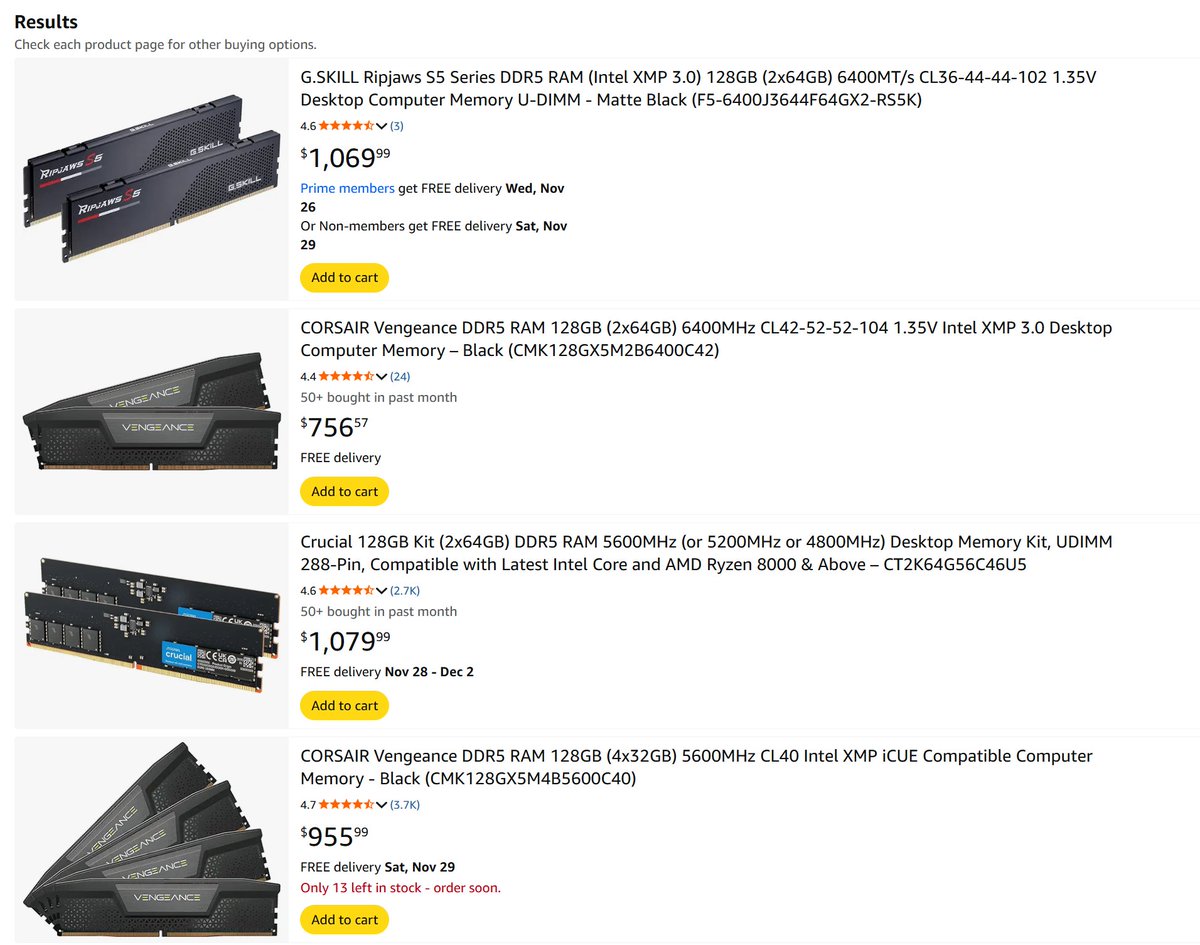
if you need a reasonably priced kit of 32gb (2 x 16) ddr5, probs get this before it gets jacked up in price (the other kit already has), I just got myself a kit :p s.click.aliexpress.com/e/_c3jQM7ej
English
youtu.be/32Vt0CyQA38 here is the whole situation regarding the AMD RDNA 1 and 2 maintenance mode debacle and why it's probably AMD Radeons's biggest blunder of 2025 by far.

YouTube
English
Hey @AMDGaming please reverse the rDNA 2 legacy mode drivers asap, its way too soon. The Rx 6600 is an absolute banger of a gpu for budget gamers...
English
I finally understand why everyone loves Thermalright coolers, absolutely killing it for value (though there was one model that was kind of meh) youtu.be/j6PJcXjG4b4

YouTube
English
@MrTobyCook Hey sorry man just had a lot of irl stuff to deal with, will have something coming out today!
English

@TechYESCity You ok mate? No video for two weeks, unusual for you!
English