TeckNexus

809 posts

TeckNexus banner
TeckNexus

TeckNexus

@TeckNexus

TeckNexus is a leading global media, telecom, and IT company publishing 5G magazines, research reports, and thought-leadership content. #TeckNexus #5GMagazine

United States Katılım Aralık 2022
169 Takip Edilen59 Takipçiler
TeckNexus
TeckNexus@TeckNexus·
TeckNexus is delighted to be partnering with #ConnectedAmerica 2026! Connected America is the premier event for stakeholders delivering next-generation connectivity and infrastructure across the country. Organized by @Total Telecom (please tag), the conference takes a technology-neutral approach to exploring U.S. communications, covering everything from data centers to real-world socioeconomic use cases. Taking place April 14-15 at the Irving Convention Center, TX, the event offers unparalleled access to 1500+ key decision-makers through expertly curated panel discussions, presentations and case studies, featuring 175+ speakers. It is the definitive marketplace to understand market opportunities, forge strategic partnerships, and solve industry challenges. With a refreshed social agenda and extensive networking opportunities, Connected America is the essential gathering for the U.S. digital economy. Get a 20% discount on tickets with promo code: 'TECKNEX20'. Find out more and register here: lnkd.in/gzb4KXj8 #Connectivity #Telecoms #Networks #Events
GIF
English
0
0
1
10
TeckNexus
TeckNexus@TeckNexus·
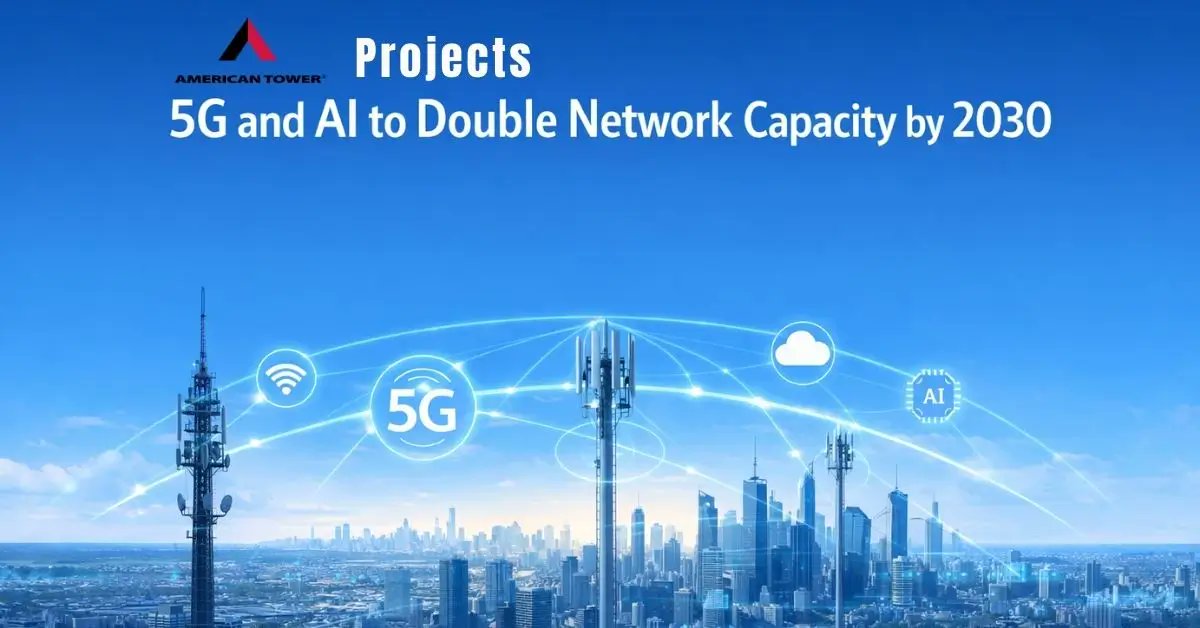
American Tower projects networks must double capacity by 2030 as 5G, fixed wireless access, and AI drive new traffic. Highlights • American Tower sees capacity needing to roughly double by 2030 as 5G, fixed wireless access, and AI raise throughput, uplink, and latency demands. • Why it matters: pressure is shifting from coverage to capacity, stressing radios, backhaul, and site power. • In practice: densify mid‑band, add targeted small cells, refarm spectrum, and use 5G‑Advanced features to lift spectral efficiency. • Backhaul and power are bottlenecks—prioritize fiberized transport or high‑capacity microwave, and modernize power (efficient rectifiers, lithium batteries, power‑as‑a‑service). • For AI at the edge: colocate micro edge nodes near radio sites and use neutral‑host and open radio access network (open RAN) options to speed indoor/venue builds. 📖 Full article via @TeckNexus: tecknexus.com/american-tower… #5G #AI #FWA #EdgeComputing #NetworkDensification #Backhaul #TelecomInfrastructure
TeckNexus tweet media
English
0
0
1
14
TeckNexus
TeckNexus@TeckNexus·
Cargill is scaling private 5G with NTT DATA across 50 facilities. Highlights • NTT DATA is deploying private 5G across 50 Cargill plants in the U.S. and Europe to support connected workers, robotics, and edge AI. • Private 5G delivers predictable, low-latency coverage with SIM-based security where Wi‑Fi or cabling fall short in large, complex sites. • As Cargill rolls out SAP ERP, smartphones and rugged tablets get consistent access to apps and data on the shop floor. • Real-world use: robotic inspections (e.g., Spot in Amsterdam) and edge AI for safer operations and faster issue detection. • Why it matters in practice: standardized designs (dedicated 5G core, local breakout or multi‑access edge computing), SIM/eSIM onboarding, and region-specific spectrum plans enable repeatable multi-site ops with service-level agreements (SLAs) tied to latency and coverage. 📖 Full article via @TeckNexus: tecknexus.com/cargill-scales… #Private5G #Manufacturing #EdgeComputing #Robotics #SAP #IndustrialConnectivity #5G
TeckNexus tweet media
English
0
0
1
38
TeckNexus
TeckNexus@TeckNexus·
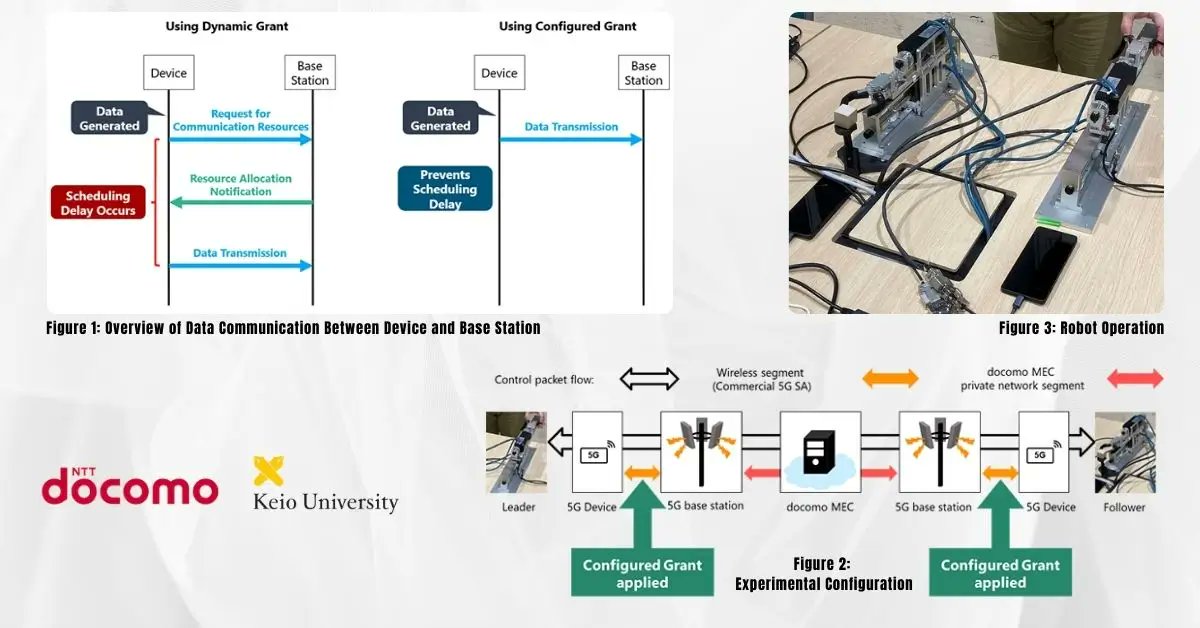
DOCOMO and Keio validated stable haptic teleoperation on commercial 5G Standalone (SA) using network slicing, configured grant, and edge computing. Highlights • On a commercial 5G Standalone (SA) network, configured grant uplink plus a low-latency slice and multi-access edge computing (MEC) delivered steadier latency and jitter for haptic control, even with 20 Mbps background traffic. • Results vs standard scheduling: force reproduction accuracy improved ~40% (24-point gain), and motion smoothness improved ~59%, with fewer outliers. • Why it matters: shows public 5G SA, when engineered, can support haptic teleoperation—an option for enterprises that need nationwide reach without building private networks. • In practice: operators will need device support for configured grant, priority slicing, MEC placement, and tactile-grade SLAs for latency, jitter, and packet errors, plus real-time telemetry. • What’s next: validate performance through mobility and multi-tenant load; watch 5G-Advanced features that tighten latency bounds; demo to be shown at MWC Barcelona 2026. 📖 Full article via @TeckNexus: tecknexus.com/docomo-and-kei… #5G #Standalone5G #NetworkSlicing #EdgeComputing #Teleoperation #Haptics #Robotics #IndustrialAutomation
TeckNexus tweet media
English
0
0
1
47
TeckNexus
TeckNexus@TeckNexus·
Digital identity is moving to AI that speeds authentication and spots fraud earlier. Highlights • AI shifts from passwords to biometrics, behavioral patterns, and adaptive risk checks. • Machine learning scans transactions and networks in real time to flag anomalies. • Onboarding uses document + selfie verification to meet know your customer (KYC) and anti-money laundering (AML) rules faster. • Decentralized IDs and blockchain give users more control; AI verifies claims without oversharing. • Why it matters: stronger security with less friction, with privacy, transparency, and bias controls still essential. 📖 Full article via @TeckNexus: tecknexus.com/future-digital… #DigitalIdentity #AI #Authentication #FraudPrevention #Biometrics #Privacy #Cybersecurity
TeckNexus tweet media
English
0
0
1
2
TeckNexus
TeckNexus@TeckNexus·
Nokia and AWS are introducing agentic AI to 5G-Advanced network slicing, with live pilots at du and Orange. Highlights • The solution blends Nokia RAN-to-core slicing, AirScale and MantaRay service management and orchestration with AWS Bedrock and EKS Hybrid Nodes. • Agents use external context (events, traffic, weather) plus live KPIs to adjust slice policies in real time, avoiding manual reconfiguration. • du and Orange are exploring it on live networks, with demonstrations at Mobile World Congress 2026. • Why it matters: dynamic, intent-based orchestration can right-size resources, protect SLAs, and enable paid performance tiers. • In practice: prioritize first responders, pre-stage venue capacity, tune campus/industrial slices, and protect premium sessions; deploy on-prem or at the edge. 📖 Full article via @TeckNexus: tecknexus.com/nokia-and-aws-… #5GAdvanced #NetworkSlicing #AI #Telecom #AWS #Nokia #EdgeComputing #Automation
TeckNexus tweet media
English
0
0
1
27
TeckNexus
TeckNexus@TeckNexus·
Deutsche Telekom is reporting early live 5G core energy savings of up to 65% by running functions only when needed. Highlights • Early tests show up to 65% lower 5G core energy from demand-aware, software-led control. • A Horizontal Telco Cloud unifies stacks so functions scale up, down, or pause based on real-time traffic. • Why it matters: lower opex and carbon as standalone 5G grows and data center loads rise. • In practice: baseline energy per Gbps and per function, pilot demand-driven scaling, and keep open interfaces and observability. • Next: AI-based forecasting and broader rollout, with more detail expected at MWC Barcelona 2026. 📖 Full article via @TeckNexus: tecknexus.com/deutsche-telek… #5G #TelcoCloud #EnergyEfficiency #Sustainability #CloudNative #Telecom #NetworkAutomation
TeckNexus tweet media
English
0
0
1
98
TeckNexus
TeckNexus@TeckNexus·
Deutsche Telekom, Orange, Telefónica, TIM, and Vodafone unveiled a live pan‑European edge federation at MWC 2026 to simplify cross‑border edge deployment and operations. Highlights • The five operators showed the European Edge Continuum in lab and pre‑production, with a single entry point to deploy apps across multiple operators’ edge nodes. • Built on EU IPCEI‑CIS components and backed by NextGenerationEU funding, with industrialization and phased commercial rollout next. • Why it matters: reduces fragmentation, aligns with data sovereignty goals, and extends reach without duplicating buildouts. • In practice: deploy once, get automated placement, mobility‑aware continuity across borders, and data locality controls for compliance. • Watch for clear pricing, harmonized SLAs, and alignment with ETSI MEC, GSMA Operator Platform, and CAMARA APIs to speed onboarding. 📖 Full article via @TeckNexus: tecknexus.com/european-edge-… #EdgeComputing #5G #Telecommunications #DataSovereignty #CloudInfrastructure #EnterpriseConnectivity #Europe #MWC2026
TeckNexus tweet media
English
0
0
1
40
TeckNexus
TeckNexus@TeckNexus·
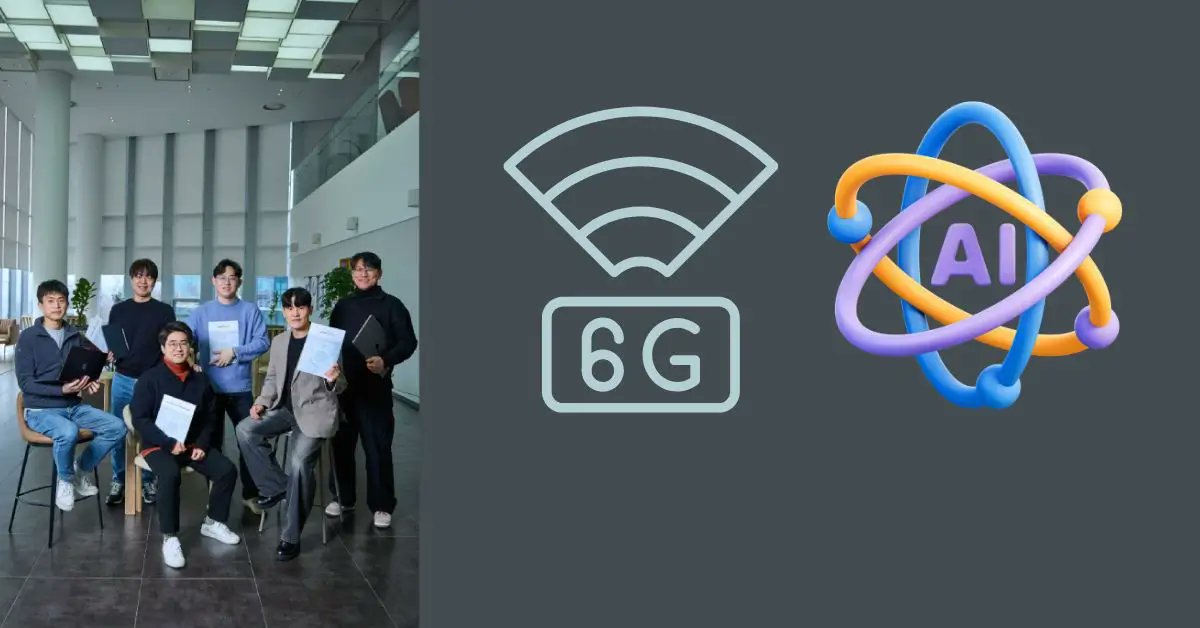
SK Telecom's ATHENA lays out an AI-native 6G blueprint for post-2030 networks. Highlights • Third 6G white paper defines 'AI for network' and 'network for AI' with Zero Trust, openness, and cloud-native design across RAN, core, and transport. • Why it matters: AI workloads are straining networks, pushing for deterministic performance, dynamic slicing, edge acceleration, and pervasive telemetry. • In practice: start with high-fidelity telemetry, a unified data platform, model governance, and pilot RAN Intelligent Controller (RIC) apps in targeted clusters. • Architecture shifts functions to microservices and open interfaces, adds AI-RAN near radios for real-time optimization, and applies Zero Trust end to end. • Business impact: API exposure and premium deterministic slices support monetization; closed-loop automation targets lower opex and faster changes. 📖 Full article via @TeckNexus: tecknexus.com/sk-telecom-ath… #6G #AI #Telecom #OpenRAN #ZeroTrust #NetworkAutomation #EdgeComputing #5GAdvanced
TeckNexus tweet media
English
0
0
1
23
TeckNexus
TeckNexus@TeckNexus·
GSMA Foundry and NUHS are moving connected health from pilots toward scaled deployment on 5G standalone, with Ericsson and Singtel underpinning the network. Highlights • The program combines private 5G standalone, network slicing and edge AI to support remote surgical assistance, extended reality (XR) training, robotics and hospital-at-home. • Why it matters: clinical workflows need deterministic latency, traffic isolation and verified security—not just bandwidth. • In practice: separate clinical traffic, run AI/XR at the edge to meet sub-20 ms targets, and design for zero-trust with failover between private and public 5G. • Operators can package private 5G, slicing, edge and security as managed services with outcome-based SLAs in hospitals. • Hospitals will look for integration with EHR/imaging systems, human-factors validation, and clear TCO with repeatable deployment playbooks. 📖 Full article via @TeckNexus: tecknexus.com/5g-healthcare-… #5G #Healthcare #Private5G #EdgeComputing #NetworkSlicing #XR #Robotics #DigitalTwin
TeckNexus tweet media
English
0
0
1
81
TeckNexus
TeckNexus@TeckNexus·
TELUS Digital reports two trillion tokens processed in 2025 and 20+ production GenAI use cases on Fuel iX. Highlights • Fuel iX processed more than two trillion tokens in 2025 across multiple models and use cases, signaling production-grade infrastructure and governance. • Agent Trainer and Agent Assist aim for faster onboarding, lower average handle time, higher digital containment, and better customer satisfaction (CSAT). • Fortify adds continuous safety/security testing, red-teaming, and monitoring to meet compliance and audit needs. • A control-plane approach centralizes model access, retrieval, privacy, observability, and per-use-case cost tracking. • In practice: start with care automation, agent assist/training, field ops, and network planning; use stage gates and link token spend to business metrics. 📖 Full article via @TeckNexus: tecknexus.com/telus-digital-… #Telecom #GenAI #AI #CustomerExperience #NetworkOperations #TelcoCloud #MWC2026 #Security
TeckNexus tweet media
English
0
0
1
14
TeckNexus
TeckNexus@TeckNexus·
KDDI and Nokia validated quantum-safe optical transport for AI DCI at KDDI’s new Sakai data center. Highlights • KDDI and Nokia showed line-rate encrypted optical DCI at Sakai using Nokia’s 1830 PSS (C+L band) and centralized key management. • C+L band packs more wavelengths per fiber, boosting throughput and helping defer new fiber builds as AI east–west traffic grows. • 🔐 Optical-layer encryption cuts CPU load and latency versus IP/app layers, with crypto agility toward post-quantum cryptography. • Why it matters: Japan’s AI buildout needs secure data-in-motion and resilience to “harvest-now, decrypt-later”; starting now shortens PQC cutovers. • In practice: map AI traffic and latency budgets, choose centralized key management and PQC-ready platforms, and test workflows under encrypted transport. 📖 Full article via @TeckNexus: tecknexus.com/kddi-nokia-qua… #OpticalNetworking #DataCenterInterconnect #QuantumSafe #AIInfrastructure #NetworkSecurity #Japan #KDDI #Nokia
TeckNexus tweet media
English
0
0
0
44
TeckNexus
TeckNexus@TeckNexus·
Anthropic introduced Claude Code Security to find complex code vulnerabilities and suggest patches with human review. Highlights • The tool uses AI reasoning to read code context, trace data flows, and assess access control and edge cases. • Findings go through multi-pass checks with severity and confidence scoring to reduce noise and prioritize work. • Early scans with Claude Opus 4.6 uncovered 500+ vulnerabilities in production open-source projects, including long-standing issues. • Why it matters: open source underpins telecom, cloud, and edge; faster discovery shrinks patch windows for defenders. • In practice: pilot alongside existing tools, route findings into secure development workflows and software bill of materials (SBOM) processes; limited research preview is available. 📖 Full article via @TeckNexus: tecknexus.com/claude-code-se… #AppSec #AI #OpenSource #DevSecOps #SoftwareSecurity #Telecom #5G
TeckNexus tweet media
English
0
0
1
44
TeckNexus
TeckNexus@TeckNexus·
Samsung, working with KT and Keysight, hit 3 Gbps at 7 GHz in an outdoor 6G trial using X-MIMO. Highlights • Outdoor trial at 7 GHz delivered 3 Gbps to one device using X-MIMO and an ultra-dense radio (eight spatial layers), with KT and Keysight support. • The radio fits roughly 4x more antenna elements than typical 5G massive MIMO in a similar size, enabled by shorter wavelengths. • Why it matters: the 7 GHz upper mid-band (FR3) balances capacity and coverage and is a strong candidate for early 6G deployments. • In practice: start FR3 planning—propagation studies, site load checks for denser arrays, and backhaul/timing upgrades for multi‑gigabit bursts. • Open items: multi-user scaling, uplink performance, mobility at cell edges, and access to contiguous 200–400 MHz spectrum blocks. 📖 Full article via @TeckNexus: tecknexus.com/samsung-6g-tri… #6G #FR3 #MIMO #Spectrum #RAN #FWA #5GAdvanced
TeckNexus tweet media
English
0
0
1
24
TeckNexus
TeckNexus@TeckNexus·
Ericsson and Mistral AI set out a practical path for telco-grade AI across network operations and RAN automation, aligned to EU data, security, and compliance needs. Highlights • Partnership combines Ericsson’s radio/cloud expertise with Mistral’s customizable models and local compute, including a planned €1.2B data center in Sweden. • Focus areas: AI-assisted code translation/migration, custom agents inside Ericsson Networks workflows, and AI support for 6G research. • Early traction includes AI-ready RAN products and an agentic rApp (RAN application) as-a-Service under evaluation at Telefónica’s Vivo Brazil. • Carrier-grade requirements are central: determinism, explainability, safe rollbacks, and integration with existing analytics and operations stacks. • Practical next steps: start with scoped wins like code migration assistants, RAN energy tuning, and ticket triage—tied to KPIs such as mean time to remediation (MTTR) and energy savings. 📖 Full article via @TeckNexus: tecknexus.com/ericsson-and-m… #Ericsson #MistralAI #Telecom #AI #NetworkAutomation #RAN #5G #6G
TeckNexus tweet media
English
0
0
2
41
TeckNexus
TeckNexus@TeckNexus·
OpenAI is planning a camera‑equipped smart speaker for no earlier than Feb 2027 as part of a wider AI‑native device roadmap. Highlights • First device: camera smart speaker at ~$200–$300; glasses and a smart lamp are also in the pipeline (glasses unlikely before 2028). • Strategy: shift from apps to hands‑free, multimodal assistants and subscriptions; 2025 acquisition of Jony Ive’s team accelerates design and hardware. • Connectivity: Wi‑Fi 7 at home and Bluetooth LE Audio; smart glasses may add 5G using Reduced Capability (RedCap) profiles as standards mature. • For operators: bundle with premium broadband, Wi‑Fi 7 gateways, managed privacy, and expose network APIs via GSMA Open Gateway. • What to do: plan edge capacity and hybrid inference, line up retail/carrier channels, and require software development kits (SDKs), privacy controls, and enterprise certifications. 📖 Full article via @TeckNexus: tecknexus.com/openai-ai-devi… #OpenAI #AI #AmbientComputing #SmartDevices #WiFi7 #5G #EdgeComputing #Telecom
TeckNexus tweet media
English
0
0
1
10
TeckNexus
TeckNexus@TeckNexus·
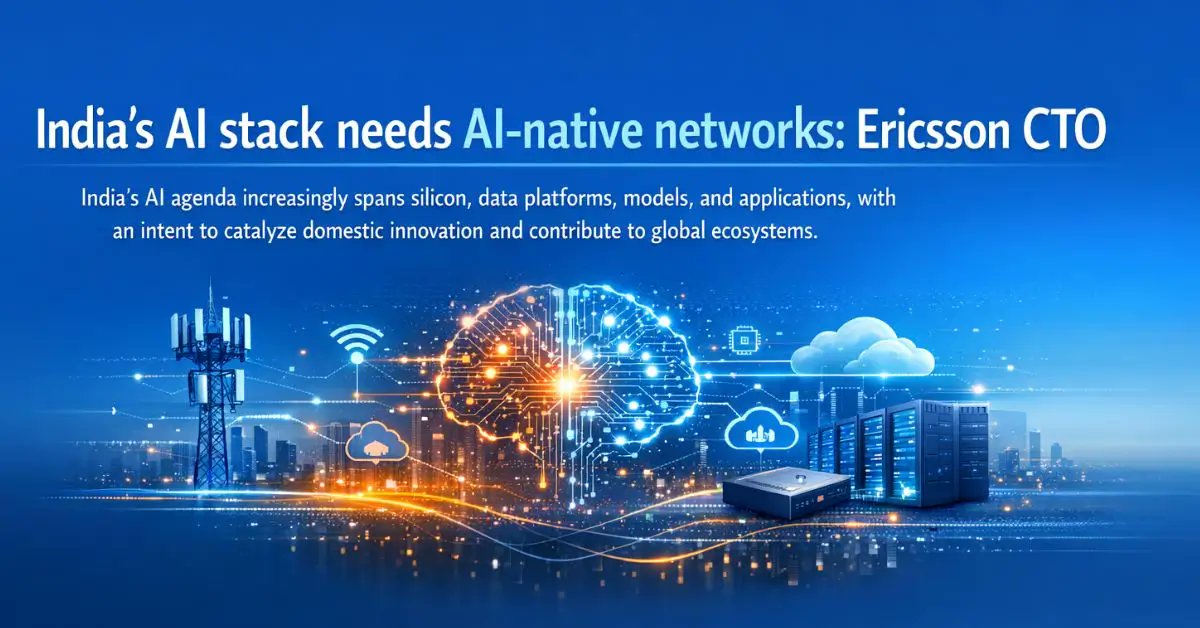
Ericsson CTO says India’s AI stack needs AI-native networks. Highlights • AI is a system-level shift across radio access network (RAN), core, transport, cloud, and edge; 5G-Advanced is the bridge toward AI-native 6G. • Enterprises building AI agents and digital twins will need deterministic networking and local compute; edge with slicing and standardized APIs can meet this. • Operators should build robust data pipelines and MLOps aligned with India’s DPDP Act, with security and model governance baked in. • Practical steps: upgrade to 3GPP Release 18/19, adopt RIC (RAN Intelligent Controller) and SMO (service management and orchestration), deploy edge zones, and productize slices with SLAs. • Why it matters: treating the network as the AI substrate lets operators fuse connectivity, compute, and data into platforms for real-time AI and industrial use. 📖 Full article via @TeckNexus: tecknexus.com/indias-ai-stac… #AI #5G #6G #Telecom #EdgeComputing #NetworkSlicing #India #OpenRAN
TeckNexus tweet media
English
0
0
1
11
TeckNexus
TeckNexus@TeckNexus·
Infosys and Anthropic are partnering to bring governed AI agents into telecom operations and modernization. Highlights • Infosys will integrate Anthropic’s Claude and Claude Code with Topaz to build and run AI agents for telecom. • Why it matters: a path to pragmatic automation and incremental modernization without rip-and-replace, with governance for regulated needs. • Practical starts: incident triage in NOCs, order fallout remediation, catalog mapping, and OSS/BSS code work. • Controls include audit logs, policy enforcement, separation of duties, and human-in-the-loop checkpoints. • Deployment options via Amazon Bedrock and Google Cloud Vertex AI support data residency and security alignment. 📖 Full article via @TeckNexus: tecknexus.com/infosys-and-an… #Telecom #AI #AIAgents #OSSBSS #AIOps #Infosys #Anthropic
TeckNexus tweet media
English
0
0
1
50
TeckNexus
TeckNexus@TeckNexus·
Cognizant is expanding its Google Cloud partnership to operationalize governed, enterprise-scale agentic AI. Highlights • Cognizant is rolling out Gemini Enterprise and Google Workspace internally and for clients to boost productivity and delivery. • A new Center of Excellence and an Agent Development Lifecycle aim to make agentic AI repeatable, auditable, and integrated into existing pipelines. • Two accelerators—Ignition (discovery/data readiness) and Agent Foundry (no-code, pre-configured agents)—target scenarios like contact centers and order management. • Alignment with Google Distributed Cloud supports on‑prem and edge deployments for latency and sovereignty in regulated environments. • Why it matters and how to use it: shift from model choice to governance and KPIs; start with service ops and CX, with evaluations and human-in-the-loop controls built in. 📖 Full article via @TeckNexus: tecknexus.com/cognizant-and-… #AgenticAI #GoogleCloud #Cognizant #EnterpriseAI #Telecom #EdgeComputing #ContactCenter #AIGovernance
TeckNexus tweet media
English
0
0
1
18
TeckNexus
TeckNexus@TeckNexus·
Ericsson has introduced an agentic rApp delivered as a cloud service on AWS to ease adoption of closed-loop RAN automation. Highlights • Delivers policy- and AI-assisted RAN optimization on the O-RAN non‑real‑time controller (non‑RT RIC). • Cloud delivery on AWS targets faster onboarding, lower integration work, and quicker pilots with consistent security and lifecycle management. • Initial use cases: energy savings, interference mitigation, load balancing, quality of experience (QoE)–driven capacity steering, and proactive fault isolation. • Why it matters: operators face cost pressure and rising service expectations; closed loops can reduce OPEX and improve user experience across 4G/5G. • In practice: set guardrails and data boundaries, keep humans-in-the-loop, and run A/B trials with rollbacks and explainable decisions. 📖 Full article via @TeckNexus: tecknexus.com/ericsson-ai-ra… #Ericsson #AWS #RAN #5G #OpenRAN #AutonomousNetworks #NetworkAutomation
TeckNexus tweet media
English
0
0
1
10