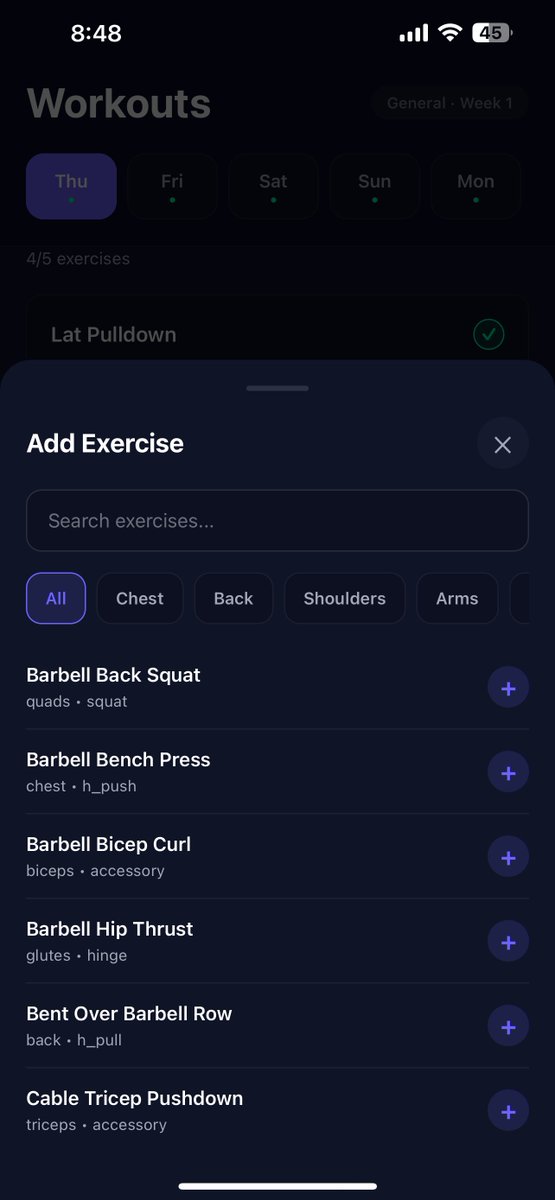
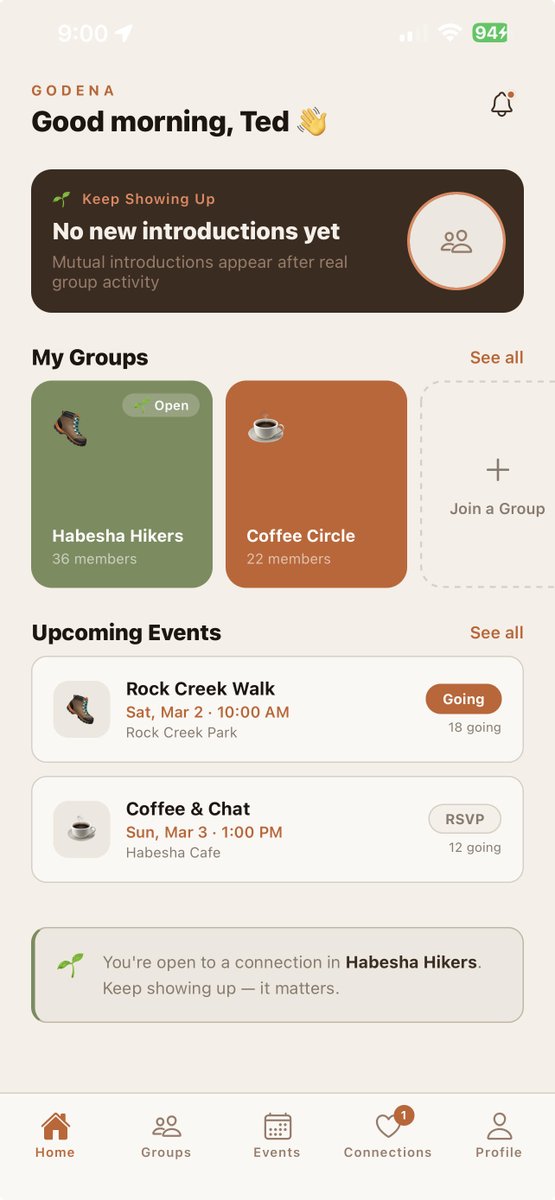
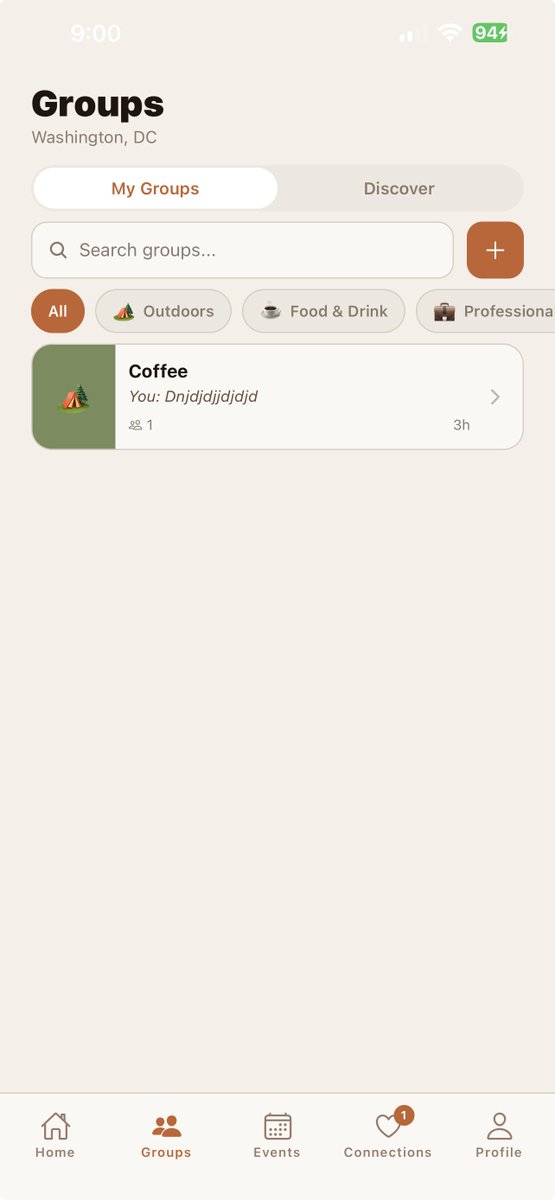
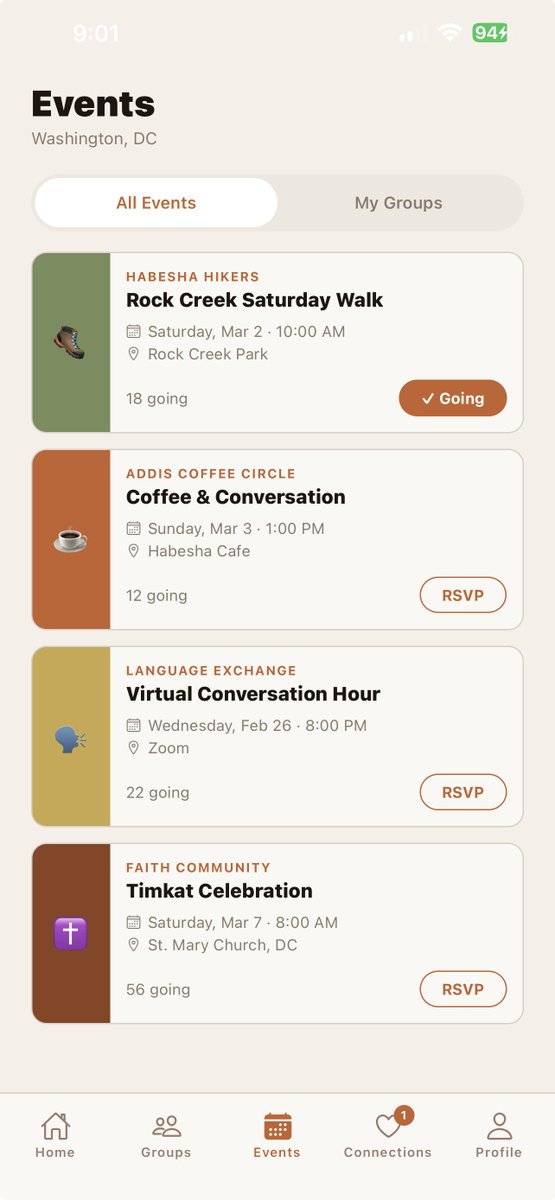
I built this kinda weird Meetup + dating app 😅 Join interest groups (hiking, coffee chats, language exchanges), attend events, interact -- get matched based on real shared experiences + participation signals (attendance, replies, reactions). Community first, connection follows.Also an optional classic dating/swipe mode. #DatingApp#RealConnections
It's interesting how current solution create new problems that lead to new solutions:
One physical machine running one app caused significant hardware waste and poor utilization,
which led to running multiple apps on one machine, causing interference and conflicts (ports, memory hogging, CPU contention, security risks),
which prompted Virtual Machines (VMs) — great isolation, but heavy and slow (full OS per VM, minutes to boot, high resource overhead).
The rise of distributed apps and microservices made VMs too resource-heavy and slow to spin up hundreds or thousands of instances,
resulting in Containers (Docker) — lightweight, fast startup, consistent packaging, finally solving "it works on my machine".
The explosion of containers created management chaos (manual deployment, scaling, monitoring, failure recovery, networking, service discovery),
which led to Kubernetes (k8s) — the orchestrator that automates deployment, auto-scaling, self-healing, load balancing, rollouts, and observability at scale.
Each layer fixed the previous era's biggest headaches. Containers were revolutionary; Kubernetes made them truly production-grade.
@brankopetric00 it would also be justifiable for any SaaS that plans to grow beyond 300 customers. i think migration from compose to k8s later is way more painful than learning k8s early.
Having fun building this one: a Meetup-style app that also quietly matches you with potential dating partners based on the events/groups you actually join.
No forced swiping — just real shared experiences → real connections.#BuildInPublic#DatingApp#IndieDev
Experimenting with a new app —kind of dating app, You join groups around things you actually do. Connections only surface when two people in the same group are both genuinely active and mutually open to meeting. #buildinpublic
@briancheong@briancheong Not yet—just experimenting with local tools right now, so keeping it simple. Thanks for sharing, separate critic + small memory/logging makes total sense for production to avoid drift nightmares
@Tedi_Tes My go-to is state + tool router + evaluator loop. keep memory small and log every tool call, otherwise it drifts fast. do you keep a separate critic?
AI Agent core loop in 2026:
State → Plan → Act (tools) → Observe → Update State → Decide → (repeat or exit)
This is basically Reasoning -> Action(tools , function execution,API calls , etc) -> feedback from action-> memory/state -> repeat/exit
Agree? What's your go-to agent pattern? #AI#Agents
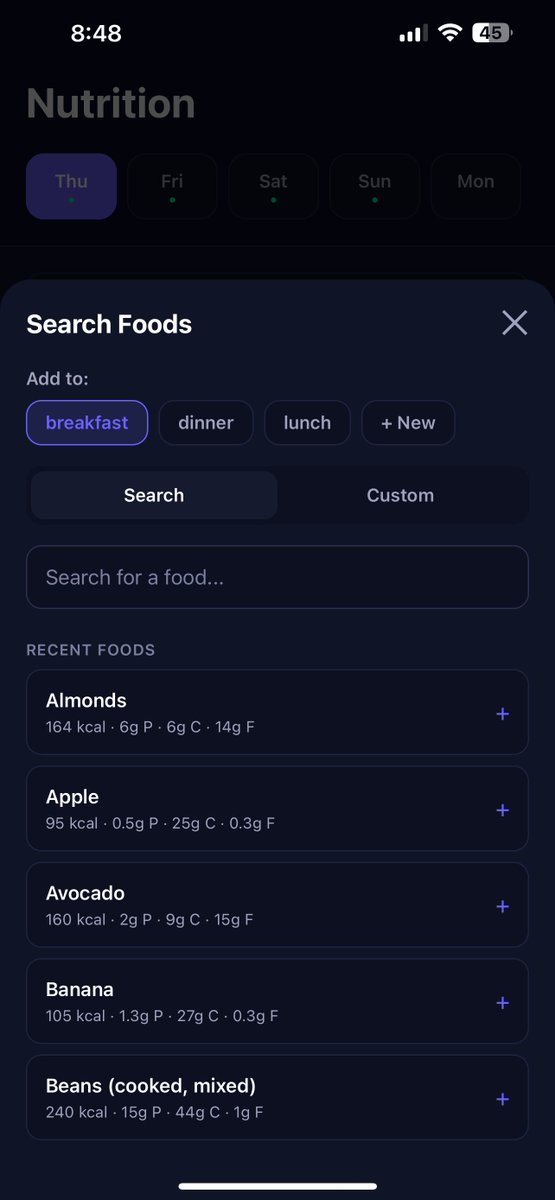
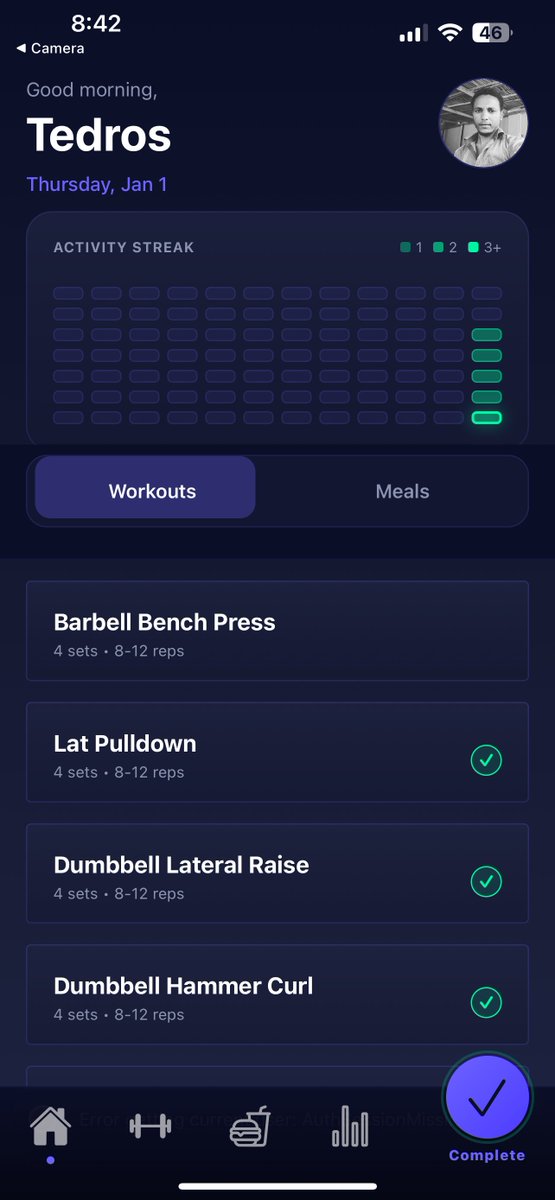
@Tedi_Tes Great to see the UI/UX improvements! Building in public with fitness goals is awesome - it keeps you accountable to both your product and your progress. What's the biggest change you've made recently?
Math that actually powers a large language model:
• Matrix multiplication → mixes and transforms information across layers
• Dot products + scaling → measures how similar tokens are (attention scores)
• Exponential + normalization (softmax) → turns similarity scores into probabilities
• Element-wise addition, multiplication, division → combines signals, gates information, and creates residual connections
• Layer normalization (mean and variance) → prevents activations from exploding or vanishing during training
• Summation and maximum → aggregates context and selects the best tokens
• Masking and indexing → controls exactly what information each token can see
• Cross-entropy loss → measures how far off the next-token prediction is
• Gradients and optimizer steps → adjust every weight to reduce prediction error
#LargeLanguageModels#AI#MachineLearning
Building almost any non-trivial project from scratch is now easiest for true beginners by prompting Claude (or Grok/ChatGPT) step-by-step.
Why it’s effective:
• Instant working code + clear explanations
• You only learn the next thing when you actually need it
• Iterate naturally: fix one bug → ask the next logical question
• Real-time guidance when you’re stuck (context window remembers everything)
Computer performance is execution time.
Compute is cheap, memory and data movement are expensive.
Parallelism + specialization win (why GPUs/TPUs dominate ML).
Built a mini Git using claude . The simplicity of content-addressable storage - hash the content, use hash as filename - solving deduplication, integrity, and versioning at once is beautiful. #claude#git#github (link → github.com/TedTes/gitc/bl…)
Made a demo showing how password security works at scale using Bloom filters
Each leaked password gets hashed to multiple bit positions and those bits are set to 1.
When a user creates a new password, it goes through the same hash functions. If all the bits are already set to 1, the password is flagged as leaked and rejected.
Each password maps to multiple positions which reduces collisions and false positives.
Key stats: If any bit is 0, the password is definitely safe. About 1% false positive rate with zero false negatives.
Real systems like Have I Been Pwned use this to check passwords against 600M+ leaked credentials in milliseconds instead of scanning every record.
Building actionable tools with real outcomes is a killer way to sharpen your problem-solving skills—and pick up the tech stack along the way.
Think: a file organizer, data cleaner, or simple automation script , etc
No coding experience? LLMs like Grok can guide you step-by-step to build and implement them.