Tejbir Singh Corporate Lawyer

228 posts

Tejbir Singh Corporate Lawyer banner
Tejbir Singh Corporate Lawyer

Tejbir Singh Corporate Lawyer

@Tejbir_Chugh

Legal Partner for Founders, VCs, Angel Investors & International Businesses | M&A, Fundraising, India Entry, FDI & Strategic Compliance

Delhi Katılım Aralık 2024
10 Takip Edilen6 Takipçiler
Tejbir Singh Corporate Lawyer
Venture capital investors almost always ask founders a very simple question during fundraising. “Are your shares fully diluted?” Interestingly, the phrase “fully diluted capital” does not appear anywhere in the Companies Act, 2013. The law speaks only of issued share capital, subscribed share capital and paid-up share capital. These are the numbers that appear in statutory filings with the Registrar of Companies. But venture capital investors look at something different. They look at what the cap table will look like if every possible right to acquire shares is exercised. This includes ESOPs granted to employees, ESOPs reserved in the pool but not yet granted, convertible instruments such as Compulsorily Convertible Preference Shares, convertible notes, and sometimes even warrants. All of these instruments may not be shares today, but they have the potential to become shares in the future. So when an investor negotiates ownership in a startup, the percentage is almost always calculated on a fully diluted basis. This ensures that once all options are exercised and all convertible instruments convert into equity, the investor’s percentage stake still reflects the negotiated ownership. The difference can be significant. A founder may believe that the investor owns 20 percent of the company based on the current issued share capital. But once the ESOP pool is expanded and convertible securities convert into equity, that percentage could fall substantially. Which is why venture capital lawyers spend an enormous amount of time on cap table modelling before closing a deal. Because in venture capital, ownership is not calculated only on what exists today rather it is calculated on what the company can legally become tomorrow.
English
1
0
1
7
Tejbir Singh Corporate Lawyer
We at T&R Law Offices are currently advising on a multi-crore cross-border investment transaction and the biggest legal risk in this matter that we found had nothing to do with the deal. As part of standard due diligence before structuring the investment, we were reviewing our client's existing financial profile and this is when we found that the client, now an NRI, still holds an active resident savings account in India alongside their NRE and NRO accounts. To most people, that reads as a minor administrative oversight. Under FEMA, it is a live violation. Under the Foreign Exchange Management (Deposit) Regulations, 2016, the moment a person's residential status changes from resident to non-resident, they are required to inform their bank and either convert the savings account to an NRO account or close it entirely. There is no grace period. No cure window. The obligation arises the moment the status changes. The penalty under Section 13 of FEMA, 1999 is up to three times the amount held in the account. Where the amount is not quantifiable, the penalty is Rs. 2 lakhs — with an additional compounding penalty of Rs. 5,000 per day from the date of intervention until compliance is achieved. Enforcement has tightened significantly since 2025. A Dubai-based individual who continued using a resident account for rental and consultancy income is facing potential penalties exceeding Rs. 7.5 crore under Section 13 alone. The transaction can wait. This cannot. We have paused the deal structuring and advised immediate conversion of the account through the bank's NRI division before a single step of the transaction is executed. The reason is straightforward. A FEMA violation sitting in the background does not stay in the background. The moment capital flows begin across jurisdictions, every connected account and financial relationship comes under regulatory scrutiny. An existing violation at that stage is not just a penalty risk. It is a transaction risk. For anyone who has recently moved abroad or transitioned to NRI status, the instruction is simple. Your residential status changes on a specific date. Your bank account does not update automatically. The law does not provide time to get around to it. A savings account you forgot to convert can cost more than the investment you are planning to make.
English
0
0
0
3
Tejbir Singh Corporate Lawyer
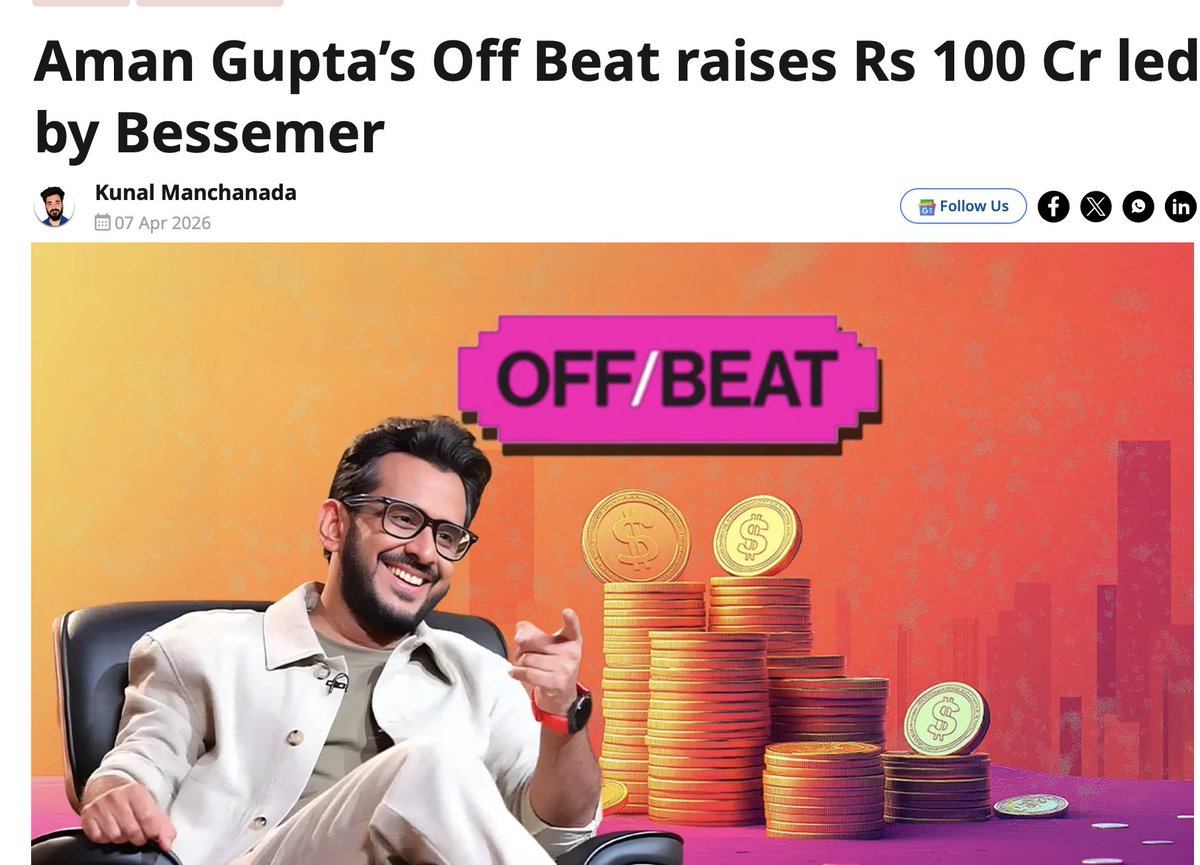
Aman Gupta invested Rs 1 crore in ZOFF Foods on Shark Tank India in 2023. For 1.25% equity. He just invested again last month. $2 million. Pre-Series B. Most early investors never get this opportunity. They back a startup at the beginning, get diluted in every round that follows, and watch their stake shrink. They are not invited to the next table. They simply watch. Gupta came back because his original deal likely included a pro-rata right. Pro-rata rights give an existing shareholder the right to invest in future funding rounds in proportion to what they already own, so they can maintain their percentage instead of being diluted out. Under Section 62(1)(a) of the Companies Act, 2013, this right has a statutory basis. When a company proposes to issue further shares, it must first dispatch a letter of offer to all existing equity shareholders, in proportion to their paid-up capital. No special resolution is required. This is called a rights issue, and it is the default position under the law. The problem is that no startup funding round is structured as a rights issue. Every VC round, every PE round, every angel follow-on uses a different route entirely. A preferential allotment under Section 62(1)(c) of the same Act. In a preferential allotment, the company issues shares to specifically named persons. The shareholders pass a special resolution at an EGM naming the allottees. A registered valuer determines the price. The shares go only to whoever is listed in that resolution. The two routes are procedurally distinct, and the distinction matters. A rights issue goes to every existing equity shareholder automatically. A preferential allotment goes only to the persons the resolution names. Existing shareholders have no automatic right to appear in that list. Section 62(1)(c) is a direct alternative to Section 62(1)(a). A company can take the preferential allotment route without first running a rights issue. When a startup raises a VC round, that is exactly what it does, and Section 62(1)(a) has no bearing on who gets included. For an existing investor like Gupta to participate in a preferential allotment round, one of two things must be true. Either the company chooses to include him as an allottee out of goodwill, or his Shareholders Agreement from the original 2023 investment contains a contractual pro-rata clause that obligates the company to include him regardless. The first is discretion. The second is a right. Most early angel deals in India are done without a properly drafted SHA. The money moves, the shares are allotted, and the pro-rata clause is never negotiated. When the next round arrives, the early investor learns that the statute they were relying on applies to a structure nobody uses, and the contract they needed was never signed. Section 62(1)(a) is the default. Section 62(1)(c) is how every funding round actually works. The SHA is the only protection that functions within that reality.
Tejbir Singh Corporate Lawyer tweet media
English
0
0
0
23
Tejbir Singh Corporate Lawyer
“We finally cracked it. Five angels are ready to put in ₹20 lakhs each on a convertible note. That gives us our first ₹1 crore. Please issue Convertible Notes” This is how a founder explained his first fundraise to me. From a business point of view, it sounded sensible. From a legal point of view, it could not be done. Let me explain. Convertible notes in India are tightly defined instruments. Companies (Acceptance of Deposits) Rules, 2014 permits issuance of convertible notes only by DPIIT-recognised startups and only where the amount received from each investor is not less than ₹25 lakhs, received in a single tranche. This is not a round-level threshold. It applies investor by investor. When I explained this, the founder asked a reasonable follow-up. “What if we issue one ₹1 crore convertible note jointly to all five investors?” Even then, the answer remains no. The law looks through the instrument and examines the contribution of each subscriber. If any investor contributes less than ₹25 lakhs, the statutory condition is breached. This is where the misunderstanding usually lies. Founders think in terms of aggregate capital. The statute does not. Convertible notes were never designed for fragmented angel cheques. They were structured for fewer investors writing larger tickets. This is not a drafting issue or a documentation fix. It is a hard legal threshold. Once money is committed below ₹25 lakhs per investor, there is no workaround other than restructuring the instrument itself. This is why, at the first round stage, legal form often dictates commercial structure, not the other way around.
English
0
0
0
7
Tejbir Singh Corporate Lawyer
Tejbir Singh Corporate Lawyer@Tejbir_Chugh·
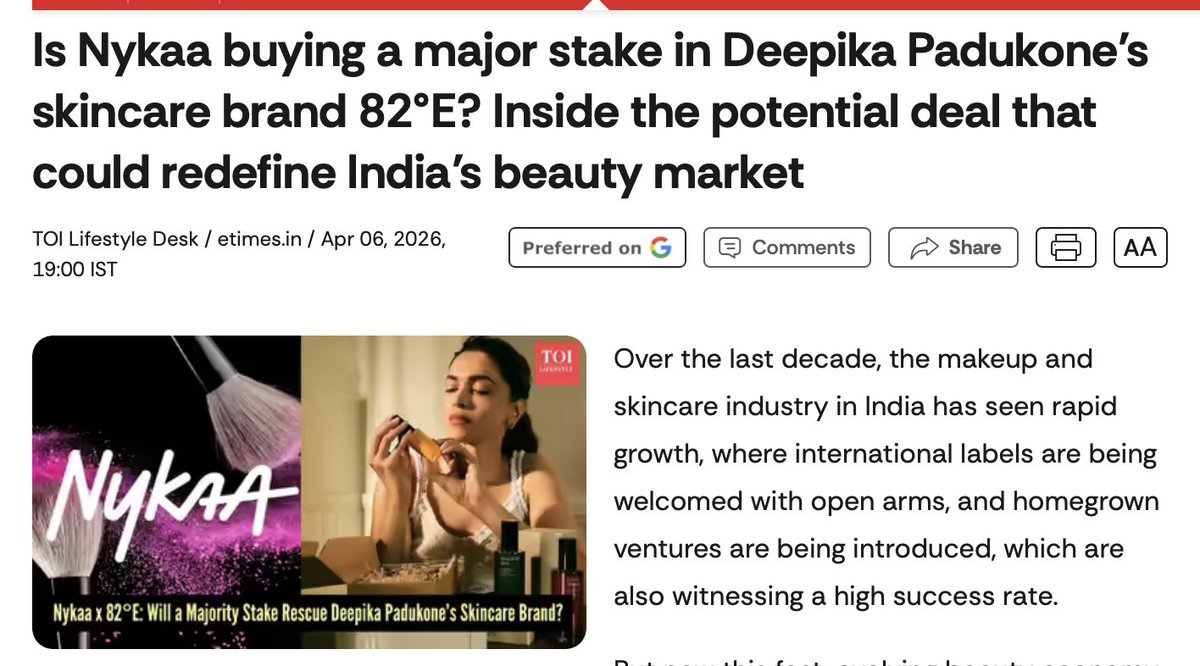
Deepika Padukone is about to become a minority shareholder in a company she founded. Most people will read that as a business story. It is actually a law story. Because in Indian company law, a minority shareholder has almost no default protections. Under the Companies Act, 2013: Ordinary resolutions pass at 50%+. Special resolutions pass at 75%. If Nykaa holds majority, it controls both. Board appointments. Business direction. Key managerial personnel. Related party transactions. All of it — decided by the majority. Deepika, as minority, cannot block any of it. But here is what most founders do not know. The law does give minority shareholders one protection. Section 241 of the Companies Act, 2013. Any member can approach the National Company Law Tribunal if the affairs of the company are being conducted in a manner prejudicial or oppressive to minority shareholders. It is called the oppression and mismanagement remedy. But the threshold is high. Courts do not intervene simply because the majority made decisions the minority dislikes. There must be conduct that is commercially unfair, discriminatory, or designed to squeeze out the minority. By the time a founder is filing before the NCLT, the relationship is already broken. Which is why the SHA matters more than the statute. The Shareholders Agreement is where real minority protection is built — before the deal closes, not after the damage is done. Affirmative vote rights. Reserved matters. Board seat guarantees. Tag-along rights. None of these exist by default under Indian law. Every single one must be negotiated. The valuation headline tells you what Deepika's stake is worth today. The SHA determines whether she has any say in what it becomes tomorrow.
Tejbir Singh Corporate Lawyer tweet media
English
0
0
0
68
Tejbir Singh Corporate Lawyer
Tejbir Singh Corporate Lawyer@Tejbir_Chugh·
A Series G round. Yes, that is what Cult.fit just did. Cult.fit has reportedly raised ₹440 crore by issuing Series G CCPS to Temasek. Now here is the legal reality. You will never find the words “Seed Round”, “Series A”, “Series B” or even “Series G” anywhere in the Companies Act, 2013. Yet the entire startup ecosystem runs on these labels. The reason is simple. These are not legal terms. They are venture capital conventions used to signal the stage, scale and maturity of a funding round. From a legal standpoint, most of these rounds look identical. Whether it is Seed or Series G, the company is typically issuing Compulsorily Convertible Preference Shares (CCPS) through a private placement under Sections 42 and 62 of the Companies Act. The process does not change with the alphabet. The Board approves the issue. Shareholders pass the necessary resolutions. The company allots securities and files PAS-3 with the Registrar of Companies. That is the law. There is no separate legal framework for “Series A” versus “Series G”. So what do these labels actually do? They act as market shorthand. A Seed round usually indicates early validation, with smaller cheque sizes. A Series A signals product-market fit and institutional capital coming in. By the time you reach Series G, it typically reflects a late-stage company with multiple prior rounds, larger ticket sizes and more complex investor rights. But legally, nothing transforms between these stages. A Series G is not a different kind of transaction from a Series A. It is the same legal mechanism, executed at a different scale and sophistication. Which is why, despite the headline reading “Series G round,” the statutory filing will say something far less dramatic: Preferential allotment of Compulsorily Convertible Preference Shares.
Tejbir Singh Corporate Lawyer tweet media
English
0
0
0
4
Tejbir Singh Corporate Lawyer
Tejbir Singh Corporate Lawyer@Tejbir_Chugh·
Aman Gupta just raised ₹100 crore in a seed round. But here is a legal detail many first-time founders miss and get penalised. When a company like Off Beat raises funds from investors such as Bessemer Venture Partners, the assumption is simple. Money comes in. Business starts using it. Legally, that is not how it works. Under the Companies Act, 2013, specifically Section 42 dealing with private placement, the law requires that: The subscription money must be kept in a SEPARATE BANK ACCOUNT. This is not optional.It is a statutory requirement. Now to be clear, someone like Aman Gupta, being a seasoned founder, would have structured this correctly. But many founders raising their first round do not. They receive funds directly into their main current account and start deploying it for operations. From a business lens, this seems efficient. From a legal lens, it is incorrect and attract penalties. Because until shares are formally allotted and PAS-3 is filed, the money received is not meant to be mixed with general business funds. It must sit in a designated, separate bank account. Which leads to the insight. At the early stage, founders focus heavily on valuation and investors. But one of the first compliances the law expects is far simpler. Do not mix your funding money with your operating money before the entire compliance takes place.
Tejbir Singh Corporate Lawyer tweet media
English
0
0
0
19
Tejbir Singh Corporate Lawyer
Tejbir Singh Corporate Lawyer@Tejbir_Chugh·
Zomato just granted ESOPs worth ₹167 crore. But employees don’t get a single share today. That is the first legal misconception around ESOPs. Eternal (parent of Zomato) has granted stock options to employees under multiple ESOP schemes. But an ESOP is not a share. It is a right to acquire shares in the future, subject to conditions. And the most important of those conditions is vesting. Under the Companies Act, 2013 and Rule 12 of the Share Capital and Debentures Rules, ESOPs are governed with a clear structure. When ESOPs are granted: No shares are issued No ownership is transferred No voting rights arise What the employee receives is an option. This option becomes valuable only after it vests. Vesting is a time-based (or performance-based) mechanism through which the employee earns the right to exercise the option. For example, a typical vesting schedule could be: 25% after 1 year The balance over the next 3–4 years Until vesting happens, the employee cannot exercise the option. And even after vesting, there is one more step. Exercise. This is when the employee actually pays the exercise price and converts the option into equity shares. Only at this stage: Shares are issued The employee becomes a shareholder Voting and economic rights kick in There is another legal safeguard. The law mandates a minimum one-year vesting period from the date of grant. Immediate vesting is generally not permitted (except in limited cases like death or permanent incapacity). In Eternal’s case, the filings also specify an exercise window—employees can exercise their vested options within a defined period (for example, up to 10 years from vesting). If they don’t, the options can lapse. So legally, an ESOP has three distinct stages: Grant → Vesting → Exercise And each stage has a completely different legal consequence. Which leads to the real insight. When companies announce large ESOP grants, they are not transferring ownership immediately. They are creating a long-term incentive structure, where ownership is earned over time and only materialises if the employee stays and chooses to exercise. Because in law, ESOPs are not about giving shares. They are about earning the right to become a shareholder.
Tejbir Singh Corporate Lawyer tweet media
English
0
0
0
29
Tejbir Singh Corporate Lawyer
Tejbir Singh Corporate Lawyer@Tejbir_Chugh·
A company can wake up tomorrow and enter a completely new business. But legally, it cannot do so without rewriting its own constitution. Dream Sports, the parent of Dream11, is now entering stockbroking through a new platform. From fantasy sports to financial services. Commercially, that sounds like diversification. Legally, it triggers a very specific requirement under the Companies Act, 2013. Every company is bound by its Memorandum of Association (MoA), specifically the Objects Clause under Section 4. This clause defines what the company is legally allowed to do. A company cannot carry on a business that falls outside its stated objects. So if Dream Sports was originally incorporated to operate in gaming or digital entertainment, entering stockbroking and financial services is not just a business decision. It requires alignment with its Objects Clause. The law provides a mechanism. Under Section 13 of the Companies Act, a company can alter its MoA by passing a special resolution of shareholders and filing the amendment with the Registrar of Companies. Only after this alteration can the company legally expand into a new line of business. There is another layer here. In regulated sectors like stockbroking, approvals from Securities and Exchange Board of India are required. But regulatory approval alone is not sufficient. Even if SEBI grants a license, the company must still ensure that its MoA permits such activity. Otherwise, the act can be challenged as ultra vires — beyond the legal capacity of the company. Which leads to a subtle but important insight. Companies do not just pivot. They amend their legal identity before they pivot. Because in corporate law, strategy follows structure.
Tejbir Singh Corporate Lawyer tweet media
English
0
0
0
72
Tejbir Singh Corporate Lawyer
Tejbir Singh Corporate Lawyer@Tejbir_Chugh·
A Private Limited Company is the standard vehicle for raising venture capital. But can you legally do the same through an LLP? The short answer is yes. The structured answer under law is far more restrictive. Under the Limited Liability Partnership Act, 2008, an LLP does not recognise share capital. There are no shares, no concept of equity, and no ability to issue securities. This creates the first legal limitation. An LLP cannot issue equity shares, preference shares or convertible instruments such as CCPS, which are routinely used under the Companies Act, 2013 for venture capital investments. So how does an LLP raise funds? The only legally recognised route is through capital contribution by partners. Section 32 of the LLP Act permits partners to contribute in the form of tangible, intangible or other benefits. In return, partners receive a profit-sharing ratio, not shares. This leads to a fundamental governance difference. In a company, there is a clear separation between ownership (shareholders) and management (board of directors). In an LLP, governance is contractual. It is driven entirely by the LLP Agreement under Section 23. There is no board structure. Rights relating to management, voting, transfer, exit and control must be specifically drafted. This creates friction for institutional investors. Venture capital investors typically require: Defined securities Liquidation preference Anti-dilution protection Board representation Structured exit rights These are difficult to replicate in an LLP because there is no statutory framework for layered securities or differential rights. The legal consequence is clear. An LLP can admit investors. But it cannot structure investment the way venture capital requires. Which is why most scalable businesses either start as, or eventually convert into, a Private Limited Company. Because in law, the question is not whether you can raise funds. It is whether your structure can legally accommodate the rights that investors require.
English
0
0
0
5
Tejbir Singh Corporate Lawyer
Tejbir Singh Corporate Lawyer@Tejbir_Chugh·
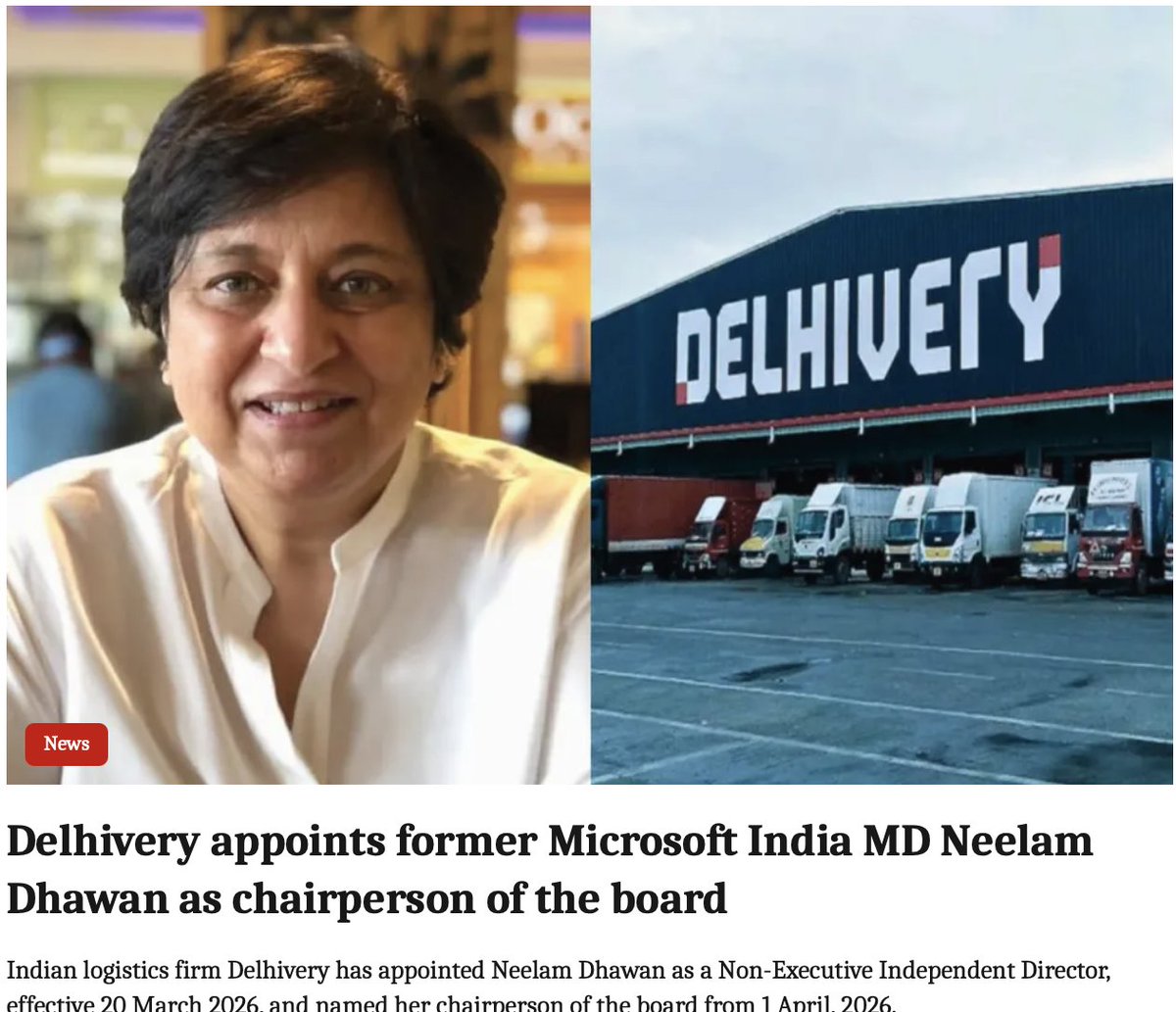
Delhivery has appointed a new Chairperson and some person confuse Chairperson as the one who runs the company. But in law, the Chairperson does not “run” the company. Delhivery has appointed Neelam Dhawan as a Non-Executive Independent Director and Chairperson of its Board, succeeding Deepak Kapoor. The designation sounds senior but the legal position is more nuanced. Under the Companies Act, 2013, the Board of Directors is the primary governing body of the company. Section 179 vests the Board with the power to manage the affairs of the company, subject to the Act and the Articles. The Chairperson operates within this Board framework. The law does not define the Chairperson as an executive authority. Instead, the role is largely procedural and governance-oriented. The Chairperson: Presides over Board meetings under Secretarial Standard-1 (SS-1) issued by the Institute of Company Secretaries of India. Ensures that meetings are conducted in an orderly manner. Facilitates participation of all directors, especially independent directors. Oversees that agenda items are properly deliberated and recorded. Importantly, the Chairperson does not have inherent executive powers unless separately designated as an Executive Chairperson or Managing Director. That is why in this case, where the Chairperson is also an Independent Director, the structure aligns with SEBI’s corporate governance framework. Under the Securities and Exchange Board of India (LODR Regulations), listed entities are encouraged to maintain a clear separation between the Chairperson and the Managing Director/CEO, particularly to strengthen board independence. There is another legal nuance. The Chairperson may exercise a casting vote in case of a tie at Board meetings, but only if such a right is provided in the Articles of Association. This is not automatic under the statute. Further, while the Chairperson influences board agenda, deliberation quality, and governance standards, the execution of business decisions remains with the management. So legally, the distinction is clear. The CEO manages the company. The Board governs the company. And the Chairperson controls how the Board functions. Which is why such appointments are less about operational leadership and more about who anchors governance at the highest level.
Tejbir Singh Corporate Lawyer tweet media
English
0
0
0
16
Tejbir Singh Corporate Lawyer
Tejbir Singh Corporate Lawyer@Tejbir_Chugh·
Unacademy is being “acquired.” But legally, it will not disappear or lose its existence. That’s the part most people miss when they hear about the share swap with upGrad. So what actually happens to Unacademy after this? Does it get merged into upGrad?Or does a completely new entity get created? Under the Companies Act, 2013, these are not interchangeable ideas. The law draws a very clear distinction based on one core question: Does the target company survive as a legal person? In this case, the structure being discussed is an acquisition through a share swap. Which means Unacademy (Sorting Hat Technologies Pvt Ltd) continues to exist. It does not vanish from MCA records. Instead, its shareholders exchange their shares for shares in upGrad, resulting in a change of control. Practically, Unacademy becomes a subsidiary (often a wholly-owned one) of upGrad. This is done for a reason and the reason is generally that it allows continuity-brand, contracts, licenses, employees all remain intact. It also explains why Gaurav Munjal can continue as CEO of that entity. Now contrast this with a merger. In a merger, the target company is absorbed and extinguished. Its legal existence ends, and everything flows into the acquiring company. A + B = A This requires a formal Scheme of Arrangement approved by the NCLT. An amalgamation is even more structural. Both companies dissolve and a new company is born. A + B = C Again, a tribunal-driven process, rarely preferred in startup ecosystems due to complexity and regulatory friction. So the reality here is counterintuitive. Even after being “acquired,” Unacademy may continue to exist as a separate legal entity, just no longer independently controlled. And that single structural choice determines everything from governance to tax to operational continuity.
Tejbir Singh Corporate Lawyer tweet media
English
0
0
0
19
Tejbir Singh Corporate Lawyer
Tejbir Singh Corporate Lawyer@Tejbir_Chugh·
This single tweet from @RonnieScrewvala reveals something interesting from a legal perspective. Not all term sheets and their clauses are non-binding. In the tweet, upGrad announced that it has signed a term sheet to acquire Unacademy in an all-stock deal. But there is one line in that announcement that corporate lawyers immediately notice. They have agreed to a break fee if the transaction does not close. Now this is fascinating because founders are often told that a term sheet is merely indicative and not legally binding. Broadly speaking, that is true. A term sheet usually captures the commercial understanding between parties before the detailed definitive agreements are negotiated and signed. However, in sophisticated transactions, certain provisions in a term sheet are expressly made binding. A break fee clause is one such provision. A break fee, also known as a termination fee, means that if a party walks away from the deal under certain agreed circumstances, it must pay a predetermined amount to the other party. The reason is practical. Once a term sheet is signed, the acquirer typically begins deep due diligence, legal structuring, negotiations, and documentation. This process can take months and involves significant advisory costs. Without a break fee, the counterparty could theoretically walk away at the last moment or even use the negotiations to attract a better offer from another buyer. A break fee introduces economic consequences for abandoning the deal, even though the final acquisition agreements may not yet be executed. So while people casually say “it’s just a term sheet”, the legal reality is more nuanced. Some parts of a term sheet are non-binding commercial intent. But clauses like confidentiality, exclusivity, and sometimes break fees can already create binding legal obligations the moment the term sheet is signed.
Tejbir Singh Corporate Lawyer tweet media
English
0
0
0
30
Tejbir Singh Corporate Lawyer
Tejbir Singh Corporate Lawyer@Tejbir_Chugh·
The year was 2008. Anil Ambani was close to pulling off one of the biggest telecom deals in the world but one person was waiting with a legal weapon to make his move. His company, Reliance Communications, was negotiating a massive cross-border transaction with South African telecom giant MTN Group. The proposed structure could have created a telecom behemoth worth nearly $70 billion. But just when the deal seemed to be moving forward, another player intervened and that too with a legal weapon. Not a regulator. Not a competitor. His own brother. Mukesh Ambani’s company, Reliance Industries Limited, sent a communication asserting that it had a Right of First Refusal (ROFR) over the controlling stake of Reliance Communications. In simple terms, Mukesh Ambani claimed he had a legal right to step in before MTN could acquire the stake. This right did not come from a statute. It came from a contract. During the famous Ambani family settlement in 2005, several agreements were executed when the Reliance empire was split between the two brothers. One of the clauses reportedly provided that if Anil Ambani intended to sell or transfer control of certain companies, the shares had to first be offered to Mukesh Ambani’s side on the same terms. That is exactly how Right of First Refusal works in corporate law. A ROFR gives an existing shareholder or strategic partner the first opportunity to purchase shares before they are sold to a third party. If someone wants to sell shares to an outside buyer at a certain price, the ROFR holder can step in and buy those shares at the same price and on identical terms. It is essentially a defensive weapon to prevent unwanted change of control. But the Ambani–MTN episode also exposed an important legal tension in Indian company law. Reliance Communications argued that even if such a clause existed in a private agreement, shares of a public company are meant to be freely transferable. Unless the restriction was embedded in the Articles of Association, enforcing such a clause could become legally contentious. So the entire mega-deal turned into a debate about a single question: Can a contractual Right of First Refusal restrict the transfer of shares in a public company? The broader lesson is fascinating. In corporate transactions, headlines usually focus on valuation, strategy, or market expansion. But sometimes the real power lies in a single clause quietly sitting inside a shareholder agreement.
Tejbir Singh Corporate Lawyer tweet media
English
0
0
1
78
Tejbir Singh Corporate Lawyer
Tejbir Singh Corporate Lawyer@Tejbir_Chugh·
Startup founders often say an investor has “invested in the company.” Legally, that statement hides an important distinction. In many venture transactions, the investor is not buying shares from the company at all. The investor may be buying shares from an existing shareholder. Corporate law treats these two situations very differently. If the company issues new shares to an investor, it is a primary issuance. The company receives the money, the share capital increases, and the funds appear on the company’s balance sheet. But if an investor buys shares from an existing founder or early investor, it is a secondary sale. The money goes to the selling shareholder, not to the company. The company’s balance sheet does not change at all. Yet in startup announcements, both transactions are often described with the same phrase: “the company raised funding.” Under the Companies Act, 2013, these two transactions follow entirely different legal pathways. A primary issuance requires compliance with private placement rules, board approvals, shareholder resolutions and filings with the Registrar of Companies. A secondary transfer is largely a share transfer between shareholders, governed by the Articles of Association and the share transfer procedure. This difference becomes strategically important in venture deals. Primary capital helps the company grow. Secondary transactions provide liquidity to founders and early investors. Many late-stage rounds are actually a mix of both. The company issues new shares to raise fresh capital, while some early shareholders simultaneously sell part of their stake to incoming investors. Which leads to a subtle but important insight in startup financing. Not every funding round actually funds the company. Sometimes it simply changes who owns it.
English
0
0
0
7
Tejbir Singh Corporate Lawyer
Tejbir Singh Corporate Lawyer@Tejbir_Chugh·
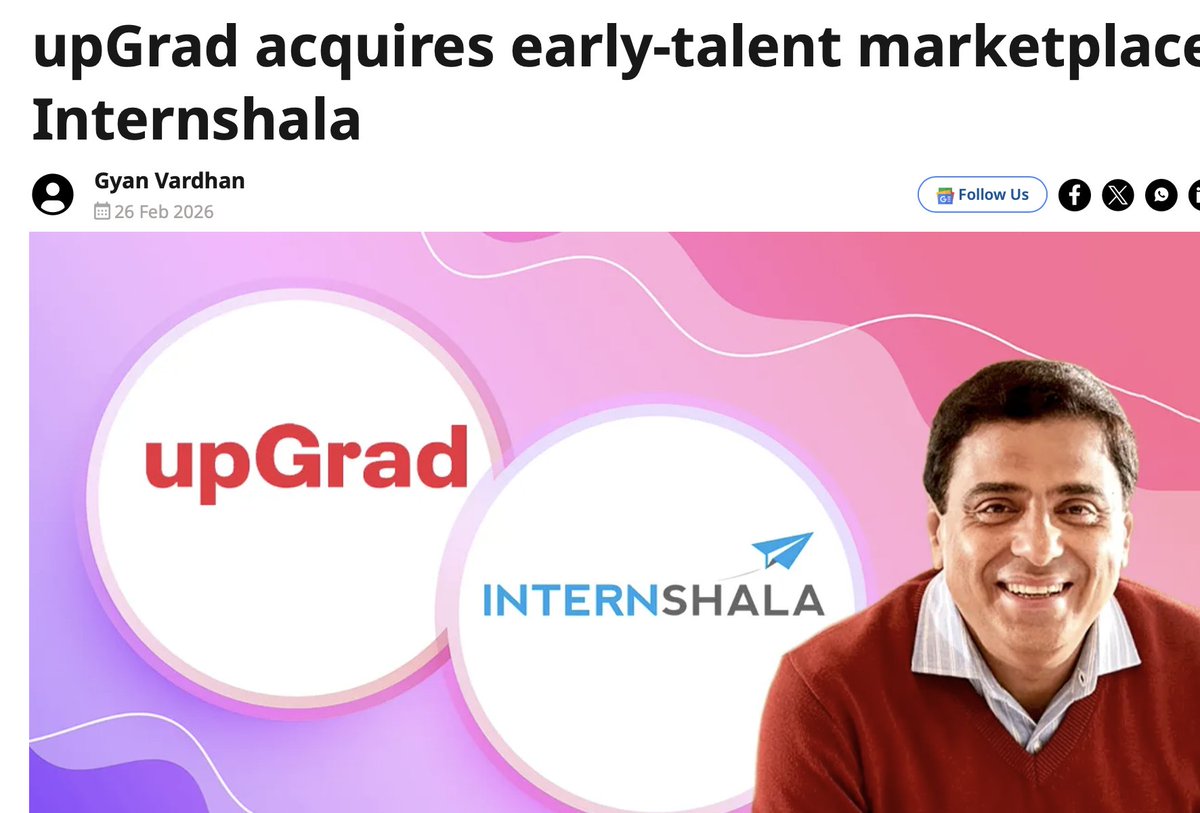
Can a startup acquire another startup without paying cash? When a startup acquires another company, most people assume the buyer simply pays cash. But that is not always how acquisitions are structured. Take the case where upGrad reportedly acquired a 90% stake in Internshala through a share swap. In a share swap transaction, the buyer does not pay money to the sellers. Instead, it issues its own shares in exchange for the shares of the target company. The sellers of the target company therefore become shareholders in the acquiring company. Legally, this works through two coordinated steps. First, the existing shareholders of Internshala transfer a portion of their shares to upGrad. In return, upGrad issues fresh shares to those shareholders. The consideration for the acquisition is therefore equity in the acquiring company rather than cash. Under the Companies Act, 2013, this is typically implemented through a preferential allotment of shares for consideration other than cash under Section 62. The acquiring company must obtain shareholder approval, determine the valuation of the shares being issued, and complete the statutory filings with the Registrar of Companies. The mechanics are simple but the implications are significant. Instead of exiting completely, the founders and shareholders of Internshala effectively roll their ownership into the larger upGrad ecosystem. They now participate in the upside of the combined business because they hold equity in upGrad. From the acquirer’s perspective, a share swap has another advantage. It allows the acquisition to happen without deploying large amounts of cash, while still aligning incentives between the two businesses. The sellers remain economically invested in the future growth of the platform they built. That is why many startup acquisitions, especially within the technology ecosystem, are structured partly or entirely through share swaps. The press release may say “acquired.” But legally, what often happens is something more interesting. Ownership in one company is simply exchanged for ownership in another.
Tejbir Singh Corporate Lawyer tweet media
English
0
0
0
25
Tejbir Singh Corporate Lawyer
Tejbir Singh Corporate Lawyer@Tejbir_Chugh·
Venture capital investors and Founders are almost always at loggerheads on the issue of “drag-along rights.” And interestingly, you will not find the phrase anywhere in the Companies Act, 2013. Under company law, a shareholder is generally free to decide whether or not to sell their shares. One shareholder cannot normally force another shareholder to sell. But venture capital transactions change that through contract. In most startup Shareholders’ Agreements, investors negotiate a drag-along clause. This provision says that if a specified majority of shareholders agree to sell the company to a buyer, the remaining minority shareholders must also sell their shares on the same terms. In simple terms, the majority can “drag” the minority into the exit transaction. The logic is commercial. Imagine a buyer wants to acquire 100 percent of a startup. If even one small shareholder refuses to sell, the buyer may walk away from the deal entirely. That creates a classic holdout problem where a minority shareholder can block a full exit for everyone else. Drag-along rights solve that problem. Once the contractual threshold is met, often founders plus a certain percentage of investors, the remaining shareholders are legally required to participate in the sale and transfer their shares to the buyer. So although corporate law protects a shareholder’s right to hold their shares, venture capital documentation can modify that position through agreement. Which leads to an interesting reality in startup law. A founder may technically own shares in the company. But under a drag-along clause, the timing of when those shares are sold may ultimately be decided by the majority.
English
0
0
0
9
Tejbir Singh Corporate Lawyer
Tejbir Singh Corporate Lawyer@Tejbir_Chugh·
Venture capital investors almost always ask founders a very simple question during fundraising. “Are your shares fully diluted?” Interestingly, the phrase “fully diluted capital” does not appear anywhere in the Companies Act, 2013. The law speaks only of issued share capital, subscribed share capital and paid-up share capital. These are the numbers that appear in statutory filings with the Registrar of Companies. But venture capital investors look at something different. They look at what the cap table will look like if every possible right to acquire shares is exercised. This includes ESOPs granted to employees, ESOPs reserved in the pool but not yet granted, convertible instruments such as Compulsorily Convertible Preference Shares, convertible notes, and sometimes even warrants. All of these instruments may not be shares today, but they have the potential to become shares in the future. So when an investor negotiates ownership in a startup, the percentage is almost always calculated on a fully diluted basis. This ensures that once all options are exercised and all convertible instruments convert into equity, the investor’s percentage stake still reflects the negotiated ownership. The difference can be significant. A founder may believe that the investor owns 20 percent of the company based on the current issued share capital. But once the ESOP pool is expanded and convertible securities convert into equity, that percentage could fall substantially. Which is why venture capital lawyers spend an enormous amount of time on cap table modelling before closing a deal. Because in venture capital, ownership is not calculated only on what exists today rather it is calculated on what the company can legally become tomorrow.
English
0
0
0
6
Tejbir Singh Corporate Lawyer
Tejbir Singh Corporate Lawyer@Tejbir_Chugh·
Venture capital and other investors almost always insist on one particular right before they invest. It is commonly described as a “veto right.” Interestingly, if you open the Companies Act, 2013, you will not find the concept of a veto anywhere in the statute. Corporate law in India recognises only two formal decision-making mechanisms inside a company: board resolutions and shareholder resolutions, each passed by the prescribed majority. So how do investors obtain a veto? They obtain it through contract. In venture capital transactions, the Shareholders’ Agreement and the Articles of Association typically contain a detailed list of actions called Reserved Matters. These are decisions that the company agrees it will not take without the prior consent of the investor. These matters often include issuing new shares, altering the capital structure, borrowing beyond a certain threshold, approving large capital expenditure, selling substantial assets, changing the business model, or amending the Articles of Association. Legally speaking, the company will still pass the relevant board or shareholder resolution under the Companies Act. However, the contractual arrangement ensures that such a resolution cannot be proposed or passed unless the investor first approves it. This is what the startup ecosystem loosely calls a veto. In reality, the investor is not exercising any statutory veto power. Instead, the investor is enforcing a contractual negative control right that restricts the company’s ability to take certain actions without its consent. The distinction becomes important in practice. A resolution might technically satisfy the voting requirements under the Companies Act, but if it bypasses the reserved matters clause, it could still amount to a breach of the Shareholders’ Agreement and the Articles of Association. So when venture capital investors negotiate veto rights, what they are really negotiating is something more precise under corporate law. They are negotiating negative control over specific corporate actions, even though the statute itself continues to operate on majority voting.
English
1
0
0
13
Tejbir Singh Corporate Lawyer
Tejbir Singh Corporate Lawyer@Tejbir_Chugh·
Startup founders often say, “The investor will take a board seat.” Interestingly, the phrase “board seat” does not exist anywhere in the Companies Act, 2013. The law only recognises directors. So when venture capital investors say they want a board seat, what they are actually asking for is the right to have their nominee appointed as a director on the board of the company. This happens through a two-layer structure. First, the Shareholders’ Agreement gives the investor a nomination right. This contractual clause states that as long as the investor holds a specified percentage of shareholding, it has the right to nominate one individual to the board of directors. Second, the company must complete the statutory appointment process. The shareholders pass the necessary resolution appointing that nominee as a director, and the company files the appointment with the Registrar of Companies. So in practice, a “board seat” is simply shorthand for a director position reserved for an investor nominee. But the distinction matters legally. Because the Companies Act imposes fiduciary duties and liabilities on directors, not on investors. Once an investor nominee becomes a director, that individual is legally required to act in the best interests of the company as a whole, not merely in the interests of the investor who nominated them. Another consequence is that the seat is not permanent. The nomination right usually survives only as long as the investor maintains a minimum shareholding threshold. If the investor sells down its stake below that level, the contractual right to nominate a director disappears, and the nominee director is typically required to step down. So while the venture ecosystem talks casually about “board seats”, what the law actually sees is much simpler. An investor negotiating a board seat is really negotiating the right to appoint a director to the board of the company.
English
1
0
0
10