Yuta Aoki

9K posts

Yuta Aoki banner
Yuta Aoki

Yuta Aoki

@ThatYuta

Aka That Japanese Man Yuta. I make YouTube videos about the subtleties of Japanese culture and the language Learn Japanese with me by clicking on the link ⬇️

Tokyo Katılım Temmuz 2013
236 Takip Edilen18.8K Takipçiler
Sabitlenmiş Tweet
Yuta Aoki
Yuta Aoki@ThatYuta·
Want to learn Japanese with me? Sign up for my FREE Japanese lessons and learn "real-life" Japanese that textbooks don't teach you bit.ly/2XpxImy
Yuta Aoki tweet media
English
28
21
266
0
エバン
エバン@mrEban123·
@ThatYuta Which are the sharpest knives? I’m doing full immersion+reading an article every couple days, using yomitan to mine vocabulary and then converting it to an Anki flash card deck, and then talking to Japanese friends irl
English
1
0
2
569
Yuta Aoki
Yuta Aoki@ThatYuta·
Talking about unnecessarily inefficient or outdated Japanese learning resources often feels like this: Me: “This knife is dull. You’d be better off using a sharper knife.” Some people: “Oh, but a dull knife is better than no knife. You can technically make it work. In fact, you can use both sharp and dull knives.” Me: "Why wouldn’t you want your knife to be sharper? You can, of course, use different types of sharp knives, but intentionally adding a dull knife doesn't make sense." One possible reason is that they haven't used a sharp knife, so they don't know how dull their knife is? Also, in reality, people do keep using dull knives (like, literally, when cooking) because even the small psychological barrier of switching knives is enough for people to avoid doing it. People often choose to avoid short-term discomfort at the expense of long-term gains. And this applies to all kinds of things in life.
剣心 フェイス エヒオウスウォリア🇯🇵🇳🇬@faithkenshin1

@ThatYuta Maybe but I feel the efficiency of a tool depends on how skillful the user is. I don’t think any particular app can really do that 1 job. It’s your duty as a learner not to stick to just 1 app or source. You have to learn with multiples sources and completely immerse yourself

English
4
7
66
10.4K
Yuta Aoki
Yuta Aoki@ThatYuta·
I feel like Duolingo intentionally removes context and nuances because they probably found out context and nuances hurt engagement = revenues. Removing thinking is probably one of the most important things about engagement, which also applies to social media reels. It takes less thinking to just say, "This is the answer, just remember it," than, "Well, there's many possible answers depending on what you are trying to say." Ninna no Nihongo also does a lot of, "This is THE answer, just remember it."
English
2
1
42
2.2K
Yuta Aoki
Yuta Aoki@ThatYuta·
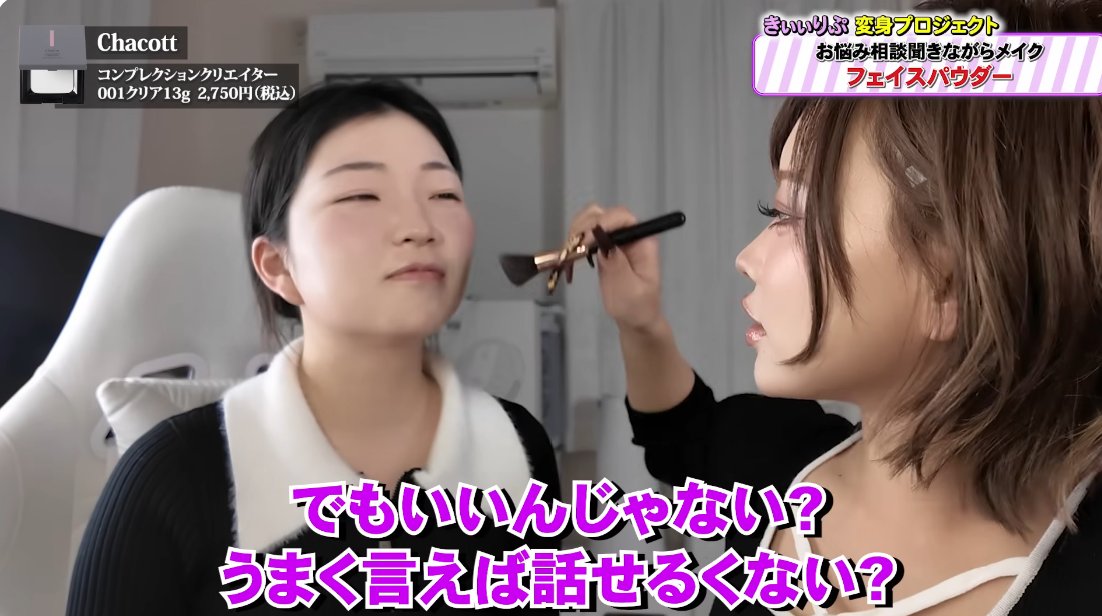
"うまく言えば話せるくない?" You can talk about it if you say it skillfully (without mentioning the specifics). 話せるくない is an "unofficial" inflection of 話せなくない This could be considered slang
Yuta Aoki tweet media
日本語
1
0
5
481
Go
Go@goji3da·
@ThatYuta >Research shows that gains from this kind of drill are so small that it’s not really worth spending much time on it. Do you mind sharing the paper? I'm interested in learning more about this.
English
1
0
1
394
Yuta Aoki
Yuta Aoki@ThatYuta·
みんなの日本語 is outdated even by textbook standards. There’s a particularly ineffective type of drill called a "mechanical drill", where you can mechanically manipulate the language without understanding the meaning. For example, changing one verb form into another is a type of mechanical drill because you can perfectly answer it without caring about the meaning. Research shows that gains from this kind of drill are so small that it’s not really worth spending much time on it. みんなの日本語 contains a lot of these kinds of mechanical drills. However, more modern textbooks typically have significantly fewer mechanical drills. So even though a lot of textbooks still have their own problems, you could say they’re not as bad as みんなの日本語 because they at least removed some of the least effective things you can do to learn Japanese. Also, even though newer textbooks still contain a lot of strange-sounding phrases, they typically remove many of the weirder-sounding phrases from みんなの日本語. And they also tend to use more up-to-date vocabulary.
日本語
4
8
74
5.8K
Yuta Aoki
Yuta Aoki@ThatYuta·
When I talk about mistakes that Japanese learning resources like Duolingo or みんなの日本語 make, some people misunderstand or misinterpret my takes as: “Oh, so it’s not okay for learners to make mistakes?” This is faulty logic and also a very illogical assumption, because almost nobody has the unrealistic expectation that learners need to be perfect all the time. Learners making mistakes is just part of the process. It’s completely normal. But learning materials constantly making mistakes or being unnecessarily weird, and teaching a large number of people to actively learn those mistakes, is a completely different problem. Because it’s very reasonable to expect learning resource creators to be highly proficient in Japanese and know what they’re talking about, especially for popular resources that have so much time and opportunity to do research, check things, and do quality control. Teachers making mistakes while teaching live is not the same thing as widely used learning resources being full of "unnecessarily" weird, non-native-like examples. “Unnecessary” is an important keyword here. Because there’s really no benefit to sounding weird. Being weird serves no communicative purpose. And since most learners who choose to learn Japanese (as opposed to someone who just has to pass the test for the visa) are interested in some type of communication, whether that’s talking to people or understanding Japanese media, it doesn’t really serve their interests.
日本語
1
0
26
1.3K
Yuta Aoki
Yuta Aoki@ThatYuta·
Informed language learners and beginner language learners often approach a second language very differently because they have different expectations. Beginner language learners often mistakenly think that language learning is mainly about accumulating conscious knowledge, so they judge their progress based on how much conscious knowledge they think they’ve gained. Because of this, even if they do something really solid, like meaningfully engaging with input they enjoy, such as watching their favourite anime episode while breaking down each sentence so they can understand it, they may still feel like they’re not making progress if they can’t consciously recall what they learned. But if you are an informed language learner who understands the basics of language acquisition, you wouldn’t make this mistake because your target isn't the accumulation of conscious knowledge. So you would use different criteria to judge your progress. Practical language acquisition is mainly about building intuition, with some help from conscious knowledge. Conscious knowledge itself is not the target. So if you want to judge your progress, you have to judge how much nonconscious knowldge (intuition) you’re building. And testing intuition is much harder than testing conscious knowledge, because you can’t simply use fill-in-the-blank questions (typical language tests) or conscious recalling (let's try to remember how much I learned) for that.
English
0
1
36
2K
Yuta Aoki
Yuta Aoki@ThatYuta·
And that was from a teacher’s perspective. From a learner’s perspective, when I dive into a new language, I actually start with native content, because native content (or native speakers) is usually what makes me want to learn the language in the first place. So I try to find easy sentences and dissect them. And if I’m a bit more serious, I try to find relatively easy native content and go through the sentences one by one, skipping things that are too difficult for me. And If I want to learn a language my friends speak, I start asking my friends. So interacting with native speakers is something I do on day one.
English
1
0
1
76
Yuta Aoki
Yuta Aoki@ThatYuta·
> However, complete beginner wouldn't be able to just start talking with Japanese people. I think you overinterpreted my brief description. It doesn’t mean you should start talking to Japanese people on day one. It’s just a rough summary of an overall approach. > In your opinion, what is the best way to acquire that basic knowledge? Start with very short beginner-friendly sentences, followed by easy dialogues with short sentences, and gradually move up to more complex sentences and more complex dialogues, preferably using tons of high-frequency vocabulary. As you go, you can increase the amount of time you spend on native media. No strict grammar gatekeeping. No perfectionism about accuracy in beginner output. This is an overall direction. There are also subtle techniques that can provide additional benefits, such as glossing, but the list can go on if you focus too much on the details. > And, if you have some opinion on this, what do you think is the bare minimum that learner need to know before engaging with real/native input? There’s no bare minimum. As a teacher, you can curate natural and easy native input and incorporate that into your teaching, which I actually do. And you can offer necessary explanations to make that input digestible for beginners. This doesn’t mean you should give long-winded, complex sentences to beginners. Read this as an example of meaningfully incorporating at least some native content into beginner lessons.
English
1
0
1
90
Yuta Aoki
Yuta Aoki@ThatYuta·
There are many ways to learn Japanese, and technically, a lot of things “work” in the sense that you will eventually learn something from them. But not everything works equally well. Some things are simply more effective than others. So when somebody says: “Well, this technically works.” that’s not a very good point, because doing almost anything is usually better than doing nothing. For example, imagine copying data from one spreadsheet to another. Technically, you could copy everything by selecting and copying each individual cell one by one. Or you could just select everything and copy and paste it all at once. Yes, both methods technically work. But if you can do it all at once much more efficiently, why would you choose the former approach? A lot of traditional, outdated language learning is kind of like copying spreadsheet cells one by one. And then if somebody comes along and says: “You can actually just select everything and copy it all at once,” they react like: “No, but we’ve always done it one cell at a time, and it technically works, so we don’t want to change the way we do things.” And some influencers are basically like: “Yeah, I successfully copied all my data by selecting each cell one by one, so you should do the same thing.”
English
1
0
16
1K
Yuta Aoki
Yuta Aoki@ThatYuta·
To this, I sometimes get responses like: “Why not do both?” But adding A is unlikely to give you additional benefits, because B is already doing what A is trying to do in a more effective way, and A takes away time from doing something that’s more effective. What you can add to B is something that B doesn’t really offer, like talking to actual Japanese people in real life, which I believe will have additional benefits.
English
0
0
0
41
Yuta Aoki
Yuta Aoki@ThatYuta·
@goji3da If you want to be more precise, it would be something like this: A: doing mechanical grammar drills that you can answer without understanding the meanings of the sentences. B: learning what grammar points mean through a wide variety of examples.
English
2
0
0
84