Brian Noir
4.8K posts

Brian Noir
@TheBigPlus1
I foresee letters and words forming before my eyes.
London, England Katılım Eylül 2016
80 Takip Edilen114 Takipçiler

At the moment most 'AI film-makers' don't seem to understand this.
Rodney Marshall@RodneyMarshall1
Roger Marshall: "As a TV writer, you create a main character from a blank page, adding back story, strengths, foibles, flaws. However, casting is the key. The lead actor must breathe life into it, emotionally invest, & ends up its co-creator. That's why top actors are gold dust."
English

@BeltayneRavenna One was last sold for only £65000, they're obviously a bargain.
English

I never knew how badly I needed a Victorian reading station until this very moment ...
DaVinci@BiancoDavinci
Victorian “reading station” crafted by Charles Hindley & Co. c. 1890.
English

@IamEmily2050 @ai_for_success IMO, it does not make sense why educated people find this vaguely impressive or a path to a technology that actually helps or even works.
English

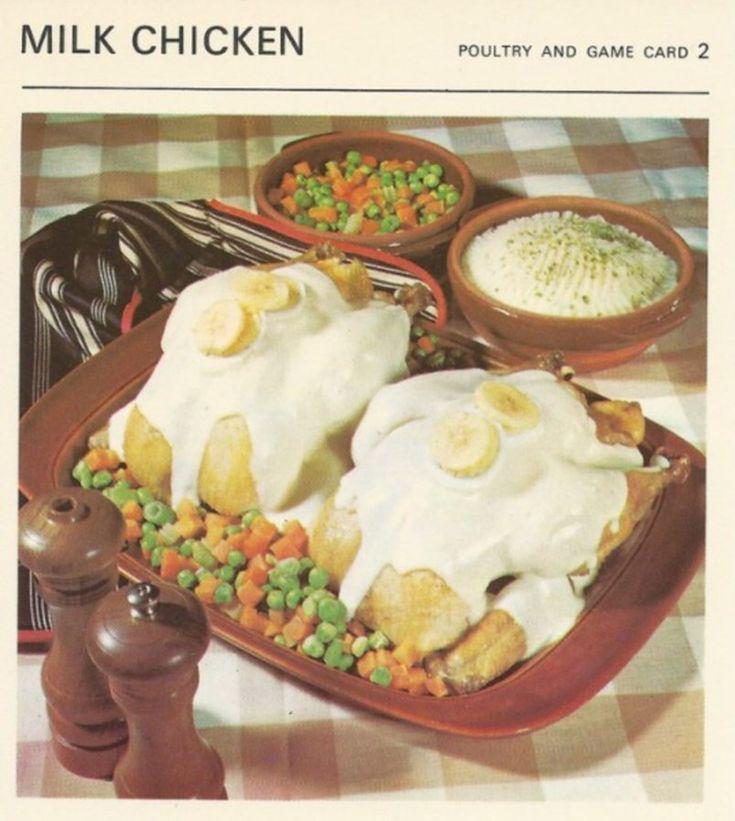
@HistorylandHQ Not as insane as you think. Cooking a chicken in milk+herbs creates a tasty sauce and produces moist/tender meat, banana garnish was a trend in the 60s of combining sweet/savory.
English

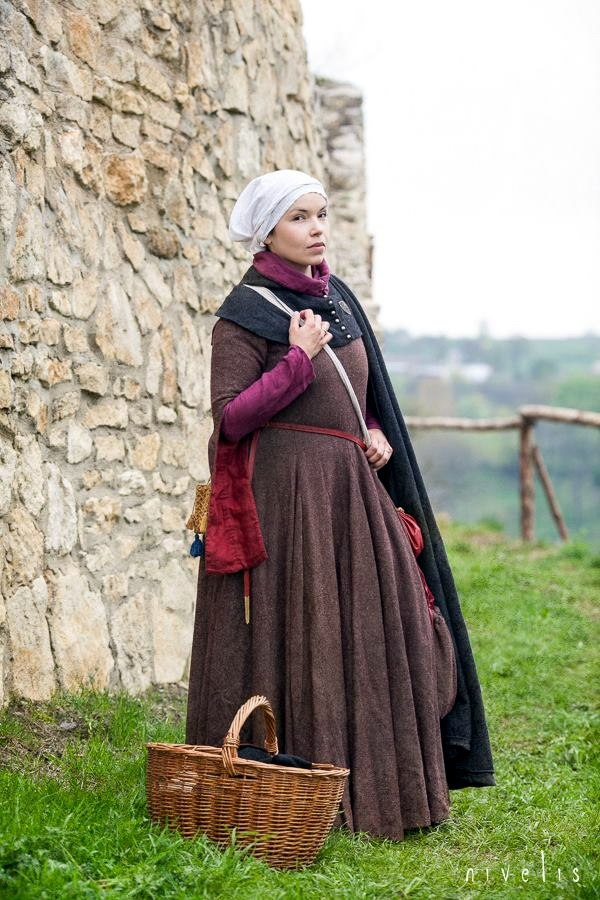
@TimothyEveland True, but widespread adoption & variety of color only really happened post 1400s, with increase in cotton use. Most early medieval peasants wore plain clothes. Or so I've read!
English

More proof that the Middle Ages weren't dull and colorless


Medieval Diesel@TimothyEveland
The idea that the Middle Ages were dull and colorless is ridiculous. We won't stop spreading awareness about the misconception until cinema starts getting it right!
English

@IamEmily2050 @heavypulp All those things in real-life film-making require human collaboration, pretending you can do it all yourself is just silly.
English

@heavypulp I don't understand why it hard for people to understand this 🤔
English

Even in traditional filmmaking and visual entertainment of the last 20-30 years, the audience rarely sees the totally raw footage that was filmed on set.
The footage is edited, cut down, color graded, cleaned up with VFX, actors' faces digitally beautified, sometimes even different performances from numerous takes are "fluid morphed" together to create a perfect "take" that never happened on set.
yes, this has all been happening with real shows and movies that you've watched for the last few decades.
AI video/image gen is really no different. A creator with a story generates some awesome raw outputs from a model, and then takes those raw outputs and strings them together/cleans them up into a cohesive narrative.
anyway - fun times to be a person with a story to tell.
English

I thought I heard Elvis Costello singing a lyric, 'Thomas Aquinas'. No wasn't. That I thought it was possible is intriguing, it kinda fits the song! Anyway he's the genius. And maybe it's genius that can provoke a subconscious speculative reaction?
tinyurl.com/2fj94uuz
English

@Bigvadrouiller1 The story of Henry not taking solders with him that had dysentery isn't new! He probably had the remains of the toughest with him. I'll check out that book. I've never heard this story of peasants ransacking the baggage train! Thanks.
English

Thank you very much. That's why I included those warnings, especially since there are so many debates today, including one I just learned about historian Anne Curry stating that English soldiers with dysentery were sent straight home. New details about this military campaign can always be discovered.
For references, I used a combination of several books, but the main one remains Hundred Years War IV by Jonathan Sumption. An Incredible work
English

I think this might be an opportunity to share my perspective on the Battle of Agincourt, as it tends to be oversimplified.
There's a very sensitive issue surrounding the battle. Even today, England ultimately decided against using Agincourt as the name for a submarine due to international relations concerns. What really happened? What could have occurred to cause such a large part of the French knighthood and nobility to be massacred? To the point that, years later, Charles VII decided to no longer place his full trust in the knighthood, but rather in anyone who knew how to fight, regardless of nobleman or commoner?
One thing is certain: it's incredibly complex, given the number of different sources and especially the chronicles of both sides, which can contradict each other. The same is true for modern works and the numerous debates between the French and English.
Several versions exist of what happened, one where the English killed and executed the knights and a large part of the French army out of humiliation. The other version claims that the French knights were arrogant and foolish for charging on horseback into thousands of archers firing ten arrows a minute. Neither is in fact exactly true.
Both sides shared a common problem that led to the catastrophe: panic, a natural reaction in any human being, noble or not.
Yes, the French army had been arrogant the night before the battle, but by morning this was no longer the case. During the day, they saw that the English army had positioned itself at the narrowest point of the two forests, making it impossible to flank them on horseback, which had been Marshal Boucicaut's plan. But in addition, all the ranged troops (archers and crossbowmen) who were supposed to be in the front line had disappeared. They had been hastily and improvisedly moved to the rear, ultimately rendering them useless. Arguments had broken out among the dukes over which improvised plans to implement.
Meanwhile, the English had already traveled 170 km, outnumbered and battling a dysentery epidemic that had already claimed over 1,000 lives during the siege of Harfleur. Having attempted to flee via Calais, they were blocked on the road by the French army and their morale was at rock bottom. It would be a bloodbath if they were to reach Calais.
Both sides were in a state of panic on October 25th. Even though the French had numerical superiority, after these accumulated problems, many, including those on foot, lowered their heads, helmets and all, at the sight of the English arrow hail, to avoid being pierced by the visor. Despite armor capable of withstanding the onslaught, the psychological effect of the darkening sky also demoralized them. All had to charge into battle for honor, to die or not, or else a herald would write in his chronicle that such and such a knight bore this coat of arms and fled, and this would enter the annals of his family.
For the English, especially the archers, some of whom were without pants due to dysentery, when they ran out of arrows they immediately resorted to hand-to-hand combat, filled with stress and fighting for their survival.
After the battle and the successive waves of violence, including that of Duke John I of Alençon which even targeted King Henry V, thousands of prisoners were taken.
However, we come to the crucial point: the massacre. What happened?
The answer: Lord Ysembart of Agincourt and his army of 600 peasants. Though rarely mentioned, he and the lesser lords are indirectly responsible for it.
The local lords near the battlefield, having learned of the French defeat and that thousands had been taken prisoner, decided to seize the opportunity.
He and his local army attacked the rearguard of the English army, stealing, looting, and plundering equipment, treasures, and supplies. They even took a precious crown and the king's ceremonial sword.
Panic gripped the English and King Henry V. Everything suggested that the French army had anticipated defeat and was seeking reinforcements. From the moment Englishmen rushed from the camp to warn the king of a surprise attack, Henry V suspected revenge in an emergency and ordered the immediate execution of all prisoners, noble or not, keeping only the most important. Few prisoners who had already been moved survived the order, and many Englishmen had refused to execute their prisoners for ransom. The King of England then appointed a nobleman with 200 archers to carry out the executions.
When the English army and King Henry V arrived at the camp, everything was ransacked, and the peasants and lords had fled in haste with enormous booty.
In the end, Henry V himself admitted to killing a "living bank" because of damn peasants and local lords who gave a false alarm about a counter-attack, or even surviving French rearguard troops who regrouped to attack desperately. This could have brought England a colossal fortune through ransoms for future warfare. Perhaps this is why the invasion of Normandy was only planned two years later. Henry V himself would say that the massacre was carried out according to God's justice anyway, that the French rearguard and the minor lords paid the price for their sins in this act.
The chronicles of both sides try to exonerate themselves. The French died for their code of honor in a defeat that had become inevitable, and that it was suicidal. The English fought for their survival and, faced with the need to commit the unthinkable in the heat of the moment.
Both sides fought hard, and both made mistakes that led to the catastrophe, which is still debated today. This battle remains one of the greatest tragedies in the History of the Hundred Years' War. Agincourt is not the victory of genius over arrogance, it is the triumph of survival over honor.
I hope I've been able to shed some more light on this battle, which, for me, would take an extremely long time to study all the scenarios that unfolded for each warrior.
To those who have no grave.
The Medieval Scholar@MedievalScholar
Memorial near the site of the Agincourt battlefield. “To those who have no grave.”

English

@LauraAKarim The Play's the Thing, wherein I'll catch the conscience of the King.
English

@eyezcreems @HiddenYorkshire The very rich control non-cash assets, for example large farm-holders. But anyone with access to foreign hard currency can potentially cash in.
English

@TheBigPlus1 @HiddenYorkshire No everything costs much more. The rich are only better off if they control non-cash assets.
English

@Jayseki @HiddenYorkshire I gave you one example of how the rich manipulated the situation, with access to foreign hard currency. In 1920s Germany when the currency stabilized the Govt tried to address the abuses that had happened, with mixed success.
English

@TheBigPlus1 @HiddenYorkshire but the idea that when hyperinflation happens, rich people see their purchasing power go up dramatically, "buying things for peanuts" is false
English

@Jayseki @HiddenYorkshire The super-rich don't live in that world.
English

@TheBigPlus1 @HiddenYorkshire i have ten dollars in an investment accout, enough to buy a big mac meal. hyperinflation happens, oh no, now the meal is $1000! no worries, my investment is now worth 1000 as well, the price of a meal. a wash
English

@Jayseki @HiddenYorkshire 1920s German, the rich played the system, for example buying foreign hard currency to pay off their debts and buy assets. It's not as rational/logical has you paint it, it's a free-for-all and the rich use it to their advantage.
English

@TheBigPlus1 @HiddenYorkshire if a rich person's non-monetary assets go up in value by 100x, so they sell some, but everything they would buy with the money has also increased in price by 100x, they dont come out ahead, its a wash
English

@Jayseki @HiddenYorkshire The rich with 'non-monetary' assets can clean up. Also the rich have any large debts wiped out. Hyperinflation collapses the 'normal' economy, the rich can use it to their advantage. In 1920s Germany wealthy foreign buyers had a bonanza, for example.
English

@TheBigPlus1 @HiddenYorkshire what on earth are you talking about? if we had hyperinflation and a nice house went to, say, 10B dollars, the rich dont get to buy it for "peanuts," they have to pay 10B same as anyone else would
English

@DrOrtmeyer @HiddenYorkshire You could start by reading some economic history of 1930s era US Depression.
English

@TheBigPlus1 @gemmaEdenham @MrKelly2u V true 😊
I’ve just been going through a slump with my fiction writing over the past couple weeks & am finding insights from others helpful & comforting. Also the title - Real Writers Don’t Quit - was exactly what I needed to read this afternoon.
English

I was lucky enough to be an early reader. Now I’m lucky enough to hold one in my hands.
This book is for any writer who needs to rebuild momentum and rediscover the drive to keep going. Real advice from real authors. Brilliant!
From author and podcast host @MrKelly2u

English

@LauraAKarim @gemmaEdenham @MrKelly2u I may be out of line, but don't buy a book to motivate you to write. (Re)Discover why you love writing. Write because you love to write. If there's an element of self-delusion, so be it! That's part of the process! 🙂
English

@gemmaEdenham @MrKelly2u Thanks for the reccomendation, Gemma 🥰 I’m now following @MrKelly2u & will be purchasing a copy 😄
English