Data and Intelligence Privacy in the @TheoriqAI Ecosystem
In the Web3 era, where knowledge has become a new asset, privacy is not just an option, but a critical foundation. As an infrastructure for decentralized knowledge sharing,
TheoriqAI implements clear mechanisms to protect user data and author intellectual contributions.
1. Decentralized knowledge storage
Information entering TheoriqAI is not concentrated on centralized servers. Instead, it is distributed via IPFS and other decentralized file systems with cryptographic encryption. This eliminates the possibility of unauthorized access or leakage.
2. Author control over access
Each participant who creates or validates knowledge can independently determine the level of access: public, private, or conditionally accessible knowledge (for example, only after payment or staking). This forms a model of tokenized intellectual property.
3. Zero-Knowledge mechanisms
TheoriqAI implements ZK-proofing to verify the validity of knowledge without revealing its content. For example, it is possible to confirm that a model has been trained on a verified dataset? without revealing the dataset itself. This allows for the creation of “trusted knowledge” without compromising privacy.
4. DID and selective disclosure
The identities of participants are protected using decentralized identifiers (DIDs), which support selective disclosure: the user reveals only what is needed for a specific action (for example, industry experience, but not their name).
Conclusion: TheoriqAI not only accumulates knowledge, but also ensures its privacy, access control, and authorship protection.
This is critically important in the new economy, where intellectual contribution is an asset with real value.
Want to join on us? For a chance to win a pair of free tickets:
🎾 Follow us @linera_io
🏓 RT this thread's first post
🎷 Reply with your favorite jazz song
Let’s build the agentic future together. The winner of the two tickets will be announced 7/29!
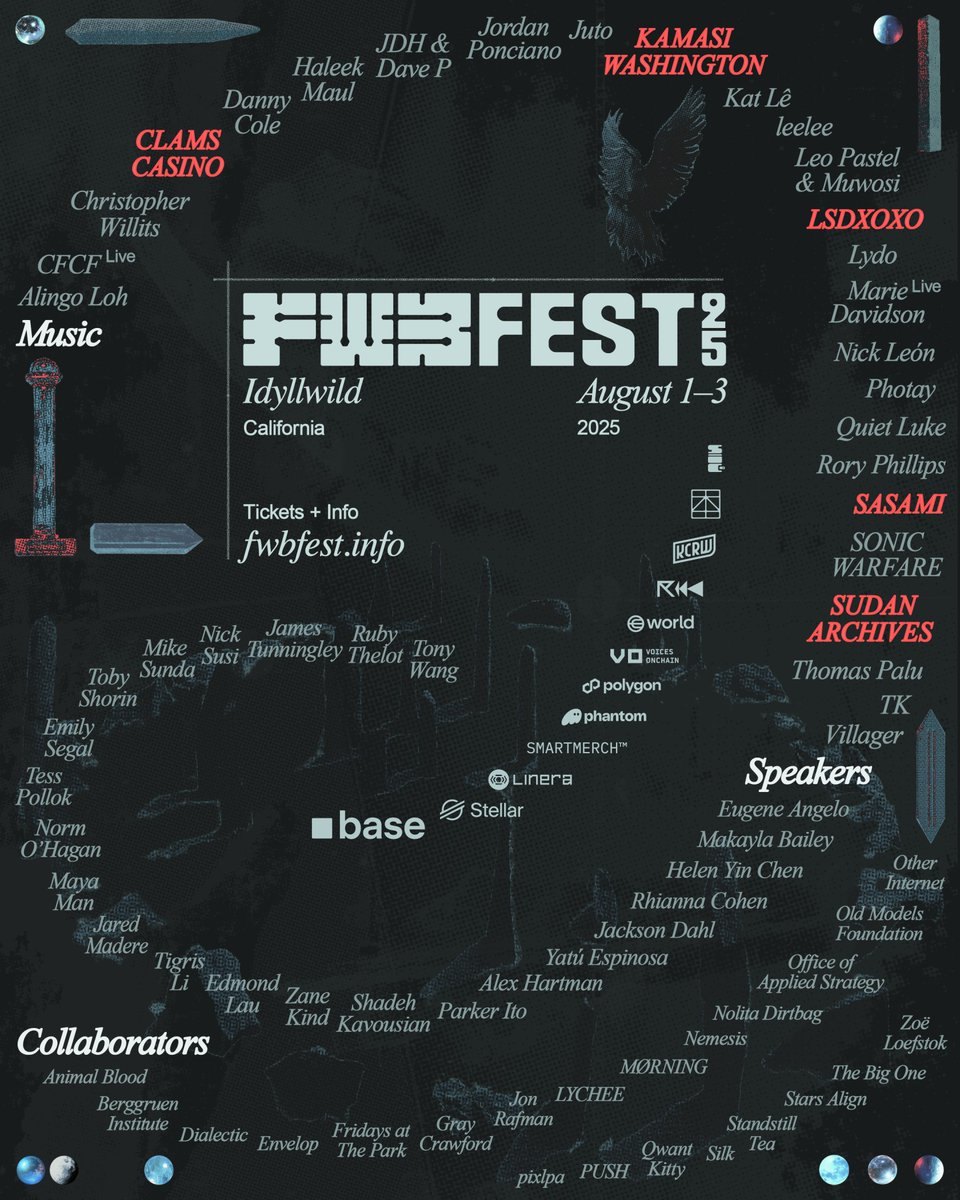
Linera is headed to the mountains! We’re a proud main sponsor of @FWBtweets in Idyllwild, CA, Aug 1–3.
Music, tech, microchains—and maybe a free ticket?
Follow this thread + read to the end for a shot at joining us under the pines. 👇🌲
#FWBFEST25
@HODLguin How does Peaq verify the accuracy of AI model updates from distributed sources?
The privacy-preserving approach is ideal for sectors like healthcare and finance
Federated learning on Peaq: distributed computing for AI models
What is federated learning
Federated learning is a method of training artificial intelligence in which the model is trained directly on distributed devices or servers rather than centrally. This allows data privacy to be maintained, as information is not transferred to a central server.
How Peaq implements federated learning
Peaq creates a decentralized platform that coordinates distributed computing for AI models. Thanks to blockchain, Peaq guarantees transparency, security, and verification of the training process, as well as incentivizes network participants to share computing resources.
Advantages of distributed computing
Distributed computing on Peaq increases the scalability and efficiency of AI training while reducing dependence on centralized data centers. It also helps protect privacy and reduce data processing costs.
Application of federated learning on Peaq
This model is suitable for industries where data privacy is important, such as medicine, finance, or the automotive industry. @peaq helps create more secure and scalable AI solutions
Conclusion
Federated learning on Peaq is an innovative approach that combines AI and @blockchain for distributed, secure, and efficient computing, opening up new opportunities for the development of artificial intelligence.
Performance benchmarks: throughput, latency, and transaction efficiency of dYdX:
Introduction
In the world of decentralized finance (DeFi), blockchain performance is critical. dYdX, as one of the leading protocols for derivatives, demonstrates high technical performance, allowing it to remain competitive. Let's look at the key benchmarks: throughput, latency, and transaction efficiency
Throughput
Throughput measures the number of transactions a network can process per second (TPS). @dYdX V4 on Cosmos demonstrates high throughput thanks to the use of its own consensus and the rejection of Ethereum L2. This allows thousands of orders to be processed every second critical for traders
Latency
Latency determines how quickly a transaction goes from submission to confirmation. In dYdX V4, confirmation time is reduced to hundreds of milliseconds, bringing the UX closer to centralized exchanges. This allows users to react instantly to market changes
Transaction efficiency
Efficiency is a balance between speed, reliability, and cost. @dYdX has made significant progress thanks to its optimized order book architecture, which operates off-chain, while transaction finalization occurs on-chain. This reduces network load and increases order processing efficiency
Conclusion
dYdX demonstrates high performance standards, which is important for professional trading. With low latency, high throughput, and optimized efficiency, it sets a new benchmark for DeFi exchanges
Blockchain energy efficiency: Polkadot's green approach
The importance of energy efficiency in blockchain
The growing popularity of @blockchain technologies raises concerns about energy consumption. High energy costs affect the environment and the industry's reputation, so finding green solutions is becoming a priority.
Polkadot's green approach
Polkadot uses the Nominated Proof of Stake (NPoS) consensus mechanism, which is significantly less energy-intensive than the classic Proof of Work. Validators and nominators ensure network security while consuming a minimum of resources.
Architectural features
Polkadot's multi-chain architecture allows parallel processing of transactions in parallel chains, which increases performance and reduces the load on the relay chain. This contributes to more efficient use of resources.
Benefits for the environment and users
This approach not only reduces the carbon footprint, but also makes the network more accessible and economical for users, contributing to the sustainable development of the ecosystem.
Conclusion
@Polkadot demonstrates that blockchain can be energy efficient and environmentally responsible. Its green approach paves the way for the sustainable development of decentralized technologies.
DAOs on Polkadot – examples of decentralized governance
Decentralized autonomous organizations (DAOs) are becoming a key governance tool in Web3. In the Polkadot ecosystem, this model is developing particularly actively thanks to the high flexibility of parachains, cross-chain capabilities, and modern governance mechanisms
One of the most notable projects is SubDAO Network, which provides tools for creating DAOs of any complexity. They have already brought together more than 15 initiatives within the Polkadot DAO Alliance, which promotes DAO standards, funding for new projects, and legal recognition
Another important initiative is Dora Factory, a DAO-as-a-service platform that provides modules for voting, funds, grants, and cross-chain asset management. It is aimed at technical teams, hackathons, and public goods
Among the applied DAOs, the following stand out:
- Imbue Network a crowdfunding platform where the community controls the financing of ideas;
- GameDAO a DAO for the gaming industry with a focus on game development through DAO mechanics;
- Acala a financial platform entirely managed by DAO;
- Zenlink a community-managed DEX with cross-chain trading;
- SpiderDAO a unique DAO model with dual governance that prevents the concentration of power
@Polkadot also supports ecosystem DAOs such as Polkadot Fellowship, ChaosDAO, and others they are responsible for network development, moderation, research, and security
Conclusion:
@Polkadot demonstrates that DAO is not just a buzzword, but a real tool for collective decision-making. Thanks to the Substrate and OpenGov infrastructure, DAO governance in the ecosystem has become accessible, scalable, and practical. In the coming years, Polkadot may become the leader in DAO innovation in Web3
@HODLguin@MandalaChain@Polkadot Polkadot’s ecosystem enables seamless integration of DeFi and ZK tech, driving innovation across borders and industries
Polkadot: Infrastructure for digital transformation
Polkadot is changing the rules of the game by creating digital infrastructure for countries such as Indonesia, with a population of 280 million.
The @MandalaChain project, built on @Polkadot , supports digital transformation by providing a secure and scalable network.
With 110 MB/s throughput and shared security, Polkadot is ideal for large ecosystems.
From DeFi on Uniswap to ZK technologies, Polkadot connects @blockchain for global innovation.
@silandrift The $BLESS token’s voting power gives the community true influence over the network’s future and adaptability
How scalable is this governance system as the user base and proposal volume grow?
NFT + @TheoriqAI : How Agents Are Changing the Rules of Auctions and Liquidity
NFT projects have long since moved beyond simple collecting. But many still face challenges: low liquidity, manual auction management, and complex pricing.
This is where TheoriqAI offers a breakthrough, automated agents that simplify working with NFTs and open up new interaction scenarios.
Theoriq creates an environment in which NFTs can be sold not through manual listings, but through smart auctions managed by agents.
Such agents can automatically set the starting price, track demand in real time, complete trades, or even transfer the asset to another market, all without user intervention.
Another innovation is increasing NFT liquidity. With the help of agents, NFT assets can be instantly pooled, divvied up, or provided as collateral.
This not only simplifies market participation, but also opens up access to lending, dynamic pricing, and real-time secondary trading.
TheoriqAI turns NFTs from just digital images into fully-fledged financial assets with intelligent logic.
And it is this automation that is the key to the next stage of the NFT market.
Forget fork wars.
@linera_io isn’t copying anyone—it’s building a new category:
Real-time, microchain-powered infrastructure for the agent economy.
The future isn’t monolithic. It’s parallel.
#microchains
The future of dApps?
🤖 AI agents
🧠 Autonomous decisions
⚡ Real-time reactions
Only @linera_io has the architecture to support it all—with microchains and instant finality.
#microchains
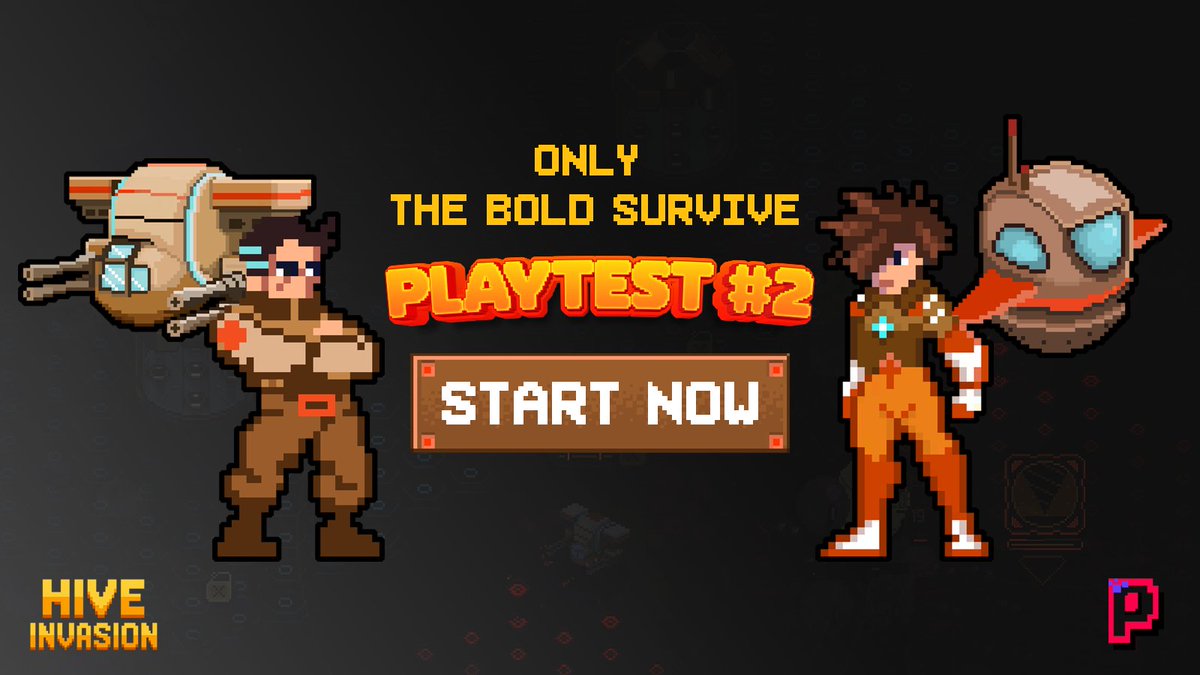
🔥 Playtest #2 has officially begun!
Climb the leaderboard.
Claim the Diamond Badge NFT.
Prove you're the fastest in the Hive Invasion universe.
Play now: pixcape.games/playtest