The Chronicler

20 posts

The Chronicler banner
The Chronicler

The Chronicler

@TheChroniclerH

Cinematic historical reconstructions. The past — brought back to life.

Spain Katılım Şubat 2026
5 Takip Edilen37 Takipçiler
The Chronicler
The Chronicler@TheChroniclerH·
In 18th-century Venice, the masks didn’t come off. For months each year, the Republic transformed into a theater of secrecy and indulgence. Nobles and merchants mingled behind disguises. Casini hosted private banquets. Hot chocolate flowed. Fried sweets filled the streets. Carnival wasn’t chaos. It was ritualized spectacle — perfected before the fall of the Venetian Republic. #Venice #VenetianCarnival #18thCentury
English
0
0
1
66
The Chronicler
The Chronicler@TheChroniclerH·
In 1914, a ship sailed from the Atlantic to the Pacific — without rounding South America. It crossed the Panama Canal. Massive steam shovels carved through the Culebra Cut. Entire valleys were flooded to form Gatun Lake. A gravity-powered lock system lifted ships 85 feet above sea level. The result? Global trade routes were permanently rewritten. The world became smaller — and more strategic. #PanamaCanal #EngineeringHistory #GlobalTrade
English
0
1
4
54
The Chronicler
The Chronicler@TheChroniclerH·
In the 17th century, Champagne had a problem. The bottles kept exploding. Winemakers called it “the devil’s wine.” Cellars were destroyed. Workers wore iron masks to avoid flying glass. French monks tried to eliminate the bubbles. English glassmakers perfected them. Stronger bottles. Cork stoppers. Secondary fermentation. Champagne wasn’t invented on purpose. It was a dangerous accident that became the drink of kings. #Champagne #WineHistory #17thCentury
English
0
0
1
43
The Chronicler
The Chronicler@TheChroniclerH·
In 1905, nearly a million people a day came to Coney Island. They rode early roller coasters. Traveled “to the moon.” Watched staged disasters under 250,000 electric lights. For 25 cents, factory workers and bankers entered the same world of spectacle. Coney Island wasn’t just a beach. It was America’s first modern mass entertainment machine. #ConeyIsland #1905 #GildedAge
English
0
0
2
36
The Chronicler
The Chronicler@TheChroniclerH·
In 1893, Chicago built a city that wasn’t meant to last. The World’s Columbian Exposition — known as the White City — rose in just two years, filled with monumental architecture, electric lights, canals, and grand boulevards. Millions walked through it. Months later, it was dismantled. But its influence on urban planning, architecture, and modern city design endured. A glimpse into Chicago at the height of the Gilded Age. #Chicago1893 #WorldsFair #WhiteCity
English
0
1
1
46
The Chronicler
The Chronicler@TheChroniclerH·
Kraków, 1600. Before dawn, the royal kitchens of Wawel Castle are already alive. Whole fish prepared three ways. Roasted game from royal hunts. Forest mushrooms, spiced sauces, endless bread and meat. This wasn’t ceremonial excess. It was daily life at the court of the Polish–Lithuanian Commonwealth. A glimpse into royal feasting in early modern Europe — where food was power, hierarchy, and spectacle. #WawelCastle #Krakow #FoodHistory
English
0
0
1
34
The Chronicler
The Chronicler@TheChroniclerH·
New Orleans, 1890. Steamboats crowd the Mississippi River. Gas lamps flicker in the French Quarter. Horse-drawn carriages share streets with early electric streetcars. Long before jazz became famous, the city was already a collision of French, Spanish, African, and American cultures. A glimpse into Gilded Age New Orleans — where trade, migration, and Creole tradition shaped a city unlike any other. #NewOrleans #GildedAge #AmericanHistory
English
0
0
1
50
The Chronicler
The Chronicler@TheChroniclerH·
Shanghai, 1920. Rickshaws and automobiles share the same streets. Foreign concessions divide the city. Neon lights glow over jazz clubs and trading houses. Once called the “Paris of the East,” Shanghai was a global crossroads where East met West — and where commerce, culture, and tension collided. A glimpse into Republican-era Shanghai at the height of its transformation. #Shanghai1920 #RepublicanChina #ParisOfTheEast
English
0
1
1
37
The Chronicler
The Chronicler@TheChroniclerH·
Paris, 1890. Gas lamps flicker along Haussmann’s boulevards. Carriages roll past cafés. The Belle Époque is at its height. Before world wars reshaped Europe, this was the capital of elegance, art, and ambition. A visual reconstruction of 19th-century Paris — from grand avenues to everyday street life. #Paris1890 #BelleEpoque #ParisHistory
English
0
0
1
32
The Chronicler
The Chronicler@TheChroniclerH·
Before World War I. Before World War II. The United States fought pirates in North Africa. In the early 1800s, American ships were seized in the Mediterranean. Sailors were taken hostage. Tribute was demanded by the Barbary States of Tripoli, Algiers, and Tunis. The young republic faced a choice: Pay. Or fight. The Barbary Wars became America’s first overseas conflict — and a defining moment in the creation of the U.S. Navy and American foreign policy. #BarbaryWars #USNavy #AmericanHistory
English
7
36
79
9K
The Chronicler
The Chronicler@TheChroniclerH·
Christmas Night, 1776. George Washington’s army was freezing, starving, and collapsing. If the next move failed, the American Revolution would likely die before 1777. Washington chose to cross the Delaware River through ice and darkness — and attack at Trenton. It was a military gamble that saved the Revolution. #WashingtonCrossingTheDelaware #BattleOfTrenton #AmericanRevolution
English
0
0
2
30
The Chronicler
The Chronicler@TheChroniclerH·
22 ships. 1,500 men. One objective: control the Indian Ocean. In 1505, Dom Francisco de Almeida sailed east with orders not just to trade — but to dominate. Kilwa submitted. Mombasa burned. Malindi allied. Then Portugal introduced the cartaz — a naval licensing system forcing every merchant ship in the Indian Ocean to buy Portuguese permission or face destruction. This wasn’t exploration anymore. It was the creation of the first global naval enforcement regime. #FranciscoDeAlmeida #IndianOcean #PortugueseEmpire
English
0
0
1
39
The Chronicler
The Chronicler@TheChroniclerH·
Four ships lost. Bartolomeu Dias drowned. When Pedro Álvares Cabral rounded the Cape of Good Hope in 1500, nearly half his fleet vanished. The survivors reached Calicut expecting trade. Instead, Portuguese merchants were killed. Cabral responded by bombarding the port and burning ships in the harbor. The spice trade had become naval warfare. This was the moment Portugal stopped negotiating — and started enforcing empire in the Indian Ocean. #Cabral #Calicut #AgeOfExploration #IndianOcean
English
0
0
0
23
The Chronicler
The Chronicler@TheChroniclerH·
They were sailing to India. They found Brazil instead. In 1500, Pedro Álvares Cabral led the largest fleet Portugal had ever assembled — sent to secure the spice route to India after Vasco da Gama’s breakthrough. Instead, winds pushed them west. They made landfall on the coast of what they called Terra de Vera Cruz. That “navigational error” became Brazil — and gave Portugal control of nearly half of South America. One voyage to India reshaped two continents. #Brazil #PedroAlvaresCabral #AgeOfExploration
English
2
1
12
2K
The Chronicler
The Chronicler@TheChroniclerH·
When Vasco da Gama came back to Lisbon in 1499, it wasn’t just a navigation success. It was a market disruption. The sea route to India undercut Venice, threatened Cairo’s economy, and forced Calicut into confrontation. This was the moment global trade stopped being regional — and started becoming imperial. One voyage. System-wide consequences. #AgeOfExploration #GlobalHistory
English
0
0
1
22
The Chronicler
The Chronicler@TheChroniclerH·
In 1498, Vasco da Gama reached Calicut (modern Kozhikode, India) expecting Christian allies and instant access to the spice trade. Instead, he faced the Zamorin — ruler of one of the richest ports in the Indian Ocean. The Portuguese offered cheap gifts. Arab merchants warned the court. Diplomacy failed. This wasn’t just first contact between Europe and India by sea. It was the beginning of a power struggle over the Indian Ocean trade — a conflict that would reshape Asia, Europe, and Africa. #VascoDaGama #Calicut #IndianOcean #AgeOfExploration
English
0
0
1
676
The Chronicler
The Chronicler@TheChroniclerH·
Imagine the United States spending $300 billion on a high-risk overseas mission that had already cost hundreds of lives. Now imagine it returning 60x the investment. That’s $18 trillion. In 1497, Portugal made that gamble. Vasco da Gama’s voyage to India — around the Cape of Good Hope — broke the Silk Road monopoly after the Fall of Constantinople and launched the Portuguese Empire. This is how global trade began. #VascoDaGama #AgeOfExploration #History
English
0
0
0
17
The Chronicler
The Chronicler@TheChroniclerH·
Portugal in the 1480s was one of the poorest kingdoms in Western Europe. Then a storm changed everything. Bartolomeu Dias was blown past the southern tip of Africa — proving the Cape of Good Hope could be rounded. At the same time, Pêro da Covilhã infiltrated Cairo, mapping the Indian Ocean spice trade from the inside. Exploration wasn’t random. It was strategy. This was the decade that made Vasco da Gama possible. #Portugal #AgeOfExploration #BartolomeuDias
English
0
0
0
17
The Chronicler
The Chronicler@TheChroniclerH·
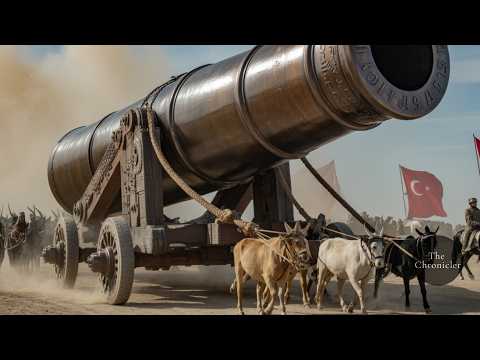
Constantinople falls. Europe’s gateway to Asia collapses overnight. Venice panics. Genoa scrambles. But one small kingdom sees something else: Opportunity. This is how Portugal began building the first global maritime empire — long before Vasco da Gama. 🧭
English
1
0
0
258