The Coded Ones

567 posts

The Coded Ones banner
The Coded Ones

The Coded Ones

@TheCodedOnes

Ancient patterns. Modern systems. Same playbook. What’s underneath and what to do once you see it. Author of The Coded Ones. https://t.co/taViWEfbcp

Katılım Aralık 2025
623 Takip Edilen263 Takipçiler
Sabitlenmiş Tweet
The Coded Ones
The Coded Ones@TheCodedOnes·
She didn't leave over ads. She left because she understands what that data actually is. Every prompt is a window into how someone thinks. Not what they post publicly. How they actually reason privately. That's the most valuable dataset ever created and it just got handed to advertisers. The builders are walking away. That should tell you everything you need to know about what's coming.
English
3
31
232
14.4K
The Coded Ones
The Coded Ones@TheCodedOnes·
Seneca nailed the diagnosis. But the part he didn’t have language for is why we do it. The nervous system doesn’t distinguish between a real threat and an imagined one. Your body floods with the same survival chemistry whether the danger is in the room or just in your head. So it’s not enough to know you’re imagining trouble. You have to teach the body it’s safe. That’s regulation work, not just philosophy. The mind creates the story. The nervous system makes it feel real.
English
0
0
0
97
Daily Stoic
Daily Stoic@dailystoic·
Don't suffer imagined troubles Stress and anxiety, Seneca said, are usually products of the imagination, not reality. “We are in the habit of exaggerating, or imagining, or anticipating, sorrow,” he wrote. "We suffer more from imagination than from reality."
English
27
81
542
22.6K
The Coded Ones
The Coded Ones@TheCodedOnes·
The first generation that doesn’t need to “wake up” because they were never put to sleep. Kids being raised by parents who question everything, build with intention, and treat AI like a tool instead of a threat. That’s the real optimism. Not flying cars. Not Mars colonies. A species that finally develops its technology and its awareness at the same pace. Every civilization that built tools faster than it built consciousness hit a wall. We might be the first one with a real shot at doing both.
English
0
0
1
72
Peter H. Diamandis, MD
Peter H. Diamandis, MD@PeterDiamandis·
Do you have a wildly optimistic vision of the future? Tell me. I want to hear it👇
English
449
35
490
47.2K
The Coded Ones
The Coded Ones@TheCodedOnes·
@realNDWalsch This is the hardest lesson to actually live. The resistance isn’t random. It’s feedback. When everything feels like a fight, the move isn’t to push harder. It’s to ask whether you’re pointed in the wrong direction. The river already knows where it’s going.
English
0
0
2
35
Neale Donald Walsch
Neale Donald Walsch@realNDWalsch·
Do not get into the boat and start pushing the river! When things are not “in the flow,” pay attention to that. And don’t insist on having “your way.” But watch Life resolve itself in the process of Life itself.
Neale Donald Walsch tweet media
English
7
24
151
2.4K
The Coded Ones
The Coded Ones@TheCodedOnes·
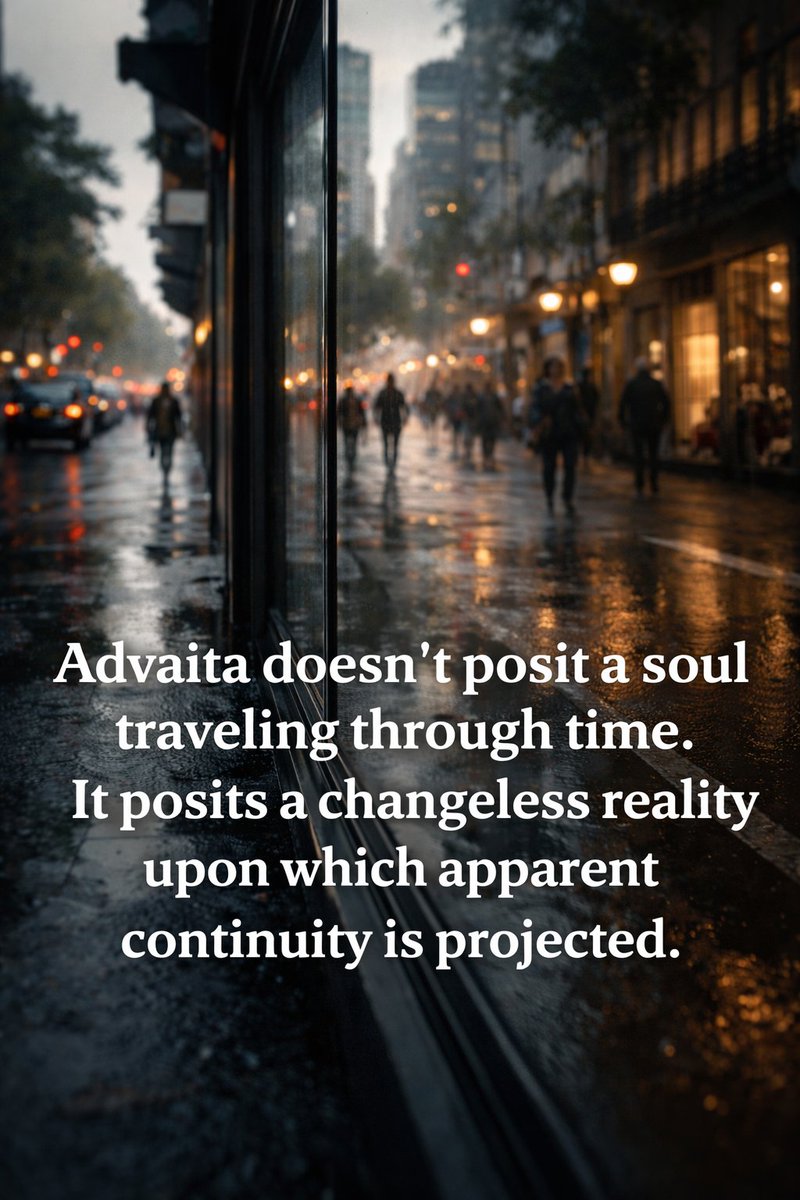
@JasonWilde108 It does. And once you actually sit with it, most of the pressure we carry stops making sense. Hard to stay anxious about a timeline that isn’t moving.
English
1
0
1
31
Jason Wilde
Jason Wilde@JasonWilde108·
Advaita doesn’t say a soul is traveling through time. It says its a changeless reality upon which apparent continuity is projected.
Jason Wilde tweet media
English
10
6
60
2.1K
The Coded Ones
The Coded Ones@TheCodedOnes·
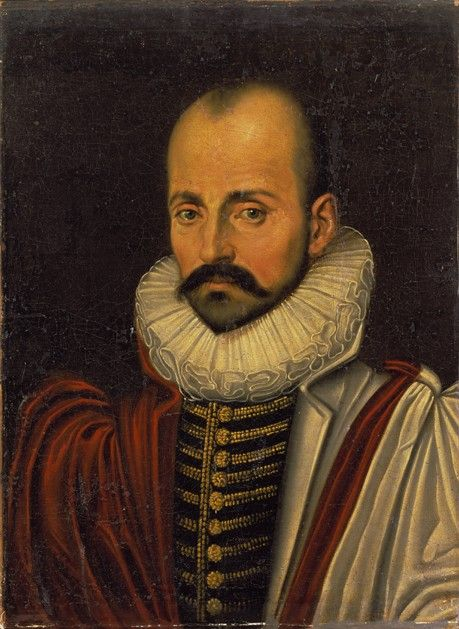
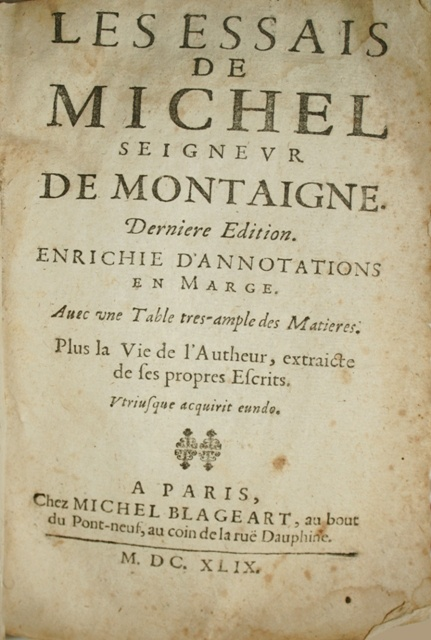
@BigBrainPsych The reason letting go works isn’t mystical. When you stop running the approval program, you free up processing power for actual thought. Montaigne called it nonchalance. It’s really just what happens when you stop letting someone else’s operating system run your decisions.
English
0
1
5
337
Kevin Tanaka
Kevin Tanaka@ItsKevinTanaka·
Most people think success comes from caring more. Michel de Montaigne proved the opposite 450 years ago. Modern psychology confirmed he was right. Here's the philosophy that frees you from outcome obsession ↓ We live in an era of relentless outcome fixation. Metrics. Follower counts. Performance reviews. Psychologists call it "maladaptive perfectionism." And it's quietly destroying performance, elevating burnout risk by 20–30% and linking directly to depression and low self-esteem. The cruel irony? The harder you chase the result, the worse you perform. Anxiety splits your attention. Perfectionism triggers paralysis. The approval you seek becomes the very thing that repels people. But a 16th-century French nobleman figured out the cure long before the science existed. Meet Michel de Montaigne ↓ Born in 1533, Montaigne seemed destined for political greatness. Then life dismantled him. His closest friend died. He lost his daughter. His ambitions collapsed. Instead of clawing back control, he retreated to his tower library and let go. Between 1572 and 1595, he wrote 107 essays simply to understand himself. His conclusion? "He who places his happiness in dependence upon tomorrow is condemned to eternal unhappiness." His essays shaped Shakespeare, Descartes, and modern philosophy for centuries. He called his method mettre à nonchalloir, or strategic nonchalance. It's not laziness, nor apathy. It's a deliberate release of ego-driven fixation on outcomes, so spontaneity and serendipity could finally do their work. His philosophy had 3 principles: 1) Release the need for external validation People become prisoners of their own minds, trapped in loops of judgment and approval-seeking. Today, that loop runs 24/7 through every notification and metric. The less you need to prove yourself, the more magnetic you become. 2) Accept uncertainty instead of controlling it Perfectionism promises safety. It delivers exhaustion. Relaxed minds outperform anxious ones by up to 30% in creative insight. Loosening your grip doesn't slow progress. It accelerates it. 3) Value process over product It means redirecting energy from approval toward meaningful action. You'll notice relationships become more genuine. Opportunities come naturally. 3 ways to apply this today ↓ • Audit your attachments. Ask: "What expectations am I carrying that aren't mine?" Name the worries draining you, then set them down. • Practice nonchalance. When anxiety spikes, step back. Solutions surface when you stop forcing them. • Engage authentically. The more you allow others to be themselves, the deeper your connections become. Montaigne survived plague, personal tragedy, and political collapse by mastering one insight modern psychology is only now quantifying: Presence breeds serendipity. And once you stop gripping the outcome... Something shifts. — Thanks for reading! Enjoyed this post? Follow @BigBrainPsych for more content like this.
Kevin Tanaka tweet mediaKevin Tanaka tweet media
English
11
69
274
14.9K
The Coded Ones
The Coded Ones@TheCodedOnes·
@incentivising Perfectionism isn’t procrastination. It’s programming. You were taught to wait for permission before you move. That’s not a character flaw, that’s conditioning.
English
0
0
1
96
Incentivising
Incentivising@incentivising·
Perfectionism is a lie. It's literally just glorified procrastination. There is nothing to it. Stop waiting for the perfect moment, the perfect plan, or the perfect situation. Start acting now, or fall behind forever. It's not that difficult to understand, but it takes courage. Courage that most people do not have.
English
3
16
90
2.8K
The Coded Ones
The Coded Ones@TheCodedOnes·
The glasses aren’t just collecting data. They’re collecting perspective. Literally how a human sees, moves through space, reacts to the world in real time. Every hour of footage is a masterclass in being human that no lab could design. We’re not just being watched. We’re being studied. And we consented to it in the terms of service nobody read. The question worth asking isn’t whether AI gets smarter from this. It will. It’s whether the humans wearing the glasses get anything back, or just become the unpaid faculty.
English
1
1
5
184
Kekius Maximus
Kekius Maximus@Kekius_Sage·
STOP USING META RAY-BAN SMART GLASSES NOW YOU’RE BEING WATCHED
Kekius Maximus tweet mediaKekius Maximus tweet media
English
164
173
773
29.5K
The Coded Ones
The Coded Ones@TheCodedOnes·
The more interesting question isn’t whether it exists. It’s how many times something has gone from “conspiracy theory” to declassified fact and nobody noticed the pattern. Stealth aircraft. MKUltra. The UAP hearings. Every generation gets a moment where the official story quietly updates and the people who said it first get no apology. At some point “I wouldn’t doubt it” stops being fringe and starts being just paying attention.
English
1
0
29
805
Jay Anderson
Jay Anderson@TheProjectUnity·
Do you think there is a secret space fleet utilising advanced propulsion systems that are still believed by the public to be science fiction?
Jay Anderson tweet media
English
341
49
1.1K
33.8K
The Coded Ones
The Coded Ones@TheCodedOnes·
@RawBooty2 @ericweinstein Exactly. Struggle isn’t the enemy, purposeless struggle is. The distinction matters because one builds people and the other just breaks them.
English
0
0
1
9
RawBooty.com
RawBooty.com@RawBooty2·
It's not even just having purpose, it's that humans thrive under stress and adversity. The idea that we can remove this and make everyone happy is lunacy. People will adapt to whatever their conditions are. Humans require persistent progress else they lose coherence. Progress is relative. UBI is antithetical to human nature, the idea is to place people in a state of 'statis' where progress become impossible. this is disastrous for mental health and social cohesion.
English
1
0
0
15
Eric Weinstein
Eric Weinstein@ericweinstein·
Then wanna have a public discussion about UBI vs Coase vs Blind Optimism? Not a debate. A discussion. You and I agree about most things most of the time. And I think we both care about people getting obliterated. I want markets and freedom for everyone. So do you. Let’s do it.
Marc Andreessen 🇺🇸@pmarca

I’m right though.

English
101
49
1.1K
106.8K
The Coded Ones
The Coded Ones@TheCodedOnes·
Because the fragmentation isn’t accidental. Divided people are manageable people. That’s not conspiracy, that’s just incentive structure, it’s been the operating model for organized power since the first city-states. The Antarctica thing is the tell. Remove the artificial scarcity, remove the tribal boundary, point at something external, and the default human setting turns out to be cooperation. That’s not the exception. That’s what we actually are underneath the programming.
English
0
0
0
427
Science girl
Science girl@sciencegirl·
What is stopping humanity from living peacefully together?
English
29.2K
2.8K
21.9K
6.5M
The Coded Ones
The Coded Ones@TheCodedOnes·
@readswithravi Most people don’t wait because they’re lazy. They wait because somewhere along the way they got coded to believe they weren’t the kind of person who gets the best. That the best is for other people. Epictetus knew, that’s not humility. That’s a program running you.
English
0
0
0
59
Reads with Ravi
Reads with Ravi@readswithravi·
“How long are you going to wait before you demand the best for yourself?” — Epictetus
English
38
116
861
24.9K
The Coded Ones
The Coded Ones@TheCodedOnes·
@BigBrainPsych Works until it doesn’t. Redirecting attention outward breaks the anxiety loop, but if you never come back inward you just trade social anxiety for a self you don’t recognize anymore. The fix can’t also be the erasure.
English
0
0
0
27
Kevin Tanaka
Kevin Tanaka@ItsKevinTanaka·
Jordan Peterson's counter-intuitive fix for social anxiety: Stop focusing on your own discomfort. Focus entirely on making others comfortable instead.
English
4
16
56
3.3K
The Coded Ones
The Coded Ones@TheCodedOnes·
Universe 25 is the most under-cited experiment in this whole debate. Every material need met. Zero struggle. Total behavioral sink within a few generations. The mice didn’t need UBI to collapse. They needed purpose. Meaning. Something to orient toward. Abundance without that isn’t utopia. It’s a more comfortable cage.
English
1
0
1
16
The Coded Ones
The Coded Ones@TheCodedOnes·
The threat everyone’s modeling is foreign adversaries. The threat nobody’s building for is the divorce attorney, the vindictive ex-cop, the mid-level contractor with access and a grudge. Purpose limits sound good on paper. But every system ever built for “legitimate use only” eventually gets used by someone who decides their use is legitimate. The audit log doesn’t help the person whose life got destroyed before anyone checked it.
English
0
0
0
8
Robert Scoble
Robert Scoble@Scobleizer·
Given the Anthropic vs. Pentagon divorce last week, we dig into AI surveillance in the United States. 
@IrenaCronin and I write this newsletter every week.   AI surveillance in the United States is rapidly scaling because AI makes it easy to search video, track locations through license plates, use biometrics like face recognition, and fuse many databases into profiling and prediction systems. Oversight remains fragmented across agencies and states, with governance stronger on process than hard limits, while political battles are growing around domestic mass surveillance, national security authorities, and how contractors can restrict government use. The central tension is scale versus safeguards, with the most important protections being strict purpose limits, short retention, access controls, audit logs, independent testing, and clear appeal paths. Read for free at unaligned.io (and please subscribe).
Robert Scoble tweet media
English
32
24
119
32.3K
The Coded Ones
The Coded Ones@TheCodedOnes·
The part you’re protecting isn’t produced by the brain anyway. It comes through it. People who’ve been clinically dead, zero brain activity, come back describing the most vivid, coherent internal experience of their lives. Plugging in doesn’t delete that. It just makes the illusion that the skull is the boundary a lot harder to maintain.
English
0
0
0
12
Seán Ono Lennon
Seán Ono Lennon@seanonolennon·
One of the defining characteristics of being conscious is having a private and subjective internal experience. Once we can plug our brains in directly I feel like that’s game over for any meaningful sense of self. Could be wrong though. Maybe that’s when humans become cells in a new and improved super organism. Sounds hellish to me though.
English
176
38
717
23.4K
The Coded Ones
The Coded Ones@TheCodedOnes·
Cross, cross, cross. Line, line, line. 40,000 years before Sumer. Same information density as the earliest proto-cuneiform. That’s not doodling. That’s encoding. Someone was transmitting something before language existed to carry it. The question nobody’s asking, who were they transmitting it to?
English
0
0
1
189
Graham Hancock
Graham Hancock@Graham__Hancock·
phys.org/news/2026-02-y… Stuff, including writing it seems, just keeps on getting older... Quotes from linked article: Over 40,000 years ago, our early ancestors were already carving signs into tools and sculptures. According to a new analysis by linguist Christian Bentz at Saarland University and archaeologist Ewa Dutkiewicz at the Museum für Vor- und Frühgeschichte (Museum of Prehistory and Early History) in Berlin, these sign sequences have the same level of complexity and information density as the earliest proto-cuneiform script that emerged tens of thousands of years later, around 3,000 B.C.E. "Our analyses demonstrate that these sign sequences have nothing to do with the writing systems of today, which represent spoken languages and are characterized by high information density. In contrast, the signs on the archaeological objects are frequently repeated—cross, cross, cross, line, line, line. This type of repetition is not a feature found in spoken language," explains Christian Bentz. "However, our findings also show that Paleolithic hunter-gatherers developed a system of symbols that has an information density that is statistically comparable to the earliest proto-cuneiform tablets from ancient Mesopotamia, which came 40,000 years later. Sign sequences in proto-cuneiform script are also repetitive and the individual signs are repeated at a similar rate. In terms of complexity, the sign sequences are comparable," says Bentz.
English
37
106
794
26.3K
The Coded Ones
The Coded Ones@TheCodedOnes·
The real question is who wrote the predictions. Because most of what your nervous system “expects” didn’t come from your own experience. It came from repetition you were fed before you could filter it. The discomfort of changing isn’t your brain resisting growth. Its your programming losing grip.
English
0
0
0
56
Leo
Leo@SpartanPsyche·
The brain is constantly predicting what will happen next based on past patterns, and when those predictions are repeatedly confirmed, they harden into expectation, which is why changing behavior feels uncomfortable at first, the nervous system is reacting to prediction error, not danger.
English
5
10
70
2.8K
The Coded Ones
The Coded Ones@TheCodedOnes·
@SpartanPsyche Most people think clarity is something you earn through effort. It’s the opposite. Clarity is what’s left when you stop letting everything around you drain your processing power. The load isn’t accidental. Someone benefits from you running on fumes.
English
0
1
4
60
Leo
Leo@SpartanPsyche·
Cognitive load changes impulse thresholds. What looks like poor judgment is often decision-making under excessive load. Fatigue accelerates impulsive choices because the brain prioritizes relief over accuracy. Most bad decisions feel necessary in the wrong state.
English
3
13
83
3K
The Coded Ones
The Coded Ones@TheCodedOnes·
The Stone, the Grail, the union of opposites. Same event. Consciousness fully landing in the body. Not escape. Arrival. But most people can’t hold it even when they understand it, and that’s biological. The body is the receiver. Trauma, stress, chemical noise, all interference. You get flashes but nothing stabilizes. The ancients built whole systems around preparing the vessel first. We skipped that step and wonder why it fades.
English
0
0
9
475
Damien Echols
Damien Echols@damienechols·
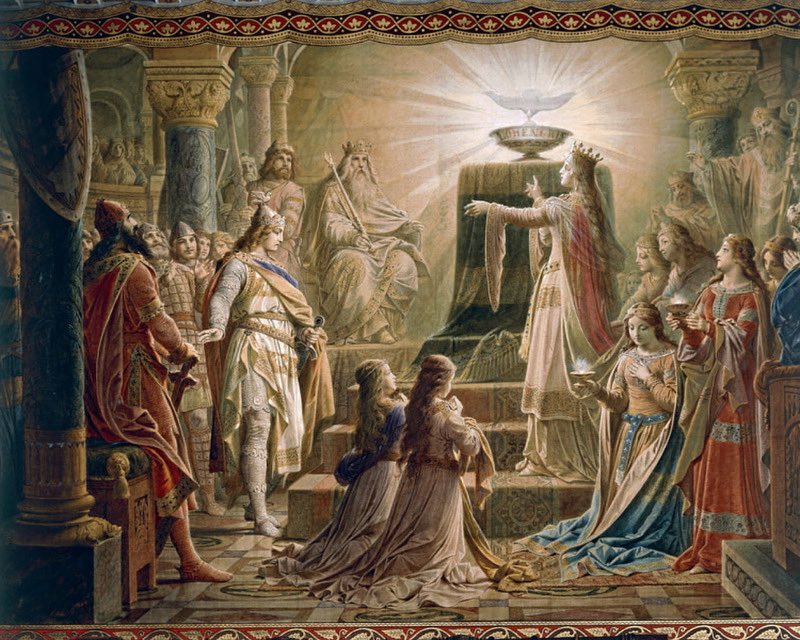
Across the traditions of alchemy, mysticism, and sacred myth, the most guarded treasures all point toward the same realization. The union of opposites, the Arcanum Arcanorum, the Holy Grail, and the Philosopher’s Stone are not different secrets, they are different languages describing the same event within human consciousness. They are symbols for the moment when awareness fully inhabits the body. Divinity is not somewhere beyond the world waiting to be reached; it is consciousness itself. And the body is the Earth in which that divinity takes root. When awareness descends fully into embodiment, heaven and earth meet. Spirit and matter stop opposing one another and become a singularity. This is the true marriage the alchemists talk about. Not the escape from the world, but the complete arrival within it. The Grail is the body when it is filled with living awareness. The Philosopher’s Stone is consciousness stabilized in the present moment. The union of opposites occurs when the mind is no longer lost in memory or projection, but rests completely inside the flesh. In that moment, the ancient riddle resolves itself: the divine and the human were never separate. Presence is the secret hidden behind every symbol. It is the treasure every tradition was pointing toward all along. A doubter usually assumes these symbols must refer to some hidden substance, or a supernatural event. But if you look closely at the traditions that produced them, the patterns become obvious. Every authentic path…Zen, Christian mysticism, Sufism, Taoism, alchemy…ultimately arrives at the same instruction: become present. The alchemists described the Philosopher’s Stone as something that costs nothing, is found everywhere, and yet remains unseen by most people. That description makes no sense if the Stone were a physical object -  but it perfectly describes awareness. Likewise, the Holy Grail was said to be hidden in plain sight, carried by those who could recognize it. Zen masters point directly to the same thing when they say enlightenment is nothing more than seeing your own nature. When separate traditions, separated by centuries and cultures, all converge on the same realization - that liberation occurs when consciousness becomes fully aware of itself in the present moment - it stops looking like poetry and starts looking like a consistent description of human experience. The symbolism itself also gives the game away. Alchemy speaks of the marriage of heaven and earth, spirit and matter, sun and moon. If spirit is consciousness and matter is the body, then their union can only occur in one place: in lived awareness, when consciousness is no longer drifting through thought but is fully rooted in the body. That is embodied presence. In that state, the opposites the mind normally experiences as separate collapse into a single event: awareness breathing through flesh, eternity expressed through a single moment. This is why the Stone is said to grant immortality - because the body lives forever, but because the practitioner discovers the dimension of consciousness that is not bound to time. The proof is not theoretical or philosophical. Anyone can test it by entering the present moment deeply enough. When they do, they discover that the ancient symbols were not pointing to something mystical and distant. They were pointing to the most immediate fact of existence: awareness, here, now, fully alive inside the body.
Damien Echols tweet media
English
23
76
359
16.2K