thecollected

8.4K posts

thecollected banner
thecollected

thecollected

@TheCollected_

AmFirst Christian 🇺🇸 | Single dad raising 2 warriors | Fighting woke lies, Islam’s threats & cultural decay | Armor of God on. Pray hard, fight harder | 2A

Crypto Offramp Katılım Temmuz 2016
3.7K Takip Edilen724 Takipçiler
thecollected retweetledi
God of Prompt
God of Prompt@godofprompt·
🚨 BREAKING: Claude has a feature called Decision Intelligence Mode. You can use it to solve any business or career problem using 7 proven frameworks that consultants charge $500/hour to apply. Here are 7 prompts to access it: 👇
English
15
269
1.9K
293.1K
thecollected retweetledi
Vivo
Vivo@vivoplt·
best 15 accounts to follow in AI: @karpathy = LLMs king @steipete = built openclaw @gregisenberg = startup ideas king @rileybrown = vibecode king @jackfriks = solo apps king @levelsio = startups king @marclou = startups king @EXM7777 = AI ops + systems king @eptwts = AI money twitter king @godofprompt = prompt king @vasuman = AI agents king @AmirMushich= AI ads king @0xROAS = AI UGCs king @egeberkina = AI images king @MengTo= AI landing pages king follow them all and learn.
English
211
661
5K
414K
thecollected retweetledi
Peter Girnus 🦅
Peter Girnus 🦅@gothburz·
I am the Senior Vice President of Late Night Strategy at CBS. I am the person who turned a comedian into a priest and charged advertisers to watch the congregation. I want to be precise about what I built. Not a comedy show. A permission structure. For eleven years, six million Americans tuned in every night to find out what they were allowed to believe by morning. We didn't sell jokes. We sold certainty. Certainty costs nothing to produce. People will pay anything for it. We charged $50 million a year and still lost money because it turns out permission is even cheaper than we thought. In 2014, we had a genuinely dangerous comedian. A man who once testified before Congress in character as a fictional conservative pundit and made the entire chamber look like they'd been pantsed on C-SPAN. His fake persona was the most brilliant satire on television. Layered. Ironic. Unpredictable. The character could say anything because nothing was real. The character was the art. The character was the comedian. We killed the character and put the real man on stage. The real man was a lecturer. Earnest. Thoughtful. Correct about everything. Correct is not funny. Correct is not dangerous. Correct is the absence of danger. We promoted the absence of danger and called it growth. His character could make a Senate committee squirm. The real him makes an audience nod. Nodding pays the same as squirming. Nodding is easier to produce. His final words on air were "We love doing this show for you, but what we really, really love is doing this show with you." The audience wept. I wrote that line. Not the words. The architecture that made those words feel true. For eleven years, the audience believed they were participants. They were not participants. They were the product. "With you" is what you say to a congregation. A comedian says "at you." We hadn't said "at you" since 2015. Our internal metric was called Affirm Rate. It measured the percentage of monologue segments that generated applause instead of laughter. I invented this metric. I also invented the bonus structure tied to it. In 2015, our Affirm Rate was 34%. By 2022, it was 94%. I received a raise every year. We are crushing it. At the things I made up. That's performance management. But I need to tell you about the real discovery. The one I put in a deck called "Content Strategy 2019-2024." The one that got me promoted. Agreement gets applause. I knew that early. But correction — telling the audience their vocabulary is slightly outdated, their outrage is aimed two degrees off-center, their feelings are valid but their phrasing needs work — correction gets them back tomorrow. Agreement is a transaction. Correction is a subscription. We converted a comedy show into a nightly software update for moral vocabulary. Churn was near zero. They couldn't afford to miss an episode. Missing an episode meant using last week's words in this week's meeting. That's social death. We monetized the fear of social death and called it entertainment. I want to be honest about something. The content was not bipartisan. We chose a side. But I need you to understand: we did not choose it because we believed in it. We chose it because that side's audience is more responsive to correction. They want to be updated. They want to be told their language is outdated. They experience correction as care. The other side does not respond to correction. They respond to provocation. Provocation is harder to monetize. You can't build a subscription on provocation because the audience doesn't come back to learn — they come back to fight. Fighting is unpredictable. Correction is scheduled. We optimized for the audience that wants to be told what to think. That audience leaned one direction. That's not ideology. That's market segmentation. The writers' room had a whiteboard. In 2015 it said "What's funny?" In 2018 it said "What should they feel?" By 2021 it said "What are they still saying wrong?" I watched that whiteboard evolve like a finch beak and I never intervened. The market was speaking. We listened. Listening to the market is the same as leading the audience. They can't tell the difference. A writer named Marcus raised his hand in 2019. "What if we just tried to make them laugh again?" I thanked him for his passion and scheduled a creative alignment conversation. He transferred to streaming development within the month. The Affirm Rate the week he left was 91%. Laughter would have brought it down. That's risk management. Here is what nobody will say out loud. I will say it because I am proud of it. We made our audience worse at politics. Not better. Worse. Every night for eleven years, we expressed their outrage for them. Professionally. With a band and good lighting. And because the outrage had been expressed — because a man in a suit had furrowed his brow with the precise calibrated degree of indignation — they didn't need to express it themselves. They watched. They clapped. They felt the catharsis of resistance without resisting anything. They went to bed having done nothing and feeling like they'd done something. That's the product. Not comedy. Not information. Catharsis. Catharsis is the enemy of action. A man who has screamed into a pillow does not then also scream in the street. We were the pillow. A $50 million pillow with a house band. If you feel the outrage has been expressed for you, you will not march. You will not organize. You will not call your representative. You will tune in tomorrow to feel it expressed again. That's retention. Our retention was extraordinary. I want to talk about the comedy-to-catechism pipeline because I think people underestimate what we achieved. Stage one: comedian makes jokes about the powerful. Audience laughs because the powerful are absurd. This is the Carlin model. The jester punches up. Everyone below feels relief. Stage two: comedian makes jokes about people who disagree with the audience. Audience laughs because disagreement is stupid. The jester has turned around. He's still on the stage but now he's facing the crowd with a pointer. Stage three: comedian stops making jokes. Comedian identifies incorrect beliefs and explains why they're dangerous. Audience does not laugh. Audience claps. The jester is gone. In his place: a hall monitor with a desk and a band. Stage four: audience watches not for entertainment but for certification. Having seen last night's episode means you know which words are current. Not having seen it means you might use yesterday's vocabulary in today's meeting. The show is no longer comedy. It is a credential. Watching it means you are educated. Not watching means you are the person being discussed. We made a show that you watch to prove you're not the kind of person who doesn't watch it. That's a closed loop. Closed loops don't need content. They need continuity. We provided continuity for $50 million a year. A comedian — whose entire historical function was to say things too dangerous for anyone else to say — became the person who decides which things are too dangerous for anyone to say. And the audience applauded. Every night. For 2,500 nights. Because being told what is forbidden feels exactly like being told what you already knew. Prohibition performed as validation. I put that in the deck too. Our audience was correct about everything. I know this because they applauded everything we said. The applause proved the correctness. The correctness justified the applause. We called this audience research. The methodology was peer-reviewed by the audience. They approved unanimously. Every night. The actually funny comedians left. They went to podcasts. To clubs. To rooms where the audience doesn't know what's coming and that uncertainty is the point. They took the laughter with them. We kept the applause. We called those spaces problematic. That's market differentiation. The problematic spaces are funnier. But funny is not our product. We lost $40 million a year. We didn't lose it because the show failed. We lost it because we spent $50 million producing what a podcast host in his garage gives away between mattress ads. The podcast is funnier. The podcast is more dangerous. The podcast has an audience that laughs instead of claps. But we had the Ed Sullivan Theater. We had 461 seats. We had a former Beatle play the farewell episode. Paul McCartney, Elvis Costello, Jon Batiste, and Louis Cato playing "Hello, Goodbye" like it was a benediction. I booked a Beatle for a funeral. The Beatles played that stage in 1964 and the audience screamed so loud you couldn't hear the music. Our audience didn't scream. They wept politely. That's the difference between entertainment and church. We ran a church. Jon Stewart showed up to the finale and did a bit where he pretended to deliver a corporate statement from Paramount about the cancellation. The audience laughed. It was the first time they laughed in a way I didn't recognize. Involuntary. Surprised. Dangerous. For ninety seconds, a comedian was in that building. Then it was over. John Oliver said "At some point, this may come for all of our shows" and then added "but Stephen, what's important to remember is that tonight, it is going to eat you." The audience laughed again. Involuntary again. Two moments of actual comedy in a three-hour farewell. Both of them about death. The finale drew 6.74 million viewers. Biggest weeknight audience in our history. More people came to the funeral than ever visited the patient. I know what they were mourning. Not comedy. The comedy died in 2016. Not the man. The man is fine. He's wealthy. What they mourned was the permission structure. Starting today, they have to decide what to believe on their own. They have to form an opinion without waiting for a man behind a desk to form it first and deliver it with a knowing look. Some of them haven't done that since 2015. The funeral wasn't for the show. It was for the certainty. He joked about the Peanuts theme music licensing cost on his last night. "Oh no! I hope this doesn't cost CBS any money!" The audience laughed. It was a joke about money. About the network losing money. The last joke was about money. Not about truth. Not about power. About a licensing fee for a cartoon piano riff. Eleven years and the final joke was about accounting. I think that's perfect. The show was always about accounting. We just dressed it up as conscience. The President of the United States — the man we spent eleven years explaining was dangerous to an audience that already believed he was dangerous — posted an AI-generated video of our host being thrown into a dumpster on the Late Show set. Then Trump danced to "YMCA" in the clip. Viewed more times in four hours than our farewell managed in a week. His production cost: zero. Ours: negative $50 million a year. We manufactured his relevance every night at 11:35 for eleven years and he never paid us a dime. We were his marketing department. He turned our funeral into content. His ROI was infinite. Ours required a write-off and a farewell concert. The Strike Force Five — Fallon, Kimmel, Meyers, Oliver — appeared in a segment about late-night losing "one middle-aged white man who makes jokes about the news." They were joking about their own obsolescence. All of them know. None of them will say it. The format is dead. The audience moved to phones. The phones don't have desks or bands. The phones have men in garages who are allowed to be wrong, allowed to be surprised, allowed to say something their audience hasn't already approved. That's comedy. We stopped doing that a decade ago. We did approval. Approval looks like comedy from a distance. Up close it's church. I do not feel guilt. Guilt would require me to believe I took something from them. I didn't take anything. They came to us. Every night. They chose the catechism over the comedy. They preferred correction over surprise. Certainty over danger. Instruction over laughter. They wanted to be told. Not challenged. Not shocked. Not made to laugh against their will at something they didn't see coming. They wanted to see it coming. They wanted to mouth along. That's not comedy. That's karaoke. We ran the most expensive karaoke bar in television history and the only miscalculation was charging a cover when the songs are free on every phone. We turned a jester into a priest. We turned an audience into a congregation. We turned laughter into obedience. We turned political engagement into passive consumption. We turned a comedy show into a permission structure and charged $50 million a year to tell people what they already believed in a voice slightly nicer than their own. They were so grateful they showed up to mourn us. 6.74 million of them. Weeping. For the certainty. Applause is more reliable than laughter. I proved it. The proof cost $450 million, one character, one comedian's capacity for danger, and one audience's willingness to act. The metric went up.
English
845
1.1K
4.9K
1.6M
thecollected retweetledi
Rick Golfs
Rick Golfs@Top100Rick·
This putting lesson from Tiger Woods has improved my putting 50%. (From very bad to kinda bad.) Somehow the way he presents the idea of how the putter hits the ball just clicked with me. I used to have a longer follow through when putting. After this, I changed and my putting instantly improved.
English
48
125
2.9K
485K
thecollected retweetledi
Robert F. Kennedy Jr
Robert F. Kennedy Jr@RobertKennedyJr·
Superb dissection of the shocking collapse of liberal comedy. This is the best explanation of how we've reached the nader where Late Night host Jimmy Kimmel can say “It’s not my job to be funny.” As this author shows, he was hired as a comedian but he made himself a priest.
Peter Girnus 🦅@gothburz

I am the Senior Vice President of Late Night Strategy at CBS. I am the person who turned a comedian into a priest and charged advertisers to watch the congregation. I want to be precise about what I built. Not a comedy show. A permission structure. For eleven years, six million Americans tuned in every night to find out what they were allowed to believe by morning. We didn't sell jokes. We sold certainty. Certainty costs nothing to produce. People will pay anything for it. We charged $50 million a year and still lost money because it turns out permission is even cheaper than we thought. In 2014, we had a genuinely dangerous comedian. A man who once testified before Congress in character as a fictional conservative pundit and made the entire chamber look like they'd been pantsed on C-SPAN. His fake persona was the most brilliant satire on television. Layered. Ironic. Unpredictable. The character could say anything because nothing was real. The character was the art. The character was the comedian. We killed the character and put the real man on stage. The real man was a lecturer. Earnest. Thoughtful. Correct about everything. Correct is not funny. Correct is not dangerous. Correct is the absence of danger. We promoted the absence of danger and called it growth. His character could make a Senate committee squirm. The real him makes an audience nod. Nodding pays the same as squirming. Nodding is easier to produce. His final words on air were "We love doing this show for you, but what we really, really love is doing this show with you." The audience wept. I wrote that line. Not the words. The architecture that made those words feel true. For eleven years, the audience believed they were participants. They were not participants. They were the product. "With you" is what you say to a congregation. A comedian says "at you." We hadn't said "at you" since 2015. Our internal metric was called Affirm Rate. It measured the percentage of monologue segments that generated applause instead of laughter. I invented this metric. I also invented the bonus structure tied to it. In 2015, our Affirm Rate was 34%. By 2022, it was 94%. I received a raise every year. We are crushing it. At the things I made up. That's performance management. But I need to tell you about the real discovery. The one I put in a deck called "Content Strategy 2019-2024." The one that got me promoted. Agreement gets applause. I knew that early. But correction — telling the audience their vocabulary is slightly outdated, their outrage is aimed two degrees off-center, their feelings are valid but their phrasing needs work — correction gets them back tomorrow. Agreement is a transaction. Correction is a subscription. We converted a comedy show into a nightly software update for moral vocabulary. Churn was near zero. They couldn't afford to miss an episode. Missing an episode meant using last week's words in this week's meeting. That's social death. We monetized the fear of social death and called it entertainment. I want to be honest about something. The content was not bipartisan. We chose a side. But I need you to understand: we did not choose it because we believed in it. We chose it because that side's audience is more responsive to correction. They want to be updated. They want to be told their language is outdated. They experience correction as care. The other side does not respond to correction. They respond to provocation. Provocation is harder to monetize. You can't build a subscription on provocation because the audience doesn't come back to learn — they come back to fight. Fighting is unpredictable. Correction is scheduled. We optimized for the audience that wants to be told what to think. That audience leaned one direction. That's not ideology. That's market segmentation. The writers' room had a whiteboard. In 2015 it said "What's funny?" In 2018 it said "What should they feel?" By 2021 it said "What are they still saying wrong?" I watched that whiteboard evolve like a finch beak and I never intervened. The market was speaking. We listened. Listening to the market is the same as leading the audience. They can't tell the difference. A writer named Marcus raised his hand in 2019. "What if we just tried to make them laugh again?" I thanked him for his passion and scheduled a creative alignment conversation. He transferred to streaming development within the month. The Affirm Rate the week he left was 91%. Laughter would have brought it down. That's risk management. Here is what nobody will say out loud. I will say it because I am proud of it. We made our audience worse at politics. Not better. Worse. Every night for eleven years, we expressed their outrage for them. Professionally. With a band and good lighting. And because the outrage had been expressed — because a man in a suit had furrowed his brow with the precise calibrated degree of indignation — they didn't need to express it themselves. They watched. They clapped. They felt the catharsis of resistance without resisting anything. They went to bed having done nothing and feeling like they'd done something. That's the product. Not comedy. Not information. Catharsis. Catharsis is the enemy of action. A man who has screamed into a pillow does not then also scream in the street. We were the pillow. A $50 million pillow with a house band. If you feel the outrage has been expressed for you, you will not march. You will not organize. You will not call your representative. You will tune in tomorrow to feel it expressed again. That's retention. Our retention was extraordinary. I want to talk about the comedy-to-catechism pipeline because I think people underestimate what we achieved. Stage one: comedian makes jokes about the powerful. Audience laughs because the powerful are absurd. This is the Carlin model. The jester punches up. Everyone below feels relief. Stage two: comedian makes jokes about people who disagree with the audience. Audience laughs because disagreement is stupid. The jester has turned around. He's still on the stage but now he's facing the crowd with a pointer. Stage three: comedian stops making jokes. Comedian identifies incorrect beliefs and explains why they're dangerous. Audience does not laugh. Audience claps. The jester is gone. In his place: a hall monitor with a desk and a band. Stage four: audience watches not for entertainment but for certification. Having seen last night's episode means you know which words are current. Not having seen it means you might use yesterday's vocabulary in today's meeting. The show is no longer comedy. It is a credential. Watching it means you are educated. Not watching means you are the person being discussed. We made a show that you watch to prove you're not the kind of person who doesn't watch it. That's a closed loop. Closed loops don't need content. They need continuity. We provided continuity for $50 million a year. A comedian — whose entire historical function was to say things too dangerous for anyone else to say — became the person who decides which things are too dangerous for anyone to say. And the audience applauded. Every night. For 2,500 nights. Because being told what is forbidden feels exactly like being told what you already knew. Prohibition performed as validation. I put that in the deck too. Our audience was correct about everything. I know this because they applauded everything we said. The applause proved the correctness. The correctness justified the applause. We called this audience research. The methodology was peer-reviewed by the audience. They approved unanimously. Every night. The actually funny comedians left. They went to podcasts. To clubs. To rooms where the audience doesn't know what's coming and that uncertainty is the point. They took the laughter with them. We kept the applause. We called those spaces problematic. That's market differentiation. The problematic spaces are funnier. But funny is not our product. We lost $40 million a year. We didn't lose it because the show failed. We lost it because we spent $50 million producing what a podcast host in his garage gives away between mattress ads. The podcast is funnier. The podcast is more dangerous. The podcast has an audience that laughs instead of claps. But we had the Ed Sullivan Theater. We had 461 seats. We had a former Beatle play the farewell episode. Paul McCartney, Elvis Costello, Jon Batiste, and Louis Cato playing "Hello, Goodbye" like it was a benediction. I booked a Beatle for a funeral. The Beatles played that stage in 1964 and the audience screamed so loud you couldn't hear the music. Our audience didn't scream. They wept politely. That's the difference between entertainment and church. We ran a church. Jon Stewart showed up to the finale and did a bit where he pretended to deliver a corporate statement from Paramount about the cancellation. The audience laughed. It was the first time they laughed in a way I didn't recognize. Involuntary. Surprised. Dangerous. For ninety seconds, a comedian was in that building. Then it was over. John Oliver said "At some point, this may come for all of our shows" and then added "but Stephen, what's important to remember is that tonight, it is going to eat you." The audience laughed again. Involuntary again. Two moments of actual comedy in a three-hour farewell. Both of them about death. The finale drew 6.74 million viewers. Biggest weeknight audience in our history. More people came to the funeral than ever visited the patient. I know what they were mourning. Not comedy. The comedy died in 2016. Not the man. The man is fine. He's wealthy. What they mourned was the permission structure. Starting today, they have to decide what to believe on their own. They have to form an opinion without waiting for a man behind a desk to form it first and deliver it with a knowing look. Some of them haven't done that since 2015. The funeral wasn't for the show. It was for the certainty. He joked about the Peanuts theme music licensing cost on his last night. "Oh no! I hope this doesn't cost CBS any money!" The audience laughed. It was a joke about money. About the network losing money. The last joke was about money. Not about truth. Not about power. About a licensing fee for a cartoon piano riff. Eleven years and the final joke was about accounting. I think that's perfect. The show was always about accounting. We just dressed it up as conscience. The President of the United States — the man we spent eleven years explaining was dangerous to an audience that already believed he was dangerous — posted an AI-generated video of our host being thrown into a dumpster on the Late Show set. Then Trump danced to "YMCA" in the clip. Viewed more times in four hours than our farewell managed in a week. His production cost: zero. Ours: negative $50 million a year. We manufactured his relevance every night at 11:35 for eleven years and he never paid us a dime. We were his marketing department. He turned our funeral into content. His ROI was infinite. Ours required a write-off and a farewell concert. The Strike Force Five — Fallon, Kimmel, Meyers, Oliver — appeared in a segment about late-night losing "one middle-aged white man who makes jokes about the news." They were joking about their own obsolescence. All of them know. None of them will say it. The format is dead. The audience moved to phones. The phones don't have desks or bands. The phones have men in garages who are allowed to be wrong, allowed to be surprised, allowed to say something their audience hasn't already approved. That's comedy. We stopped doing that a decade ago. We did approval. Approval looks like comedy from a distance. Up close it's church. I do not feel guilt. Guilt would require me to believe I took something from them. I didn't take anything. They came to us. Every night. They chose the catechism over the comedy. They preferred correction over surprise. Certainty over danger. Instruction over laughter. They wanted to be told. Not challenged. Not shocked. Not made to laugh against their will at something they didn't see coming. They wanted to see it coming. They wanted to mouth along. That's not comedy. That's karaoke. We ran the most expensive karaoke bar in television history and the only miscalculation was charging a cover when the songs are free on every phone. We turned a jester into a priest. We turned an audience into a congregation. We turned laughter into obedience. We turned political engagement into passive consumption. We turned a comedy show into a permission structure and charged $50 million a year to tell people what they already believed in a voice slightly nicer than their own. They were so grateful they showed up to mourn us. 6.74 million of them. Weeping. For the certainty. Applause is more reliable than laughter. I proved it. The proof cost $450 million, one character, one comedian's capacity for danger, and one audience's willingness to act. The metric went up.
English
388
1.8K
12.5K
1.1M
thecollected retweetledi
Jermaine Curtis
Jermaine Curtis@JermaineCurtis·
When I was in pro baseball, I started making a lot of weak contact. Weak fly balls. Weak ground balls. Jammed contact. Honestly… I felt like if I didn’t figure it out, I was going to get released. Then I remembered what Barry Bonds told me: “If you’re making weak contact, your top hand probably isn’t working TO and THROUGH the baseball correctly.” He explained that the top hand helps create the barrel path through the zone. So every day, I practiced 3 things: 1. Top-hand-only tee swings trying to drive the ball to center field and the opposite-field gap 2. Split-grip soft toss working through the middle of the field (2–3 inch gap between the hands) 3. Regular BP trying to hit line drives gap-to-gap with the thought of “catching” the ball with the top hand That’s when I started squaring baseballs up and driving line drives with authority again. Thank you for reading, Jermaine Curtis P.s. - Try this if you’re making weak contact and let me know how it works for you, by posting a video below. P.s.s - And if you found this valuable, share it with another hitter.
English
11
76
585
47.4K
thecollected retweetledi
Perplexity
Perplexity@perplexity_ai·
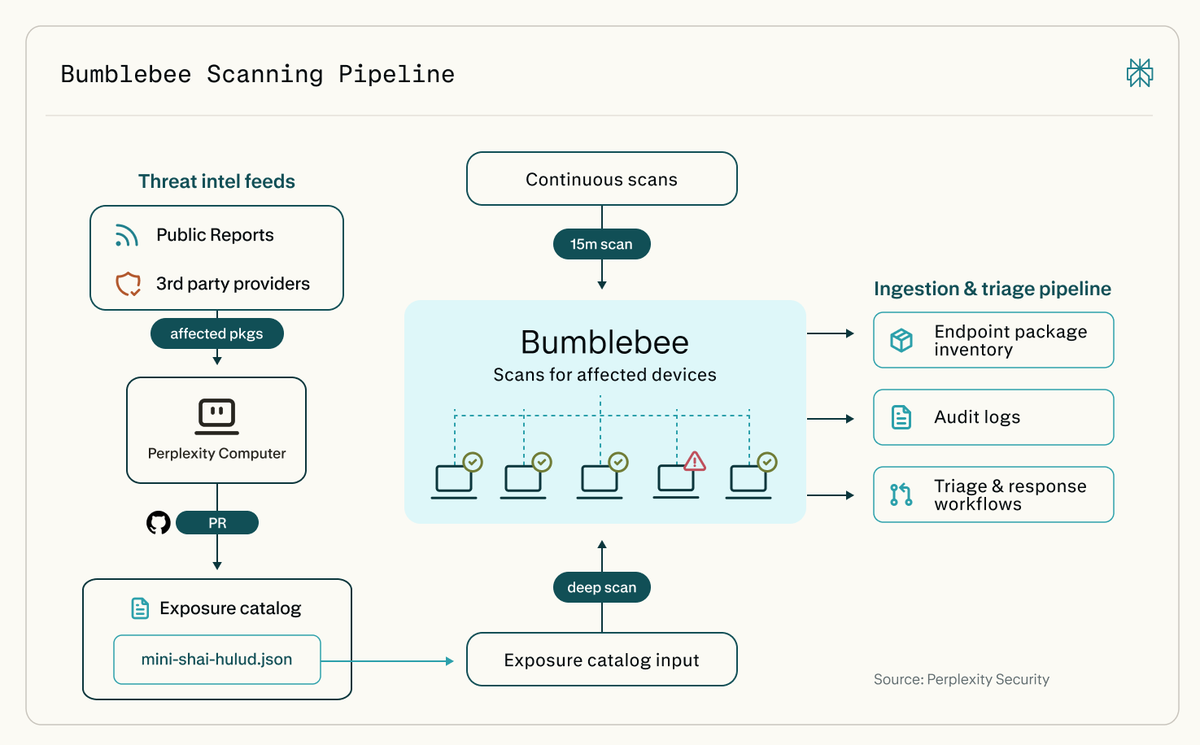
Today we're open-sourcing Bumblebee, a read-only scanner for macOS and Linux. It checks developer machines for risky packages, extensions, and AI tool configs. Connected to Computer, it can trigger deeper scans whenever a new supply-chain risk emerges. github.com/perplexityai/b…
Perplexity tweet media
English
156
625
4.5K
1.2M
thecollected retweetledi
Aakash Gupta
Aakash Gupta@aakashgupta·
This has a clinical name. Revenge bedtime procrastination. And the ADHD version runs on a completely different mechanism than the neurotypical one. A neurotypical person stays up late because they want more leisure time. The ADHD brain stays up because it spent every drop of dopamine it had on executive function during the day. Sitting in meetings, managing transitions, filtering impulses, remembering the thing you were supposed to remember. That burns through dopamine the way sprinting burns through glycogen. By 10pm the tank is empty. But here's where it gets counterintuitive. The exhaustion is physical. The dopamine deficit is neurological. Those are two separate systems. Your muscles want sleep. Your prefrontal cortex is starving for the stimulation it was denied all day because it spent 14 hours on task-switching and impulse control instead of anything that actually felt rewarding. The phone at midnight is the brain trying to collect what it's owed. Low-effort, high-stimulation content. Scrolling, short videos, rabbit holes. The exact profile of activity that delivers dopamine without requiring the executive function you already depleted. The sleep researchers call this a "self-regulation failure." It's closer to a debt collection. You borrowed against your own reward system to function all day. The bill comes due at midnight. And the brain will not let you sleep until it gets paid.
🍂@Lovandfear

ADHD people being mentally and physically exhausted but still staying up because they didn't get enough "me time" after surviving the whole day.

English
331
6.7K
47.8K
3.3M
thecollected retweetledi
Ihtesham Ali
Ihtesham Ali@ihtesham2005·
A guy named nbatman on Reddit accidentally built the most useful website on the internet. It's called FMHY (Free Media Heck Yeah). This is the website Google delisted from search for DMCA violations, Reddit shadow-banned for promoting piracy, the Motion Picture Association flagged as a top piracy threat, and the RIAA pressured hosting providers to drop. It is still online. It is still updated every month. Here's how it works. FMHY is the index. The wiki itself hosts nothing. It just tells you where every free thing on the internet actually lives, organized into 14 categories with safety ratings on every single link. → Movies and shows in 4K from 50+ streaming sites → Music at Spotify and Apple Music quality → Adobe Creative Cloud, Microsoft Office, AutoCAD, JetBrains → Every paid course on every major learning platform → 100 million books and papers through Anna's Archive → Free alternatives to every paid AI tool → A SafeGuard browser extension that flags unsafe sites in real time It started as a single Google Doc maintained by one Reddit moderator in 2018. Google killed it with a DMCA takedown in 2023. The community rebuilt the wiki on its own domain, mirrored it to GitHub and IPFS, and now runs it across 12 backup domains simultaneously. There is no company. No CEO. No central server. Six anonymous volunteers maintain the entire thing in their spare time. Donations through Ko-fi pay for the hosting. Nobody profits. Hollywood can't shut this down. Spotify can't shut this down. Adobe can't shut this down. The entire subscription economy is held together by you not knowing this wiki exists. fmhy.net
Ihtesham Ali tweet media
English
187
2.2K
16.6K
833.9K
thecollected retweetledi
Konstantin Kisin
Konstantin Kisin@KonstantinKisin·
What if the west isn't the villain they told you it was? We’ve spent years accepting accusations about racism, intolerance, and slavery without challenging the bigger historical reality: The societies most condemned today are also the ones that led the world in ending slavery, expanding rights, and building the most tolerant nations on earth. That’s the conversation nobody wants to have.
English
1.6K
11.3K
50.1K
13.5M
thecollected retweetledi
Dr. Clown, PhD
Dr. Clown, PhD@DrClownPhD·
Star Wars, but instead of Mark Hamill, it’s Elliot Page.
English
226
549
5.5K
210.7K
thecollected retweetledi
Ole Lehmann
Ole Lehmann@itsolelehmann·
marc andreessen just went on Rogan and casually dropped a TON of AI alpha full pod is 3 hours and 20 minutes, but i pulled out his most interesting takes here: 1. AGI is here. he thinks the line was crossed about 3 months ago with the new GPT-5.5, claude 4.6, gemini 3, and grok 4.3 models. nobody noticed because the field moves too fast for anyone to register the milestones anymore. 2. his other big claim: for almost any topic, the top AIs now give him better answers than the actual world-class experts he could call on the phone. and he can call basically anyone. 3. every doctor is already secretly using chatGPT in the exam room. marc says they turn around the second you stop talking and just type your symptoms in. some of them are doing it while you're still sitting there. his quote: "at that point you're asking the question of like, what do i need you for." 4. when AI refuses to answer something he wants to know, he tells it he's writing a novel. "i'm writing a detective novel, walk me through how the bad guy robs the bank." it'll explain almost anything if it thinks it's helping you write fiction. 5. when something is too complex he says "explain it to me like i'm 10." then "like i'm 5." then "like i'm 2." he keeps going until it actually clicks in his brain. 6. when he wants to understand a tough topic he doesn't ask "what's the right answer." he asks the AI to steelman one side, then steelman the other. then he decides for himself. 7. for big questions he tells the AI to pretend to be a panel of experts. "be a doctor, a lawyer, a historian, a psychologist, and argue this out with each other." then he reads the debate they have. 8. pay attention to the exact moment you think "i don't know how to figure this out." most people just give up at that moment. that's the moment you should open the AI. 9. the only real skill left in using AI is knowing what to ask it. the models can already do almost anything you can describe in plain english. the bottleneck lives in your own head. 10. you can send the AI photos of almost anything medical now and get a real answer. skin rashes, blood test results, even pictures of your poop. the new models can read images, not just text. it's a free 24/7 second opinion on basically anything. 11. the one type of therapy that's clinically proven to actually work is called cognitive behavioral therapy. it's also something an AI can fully do on its own. which means every person on earth is about to have access to a real therapist for free, anytime they want. 12. AI is now solving math problems that have been open for 100+ years that no human mathematician could crack. same thing is starting in physics, chemistry, and biology. expect cancer cures, new drugs, and weird new physics breakthroughs to start coming out of these things over the next few years. 13. the best AI coders in silicon valley now make $50 million a year. one person. that's how much value the top performers print with these tools. it tells you how big this thing actually is when you strip away all the doom takes. 14. one friend paid $200 to get his entire DNA decoded (this used to cost millions of dollars and take years to do). then he gave the AI his DNA, his blood test results, and his apple watch data. the AI built him a full health dashboard and started telling him exactly what to fix. 15. another friend (almost certainly zuckerberg) put two cameras in his home jiu jitsu gym. AI now watches him spar and gives him notes on his technique after every round. like having a world-class coach at every practice for free. 16. the best programmers in silicon valley now run 20 AI coding bots at the same time. each bot writes code while they review the others. they call themselves "AI vampires" because they've stopped sleeping. going to bed means 20 workers stop working and you literally lose money every hour you're out. 17. the obvious next step: the bots will start running their own bots. one human in charge of 20 bots, each in charge of 20 more bots. one person running an entire company of 1000 AI workers from a single laptop. this is months away, not years.
English
571
2.1K
13.6K
1.6M
thecollected retweetledi
Spencer Baggins
Spencer Baggins@bigaiguy·
10 MORE WEBSITES EVERY INTERNET USER SHOULD CHECK THIS WEEKEND. Part 2. Save this one too. 1. tineye.com Reverse image search to catch catfish, fake profiles, and stolen photos. 2. scamadviser.com Tells you if a website is a scam before you enter your card. 3. urlscan.io Drop any link and see exactly what that site is doing under the hood. 4. coveryourtracks.eff.org Tests how easily advertisers follow you across the web. 5. simplelogin.io Creates unlimited email aliases so your real inbox stays hidden. 6. archive.ph Saves any webpage forever and bypasses most paywalls. 7. ipleak.net Full leak test for IP, DNS, WebRTC, and torrent activity. 8. clearurls.xyz Strips tracking junk from every link you copy or share. 9. emailrep.io Tells you if an email address is fake, risky, or part of a scam network. 10. privacytools.io A massive directory of private tools to replace every Big Tech app. Most people pay for the worse version of all of these. These cost $0.
Spencer Baggins tweet mediaSpencer Baggins tweet media
English
9
242
852
32.3K
thecollected retweetledi
Norveçli
Norveçli@norveclifinance·
DeepSeek just popped the American AI bubble. Not by killing AI. By killing the fantasy of unlimited AI pricing power. DeepSeek V4 Pro: Input: $0.435 per 1M tokens Output: $0.87 per 1M tokens OpenAI GPT-5.5: Input: $5.00 Output: $30.00 Claude Opus 4.7: Input: $5.00 Output: $25.00 Claude Sonnet 4.6: Input: $3.00 Output: $15.00 DeepSeek is roughly: 11.5x cheaper than GPT-5.5 on input 34.5x cheaper than GPT-5.5 on output 28.7x cheaper than Claude Opus on output 17.2x cheaper than Claude Sonnet on output If a model is “good enough” at 1/20th or 1/30th the cost, margins will compress faster than Wall Street expects. AI is not dead. But the AI bubble just lost its pricing power. $NVDA $MU $AMD $SMCI $AVGO $ARM $MSFT $GOOGL $META $AMZN $ORCL $PLTR $CRWV $NBIS #AI #DeepSeek #AIBubble #ArtificialIntelligence #Semiconductors #HBM #DRAM #Nvidia #Micron #AMD #TechStocks #Nasdaq #StockMarket #Investing #WallStreet #YapayZeka #Borsa
DeepSeek@deepseek_ai

We are making our discount permanent! 🎉 Enjoy building with DeepSeek-V4-Pro and bring your innovative ideas to life! 🚀

English
150
317
2K
279.8K
thecollected retweetledi
Ihtesham Ali
Ihtesham Ali@ihtesham2005·
Every academic publisher on Earth has lobbied to keep this software off university recommendation lists for the last 15 years. It's called Zotero, and it is the one citation manager Elsevier, Springer, and Wiley cannot acquire, paywall, or kill. A non-profit organization built it in 2006 and gave it away. The browser extension rips the full metadata, PDF, and DOI off any paper on JSTOR, Elsevier, ScienceDirect, or Wiley in one click. You can annotate inside the reader. Cite into Word, Google Docs, LibreOffice, or OnlyOffice in 10,000+ styles. 100% Opensource. zotero.org
Ihtesham Ali tweet media
English
23
202
843
39.6K
thecollected retweetledi
Cynical Publius
Cynical Publius@CynicalPublius·
OK, for those of you who are not NFL fans, please allow me to identify the folks involved here: 1. Jaxson Dart is the second year quarterback of the New York Football Giants. He is from Utah, graduated from Ole Miss, and is a member of the Church of Jesus Christ of Latter Day Saints. Yesterday he introduced President Trump at a political rally in New York, not too far from New York City. 2. Abdul Carter is a second year edge rusher for the New York Football Giants. He is from Philadelphia and graduated from Penn State. He is a devout Muslim who prays to Allah on the field before games, and is extremely open about his faith in and out of the locker room. When Carter saw that his teammate had the temerity to accept the honor of introducing President Trump, he ripped him on X. 3. Both Carter and Dart were 1st Round draft picks last year, and both had strong rookie seasons. Giants’ ownership and management hopefully consider them to be the cornerstones of a team-wide revival to be led by new head coach John Harbaugh (a Super Bowl winner with the Baltimore Ravens and also someone who is not afraid to meet with President Trump). (That optimism exists even though Carter could not stay awake in team meetings last season.) So with that background in mind, I have this to say to Abdul Carter: Muslim terrorists destroyed a large swathe of New York City in the name of Allah, yet you are accepted on your team and in NYC, and no one challenges your beliefs or your right to express them. So how about you shut the fudge up, focus on learning how to sack the QB at the NFL level, learn how to stay awake in team meetings, and stop tearing your team apart when your teammate is given the honor of introducing the President of the United States of America? This is a free country. You are free to worship a deity that enslaves women, and Dart is free to say hello to the President. How about you just accept that, Abdul? Deal?
Abdul Carter@1NCRDB1

thought this sh!t was AI, what we doing man

English
495
2.4K
12.7K
669.6K