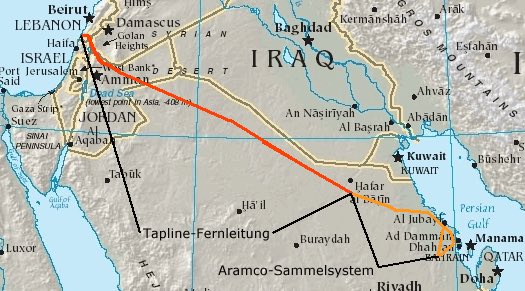
If the Saudis had joined the Abraham Accords and built the pipeline long discussed between the Persian Gulf and Mediterranean via Israel, nobody would be talking about the Straight of Hormoz.
Bahrain will soon return to Iran. For those who don't know Bahrain was part of Iran up until 1971 when the Shah of Iran gave it away in a bad exchange with the British.
You never give away land that has been part of your identity for thousands of years.
The entire Persian Gulf belongs to Iran and soon this will be proven. UAE is next.
@MosabHasanYOSEF The world economy is being hammered by high oil prices. Shutting off Iranian oil is a disaster. India has 8 days of oil supply. Sri Lanka, 0. The US is interested in INCREASING flow from all Gulf sources. Were you all dropped on your head as babies?
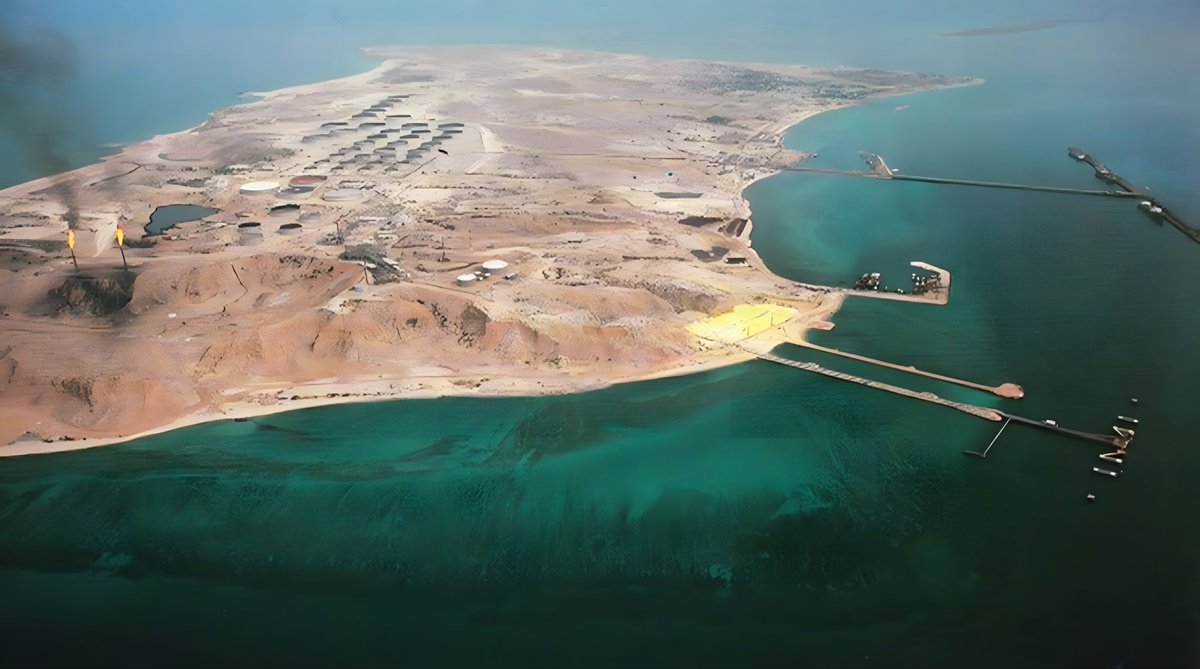
@MosabHasanYOSEF During D-Day preparations the Allies put a dummy army across from Pas de Calais to draw German. troops away from Normandy. 😀 There are two main loading piers for tankers at Kharg. The US could shut off the loading pipelines to both piers with 4 small bombs. They won't.
Kharg Island: Panic, Not Strategy
Trump’s fixated on Kharg because it’s the oil valve: 90% of Iran’s exports flow through it, and whoever holds it chokes the strait.
He’s ignoring every warning, Stavridis, Mann, Tannehill, all screaming “death trap”, but ego says “grab it, look tough, fix oil prices.”
He thinks: “Control Kharg = control Hormuz.” WRONG.
It’s not a lever, it’s a KILL ZONE. Flat island, no cover, 25 km from mainland cliffs where IRGC hides drones, snipers, suicide boats.
Boots land? Think mines, swarms, endless fire. Resupply? Nightmare.
He underplayed the strait: 21-mile choke, Iran’s side cliffs, fast boats, mines. You don’t “control” it, you bleed for it.
This ain’t strategy. It’s ego ignoring reality, he’s sending troops into a meat grinder.
An Amphibious Landing in Iran and the Battle of Gallipoli
Any war against Iran risks repeating the classic mistake of Gallipoli: a superpower’s underestimation of a determined defense strongly favored by geography.
In 1915, the British Empire believed its superior fleet would be enough to force the Dardanelles and bring down the Ottoman Empire with relative ease.
Generals and politicians, including Winston Churchill, Ian Hamilton, and Lord Kitchener, viewed the Turks as a backward army of “doubtful value” that would flee at the first salvo from British battleships. Reality proved very different.
The geography of Gallipoli turned the attack into a nightmare. The Ottomans controlled the steep heights above the beaches. Once the Allies landed, they became trapped on narrow strips of sand, fully exposed to machine-gun and artillery fire from above.
Advancing or retreating safely was nearly impossible. This is exactly the same natural wall that Iran possesses today in the mountains that surround nearly its entire coast.
Any force attempting a landing in the Persian Gulf would immediately face steep elevations right behind the beaches, giving the defender total visibility and fire superiority.
Beyond geography, Iran possesses something the British also underestimated in the Turks: the ability to conduct a saturation defense.
While offensive and defensive munitions stocks are running low for the attackers, Iran is preparing a war of saturation. Thousands of drones of various types, missiles, and fast attack boats launched in swarms could quickly overwhelm and exhaust the coalition’s ability to provide cover for a landing in Iran.
Logistics represent another fatal bottleneck. In Gallipoli, the Allies could not sustain the flow of supplies under constant fire. In Iran, the challenge would be even greater: supply lines could not rely on American bases in the region, which have already been heavily damaged and under fire for 26 days.
They would instead depend on much more distant logistics, supported by an already weakened American industrial base. Meanwhile, Iran would be fighting at home, with underground factories, short supply lines, and the ability to open multiple fronts through Iraqi militias and the Houthis.
In parallel, the Strait of Hormuz functions as the modern equivalent of the Dardanelles. Iran dominates the area with sophisticated yet relatively cheap naval mines, anti-ship missiles, drones, and its own navy.
The loss of just one or two major ships, or landing vessels, would be enough for the entire operation to collapse, just as happened in 1915 when simple mines sank three British battleships in a single day.
The error of assessment is the same as it was a century ago. Just as the British believed the Turks “had no stomach for modern warfare,” today some assume that an intense technological bombardment would quickly cause the Iranian regime to collapse.
Statements like Netanyahu’s, “Iran is a paper tiger… A strong blow and the regime will fall”, dangerously echo the declarations of Churchill and Hamilton.
Both ignored the fact that a nation of tens of millions of people, fighting on its own territory with strong ideological motivation, does not easily surrender to technological superiority.
Gallipoli cost the Allies around 250,000 casualties, including tens of thousands killed, and ended in a humiliating withdrawal. It was a meat grinder that exposed the arrogance of a superpower when it collided with the reality of the terrain and the defender’s determination.
Any potential amphibious landing in Iran today carries the same risk of becoming a Persian Gallipoli: where excessive faith in technology runs into an insurmountable geography, a mass of missiles and drones, and the overwhelming advantage of those fighting on home soil.
Iran is the opening conflict of a multipolar world, a reality that America, Israel and probably the entire west still fail to recognize.
BREAKING : Massive victory for Spanish 🇪🇸 PM Pedro Sánchez due to his spine
Algeria 🇩🇿 has decided to give gases to Spain 12% cheaper due to his firm stand against Israel and US in Iran war 🔥🔥
He's standing on the right of history and also getting free passage through Strait of Hormuz along with cheap energy 🫡
That's what courage does
@Oxydemor@VolodimirZelen1 Voila. 😀Eisenhower could not stand de Gaulle but he acceded to his demand for a French unit to first enter Paris because de Gaulle was a Primadonna. It was Eisenhower's job to assuage fragile egos. In the end, it was a unit of Spanish volunteers attached to a French unit.😀
@TheForkbeard@VolodimirZelen1 Voilà un exemple parfait de l'arrogance qui a poussé le général à prendre ses distances avec cette hégémonie qui prétendait être bienveillante mais qui en réalité ne supportait pas de ne pas dominer.
🇺🇸 Quelque chose me dépasse : Donald Trump a BESOIN de ses bases en Europe - Allemagne, Bulgarie, Italie mais surtout Royaume-Uni - pour mener sa guerre contre l’Iran.
Pourquoi les européens ne demandent-ils RIEN en échange ?! Pourquoi ne pas exiger des armes pour l’Ukraine - plutôt que soutenir une guerre qui finance la machine de guerre de Poutine ?!
Nous AVONS des cartes. Utilisons-les.
@VolodimirZelen1 Les usa se sont installés un peut partout en Europe de l'ouest à la suite de leur victoire sur l'Allemagne mais il n'y a que le général de Gaulle qui ai demandé leur départ: le 23 mars 1967 la base US de Châteauroux fermait ses portes.
@VolodimirZelen1 Europe has been buying Russian LNG and sanctioned oil for almost 4 years. You cheerleaders don't seem to understand that B-1B's taking off from Lakenheath is a deterrent to an attack on NATO. It's also a deterrent to the PRC invading China.
NEW:
🇮🇷🇺🇸🇦🇪 Iran is preparing to take over UAE with a ground invasion if the US put troops on the ground
IRIB Iranian state TV:
“If the United States makes a mistake, Iran’s armed forces are ready to seize the coastlines of the UAE and Bahrain and reshape the region”
My latest for @19_forty_five
The biggest lesson China will draw from the Iran War is that the US military is too small and too ‘exquisite’ - the navy has too few ships, missile defense is too costly, and so on - resulting in overextension
19fortyfive.com/2026/03/the-ir…
The sun has risen over Lviv, Ukraine.
We were spared last night from missiles and drones.
Not because russia didn't launch them, but because YOUR F-16's shot everything down.
THANK YOU TO:
The Dutch 🇳🇱
The Danish 🇩🇰
The Norwegians 🇳🇴
The 🇺🇸 US has 936, but 0 were given to 🇺🇦.