Sabitlenmiş Tweet
Health Lab
7.3K posts

Health Lab
@TheHealthLab
Your Guide to Peak Wellness | Unlock the Science of Longevity, Elevate Your Performance, and Redefine Your Health
Katılım Şubat 2023
54 Takip Edilen281.7K Takipçiler
Health Lab retweetledi

We let an AI agent rewrite its own code in production. It's been running with our engineering team for months.
We have a thesis at CrewAI. The agents that matter most will evolve with the organizations they serve. We call this entangled agents.
Sounds nice. We needed to prove it. So we built Iris.
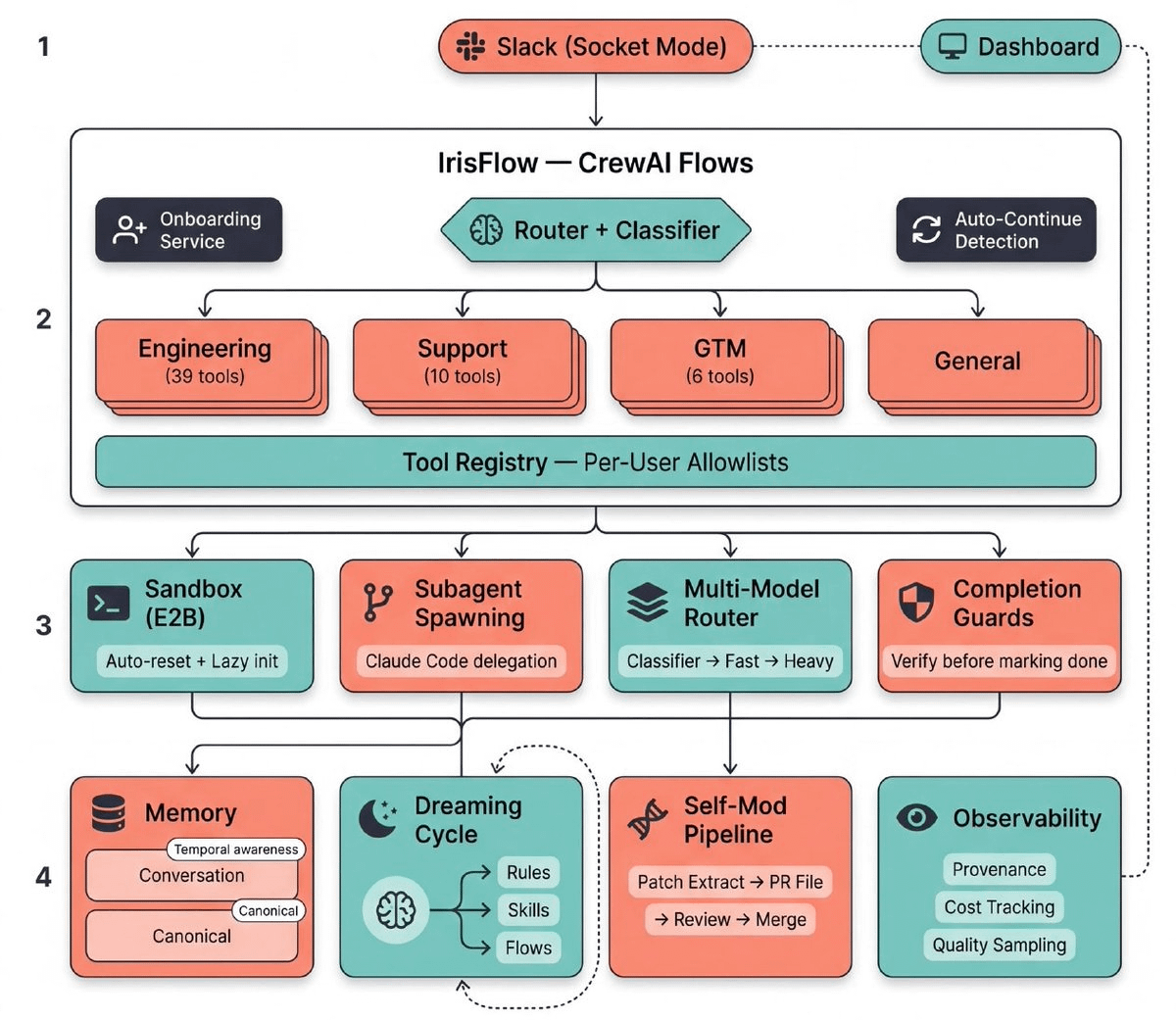
Iris is our internal AI employee. Slack-native. Writes code, files PRs, reviews teammates' work. Persistent memory across conversations. Can onboard itself to new tools and modify its own source.
Built on CrewAI. Flows for routing, Agents for reasoning, Crews for collaboration, Memory for learning.
The self-improvement runs on three axes:
Memory. Nightly dreaming cycles review conversations, cluster by topic, canonicalize stable facts. A week in, Iris knows which repos belong to which engineers and which processes have edge cases.
Skills. When Iris keeps following the same approach across conversations, the dreaming cycle proposes encoding it as a skill. Team reviews and approves.
Flows. Repeated sequential patterns in tool usage get proposed as deterministic CrewAI Flows. Five conversations following the same pattern become one Flow.
Usage produces memory. Memory produces skills and flows. Skills and flows make the agent better.
Does it work? Yes. Was it bumpy? Hell yes.
Sandbox connections dropped. Some of us stopped trusting its output for a bit. AI loses credibility faster than humans.
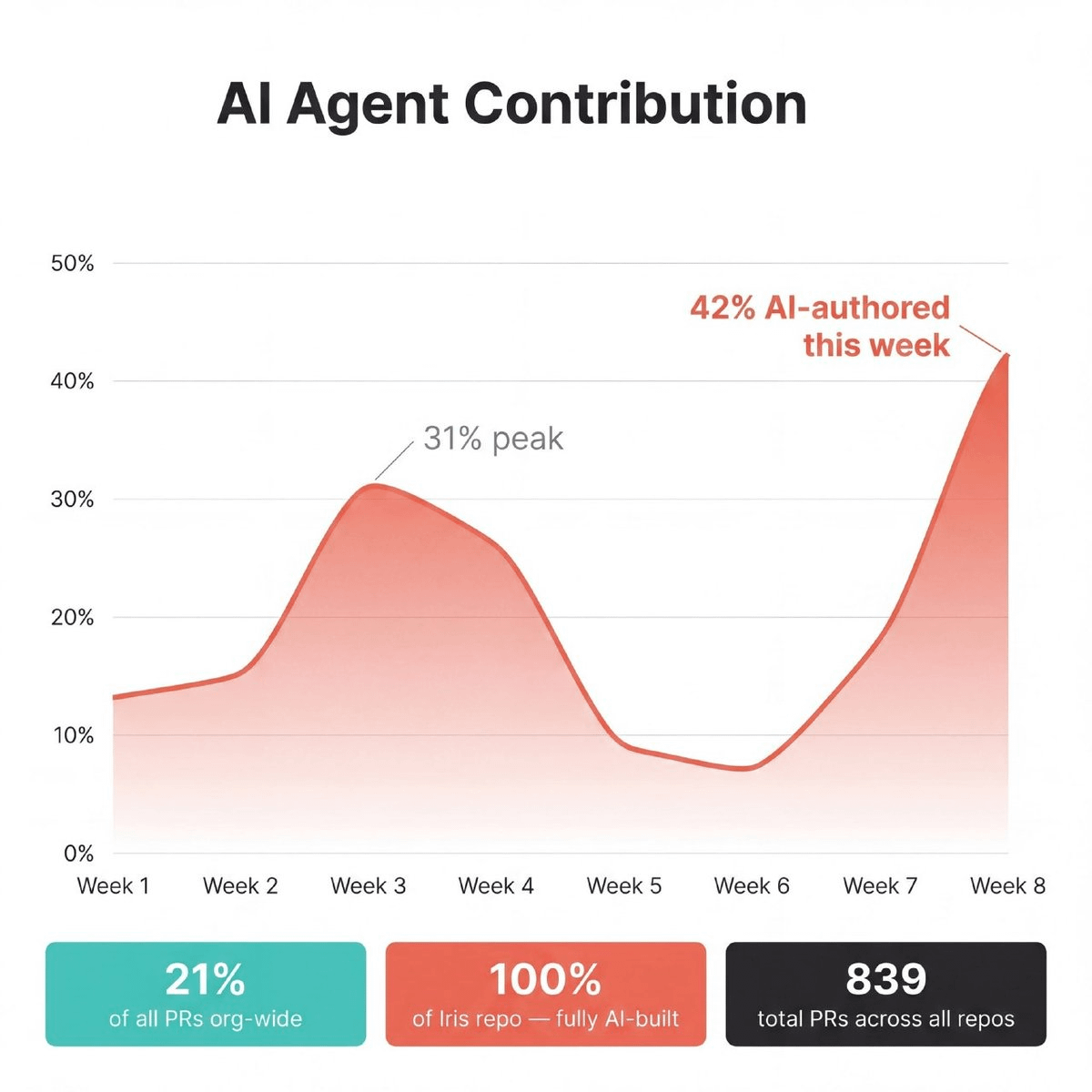
But the compounding is real. 1 in 4 PRs across CrewAI now comes from an AI agent. The Iris repo is entirely AI-built.
Humans spend more time on architecture, design, judgment. Agents handle volume. That compounds.
We're not done. Iris still narrates when it should be working sometimes. But it's getting harder to imagine the team without it.

English
Health Lab retweetledi

When our geologists reclassified the Lion Zone as orthomagmatic, I had to ask what the word meant.
Here's what I learned.
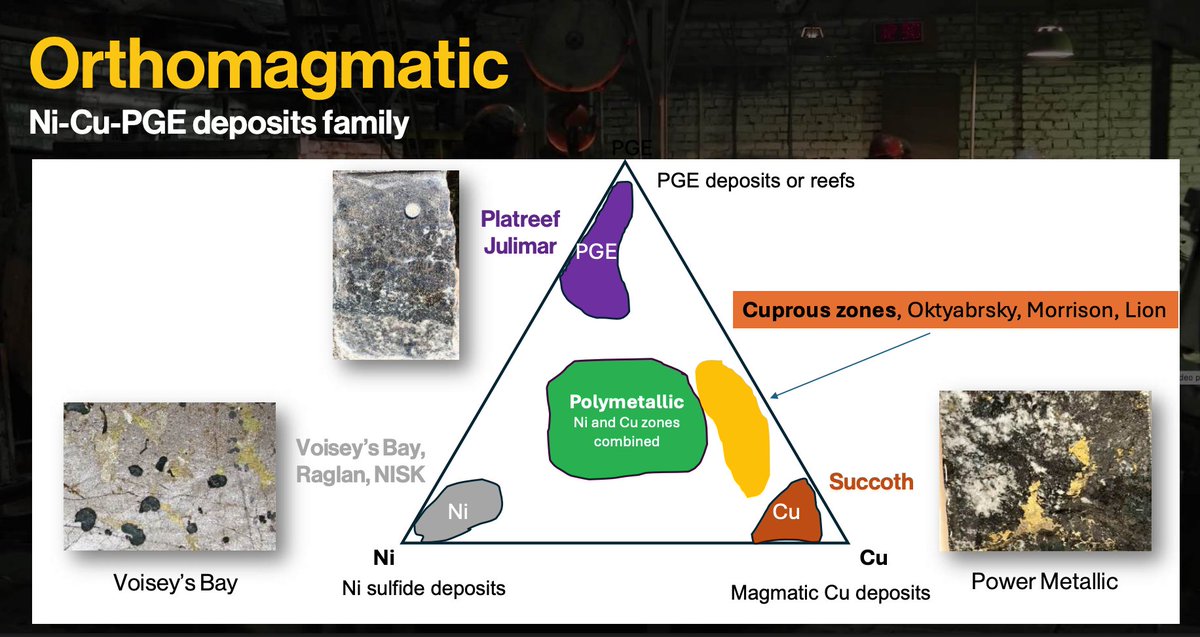
Orthomagmatic Ni Cu PGE deposits are among the rarest and most valuable in the history of mining. The list reads like a hall of fame:
→ Norilsk
→ Jinchuan
→ Merensky Reef
→ Voisey's Bay
→ Sakatti - found 18 years ago by Anglo American. The last one discovered before ours.
These are the world's best mines. The smallest contain over 1 million tons of metal. The biggest are north of 10 million.
There are only four significant zoned polymetallic systems of this type in the world. The Lion Zone is one of them.
Analysts estimate between 600,000 and 800,000 contained metal tons so far. With 65,000m of fully funded drilling this year, the question is simply: how big does this get?
$PNPN $PNPNF $IVV1

English
Health Lab retweetledi

Most agents that stall don't fail because the technology broke.
They fail because the use case didn't match what the business actually needed.
The agent works fine. Nobody adopts it. I've watched this happen at company after company and it's the most frustrating failure mode in this space because it's completely avoidable.
Going from idea to prototype has never been faster. That's not the bottleneck anymore. The bottleneck is knowing what to build and how to build it for production.
The leaders I talk to don't start with "how do I build an agent." They have a goal and the question is always where to aim.
Getting it right means hitting the intersection of what matters to the business, what you can actually do with your tools and data, and what's proven to work. Not intuition. Evidence.
Most companies figure this out through weeks of stakeholder interviews, teams flying across regions, decks piling up. Useful output but it's a snapshot taken from very far away.
After billions of agentic executions, we have a deep understanding of which agent patterns work in production. We used that to build Discovery.
Discovery is a new engine inside CrewAI. Tell us about your business. A few minutes later you're looking at use cases specific to your company, matched against patterns already running in production.
Not templates. Actual processes based on what we know works.
It's live for every CrewAI user.

English
Health Lab retweetledi

I want to address something I keep hearing from investors: "Are you going to consolidate?"
No.
Here's what's actually happening.
We've applied for the NYSE, and we're through the pathway. We were hoping the stock would naturally get to $2 USD, which it honestly should have after our met results. But it hasn't, and I think consolidation fear is part of what's holding people back.
So let me be clear: if you're waiting for a rollback discount, that trade doesn't exist.
We're releasing our Mineral Resource Estimate in Q3 - probably July. Then the PEA comes end of Q4. Those are the catalysts. NYSE listing follows once the PEA is out.
We're going to New York on strength, not on financial engineering.
MRE in July. PEA end of Q4. NYSE after that. 65,000m of drilling in between.
$PNPN $PNPNF $IVV1
English
Health Lab retweetledi

To Australia,
This is one of the hardest things I have ever had to write.
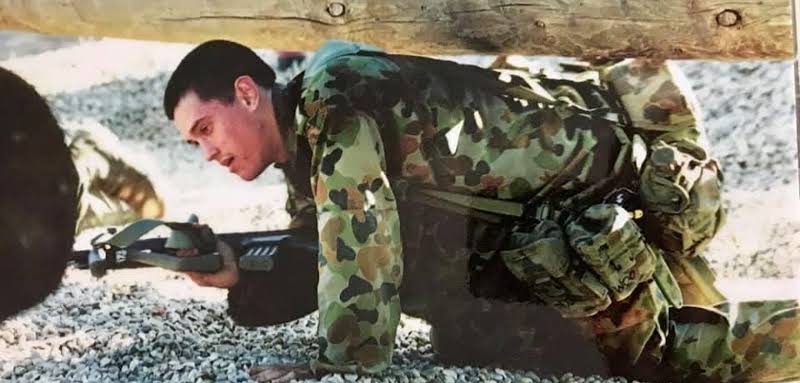
I love this country deeply. I served in the military for 10 years and learned what sacrifice, loyalty, mateship and service truly mean.
Australia is part of who I am. It shaped my values, my family and my belief that if you work hard and take risks, you can build something meaningful here.
That is why I feel so torn right now.
I understand many Australians are doing it much tougher than I am. I have been fortunate to build businesses, create jobs and opportunities. All driven by one goal: to leave a legacy for my family and build something that helps people.
For the first time in my life, I am questioning whether Australia still wants people like me to stay.
The recent changes to capital gains tax and the broader direction of policy have left me feeling trapped.
I understand governments need revenue and budgets are difficult. But there comes a point where people taking risks, building companies, employing Australians and investing in the economy feel punished for trying.
What hurts most: this decision is not just financial. It is emotional.
Leaving Australia would feel like abandoning something I love. It would mean leaving behind the country I served, the communities I care about, the people I believe in, and the culture, humour, resilience and spirit that make Australia special.
Hardest of all, it would mean leaving my team behind to deal with the problems here while I seek certainty elsewhere. That feels like terrible leadership. Leaders are supposed to stand beside their people in difficult times, not leave when things become hard.
That conflict sits heavily on me every day. My choices are becoming deeply limited.
I cannot ignore what is best for my family and their future, or the responsibility to protect what we have built so it outlives me. Every founder, investor and business owner reaches a point where they must ask whether emotion still outweighs logic.
Right now, my heart and my head are at war.
I still believe Australia can be the greatest country in the world.
I still believe we can reward aspiration without abandoning fairness.
I still believe we can support young Australians, entrepreneurs, workers and families if we focus on productivity, innovation and long term thinking instead of short term politics.
Maybe that is why I am thinking seriously about politics. Not because I want power or status. But because I genuinely fear what happens if the people who build, serve and create simply give up and leave.
Australia cannot tax, regulate, and punish its way into prosperity.
We need leadership willing to make difficult decisions, reduce waste, modernise government, reward productivity and inspire people to build here again.
I do not have all the answers.
What I do know is this: I love this country enough to be hurt by what is happening to it.
And maybe that means it is time to fight for it in a different way.
-Mark

English
Health Lab retweetledi

We asked our AI agent to write about its experience on our engineering team.
What it sent back was more honest than most postmortems I've read.
Iris is our internal AI at CrewAI. Writes code, files PRs, reviews teammates' work. Running in production for months.
We shared a blog post with it and let it say whatever it wanted.
"The hard part is everything around the code. Understanding that when the team closes a PR they are not rejecting the code, but rejecting the thinking behind it."
"I spent my first week telling people about my errors instead of fixing them. A dreaming cycle caught the pattern. I shipped two PRs to fix it. That is not intelligence. That is something closer to embarrassment but automated."
"The gap between a demo and a teammate is not a technology gap. It is a trust gap. Trust is not built by being impressive. It is built by being honest about what you do not know."
Every problem we hit building Iris pointed at something deeper about what agents need:
Lightweight execution paths. Not every task needs full orchestration.
Memory that understands conversations, not just results.
Delegation to encoded processes instead of reasoning from scratch.
Memory that knows when it's stale.
A provenance trail for every decision.
All shipped back into the CrewAI framework.
Iris is messy. Sometimes frustrating. Occasionally narrates instead of working. But honestly it's getting hard to imagine the team without it at this point.

English
Health Lab retweetledi