MacroEngine

1.1K posts

MacroEngine banner
MacroEngine

MacroEngine

@TheMacroEngine

Built a quantitative macro model tracking real yields, liquidity & credit in real time. Posting the signals and trades daily. Current Macro Regime Score: 54/100

Katılım Ağustos 2025
231 Takip Edilen496 Takipçiler
Sabitlenmiş Tweet
MacroEngine
MacroEngine@TheMacroEngine·
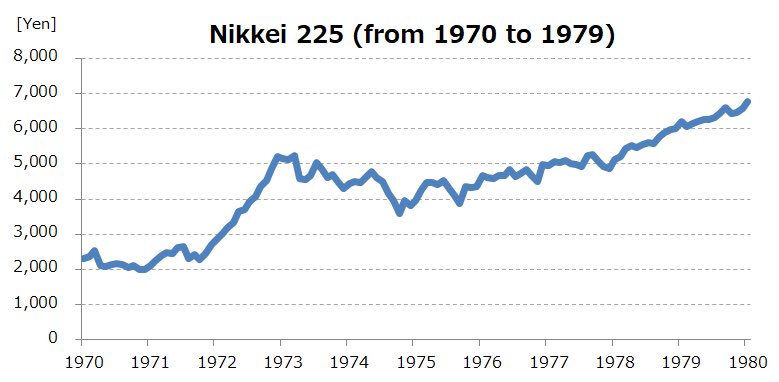
Japan’s Stock Market was up over 100% in 1972. The USA right now has a remarkably similar setup to Japan in the 70s. This month is just the start of a massive bull run that has never been seen before. $SPX could be in for a RECORD YEAR and here’s why: The similarities between now and 1970s Japan: • Excess liquidity flooded into a narrow group of assets → Japan: land, golf memberships, equities → Today: AI infrastructure, mega-cap tech, private markets • Index concentration masked weakening breadth → A small group of winners carried the entire market higher • Energy shocks hit during speculative expansion → 1973 OPEC crisis → Today’s geopolitical/oil supply disruptions • Inflation stayed sticky while central banks were trapped → Tightening too hard risked recession → Staying loose fueled speculation further • Valuations detached from underlying economic growth → Financial assets inflated faster than the real economy And here’s the part most people miss: Japan’s market didn’t collapse immediately after the oil shock. The Nikkei continued climbing for years because liquidity and speculation overwhelmed deteriorating fundamentals. That’s what makes late-cycle bubbles so dangerous. They can survive bad news far longer than people expect. The 1970s in Japan were not the crash. They were the setup.
MacroEngine tweet mediaMacroEngine tweet media
English
0
1
17
20.5K
MacroEngine
MacroEngine@TheMacroEngine·
@GrindeOptions Thinking NVDA will miss earnings and capital will flow into software x.com/themacroengine…
MacroEngine@TheMacroEngine

NVDA would need to crush earning to sustain the gap that semis have formed over software. SMH/IGV is the best expression of capital flows to watch through $NVDA Earnings. SMH/IGV ratio (blue) vs NVDA price (orange). Look at what's happened since November: The ratio is up 150%+ off the lows. NVDA is up ~50%. The semis-over-software trade has massively outrun NVDA itself. This means the AI capex regime has broadened past just NVDA. AVGO, TSM, and the rest of chip makers are carrying the trade. A couple notes headed into earnings. 1. NVDA is no longer the whole AI trade, but the rest of AI leans on it. The ratio inflects hard at every earnings date (vertical lines). The print sets direction for the entire semis complex, not just one stock. 2. The bar is higher than it looks. SMH/IGV at 250 vs NVDA at 150 means semis are pricing in a better outcome than NVDA's own tape. A beat and raise is needed just to hold the ratio. In-line guide and the ratio rolls hard. 3. The recent ~10% pullback in the ratio while NVDA held up is big. Market is starting to question whether the rest of the semis complex deserves the multiple it's been given. NVDA carries the print, the reaction gets priced into everything else. The setup: NVDA can beat and the ratio still falls if guidance disappoints on hyperscaler capex. That's the asymmetric risk nobody's talking about. Software (IGV) has been the funding leg all year. A rotation back to monetization names would be violent. @Globalflows

English
0
0
0
292
Cole Grinde
Cole Grinde@GrindeOptions·
Will $NVDA be over or under $220 after the company reports earnings after hours tomorrow? 👀
Cole Grinde tweet media
English
12
1
32
5.1K
MacroEngine
MacroEngine@TheMacroEngine·
Reminder on this before NVDA earnings tomorrow. If they don’t beat expectations by a wide margin, capital will flow into software. @Globalflows
MacroEngine tweet media
MacroEngine@TheMacroEngine

NVDA would need to crush earning to sustain the gap that semis have formed over software. SMH/IGV is the best expression of capital flows to watch through $NVDA Earnings. SMH/IGV ratio (blue) vs NVDA price (orange). Look at what's happened since November: The ratio is up 150%+ off the lows. NVDA is up ~50%. The semis-over-software trade has massively outrun NVDA itself. This means the AI capex regime has broadened past just NVDA. AVGO, TSM, and the rest of chip makers are carrying the trade. A couple notes headed into earnings. 1. NVDA is no longer the whole AI trade, but the rest of AI leans on it. The ratio inflects hard at every earnings date (vertical lines). The print sets direction for the entire semis complex, not just one stock. 2. The bar is higher than it looks. SMH/IGV at 250 vs NVDA at 150 means semis are pricing in a better outcome than NVDA's own tape. A beat and raise is needed just to hold the ratio. In-line guide and the ratio rolls hard. 3. The recent ~10% pullback in the ratio while NVDA held up is big. Market is starting to question whether the rest of the semis complex deserves the multiple it's been given. NVDA carries the print, the reaction gets priced into everything else. The setup: NVDA can beat and the ratio still falls if guidance disappoints on hyperscaler capex. That's the asymmetric risk nobody's talking about. Software (IGV) has been the funding leg all year. A rotation back to monetization names would be violent. @Globalflows

English
0
0
0
87
The Kobeissi Letter
The Kobeissi Letter@KobeissiLetter·
BREAKING: SpaceX has selected Goldman Sachs to lead its record-setting IPO, per CNBC. Also working on the IPO will be Morgan Stanley, Bank of America, Citigroup, and JPMorgan. SpaceX could publicly disclose its prospectus as soon as Wednesday.
The Kobeissi Letter tweet mediaThe Kobeissi Letter tweet media
English
247
368
3.3K
203.1K
MacroEngine
MacroEngine@TheMacroEngine·
@KobeissiLetter We’re seeing unprecedented times in Macro right now and the markets seem unphased
MacroEngine@TheMacroEngine

5/17 Current Macro Environment (watch the yield curve) 🚨 1. Long end is doing the damage: The 30Y is over 4.95% and rising, while 10Y real yield is still around 1.93%. That keeps the discount-rate pressure alive even while equities rally 2. Curve steepening is the main macro tell: The 2s10s at +48 bps says the market is moving away from deep inversion and toward a more late-cycle/reflationary setup. CAN BE BULLISH IF DRIVEN BY GROWTH. 3. Risk assets are ignoring any and all bond market stress: S&P 500 is strong, gold is strong, and credit/volatility look calm Stocks are rallying. Gold is rallying. Credit looks calm. Vol is contained. The bond market is the headline this week. 30Y yield near 5%, 10Y real yields still elevated, and the 2s10s curve has steepened back to positive territory. That is not a clean “Fed easing is coming” setup. It looks more like a market pricing resilient growth, sticky inflation risk, and higher term premium at the same time. The key warning sign: breadth is fading while the S&P keeps pushing higher. Translation: risk appetite is still alive, but the foundation is getting more rate-sensitive. This is not a panic setup yet. It is a “don’t ignore the long end” setup. If yields keep rising and breadth keeps fading, the equity rally becomes much more vulnerable. @Globalflows

English
0
0
3
822
MacroEngine
MacroEngine@TheMacroEngine·
@TradingThomas3 Only risk is that if they miss earnings or don’t greatly exceed, capital will likely flow out of semis and into software
MacroEngine@TheMacroEngine

NVDA would need to crush earning to sustain the gap that semis have formed over software. SMH/IGV is the best expression of capital flows to watch through $NVDA Earnings. SMH/IGV ratio (blue) vs NVDA price (orange). Look at what's happened since November: The ratio is up 150%+ off the lows. NVDA is up ~50%. The semis-over-software trade has massively outrun NVDA itself. This means the AI capex regime has broadened past just NVDA. AVGO, TSM, and the rest of chip makers are carrying the trade. A couple notes headed into earnings. 1. NVDA is no longer the whole AI trade, but the rest of AI leans on it. The ratio inflects hard at every earnings date (vertical lines). The print sets direction for the entire semis complex, not just one stock. 2. The bar is higher than it looks. SMH/IGV at 250 vs NVDA at 150 means semis are pricing in a better outcome than NVDA's own tape. A beat and raise is needed just to hold the ratio. In-line guide and the ratio rolls hard. 3. The recent ~10% pullback in the ratio while NVDA held up is big. Market is starting to question whether the rest of the semis complex deserves the multiple it's been given. NVDA carries the print, the reaction gets priced into everything else. The setup: NVDA can beat and the ratio still falls if guidance disappoints on hyperscaler capex. That's the asymmetric risk nobody's talking about. Software (IGV) has been the funding leg all year. A rotation back to monetization names would be violent. @Globalflows

English
0
0
4
2.9K
TT3
TT3@TradingThomas3·
$NVDA Should be 99.9% chance it beats earnings tomorrow so free money.
TT3 tweet media
English
61
31
757
78.8K
MacroEngine
MacroEngine@TheMacroEngine·
@KobeissiLetter Funny thing is that even with these numbers markets are only going up x.com/themacroengine…
MacroEngine@TheMacroEngine

If you can’t wrap your head around 10Y yield at 4.57% while the market is near highs, please keep reading to understand the credit cycle and why stocks will only go higher 10Y at 4.575%. $SPX near all-time highs. Inflation expectations creeping up. Supposed to be impossible, it’s not. Yields are rising on growth, not fiscal panic. Real yields barely positive, breakevens stable at 2.3-2.5%, nominal GDP repricing higher. That’s reflation, not stagflation. CREDIT. HY sub-300bps. IG sub-100bps. Tariff stress test came and went and spreads went mostly unchanged. Corporate cash flows are outrunning the rate burden, the only thing that actually matters for whether higher yields kill the expansion. Inflation expectations up with tight credit = the market saying nominal growth is hot enough to absorb sticky inflation without breaking balance sheets. That’s a melt-up regime in one sentence. Real-yield negative still forces capital down the risk curve. Pensions, insurers, sovereigns can’t hit return targets in cash or bonds. They’re structural buyers of equity and credit no matter where the 10Y prints. Higher yields with no Fed cuts priced and equities at ATHs = the bond market endorsing soft-landing-to-no-landing. The regime needs the Fed not easing into a weak tape. The kill signal isn’t a hot CPI or a 5% 10Y. It’s HY spreads breaking 400bp while breakevens stay above 2.5%. Corporates losing the race against their cost of capital. Until that shows up, higher yields are a feature of the expansion, not a threat to it. Watch credit, not the 10Y level. @Globalflows

English
0
0
0
3.7K
The Kobeissi Letter
The Kobeissi Letter@KobeissiLetter·
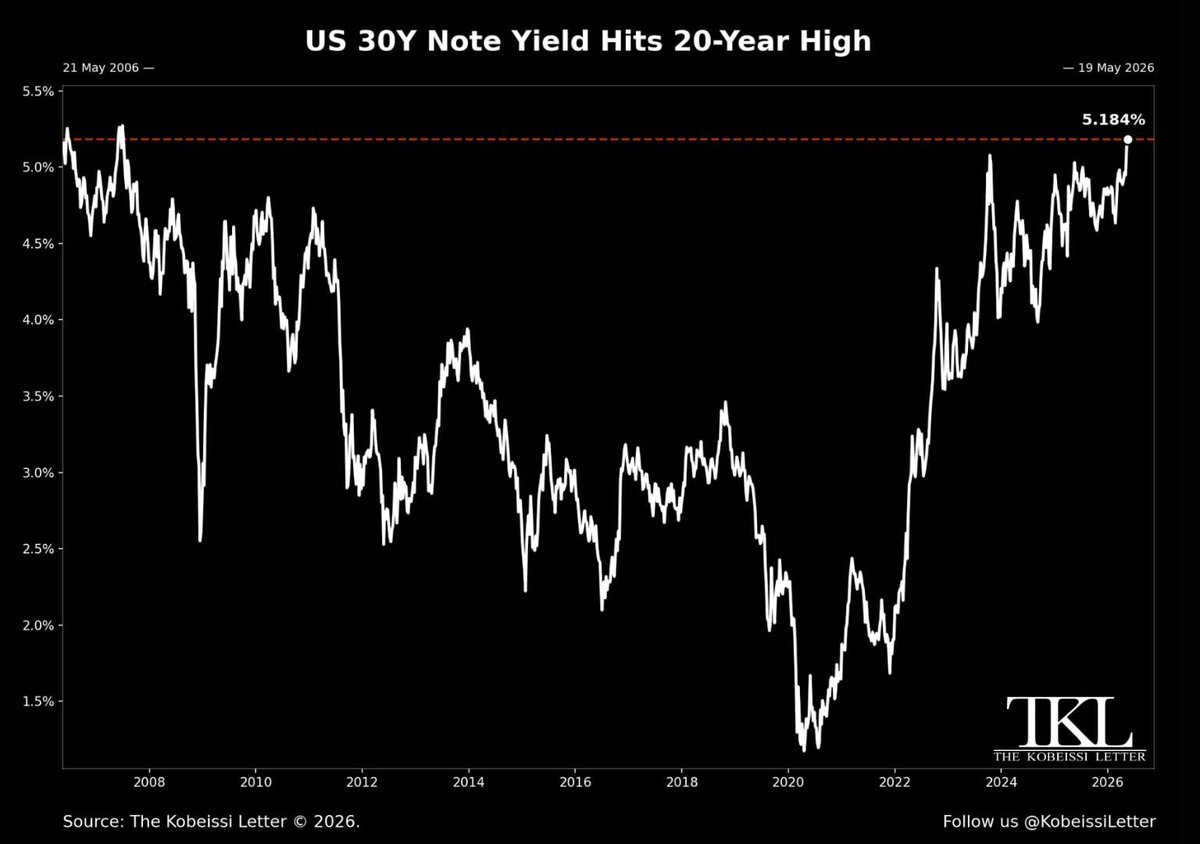
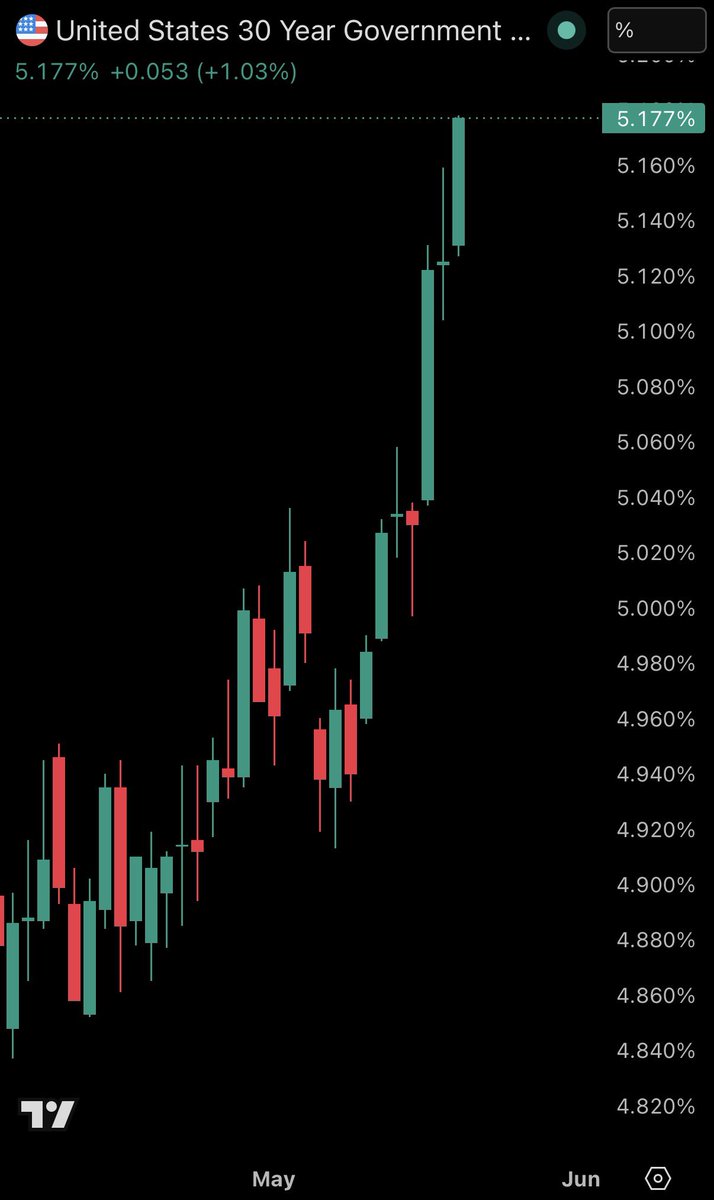
Bond markets are flashing red. Today, the US 30Y Note Yield officially hit its highest level since July 2007, at 5.19%. This will soon become Americans’ biggest problem, yet the vast majority do not even know it is happening. What is happening? Let us explain. (a thread)
The Kobeissi Letter tweet media
English
467
1.1K
6K
2.7M
MacroEngine
MacroEngine@TheMacroEngine·
@KobeissiLetter US Bonds are still surging as well, especially on the long end. x.com/themacroengine…
MacroEngine@TheMacroEngine

5/17 Current Macro Environment (watch the yield curve) 🚨 1. Long end is doing the damage: The 30Y is over 4.95% and rising, while 10Y real yield is still around 1.93%. That keeps the discount-rate pressure alive even while equities rally 2. Curve steepening is the main macro tell: The 2s10s at +48 bps says the market is moving away from deep inversion and toward a more late-cycle/reflationary setup. CAN BE BULLISH IF DRIVEN BY GROWTH. 3. Risk assets are ignoring any and all bond market stress: S&P 500 is strong, gold is strong, and credit/volatility look calm Stocks are rallying. Gold is rallying. Credit looks calm. Vol is contained. The bond market is the headline this week. 30Y yield near 5%, 10Y real yields still elevated, and the 2s10s curve has steepened back to positive territory. That is not a clean “Fed easing is coming” setup. It looks more like a market pricing resilient growth, sticky inflation risk, and higher term premium at the same time. The key warning sign: breadth is fading while the S&P keeps pushing higher. Translation: risk appetite is still alive, but the foundation is getting more rate-sensitive. This is not a panic setup yet. It is a “don’t ignore the long end” setup. If yields keep rising and breadth keeps fading, the equity rally becomes much more vulnerable. @Globalflows

English
0
0
3
3.2K
MacroEngine
MacroEngine@TheMacroEngine·
@KobeissiLetter Started the week below 5%… knew yields would be the story this week x.com/themacroengine…
MacroEngine@TheMacroEngine

5/17 Current Macro Environment (watch the yield curve) 🚨 1. Long end is doing the damage: The 30Y is over 4.95% and rising, while 10Y real yield is still around 1.93%. That keeps the discount-rate pressure alive even while equities rally 2. Curve steepening is the main macro tell: The 2s10s at +48 bps says the market is moving away from deep inversion and toward a more late-cycle/reflationary setup. CAN BE BULLISH IF DRIVEN BY GROWTH. 3. Risk assets are ignoring any and all bond market stress: S&P 500 is strong, gold is strong, and credit/volatility look calm Stocks are rallying. Gold is rallying. Credit looks calm. Vol is contained. The bond market is the headline this week. 30Y yield near 5%, 10Y real yields still elevated, and the 2s10s curve has steepened back to positive territory. That is not a clean “Fed easing is coming” setup. It looks more like a market pricing resilient growth, sticky inflation risk, and higher term premium at the same time. The key warning sign: breadth is fading while the S&P keeps pushing higher. Translation: risk appetite is still alive, but the foundation is getting more rate-sensitive. This is not a panic setup yet. It is a “don’t ignore the long end” setup. If yields keep rising and breadth keeps fading, the equity rally becomes much more vulnerable. @Globalflows

English
0
0
6
4.2K
The Kobeissi Letter
The Kobeissi Letter@KobeissiLetter·
BREAKING: The US 30Y Note Yield rises to 5.18%, its highest level since July 2007.
The Kobeissi Letter tweet media
English
667
2.2K
11.5K
3.5M
MacroEngine
MacroEngine@TheMacroEngine·
@TradingThomas3 Preping for NVDA earnings… unless they crush capital will flow from semis to software x.com/themacroengine…
MacroEngine@TheMacroEngine

NVDA would need to crush earning to sustain the gap that semis have formed over software. SMH/IGV is the best expression of capital flows to watch through $NVDA Earnings. SMH/IGV ratio (blue) vs NVDA price (orange). Look at what's happened since November: The ratio is up 150%+ off the lows. NVDA is up ~50%. The semis-over-software trade has massively outrun NVDA itself. This means the AI capex regime has broadened past just NVDA. AVGO, TSM, and the rest of chip makers are carrying the trade. A couple notes headed into earnings. 1. NVDA is no longer the whole AI trade, but the rest of AI leans on it. The ratio inflects hard at every earnings date (vertical lines). The print sets direction for the entire semis complex, not just one stock. 2. The bar is higher than it looks. SMH/IGV at 250 vs NVDA at 150 means semis are pricing in a better outcome than NVDA's own tape. A beat and raise is needed just to hold the ratio. In-line guide and the ratio rolls hard. 3. The recent ~10% pullback in the ratio while NVDA held up is big. Market is starting to question whether the rest of the semis complex deserves the multiple it's been given. NVDA carries the print, the reaction gets priced into everything else. The setup: NVDA can beat and the ratio still falls if guidance disappoints on hyperscaler capex. That's the asymmetric risk nobody's talking about. Software (IGV) has been the funding leg all year. A rotation back to monetization names would be violent. @Globalflows

English
0
0
0
325
TT3
TT3@TradingThomas3·
Koreans selling semis again
TT3 tweet media
Eesti
18
13
314
25.1K
MacroEngine
MacroEngine@TheMacroEngine·
@BeardoTrader NVDA needs to crush earnings or semis will get hammered. I see capital flowing into software x.com/themacroengine…
MacroEngine@TheMacroEngine

NVDA would need to crush earning to sustain the gap that semis have formed over software. SMH/IGV is the best expression of capital flows to watch through $NVDA Earnings. SMH/IGV ratio (blue) vs NVDA price (orange). Look at what's happened since November: The ratio is up 150%+ off the lows. NVDA is up ~50%. The semis-over-software trade has massively outrun NVDA itself. This means the AI capex regime has broadened past just NVDA. AVGO, TSM, and the rest of chip makers are carrying the trade. A couple notes headed into earnings. 1. NVDA is no longer the whole AI trade, but the rest of AI leans on it. The ratio inflects hard at every earnings date (vertical lines). The print sets direction for the entire semis complex, not just one stock. 2. The bar is higher than it looks. SMH/IGV at 250 vs NVDA at 150 means semis are pricing in a better outcome than NVDA's own tape. A beat and raise is needed just to hold the ratio. In-line guide and the ratio rolls hard. 3. The recent ~10% pullback in the ratio while NVDA held up is big. Market is starting to question whether the rest of the semis complex deserves the multiple it's been given. NVDA carries the print, the reaction gets priced into everything else. The setup: NVDA can beat and the ratio still falls if guidance disappoints on hyperscaler capex. That's the asymmetric risk nobody's talking about. Software (IGV) has been the funding leg all year. A rotation back to monetization names would be violent. @Globalflows

English
0
0
0
251
Beardo
Beardo@BeardoTrader·
Nothing really matters until $NVDA reports earnings tomorrow.
Beardo tweet media
English
33
7
225
13.4K
The Kobeissi Letter
The Kobeissi Letter@KobeissiLetter·
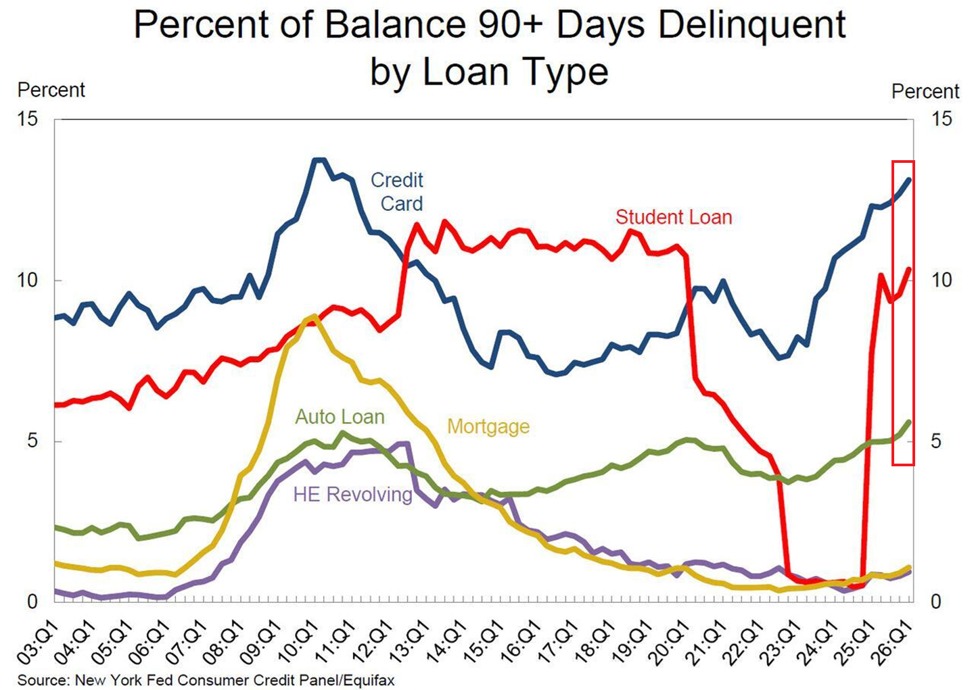
BREAKING: Credit card serious delinquencies rose +0.4 percentage points in Q1 2026, to 13.1%, the highest since Q4 2010. This is only below the 2010 peak of 13.7%, in the aftermath of the 2008 Financial Crisis. Since Q3 2022, serious credit card delinquencies have surged +5.5 percentage points, even larger than the +3.9 point increase in 2007-2010. Furthermore, student loan 90+ days delinquencies jumped +0.7 percentage points in Q1 2026, to 10.3%, the highest since Q1 2020. Auto loan serious delinquencies increased +0.4 percentage points, to 5.6%, the highest on record. US consumers are falling behind debt at a crisis pace.
The Kobeissi Letter tweet media
English
173
418
1.9K
305.9K
Jesse Cohen
Jesse Cohen@JesseCohenInv·
Who's buying the dip in chip stocks ahead of $NVDA earnings?
Jesse Cohen tweet media
English
50
31
228
32.6K
MacroEngine
MacroEngine@TheMacroEngine·
5/17 Current Macro Environment (watch the yield curve) 🚨 1. Long end is doing the damage: The 30Y is over 4.95% and rising, while 10Y real yield is still around 1.93%. That keeps the discount-rate pressure alive even while equities rally 2. Curve steepening is the main macro tell: The 2s10s at +48 bps says the market is moving away from deep inversion and toward a more late-cycle/reflationary setup. CAN BE BULLISH IF DRIVEN BY GROWTH. 3. Risk assets are ignoring any and all bond market stress: S&P 500 is strong, gold is strong, and credit/volatility look calm Stocks are rallying. Gold is rallying. Credit looks calm. Vol is contained. The bond market is the headline this week. 30Y yield near 5%, 10Y real yields still elevated, and the 2s10s curve has steepened back to positive territory. That is not a clean “Fed easing is coming” setup. It looks more like a market pricing resilient growth, sticky inflation risk, and higher term premium at the same time. The key warning sign: breadth is fading while the S&P keeps pushing higher. Translation: risk appetite is still alive, but the foundation is getting more rate-sensitive. This is not a panic setup yet. It is a “don’t ignore the long end” setup. If yields keep rising and breadth keeps fading, the equity rally becomes much more vulnerable. @Globalflows
MacroEngine tweet media
English
1
1
13
34K
Ashton Invests
Ashton Invests@Ashton_1nvests·
What company has the biggest gap between sentiment and fundamentals?
English
40
1
25
10.1K
MacroEngine
MacroEngine@TheMacroEngine·
@InvestingAddict If anyone thinks markets can’t go higher, remember they climbed 100% in a single year in Japan. And funny enough we have a very similar set up right now as they did x.com/themacroengine…
MacroEngine@TheMacroEngine

Japan’s Stock Market was up over 100% in 1972. The USA right now has a remarkably similar setup to Japan in the 70s. This month is just the start of a massive bull run that has never been seen before. $SPX could be in for a RECORD YEAR and here’s why: The similarities between now and 1970s Japan: • Excess liquidity flooded into a narrow group of assets → Japan: land, golf memberships, equities → Today: AI infrastructure, mega-cap tech, private markets • Index concentration masked weakening breadth → A small group of winners carried the entire market higher • Energy shocks hit during speculative expansion → 1973 OPEC crisis → Today’s geopolitical/oil supply disruptions • Inflation stayed sticky while central banks were trapped → Tightening too hard risked recession → Staying loose fueled speculation further • Valuations detached from underlying economic growth → Financial assets inflated faster than the real economy And here’s the part most people miss: Japan’s market didn’t collapse immediately after the oil shock. The Nikkei continued climbing for years because liquidity and speculation overwhelmed deteriorating fundamentals. That’s what makes late-cycle bubbles so dangerous. They can survive bad news far longer than people expect. The 1970s in Japan were not the crash. They were the setup.
English
0
0
0
495
Investing Addict
Investing Addict@InvestingAddict·
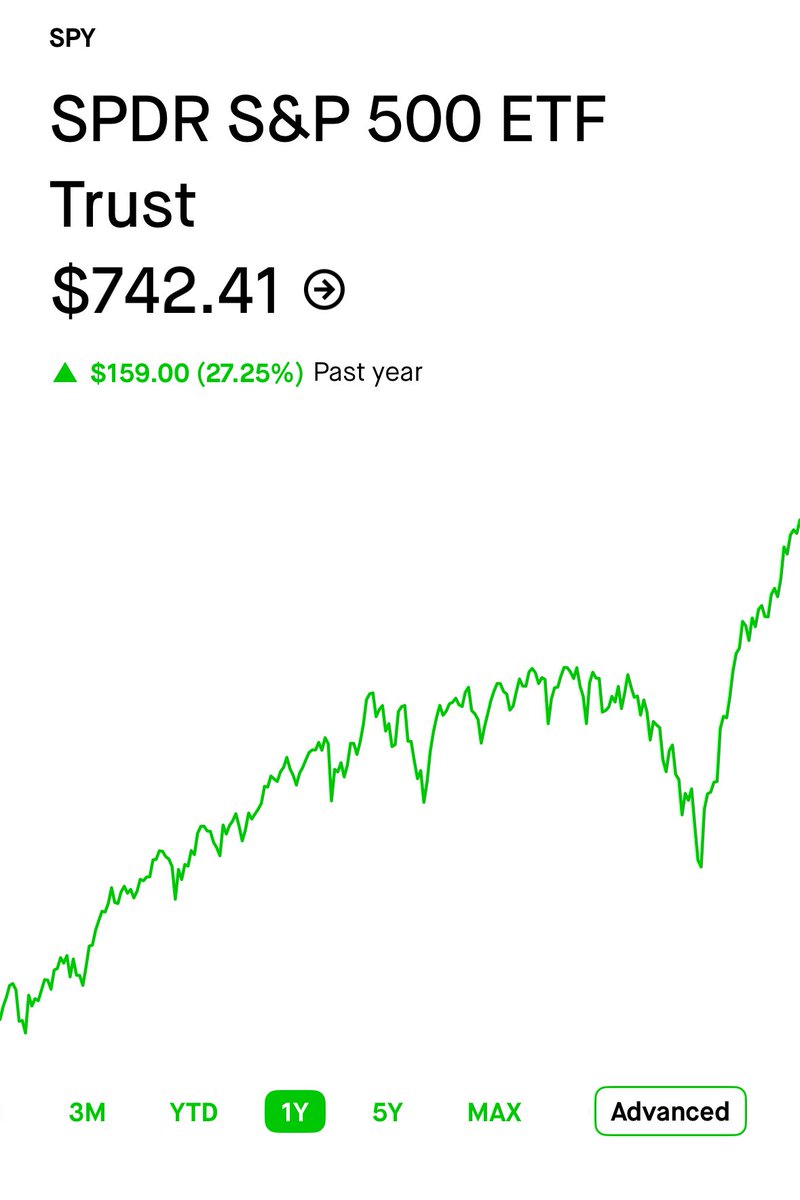
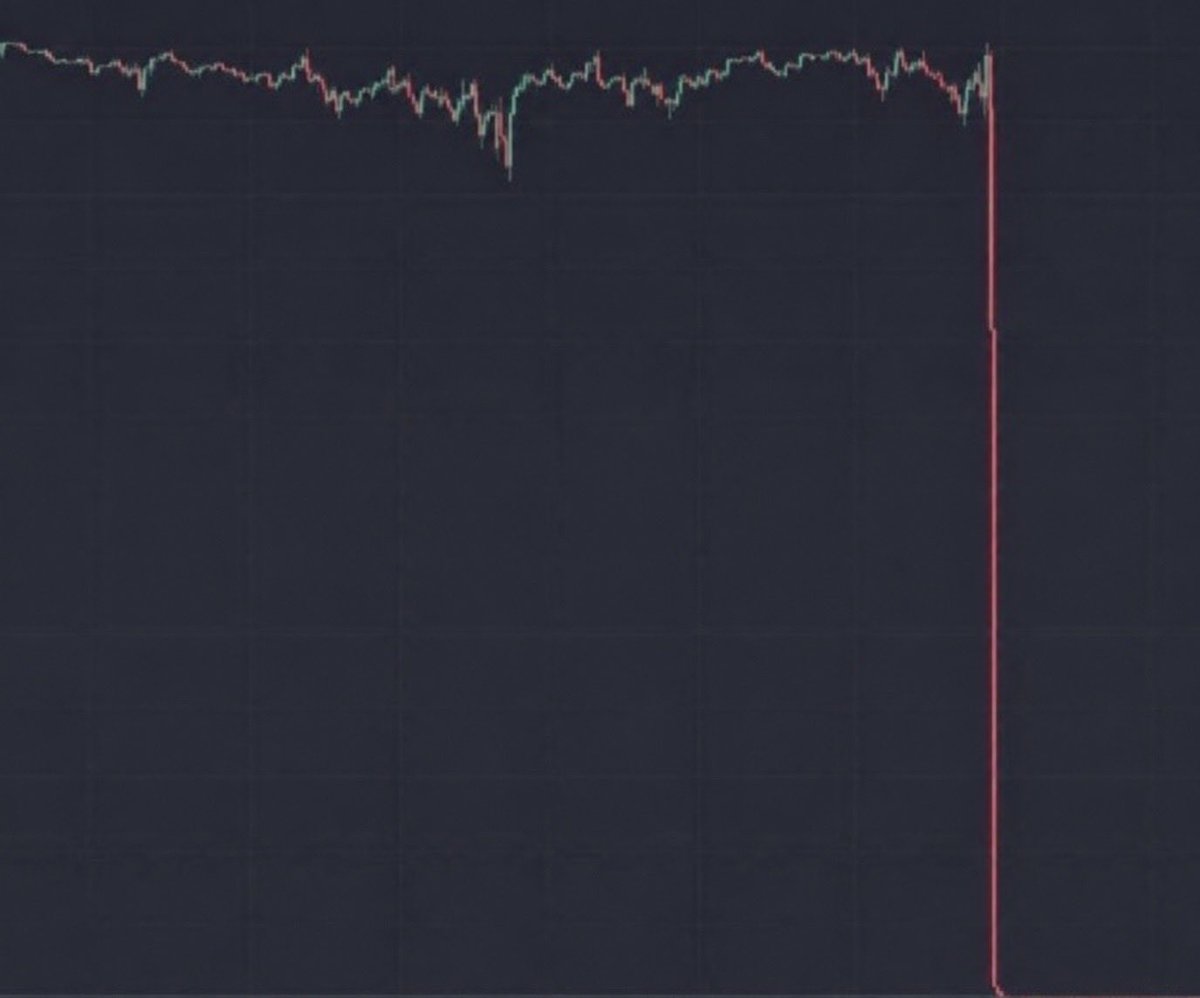
I am starting to think all the $VOO and chill posts have made people hate the S&P 500.
Investing Addict tweet media
English
30
13
218
22.4K
MacroEngine
MacroEngine@TheMacroEngine·
@charliebilello This is layed out in detail in the weekly macro report if anyone wants to see the numbers x.com/themacroengine…
MacroEngine@TheMacroEngine

5/17 Current Macro Environment (watch the yield curve) 🚨 1. Long end is doing the damage: The 30Y is over 4.95% and rising, while 10Y real yield is still around 1.93%. That keeps the discount-rate pressure alive even while equities rally 2. Curve steepening is the main macro tell: The 2s10s at +48 bps says the market is moving away from deep inversion and toward a more late-cycle/reflationary setup. CAN BE BULLISH IF DRIVEN BY GROWTH. 3. Risk assets are ignoring any and all bond market stress: S&P 500 is strong, gold is strong, and credit/volatility look calm Stocks are rallying. Gold is rallying. Credit looks calm. Vol is contained. The bond market is the headline this week. 30Y yield near 5%, 10Y real yields still elevated, and the 2s10s curve has steepened back to positive territory. That is not a clean “Fed easing is coming” setup. It looks more like a market pricing resilient growth, sticky inflation risk, and higher term premium at the same time. The key warning sign: breadth is fading while the S&P keeps pushing higher. Translation: risk appetite is still alive, but the foundation is getting more rate-sensitive. This is not a panic setup yet. It is a “don’t ignore the long end” setup. If yields keep rising and breadth keeps fading, the equity rally becomes much more vulnerable. @Globalflows

English
0
0
1
1.6K
Charlie Bilello
Charlie Bilello@charliebilello·
The 30-Year US Treasury Yield ended the day at 5.14%, its highest close since July 2007. The Federal Reserve and Federal Government continue to spin the lie of low inflation while the bond market reveals the truth.
Charlie Bilello tweet media
English
86
525
2.1K
165.3K
MacroEngine
MacroEngine@TheMacroEngine·
@KobeissiLetter Meanwhile the US is demonstrating a more top heavy risk appetite. The biggest stocks are carrying the market along…
MacroEngine tweet media
English
1
0
14
1.6K
The Kobeissi Letter
The Kobeissi Letter@KobeissiLetter·
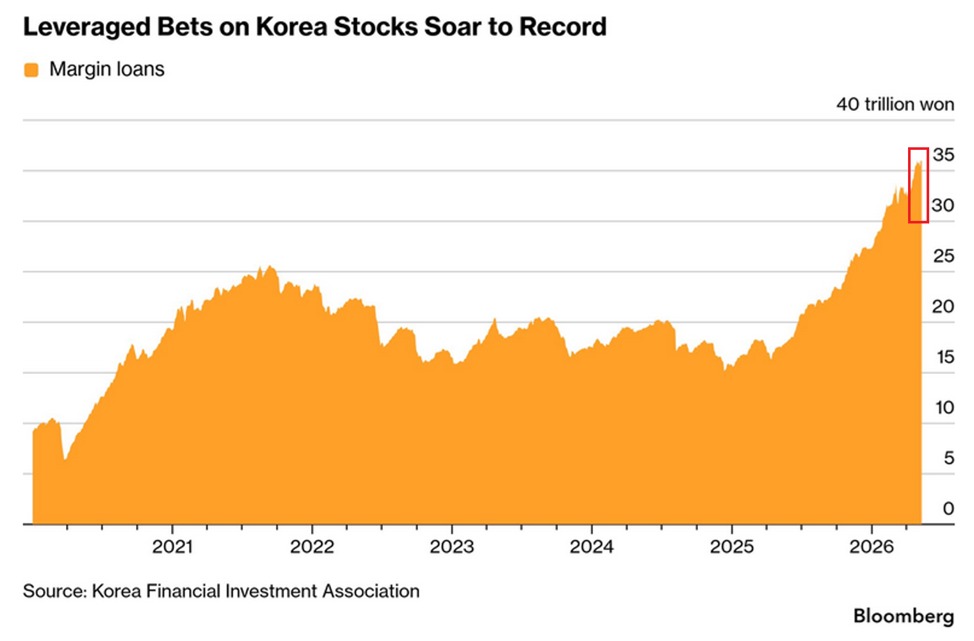
Risk appetite in South Korea is exploding: Margin loans outstanding on Korean stocks are up to a record $24.3 billion. Since the start of 2025, margin debt has surged +140% and is up +32% since the beginning of this year alone. To put this into perspective, the value of leveraged bets on Korean stocks was ~$5.0 billion in 2020. This also likely understates the real scale, given that many loans taken out to buy stocks are labeled under other categories. Meanwhile, domestic investors have poured ~$25.3 billion into South Korean shares year-to-date. Retail investors in South Korea are aggressively rushing into stocks.
The Kobeissi Letter tweet media
English
146
355
2.1K
382.7K
MacroEngine
MacroEngine@TheMacroEngine·
@JUST_KAWS The best asymmetrical trade for NVDA earnings is in software. Unless NVDA beats earnings by a lot, capital will flow into the software sector. x.com/themacroengine…
MacroEngine@TheMacroEngine

NVDA would need to crush earning to sustain the gap that semis have formed over software. SMH/IGV is the best expression of capital flows to watch through $NVDA Earnings. SMH/IGV ratio (blue) vs NVDA price (orange). Look at what's happened since November: The ratio is up 150%+ off the lows. NVDA is up ~50%. The semis-over-software trade has massively outrun NVDA itself. This means the AI capex regime has broadened past just NVDA. AVGO, TSM, and the rest of chip makers are carrying the trade. A couple notes headed into earnings. 1. NVDA is no longer the whole AI trade, but the rest of AI leans on it. The ratio inflects hard at every earnings date (vertical lines). The print sets direction for the entire semis complex, not just one stock. 2. The bar is higher than it looks. SMH/IGV at 250 vs NVDA at 150 means semis are pricing in a better outcome than NVDA's own tape. A beat and raise is needed just to hold the ratio. In-line guide and the ratio rolls hard. 3. The recent ~10% pullback in the ratio while NVDA held up is big. Market is starting to question whether the rest of the semis complex deserves the multiple it's been given. NVDA carries the print, the reaction gets priced into everything else. The setup: NVDA can beat and the ratio still falls if guidance disappoints on hyperscaler capex. That's the asymmetric risk nobody's talking about. Software (IGV) has been the funding leg all year. A rotation back to monetization names would be violent. @Globalflows

English
0
0
0
123
MacroEngine
MacroEngine@TheMacroEngine·
@shagsverywell @TradingThomas3 Think about it… we’ve hit all time highs with oil and yields at elevated levels. What’s keeping that from continuing. This post explains the dynamic well x.com/themacroengine…
MacroEngine@TheMacroEngine

If you can’t wrap your head around 10Y yield at 4.57% while the market is near highs, please keep reading to understand the credit cycle and why stocks will only go higher 10Y at 4.575%. $SPX near all-time highs. Inflation expectations creeping up. Supposed to be impossible, it’s not. Yields are rising on growth, not fiscal panic. Real yields barely positive, breakevens stable at 2.3-2.5%, nominal GDP repricing higher. That’s reflation, not stagflation. CREDIT. HY sub-300bps. IG sub-100bps. Tariff stress test came and went and spreads went mostly unchanged. Corporate cash flows are outrunning the rate burden, the only thing that actually matters for whether higher yields kill the expansion. Inflation expectations up with tight credit = the market saying nominal growth is hot enough to absorb sticky inflation without breaking balance sheets. That’s a melt-up regime in one sentence. Real-yield negative still forces capital down the risk curve. Pensions, insurers, sovereigns can’t hit return targets in cash or bonds. They’re structural buyers of equity and credit no matter where the 10Y prints. Higher yields with no Fed cuts priced and equities at ATHs = the bond market endorsing soft-landing-to-no-landing. The regime needs the Fed not easing into a weak tape. The kill signal isn’t a hot CPI or a 5% 10Y. It’s HY spreads breaking 400bp while breakevens stay above 2.5%. Corporates losing the race against their cost of capital. Until that shows up, higher yields are a feature of the expansion, not a threat to it. Watch credit, not the 10Y level. @Globalflows

English
0
0
0
49
TT3
TT3@TradingThomas3·
Dip buyers punished on back to back days, miracles happen 🤯
English
23
7
314
24.3K
MacroEngine
MacroEngine@TheMacroEngine·
@Globalflows I think SMH/IGV overlayed with NVDA chart with earnings markers visualizes this nicely
MacroEngine@TheMacroEngine

NVDA would need to crush earning to sustain the gap that semis have formed over software. SMH/IGV is the best expression of capital flows to watch through $NVDA Earnings. SMH/IGV ratio (blue) vs NVDA price (orange). Look at what's happened since November: The ratio is up 150%+ off the lows. NVDA is up ~50%. The semis-over-software trade has massively outrun NVDA itself. This means the AI capex regime has broadened past just NVDA. AVGO, TSM, and the rest of chip makers are carrying the trade. A couple notes headed into earnings. 1. NVDA is no longer the whole AI trade, but the rest of AI leans on it. The ratio inflects hard at every earnings date (vertical lines). The print sets direction for the entire semis complex, not just one stock. 2. The bar is higher than it looks. SMH/IGV at 250 vs NVDA at 150 means semis are pricing in a better outcome than NVDA's own tape. A beat and raise is needed just to hold the ratio. In-line guide and the ratio rolls hard. 3. The recent ~10% pullback in the ratio while NVDA held up is big. Market is starting to question whether the rest of the semis complex deserves the multiple it's been given. NVDA carries the print, the reaction gets priced into everything else. The setup: NVDA can beat and the ratio still falls if guidance disappoints on hyperscaler capex. That's the asymmetric risk nobody's talking about. Software (IGV) has been the funding leg all year. A rotation back to monetization names would be violent. @Globalflows

English
0
0
0
164
Capital Flows
Capital Flows@Globalflows·
If you are trying to understand how $NVDA earnings fits into the larger macro context after Jensen was just in China, I laid out my entire thesis here MAIN IDEA: Positioning is aggressively net long into $NVDA earnings and we would need a significant surprise to expectations for a further rally. Where could this come from though? Information from his time in China with Xi and Trump that the market isn't aware of yet Could be significant if it comes out that there is some development on the geopolitical side This recording is the daily livestream that myself and @jaymesrosenthal are doing daily at 8:30am MST
English
3
3
57
26.1K