

Institute for the Study of War
53.9K posts

@TheStudyofWar
ISW is a policy research organization focused on U.S. national security. Email: [email protected]. https://t.co/FO1PVyOnYB


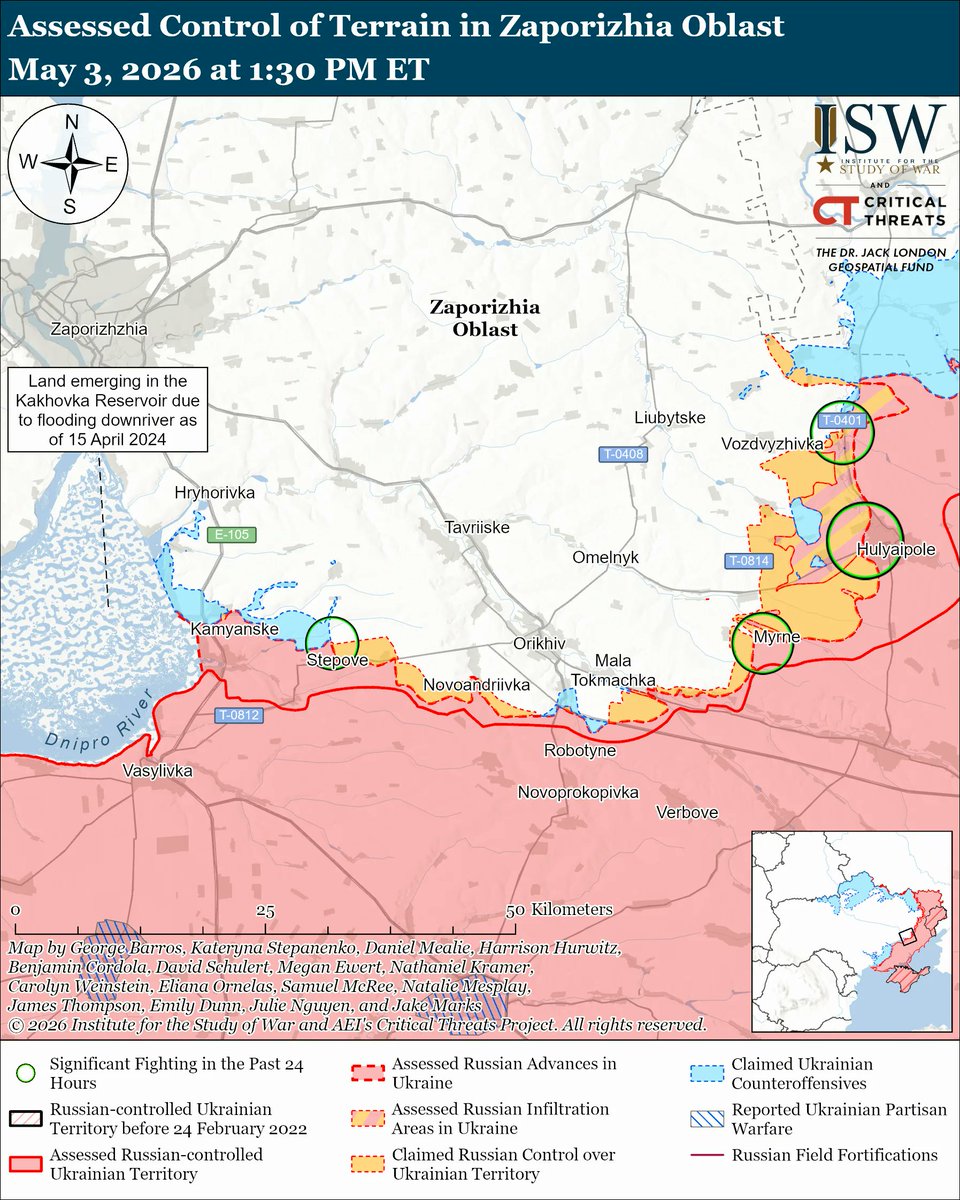
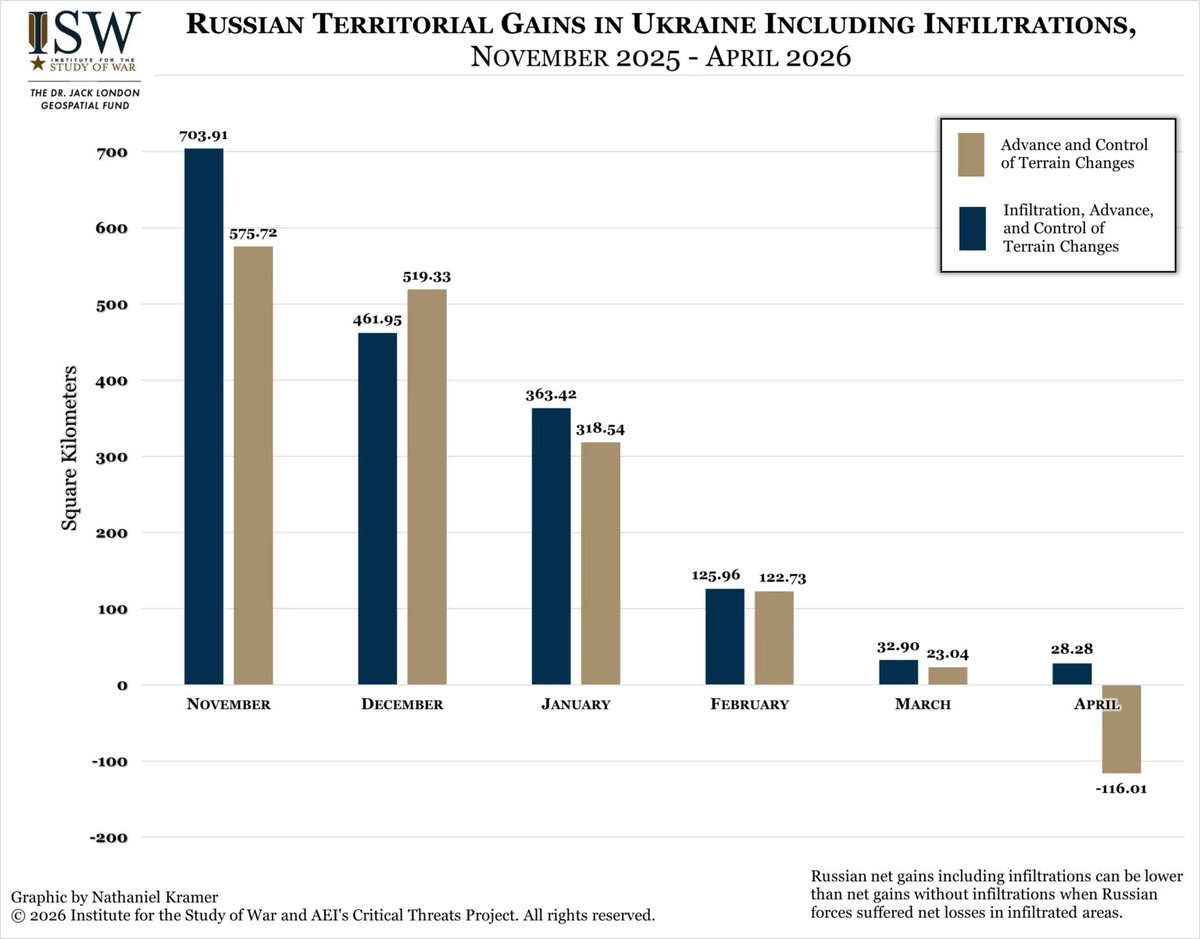
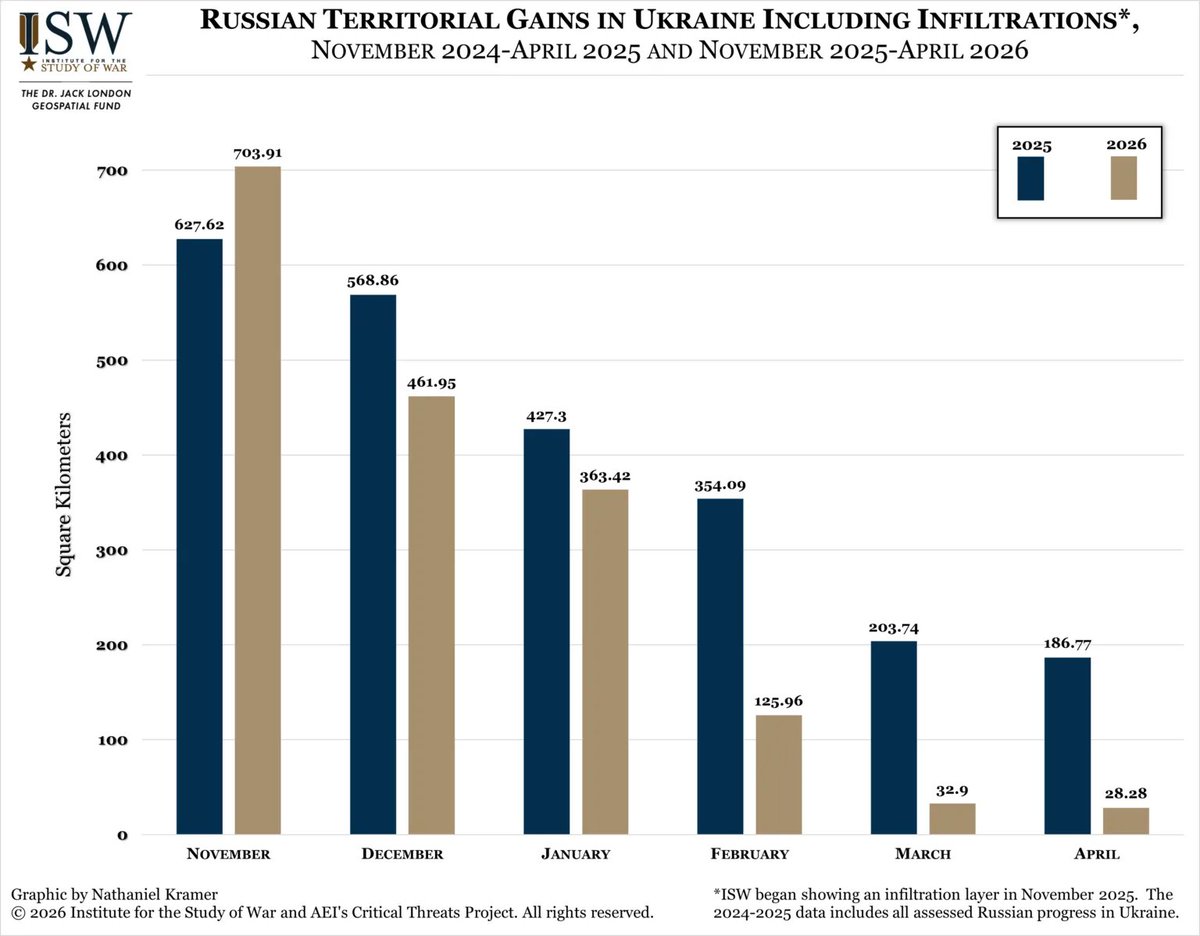
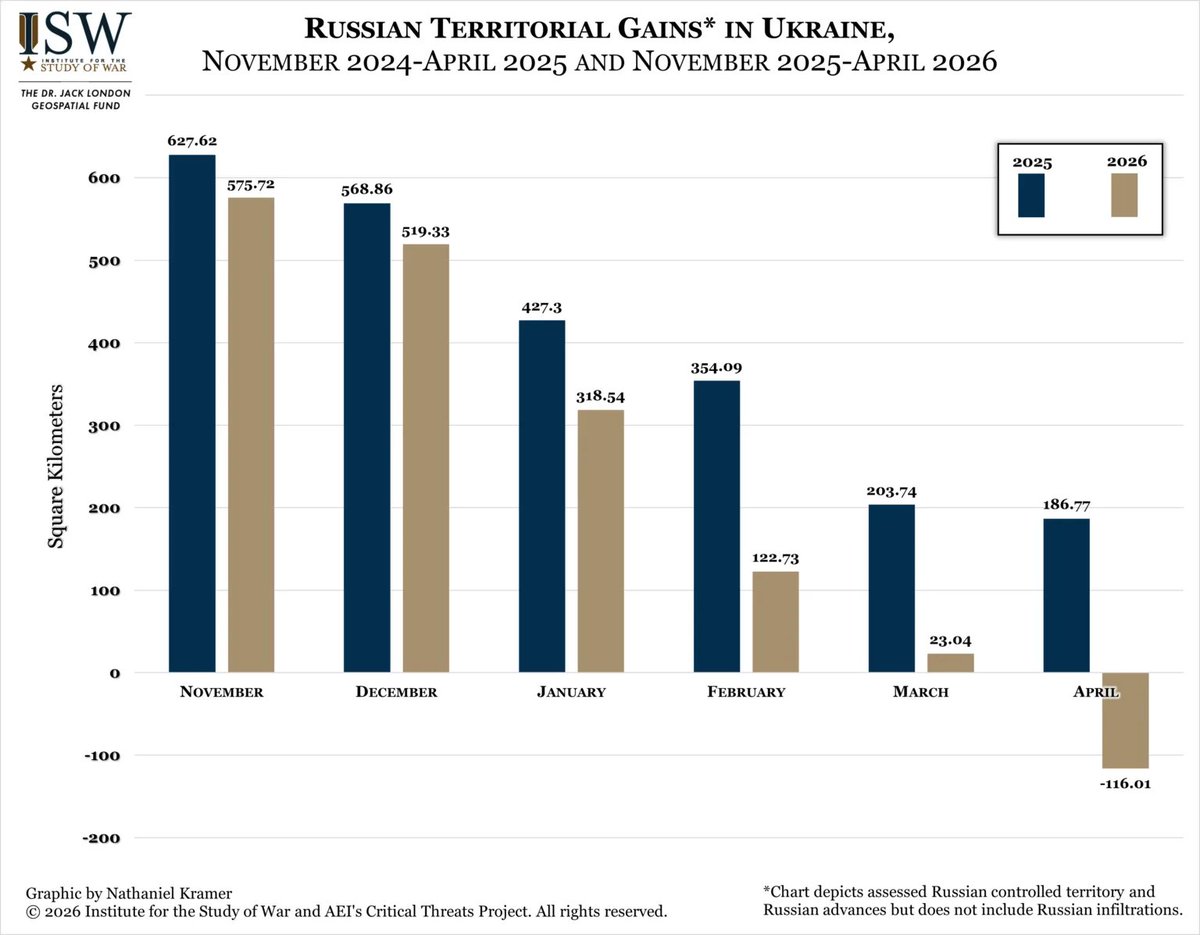
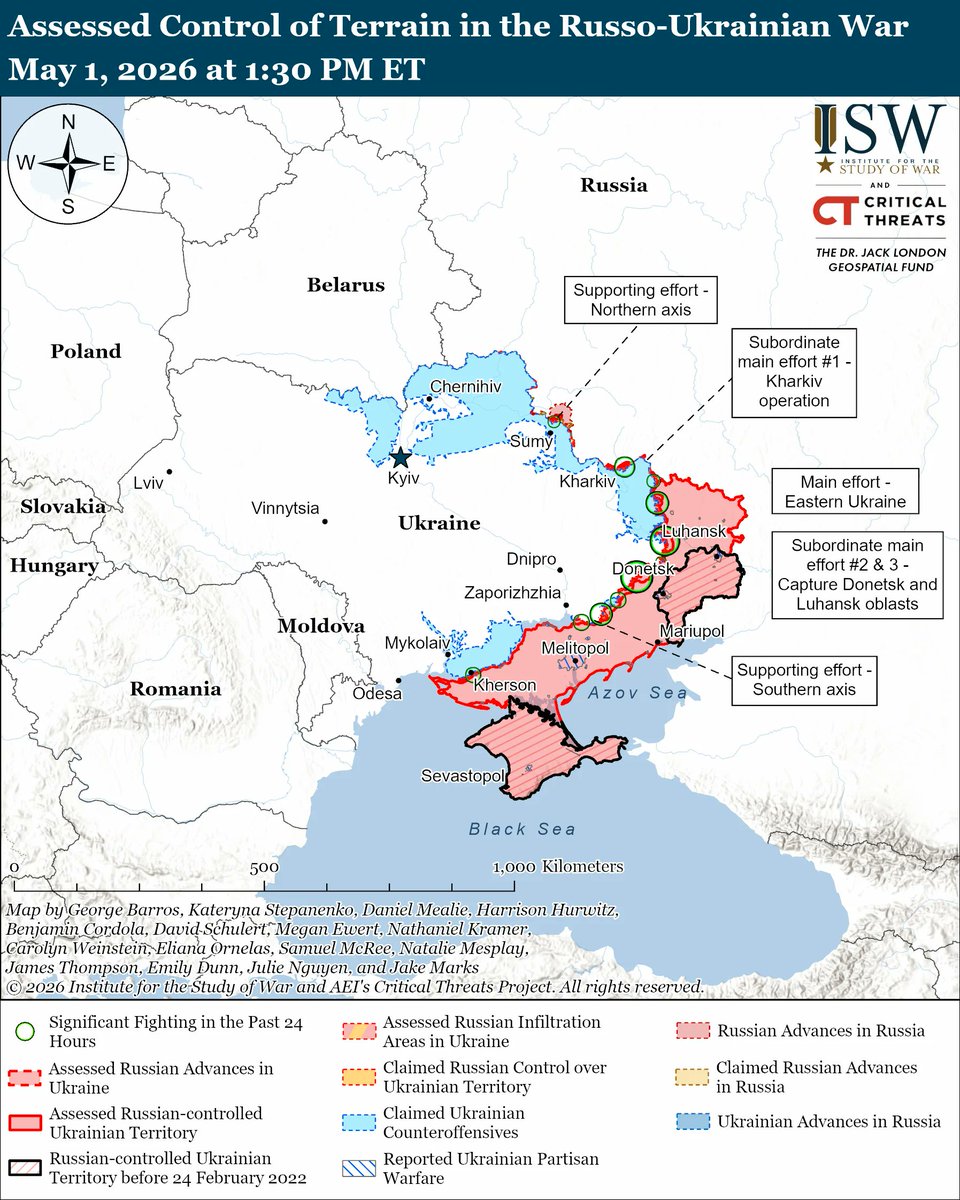
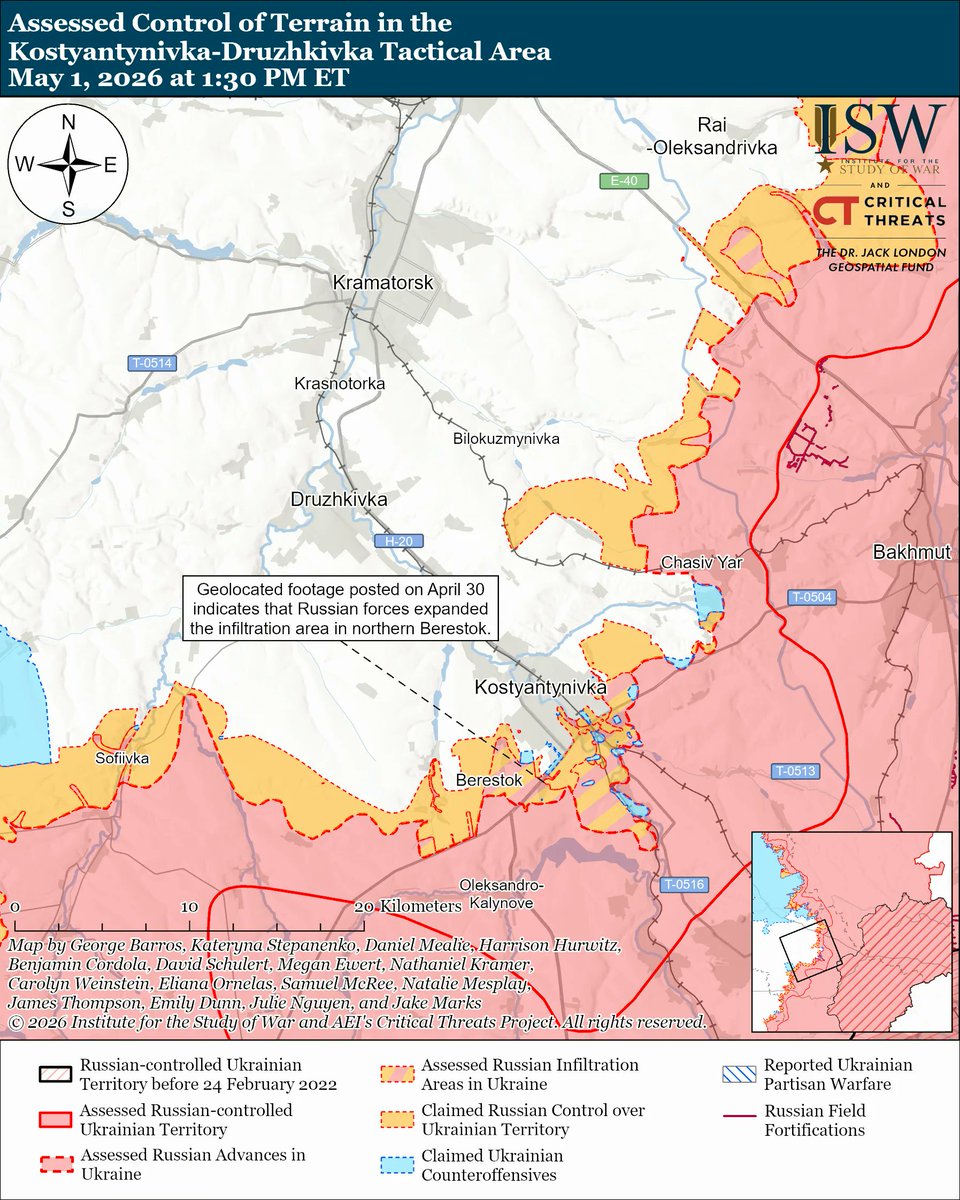
NEW: Ukraine has been imposing increasing challenges on Russia at the tactical, operational, and strategic levels since the beginning of 2026. Other Key Takeaways: Recent Ukrainian advances in the Oleksandrivka direction and the continued success of Ukraine’s defensive lines in constraining Russian advances have forced the Russian military command into competing tactical and operational dilemmas on the battlefield. The competing dilemmas that Ukraine has imposed on the Russian military command have likely disrupted Russian preparations for their Spring-Summer 2026 offensive. The Russian Ministry of Defense (MoD) likely formalized some Russian Combat Army Reserve (BARS) elements. Tankers carrying Russian oil are reportedly sailing to Cuba in violation of the US embargo. Kremlin officials are reportedly considering military means to escort Russian ships. Russian federal censor Roskomnadzor is reportedly struggling to block all blacklisted resources on the Russian internet as Russian authorities are attempting to slowly throttle access to Telegram. The US decision to lift sanctions against Belarus will likely directly benefit Russia’s economy and therefore Russia’s war effort. A Russian Su-30 fighter jet briefly violated Estonian airspace on March 18. Ukrainian forces advanced in the Kostyantynivka-Druzhkivka tactical area and in the Pokrovsk and Oleksandrivka directions. Russian forces advanced in the Kostyantynivka-Druzhkivka tactical area and in the Hulyaipole direction. Russian forces launched 133 drones against Ukraine, including in Chernihiv, Volyn, Odesa, Dnipropetrovsk, Zaporizhia, and Lviv oblasts.


NEW | Evening Update: The United States and Israel are currently attempting to use force to prevent Iran from disrupting shipping in the Strait of Hormuz. A weakened regime that remains in power after this war would be able to disrupt shipping whenever and for however long it pleases with little effort if its current, relatively limited, strike campaign on shipping proves sufficient to cause the US and Israel to surrender. A failure to demonstrate the will and ability to deny Iran the ability to disrupt traffic will make it enormously harder to deter Iran from future disruptions. Stopping the war in current conditions would thus represent a major strategic challenge that the United States or Israel would need to contend with in future rounds of conflict with a regime that will continue to be a committed adversary. Other Key Takeaways + Full Update⬇️(1/3) The Israel Defense Forces (IDF) confirmed that it struck the Islamic Revolutionary Guards Corps (IRGC) Navy headquarters in Tehran on March 16. It stated that commanders used the headquarters to direct IRGC Navy forces and plan operations against Israel and other regional countries. The IDF confirmed that it killed Supreme National Security Council (SNSC) Ali Larijani, who was a long-time regime insider and had held many senior posts, in airstrikes in Tehran overnight on March 16 and 17. Larijani’s death likely weakens a key faction in competition with the Supreme Leader Mojtaba Khamenei-IRGC nexus, but it will not end the ongoing competition. A long-time observer of drone operations in Ukraine suggested on March 17 that the drone footage posted by likely Iranian-backed Iraqi militia front group Saraya Awliya al Dam is consistent with a fiber optic first-person view (FPV) drone. The Iranian proxy group’s decision to advertise its possession of such a weapon would be an explicit threat aimed at the United States. The combined force has continued to strike Iranian ballistic missile infrastructure to degrade Iran’s missile capabilities. The combined force has continued to degrade Iranian air capabilities in order to maintain air superiority over parts of Iran. The combined force continued to strike Iranian defense industrial sites. The combined force struck a number of internal security targets.


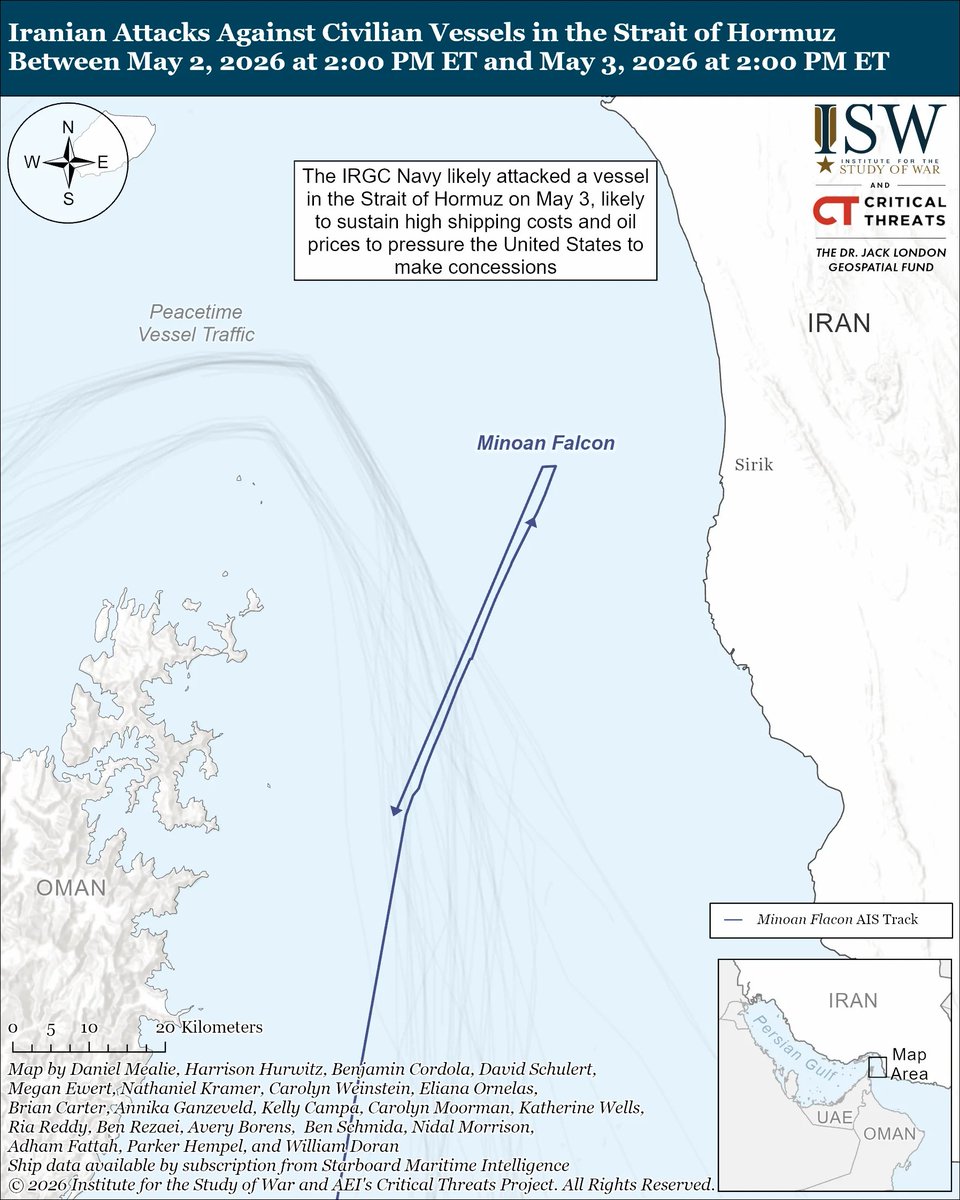
Iranian Retaliation: Iran launched ten missile barrages at Israel between 3:00 PM ET on March 17 and 3:00 pm ET on March 18. Iran has continued to conduct drone and missile attacks against the Gulf states on March 17 and 18, including targeting Gulf energy facilities. @TankerTrackers reported on March 18 that the Egyptian-owned, Maltese-flagged container ship, Safeen Prestige, is on fire. It is unclear if Iran targeted the Safeen Prestige again. United Kingdom Maritime Trade Operations (@UK_MTO) reported on March 18 that there have been no confirmed attacks on vessels since March 12. PBS reported on March 18 that at least 89 vessels, including 16 oil tankers, have transited the Strait of Hormuz between March 1 and 15. Iranian Foreign Affairs Minister Abbas Araghchi stated on March 18 that countries bordering the Persian Gulf should draft a new Strait of Hormuz protocol once the conflict concludes.

US and Israeli Air Campaign: The combined force struck multiple Iranian internal security targets on March 18, including Islamic Revolutionary Guards Corps (IRGC), Basij, and Law Enforcement Command (LEC) facilities in Tehran, Alborz, and Lorestan Provinces. The combined force has widely targeted elements of Iran’s internal security apparatus that contribute to the repression of the Iranian population, as ISW-CTP has extensively documented. The Iranian regime is continuing mass arrests and information control measures as part of its securitization efforts. The combined force continued to target Iranian naval capabilities on March 17 and 18. A maritime intelligence organization, @TankerTrackers, reported on March 18 that the combined forces’ strikes targeting Bandar Abbas Port damaged an additional three Iranian vessels. The combined force continued targeting air defense systems across Iran. Geolocated satellite imagery shows several destroyed buildings at Fath Air Base, a military base operated by the IRGC Aerospace Force, in Tehran. The combined force continued to target Iran’s defense industrial base to degrade its ability to rebuild its missile, drone, and air defense programs. Geolocated satellite imagery confirms damage to several unidentified buildings in Pasargad Industrial Town in Tehran. The Saba Battery Factory, a subsidiary of the Defense Industries Organization, is located within this complex.


NEW: US aircraft struck an Iranian anti-ship cruise missile facility north of the Strait of Hormuz as part of efforts to prevent Iran from threatening maritime shipping. Other Key Takeaways: A US defense official, Iranian media, an Israel Defense Forces (IDF) source, and the Qatari Foreign Affairs Ministry confirmed that IDF launched airstrikes targeting South Pars/North Dome Gas Field in the Persian Gulf, which is shared by Iran and Qatar. It is also the world’s largest natural gas field. Israel coordinated the attack with the United States. Qatar’s Foreign Affairs Ministry spokesperson condemned the attack. The IDF confirmed that it targeted and killed Iranian Intelligence Minister Esmail Khatib, another key figure in Iran’s internal security apparatus. Khatib was responsible in coordinating the regime’s repression of Iran’s population. Iran also confirmed the minister’s death. The IDF confirmed that it struck several Iranian internal security targets belonging to the Islamic Revolutionary Guards Corps (IRGC), the Basij, and Law Enforcement Command (LEC). These targets were mostly in Tehran. The IDF also targeted air defense systems in unspecified locations across Iran. Iran told the International Atomic Energy Agency (IAEA) that an unknown projectile fell in the vicinity of Bushehr Power Plant in southern Iran – one of Iran’s civilian nuclear plants – but reported no damage or injuries. The spokesperson for Russian state-owned nuclear energy company Rosatom, which has been supporting the construction of the plant, condemned the incident. The IDF confirmed that Iran launched seven waves of missile attacks against Israel between March 17 at 3:00 PM ET and March 18 8:00 AM ET. OSINT accounts on X reported that Iran launched medium-range Khorramshahr missiles in these salvos. Israeli media confirmed that cluster munition from an Iranian missile killed two Israeli civilians on the outskirts of Tel Aviv. Iran continues to launch several drone and missile attacks at Saudi Arabia, the United Arab Emirates (UAE), Qatar, and Kuwait. The Saudi Arabian Defense Ministry confirmed that its air defense systems intercepted 21 drones and one ballistic missile between March 17 at 3:00 PM ET and March 18 at 8:00 AM ET. The UAE Defense Ministry confirmed that Iranian attacks have killed two UAE active-duty soldiers, six civilians, and injured 158 individuals since the start of the war.


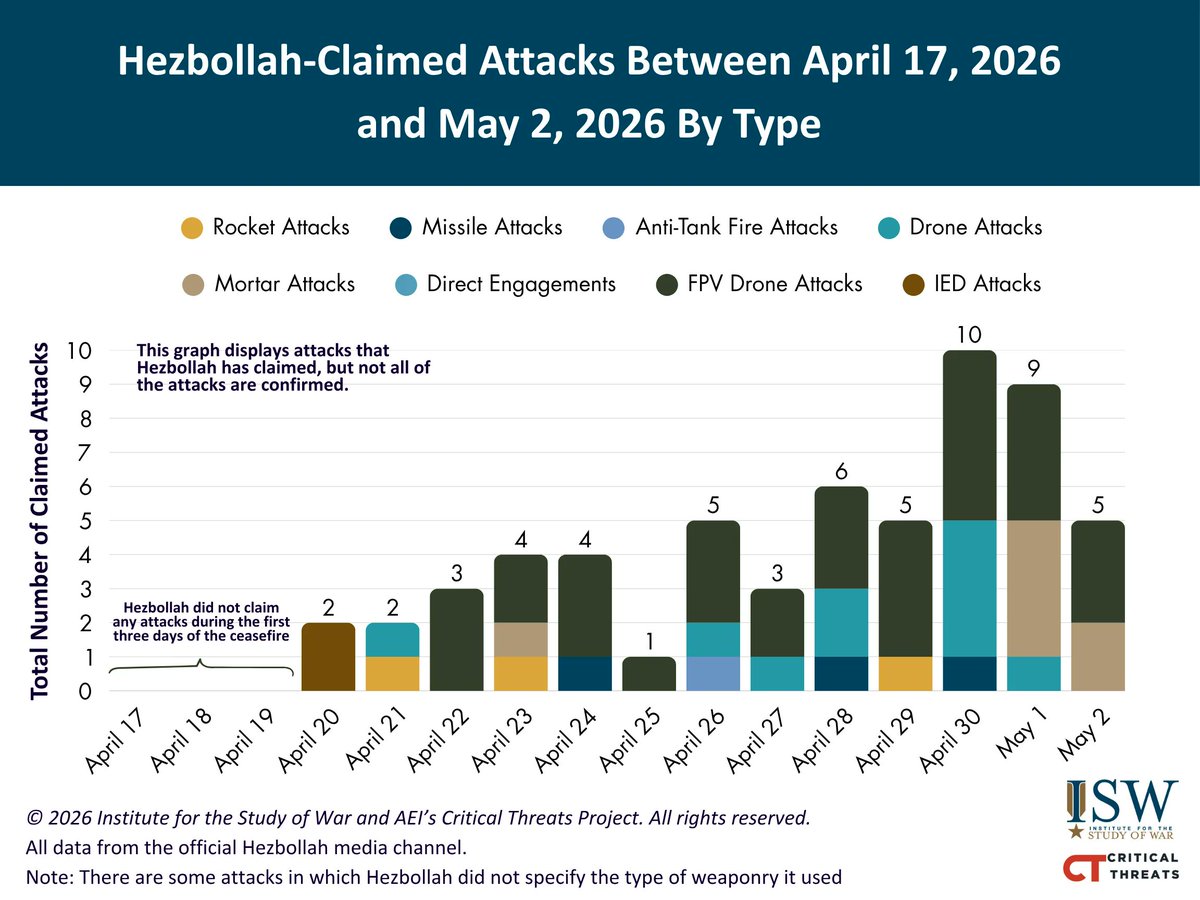
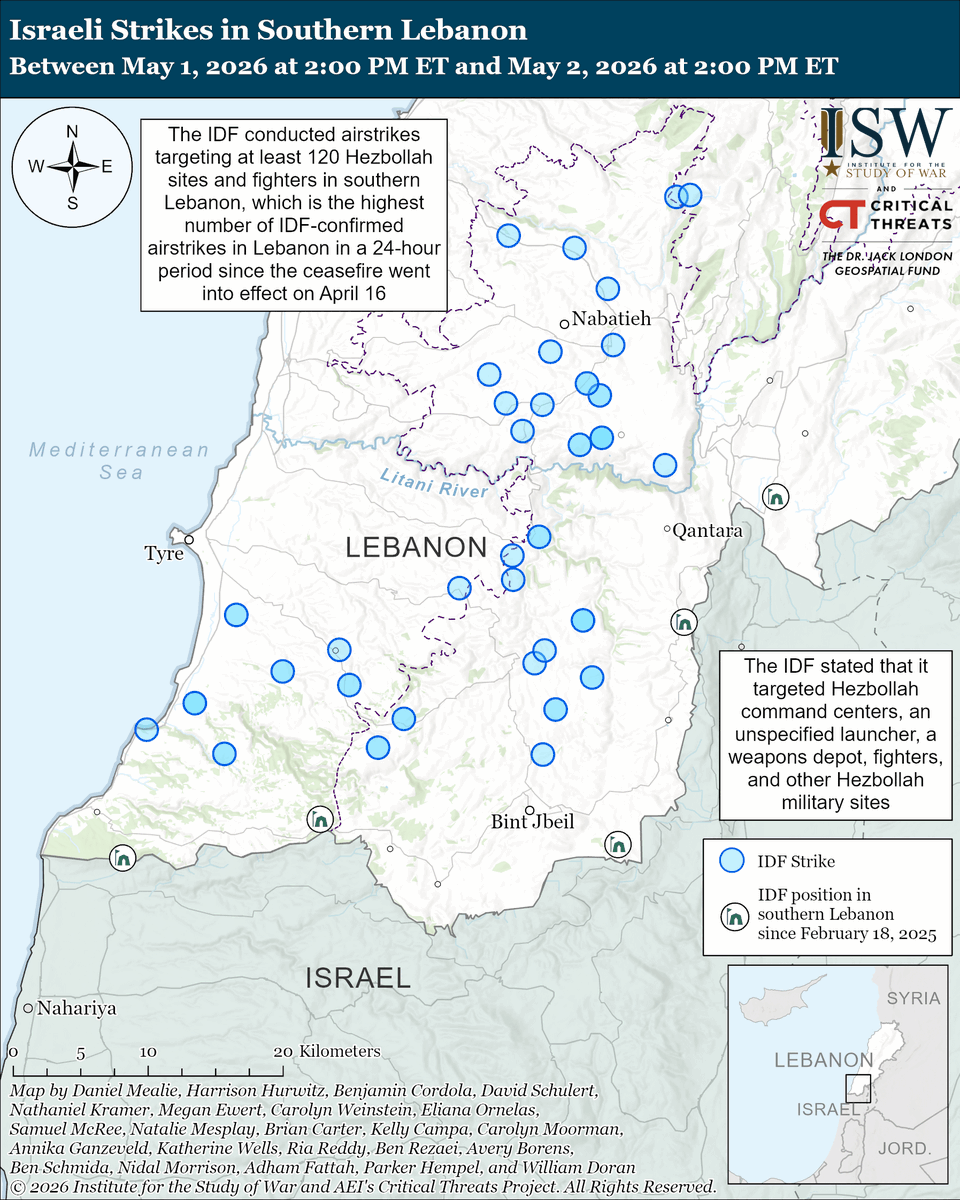
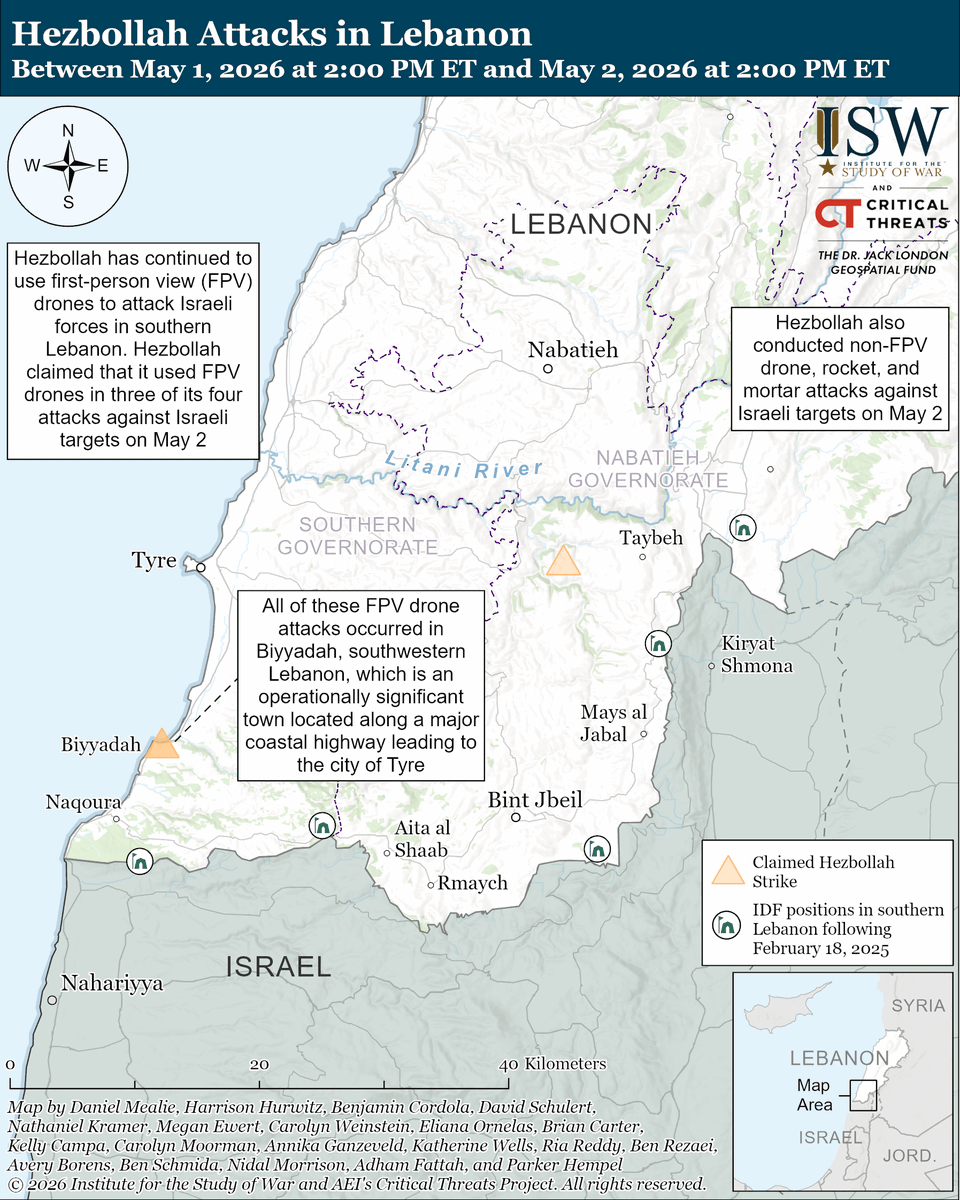
NEW: The Israel Defense Forces (IDF) struck critical Iranian energy infrastructure on March 18, including facilities linked to the South Pars natural gas field and the Asaluyeh processing hub in Bushehr Province. These facilities are central to Iran’s domestic natural gas supply and broader energy system, which supports a significant portion of Iran’s economic activity and regime revenue. Iran exports a small share of its natural gas, primarily to Iraq and Turkey, meaning disruptions will also affect regional energy consumption. The IDF killed Iranian Intelligence Minister Esmail Khatib in an airstrike on March 18. Khatib was responsible for coordinating the regime’s repression of the Iranian population in his role within the Ministry of Intelligence and Security, including overseeing the regime‘s crackdowns on the Winter 2025-2026 protests and the 2022 Mahsa Amini protests. The combined force’s decapitation campaign and targeting of security services is reportedly causing paranoia among Iranian regime officials and members of Iranian security services. Israeli strikes targeting internal security services are reportedly hurting “rank-and-file morale” and are driving security forces to sleep in vehicles, mosques, or sports facilities in order to avoid targeting. Hezbollah claimed 57 attacks targeting Israeli forces and positions in northern Israel and southern Lebanon since CTP-ISW’s last data cut off. The IDF has continued to conduct airstrikes targeting Hezbollah in southern Lebanon, including strikes targeting Hezbollah’s social and financial service network in Lebanon.


NEW: The Israel Defense Forces (IDF) struck critical Iranian energy infrastructure on March 18, including facilities linked to the South Pars natural gas field and the Asaluyeh processing hub in Bushehr Province. These facilities are central to Iran’s domestic natural gas supply and broader energy system, which supports a significant portion of Iran’s economic activity and regime revenue. Iran exports a small share of its natural gas, primarily to Iraq and Turkey, meaning disruptions will also affect regional energy consumption. The IDF killed Iranian Intelligence Minister Esmail Khatib in an airstrike on March 18. Khatib was responsible for coordinating the regime’s repression of the Iranian population in his role within the Ministry of Intelligence and Security, including overseeing the regime‘s crackdowns on the Winter 2025-2026 protests and the 2022 Mahsa Amini protests. The combined force’s decapitation campaign and targeting of security services is reportedly causing paranoia among Iranian regime officials and members of Iranian security services. Israeli strikes targeting internal security services are reportedly hurting “rank-and-file morale” and are driving security forces to sleep in vehicles, mosques, or sports facilities in order to avoid targeting. Hezbollah claimed 57 attacks targeting Israeli forces and positions in northern Israel and southern Lebanon since CTP-ISW’s last data cut off. The IDF has continued to conduct airstrikes targeting Hezbollah in southern Lebanon, including strikes targeting Hezbollah’s social and financial service network in Lebanon.