Sabitlenmiş Tweet

The real question in DeFi yield was never "what's the APY", it was always "where does the money actually come from."
Most protocols never had a good answer. Emissions, incentives, token inflation dressed up as yield. You already know how that ends.
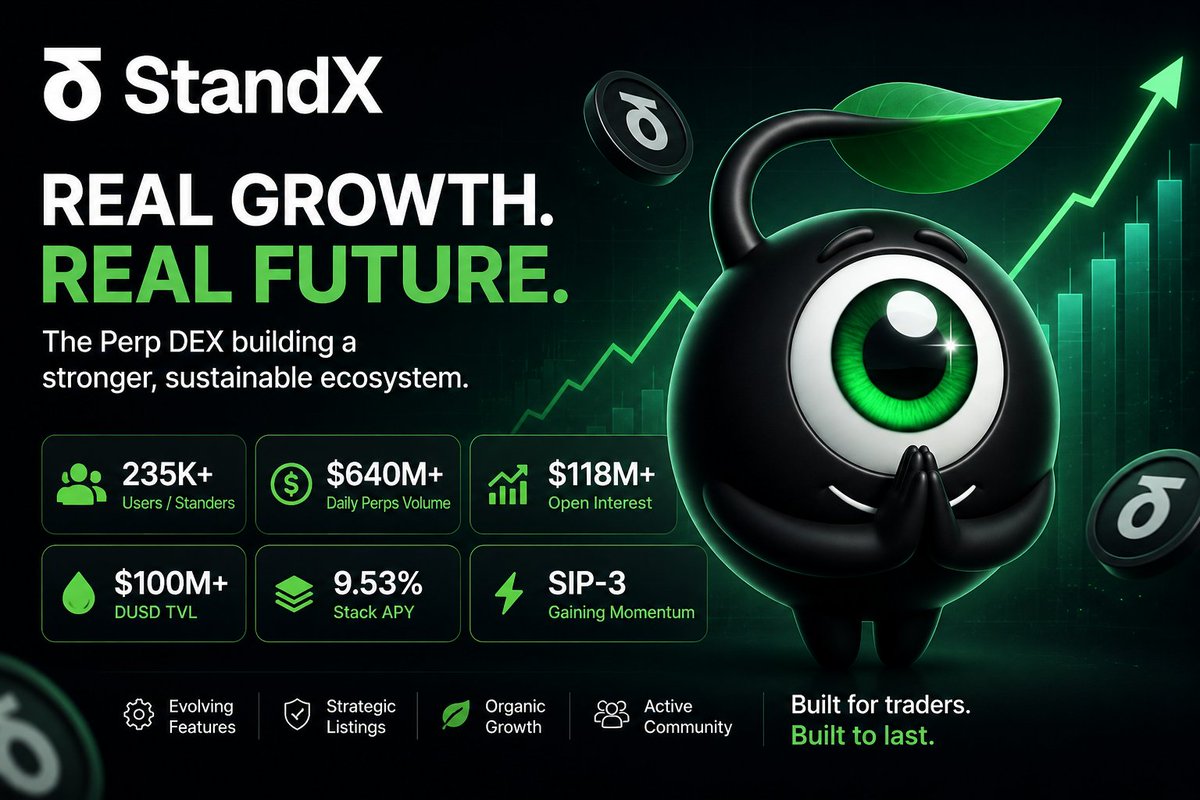
After spending some time studying how DUSD on @StandX_Official works, I saw that the answer here is different. The yield is well tied to trading volume. Traders generate fees, the platform captures revenue, DUSD holders receive part of that flow through SIP-2 (Position Yield) and SIP-3 (Native Yield Expansion).
Right now my dashboard shows 9.53% APY, but what I'm actually watching is the trading volume behind it.
That's not yield farming. That's closer to how a money market fund actually works. Not the old version backed by government debt. A crypto-native version backed by exchange activity. That distinction matters a lot.
Traditional finance figured this out a long time ago. Capital sits inside productive infrastructure, economic activity generates revenue, part of that flows back to capital holders. Treasuries, bank deposits, money market funds. Different wrappers, same core idea.
Most DeFi never got there. It ran on inflation and bled out when the incentives dried up.
The structural difference with DUSD is that yield scales with usage, not with printing. So instead of watching emission schedules, you watch platform volume. That's a completely different mental model for evaluating risk and sustainability.
The more I study this design the more I think the market hasn't caught up to what it actually represents.
English