Theo Bird

22K posts

Theo Bird banner
Theo Bird

Theo Bird

@TheonlyBird

I'm a Bird, I tweet

Katılım Temmuz 2009
1.3K Takip Edilen436 Takipçiler
Theo Bird
Theo Bird@TheonlyBird·
I just read that the Carer's Allowance cliff has been in place since 1976..? That's 40 years of lost earnings, productivity, receipts, and just uncessary hardship.
Ezra Cohen@Ezra_Cohen_

No one should lose out by working more, but the UK’s tax cliffs can mean exactly that for low & high earners. In a new @britishprogress paper, we show how the government can end this at no extra cost. And we built a tool to show how it would affect you: tax-cliffs.vercel.app

English
0
0
0
49
Theo Bird
Theo Bird@TheonlyBird·
Do you buy your shadow sticks by the litre or kilo?
Theo Bird tweet media
English
0
0
0
28
Theo Bird
Theo Bird@TheonlyBird·
Home counties
Theo Bird tweet media
English
0
0
0
17
Theo Bird
Theo Bird@TheonlyBird·
I understand the sentiment here, but the answer isn't to privatise and lock away nature. Right to roam is successful across Europe. The answer is better education. The more time people spend in nature the more they will respect it. Your gatekeeping leads to even more resentment.
The English Oak Project@TheKentAcorn

Years of work transforming ancient woodland, ruined by permissive public access, has resulted in this It is now fashionable to promote Right to Roam, as though allowing ANYBODY a chance to ruin it again is a good thing

English
0
1
1
92
Theo Bird retweetledi
Richard
Richard@ricwe123·
It’s hard to imagine US Secretary of War Pete Hegseth ever managing such a calm and intellectually coherent explanation of strategy.....
English
956
7.6K
29.9K
2.2M
Theo Bird retweetledi
Shanaka Anslem Perera ⚡
Shanaka Anslem Perera ⚡@shanaka86·
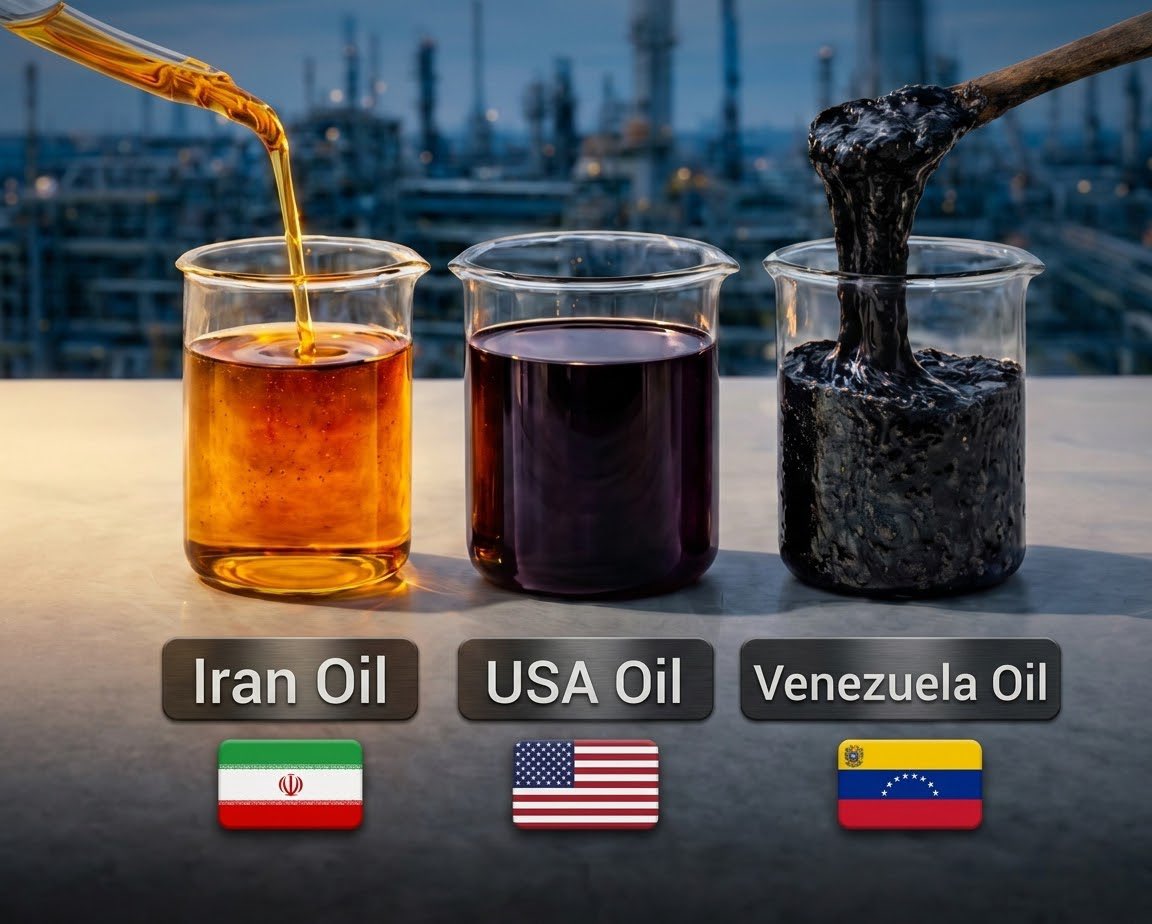
Everyone talks about Iranian oil in barrels. Nobody talks about what is inside them. That difference is why Western refineries have been running shadow networks through Dubai for twenty years to get it despite the sanctions. Crude oil is not a uniform commodity. It is a spectrum of hydrocarbons with different molecular weights, and the composition of a given crude determines how easily it converts into the products refineries actually want to sell: gasoline, diesel, jet fuel, heating oil. The measurement that captures this is API gravity. Higher API gravity means lighter crude with shorter carbon chains, which means lower energy cost to crack, lower processing cost to refine, and higher yield of the light distillates that carry premium pricing. Lower API gravity means heavier crude requiring more energy, more processing steps, more capital equipment, and producing a higher share of lower-value residuals. Iranian Light crude runs at 33 to 36 degrees API gravity with sulfur content between 1.36 and 1.5 percent. That is the refinery sweet spot. It is light enough to yield high fractions of gasoline and middle distillates without excessive processing costs, but heavy enough to produce the full range of products that complex refineries are designed to process. It is what petroleum engineers call an optimal blend crude. Now compare the alternatives. Venezuelan Merey heavy crude runs at approximately 16 degrees API gravity with sulfur between 3 and 5 percent. Refining it profitably requires a coking unit, a hydrocracker, and an extensive desulfurization train. The equipment exists. The economics work for refineries purpose-built around Venezuelan feedstock. It is not a substitute for Iranian crude. It is a different product requiring different industrial infrastructure. US West Texas Intermediate runs at 39 to 40 degrees API with sulfur below 0.25 percent. In theory, the cleanest and easiest crude to process. In practice, it is so light that it does not yield the heavier middle distillates a complex refinery needs to run at full capacity. European and Asian refineries built around medium crudes cannot switch to WTI without blending it with heavier crudes to achieve the molecular weight distribution their process units require. WTI is not a drop-in replacement for Iranian medium. Iranian oil fits where both US shale and Venezuelan heavy do not. It is the liquid that flows through the middle of the global refining system without requiring either the coking infrastructure for heavy crudes or the blending operations for ultra-light shale. That molecular fit is why it commands a persistent premium above comparable grades. It is why Indian refineries maintained Iranian crude purchases through every round of sanctions and negotiated the logistics to keep that flow moving. It is why the Dubai shadow banking and trading network that the UAE is now considering dismantling existed in the first place. The Strait of Hormuz does not just carry oil. It carries the specific category of oil that the global refining system was built to process most efficiently. Closing it does not just reduce supply. It removes the grade of crude that the system runs best on and forces every refinery in the world to run less efficiently on whatever it can find as a substitute. That is the premium embedded in the $82 oil price. Not just volume. Molecular weight. open.substack.com/pub/shanakaans…
Shanaka Anslem Perera ⚡ tweet media
English
667
9.8K
31.4K
6.4M
Theo Bird
Theo Bird@TheonlyBird·
No one should ever bow down to a multi-billion dollar company but this is about as based as big tech can get. Dario has morals. Sam is a charlatan. Whether we like it or not the AI boom is here and I hope Anthropic wins.
Erin Woo@erinkwoo

SCOOP: Dario Amodei sent an explosive memo to Anthropic employees on Friday, calling OpenAI's deal "safety theater" and criticizing the Pentagon, Palantir, OpenAI and the Trump administration writ large. theinformation.com/articles/anthr… with @steph_palazzolo and @srimuppidi

English
0
0
0
40
Theo Bird
Theo Bird@TheonlyBird·
Is this Anglofuturism?
Theo Bird tweet media
English
0
0
0
28
Theo Bird retweetledi
Cyrus Janssen
Cyrus Janssen@thecyrusjanssen·
An Iranian man left this comment on my YouTube channel. This is without a doubt the single best explanation of the reality facing Iranian people today👇 "As an Iranian, I can tell you the situation is no longer just political—it's existential. We are trapped between two collapsing structures: one internal, one external. On one hand, we face a deeply dysfunctional government, led by the Supreme Leader and the Islamic Republic’s unelected institutions. Decades of economic mismanagement, suppression of dissent, and brutal ideological control have alienated multiple generations. No one believes in reform anymore—because every attempt has either been co-opted or crushed. But here's the paradox: We are also terrified of regime collapse—because we've watched the aftermath of Western intervention in countries like Iraq, Libya, Syria, and Afghanistan. Each was promised freedom; each descended into chaos, civil war, or foreign occupation. So no, we don't trust the U.S. or Israel. Not because we support our regime—but because we know how imperial powers treat ‘liberated’ nations in the Middle East. Freedom, in their language, often means vacuum, fire, and permanent instability. Right now, many Iranians live with three truths at once: The Islamic Republic is morally and politically bankrupt. The alternatives offered by foreign actors are not liberation—they’re collapse. A bad government is survivable. No government is not. We are not silent because we agree. We are cautious because we’ve learned—too well—what happens when superpowers decide to "help." In a sentence: Iran is a nation held hostage by its own regime, but haunted by the fate of its neighbors. We are stuck in a house we hate, surrounded by fires we fear more."
English
1.1K
16.1K
51.1K
4.7M
Theo Bird retweetledi
Anish Moonka
Anish Moonka@anishmoonka·
Went down the rabbit hole on this one. The answer is actually wild. 5,000 years ago, Sumerian merchants in modern-day Iraq needed a number that's easy to divide. They picked 60. It has 12 divisors (1, 2, 3, 4, 5, 6, 10, 12, 15, 20, 30, 60). Base-10 only has four. That's 3x as many ways to split something evenly, which matters when you're dividing grain and wages and can't handle repeating decimals. The counting method is the best part. They used their thumb as a pointer on the three bone segments of each finger. Four fingers, three segments, that's 12 per hand. Track multiples of 12, on the other hand, and you hit 60. No pen needed. Merchants in parts of Asia still count this way today. The system spread from Sumer to the Babylonians, then eastward to Persia, India, and China, and westward to Egypt and Rome. By 1800 BC, Babylonian students were using base-60 to calculate the square root of 2 to six decimal places on clay tablets. One student's homework from 4,000 years ago, now at Yale, holds the most accurate computation found anywhere in the ancient world. The Greeks adopted it for astronomy, which locked it into navigation, cartography, and eventually clocks in the 14th century. People have tried to kill it. During the French Revolution in 1793, France mandated decimal time: 10 hours per day, 100 minutes per hour, 100 seconds per minute. New clocks, new laws, the whole thing. Lasted 17 months. Workers hated getting one day off every ten days instead of one every seven. They tried again in 1897. Scrapped by 1900. The metric system replaced feet and pounds across most of the world. But 60 minutes in an hour? Untouchable. 60 is just too good at being divided. You can split an hour into halves, thirds, quarters, fifths, sixths, tenths, twelfths, or twentieths and land on a whole number every time. Try that with 100, and you get ugly decimals for thirds, sixths, and most common splits. 5,000 years of civilizations looked at that math and came to the same conclusion: 60 wins.
Yunie ୧ ‧₊˚@Hyeyunie

I googled why one hour is 60 minutes and one minute is 60 seconds and the answer wasn’t even that exciting


English
315
5.9K
33.7K
1.9M