TheOldestThing

421 posts

TheOldestThing banner
TheOldestThing

TheOldestThing

@ThingOldest

I’m an archaeologist searching for the world’s oldest things! I find the oldest thing and give it context.

World Katılım Ağustos 2022
58 Takip Edilen543 Takipçiler
TheOldestThing
TheOldestThing@ThingOldest·
The oldest casino in the world, renowned for its stunning architecture, is the Casino di Venezia, situated along the picturesque Grand Canal in Venice. Established in 1638, it began its existence as the Theatre Saint Moses, incorporating a gambling wing during the intermissions of theatrical performances. This pioneering venture contributed to the proliferation of casinos in Venice, with their number soaring to over 120 by 1744. Originally constructed as a Renaissance palace in the 15th century by the esteemed Italian architect Mauro Codussi, who also lent his talent to designing some of Venice's most magnificent churches, the establishment was initially known as the Ca’ Vendramin Calergi. Following its early stint as a casino, the venue underwent various transformations, serving as a residence for Italian royalty before becoming a favored retreat for the renowned German composer Richard Wagner from 1858 until his demise in 1883. Subsequently, the municipality of Venice acquired the building in 1946, embarking on a comprehensive renovation project before reopening it as an official casino in 1959, thereby preserving its historical significance and architectural splendor for generations to come.

TheOldestThing tweet media
English
0
0
4
248
TheOldestThing
TheOldestThing@ThingOldest·
The oldest motorbike potentially dates back to either the Michaux-Perreaux steam velocipede or the Roper steam velocipede, both of which were produced around 1867. The Michaux-Perreaux steam velocipede originated in France between 1867 and 1871, when a small Louis-Guillaume Perreaux commercial steam engine was affixed to a pedal bicycle crafted by Pierre Michaux. This innovation marked the integration of steam power into the framework of a conventional bicycle. In contrast, the Roper steam velocipede was the brainchild of inventor Sylvester H. Roper from Roxbury, Boston, Massachusetts, United States. Roper's initial prototype emerged in the late 1860s, followed by a refined version constructed in 1894, which adopted the contemporary safety bicycle frame design. Tragically, Sylvester Roper met his demise in 1896 due to an apparent heart attack while riding this machine, cementing his legacy within the annals of early motorbike history.
TheOldestThing tweet media
English
0
0
2
220
Massimo
Massimo@Rainmaker1973·
Swiss Army knives are proverbially known for having everything necessary in case of emergency. These are its sewing capability. [📹 Phil Crockett] twitter.com/i/status/17663…
English
80
711
6.7K
1.3M
TheOldestThing
TheOldestThing@ThingOldest·
The oldest surviving statue of the Buddha is the Seated Buddha from Gandhara, discovered at the archaeological site of Jamal Garhi in ancient Gandhara, which is situated in present-day Pakistan. Dating back to the 2nd or 3rd century AD during the reign of the Kushan Empire, this statue stands as a significant relic of its time. Prior to the 1st century CE, representations of the Buddha were primarily conveyed through aniconic symbols, with statues of the "enlightened one" only emerging later. Reflective of Gandharan, Greco-Buddhist, and Kushan artistic influences, the statue exhibits traces of Ancient Greek art blended with Buddhist motifs. Carved from schist, the Seated Buddha displays remarkable intricacy and precision in its craftsmanship. The pose depicted in the statue corresponds to the Buddha's inaugural sermon, known as "setting in motion the Wheel of Law," delivered at the deer park in Sarnath near Varanasi, Uttar Pradesh. Despite Buddha's existence in the 6th and 5th centuries BCE, the creation of this statue in the 2nd or 3rd century AD underscores its early origins within the realm of Buddhist iconography. Notably, the practice of representing the Buddha through physical statues did not gain prominence until the 1st century AD, with the initial four centuries following his demise primarily characterized by symbolic depictions such as his footprint.
TheOldestThing tweet media
English
0
1
5
295
TheOldestThing
TheOldestThing@ThingOldest·
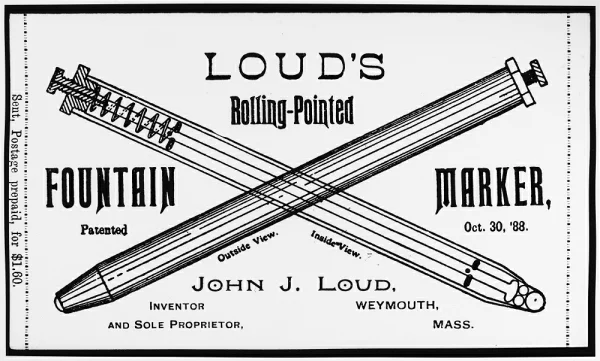
The oldest ballpoint pen dates back to October 30, 1888, when John J. Loud received the first patent for such a device. His objective was to devise a writing instrument capable of functioning on rough surfaces, such as wood and coarse wrapping-paper, where traditional fountain pens proved ineffective. Loud's creation comprised a small rotating steel ball affixed within a socket. While it effectively marked rough surfaces like leather, its utility for conventional letter-writing was limited due to its coarse nature, thus impeding its commercial feasibility. The contemporary ballpoint pen, as recognized today, evolved from a series of experimental endeavors, spurred by advancements in chemistry and the burgeoning precision manufacturing capabilities of the early 20th century. Early iterations of ballpoint pens encountered challenges such as erratic ink delivery, overflow, and susceptibility to clogging. Various solutions were explored in attempts to rectify these shortcomings, including the implementation of pressurized ink reservoirs driven by pistons, springs, capillary action, and gravity.
TheOldestThing tweet media
English
0
1
4
238
TheOldestThing
TheOldestThing@ThingOldest·
The oldest known stroller dates back to 1733, attributed to William Kent, an esteemed architect recognized for his design of the Royal Garden. Kent devised this contraption for the offspring of the Duke of Devonshire. It was commonly denoted as a pram, baby carriage, or perambulator. Kent's creation boasted an elaborate design, resembling a shell with a gracefully curved slipper toe at the forefront, constructed predominantly from wicker. Intricately fashioned snake-shaped harnesses were affixed, typically drawn by an animal akin to a horse-drawn carriage or dogsled. The incorporation of serpent motifs throughout the pram, inspired by the emblem of the Devonshire shield, further enhanced its regal allure. Dubbed the Chatsworth Serpent Pram, it garnered considerable attention, although its production remained limited due to the exorbitant costs and intricate craftsmanship involved. Noteworthy features included a crushed velvet seat, a red silk canopy, a sophisticated suspension system, two prominent snake heads protruding from the front, and the serpent-like harness. Notably absent was a handlebar for parental or caregiver guidance, as the intended mode of propulsion was through the pulling action of a goat or similar animal.
TheOldestThing tweet media
English
0
1
4
232
TheOldestThing
TheOldestThing@ThingOldest·
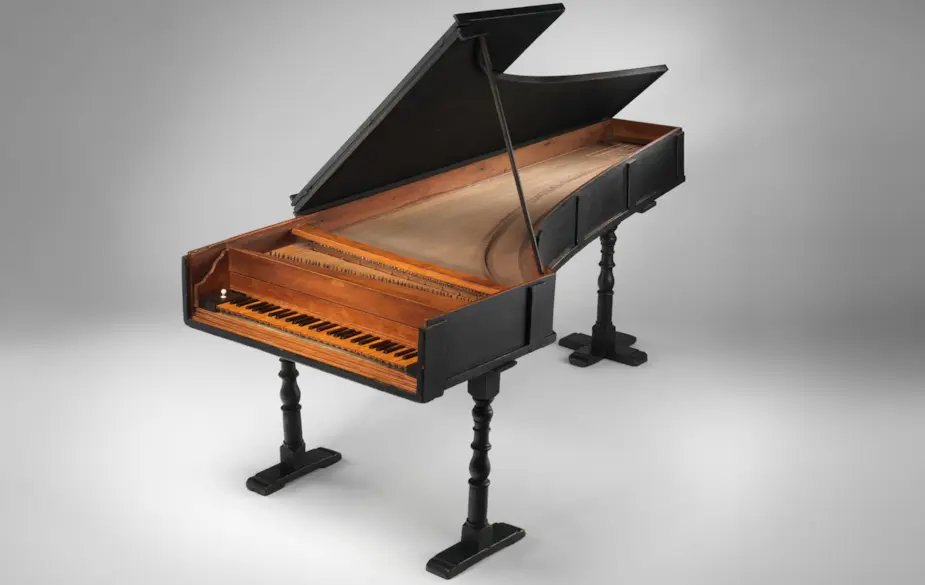
The oldest piano still in use, made by the instrument's inventor Bartolomeo Cristofori in 1720, was discovered in Florence. This remarkable piano is believed to be the first of its kind to have survived, boasting a distinctive sound that combined elements of earlier harpsichords with modern pianos. Resembling Italian harpsichords from the same period, it features a single keyboard and only 54 keys, in contrast to the 88 keys found on modern pianos. Its unique timbre, produced by thin strings, evokes both the resonance of a harpsichord and the richness of a modern piano. Bartolomeo Cristofori (1655–1731) of Padua, Italy, is credited with inventing the piano. Employed as the Keeper of the Instruments by Ferdinando de' Medici, Grand Prince of Tuscany, Cristofori's expertise as a harpsichord maker and his deep knowledge of stringed keyboard instruments facilitated the development of the first pianos. The exact date of Cristofori's initial creation of the piano remains uncertain.
TheOldestThing tweet media
English
0
1
3
242
TheOldestThing
TheOldestThing@ThingOldest·
The oldest marathon in the world, the Boston Marathon, had its inaugural race on April 19, 1897, following the debut of the first modern Olympics in 1896. Inspired by the revived marathon event at the Olympic Games, the founders of the Boston Marathon envisioned a similar race in the Boston area. Since then, the Boston Marathon has been held annually on the third Monday of April, coinciding with Patriot's Day. Tragically, the Boston Marathon was marred by a terrorist attack in 2013, known as the Boston Marathon Bombing, which claimed the lives of three individuals and left over 260 others injured. Despite the tragedy, the marathon persevered, and the following year's race went ahead as planned. To honor those affected, the 5,633 runners who were unable to finish the marathon after the bombing were guaranteed a spot in the 2014 race.
TheOldestThing tweet media
English
0
0
2
194
Curiosity
Curiosity@CuriosityonX·
What's the best movie of all time?
Curiosity tweet media
English
846
272
3.7K
485.3K
TheOldestThing
TheOldestThing@ThingOldest·
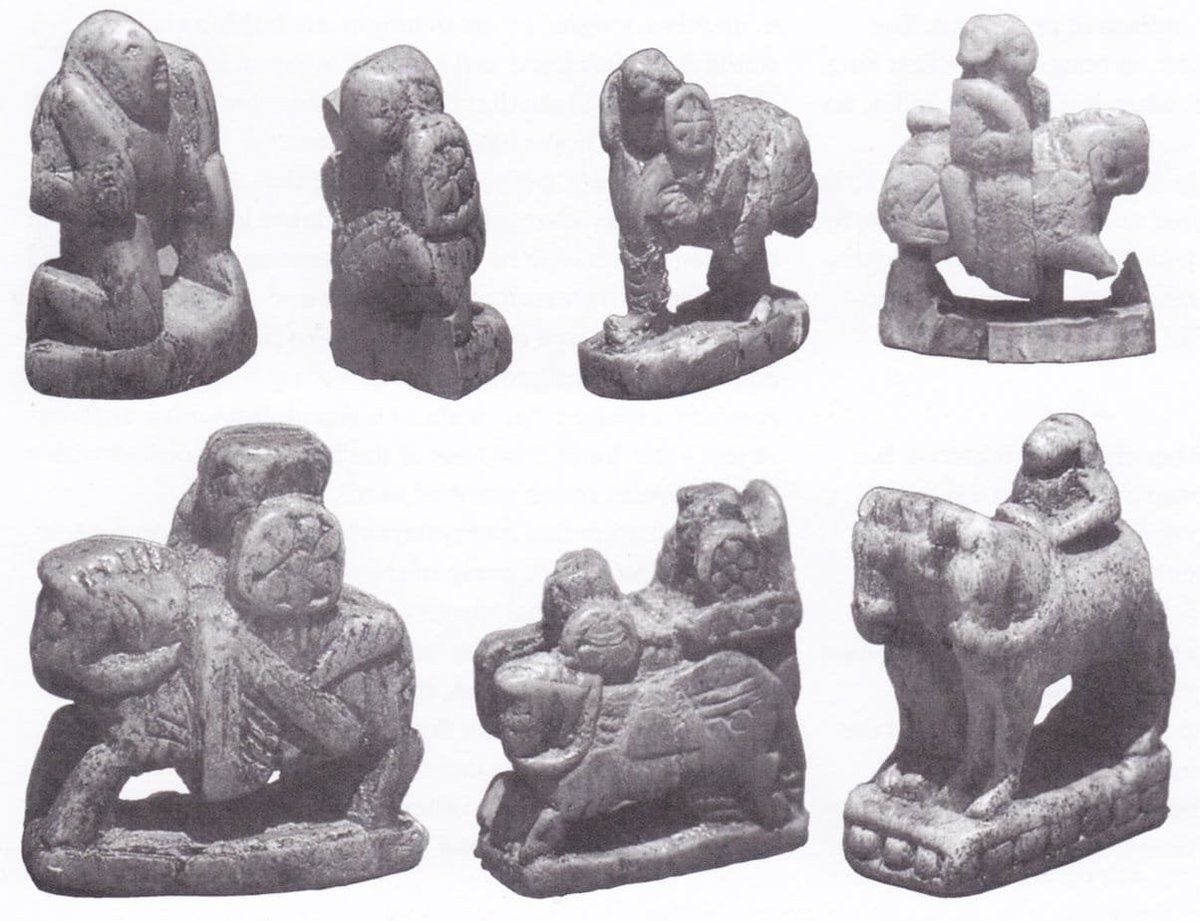
The oldest-known chess set, the Afrasiab Chessmen, dates back to around 700-760 CE. Unearthed among the treasures at the Afrasaib excavation site in modern-day Uzbekistan, these chess pieces are crafted from elephant ivory. Jurij F. Burjakov, the archaeologist credited with their discovery, dated them to the early 8th century. The set comprises seven pieces representing the earliest version of chess: two foot-soldiers (pawns) equipped with shields and short swords, a war elephant (bishop) carrying a rider in armor, a vizier (queen) accompanied by two horses, two mounted riders wielding sword and shield (knights), and a Shah (king) seated atop a three-horse chariot. Most art historians suggest that the chessmen were likely created during the waning years of the Sassanid Empire (224-651 AD), preceding the Arab conquest of Persia.
TheOldestThing tweet media
English
0
1
4
189
TheOldestThing
TheOldestThing@ThingOldest·
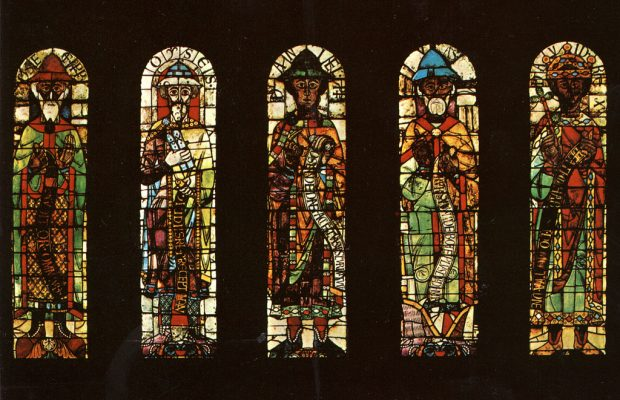
The world's oldest standing stained glass window is commonly believed to reside in Augsburg Cathedral, located in the Bavarian region of Germany, and is known as the Prophet Window. Situated in the southern clerestory of the cathedral, these stained glass panels are likely the oldest, depicting portraits of five prophets: David, Jonah, Daniel, Moses, and Hosea. It is speculated that these panels were originally part of a larger series, the remainder of which is now missing. Additionally, more recent stained glass windows adorn the church, illustrating various biblical scenes and narratives concerning the Virgin Mary. Despite enduring significant damage during World War II, Augsburg Cathedral's stained glass windows miraculously escaped destruction. The Lady Chapel suffered the brunt of the damage but was subsequently restored in 1987. Minor renovation work was carried out on the stained glass during the 18th century, deemed insignificant in comparison to the window's overall historical significance.
TheOldestThing tweet media
English
0
0
2
202
TheOldestThing
TheOldestThing@ThingOldest·
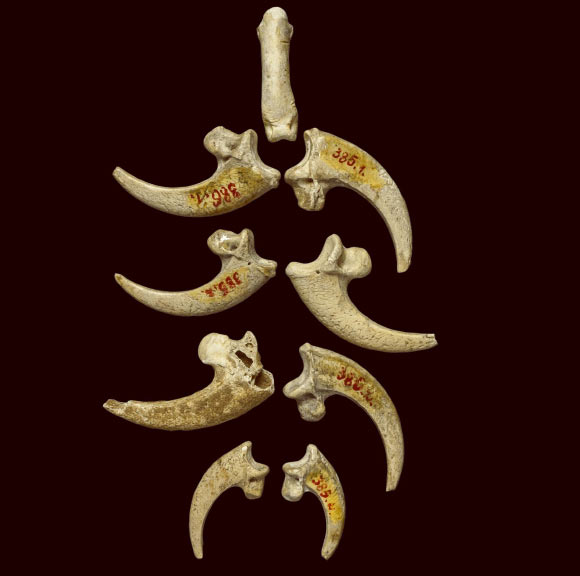
The oldest known jewelry, dating back approximately 130,000 years ago, is believed to have been worn by Neanderthals. Discovered at the Krapina Neanderthal site in present-day Croatia, this jewelry ensemble consists primarily of eight well-preserved talons from the white-tailed eagle (Haliaeetus albicilla). Notably, these talons were all sourced from a single timeframe at the Krapina site. Among the talons, four exhibit multiple cut marks smoothed along the edges, while all eight display facets or abrasions from polishing. Additionally, three of the largest talons feature small notches along the plantar surface at similar positions. These findings suggest deliberate modifications, possibly for symbolic or ornamental purposes. While some debate whether Neanderthals possessed symbolic capabilities independently or imitated such behavior from modern humans, the presence of these talons suggests that the Krapina Neanderthals may have utilized eagle talons for symbolic expression. This discovery challenges previous assumptions and indicates that Neanderthals may have engaged in jewelry-making as early as 130,000 years ago—approximately 80,000 years before anatomically modern humans appeared in Europe.
TheOldestThing tweet media
English
0
1
5
218
Science girl
Science girl@sciencegirl·
For the first time, scientists have successfully developed a functional semiconductor using graphene, opening the door to computer chips with enhanced performance and efficiency.
English
100
392
2.2K
291.9K
TheOldestThing
TheOldestThing@ThingOldest·
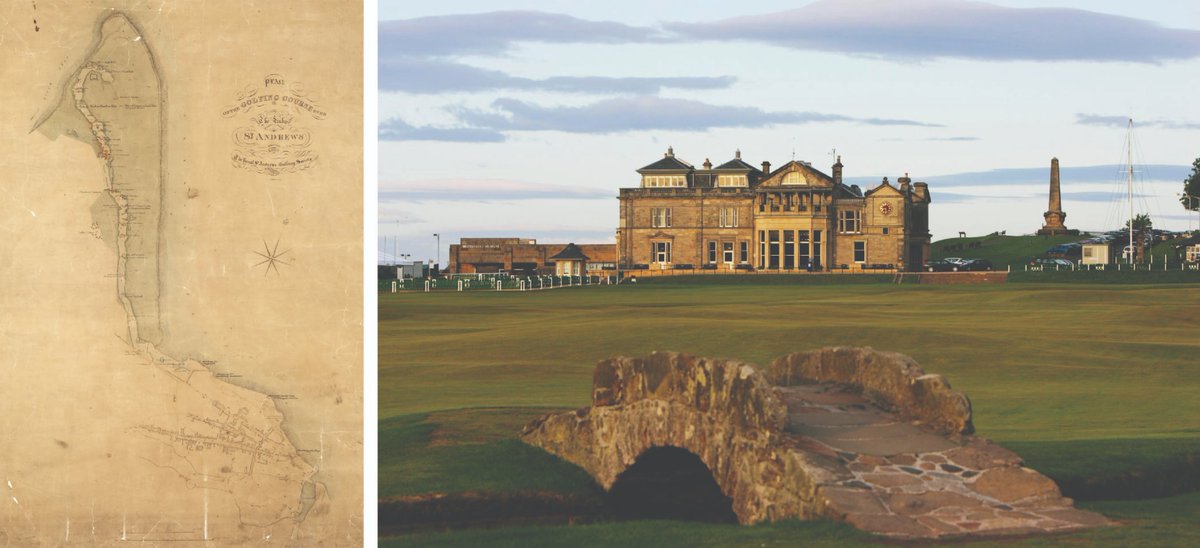
The oldest golf course in the world, known as the Old Course at St Andrews or affectionately referred to as the Old Lady or the Grand Old Lady, holds a significant place in golfing history. Situated over common land in St Andrews, Fife, Scotland, this public course is entrusted to the St Andrews Links Trust by an act of Parliament. Originally termed the "golfing grounds" of St Andrews, it wasn't until the opening of the New Course in 1895 that it acquired its current designation as the Old Course. Offering a total of seven courses, including the renowned Old Course, it features bunkers and undulating terrain across its 18-hole layout. Golf's popularity in Scotland surged until King James II banned the game in 1457, citing concerns that it detracted from archery practice among young men. This prohibition endured through the reign of James III until 1502 when James IV, himself an avid golfer, rescinded the ban.
TheOldestThing tweet media
English
0
1
4
193
TheOldestThing
TheOldestThing@ThingOldest·
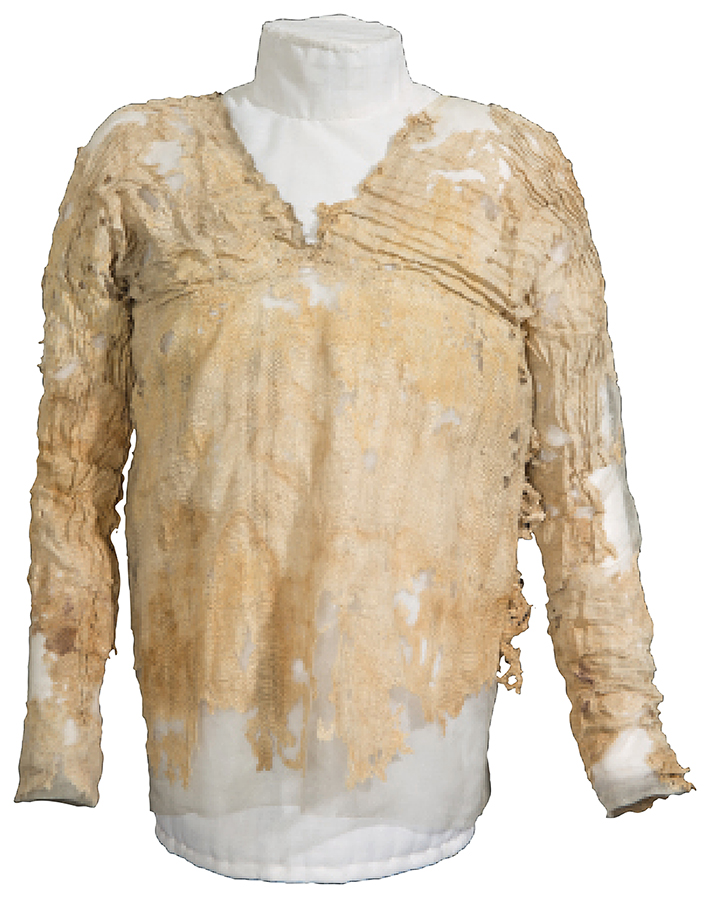
The oldest woven garment, known as the Tarkhan Dress, derives its name from the Tarkhan cemetery near Cairo, Egypt, where it was unearthed in 1913. Dating back over 5000 years, this linen attire stands as the world's oldest confirmed piece of woven clothing. With a weave featuring 22–23 warps and 13–14 wefts per centimeter, it displays a grey stripe in the warp, likely for decorative purposes. Measuring 76 centimeters wide, the main body of the dress is a straight piece of material, although the original length remains unknown due to a missing hem. Originating from the First Dynasty or Old Kingdom period, the garment, possibly a tunic, represents the earliest utilization of linen fabric in clothing. Notable features include tightly pleated sleeves and a yoke stitched to a skirt. Evidence of wear, such as distinct creasing at the elbows and armpits, suggests its use during life. Discovered inside out, some interpret this positioning as a deliberate funerary gesture, although initially excavated in 1913, the true significance of the find wasn't realized until 1977. Conservators at the Victoria and Albert Museum in London preserved the garment by mounting it on a backing of fine silk, allowing for its display in its original worn form.
TheOldestThing tweet media
English
0
1
4
192
Fascinating
Fascinating@fasc1nate·
Wearable tech from 30 years ago
English
65
88
783
250.7K
TheOldestThing
TheOldestThing@ThingOldest·
The oldest commercially available cellular phone was the DynaTAC, a series of cellular telephones manufactured by Motorola from 1983 to 1994. Approved by the U.S. FCC on September 21, 1983, the Motorola DynaTAC 8000X required approximately 10 hours for a full charge and provided 30 minutes of talk time. Featuring an LED display for dialing or recalling one of 30 phone numbers, it debuted on the market in 1984 with a hefty price tag of $3,995, equivalent to $11,253 in 2022. The name "DynaTAC" stemmed from "Dynamic Adaptive Total Area Coverage."
TheOldestThing tweet media
English
0
0
6
356
TheOldestThing
TheOldestThing@ThingOldest·
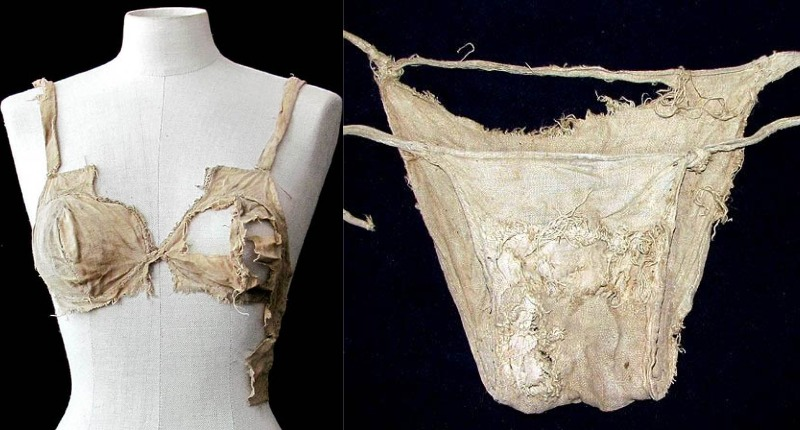
The oldest underwear ever found dates back to a remarkable discovery beneath the floorboards of an Austrian castle in the year 2008. Among the treasures unearthed within the confines of Lengberg Castle were four linen brassieres adorned with intricate lace, nestled amidst a trove of over 2,700 textile fragments. Dating back to a period between 1390 and 1485, these undergarments, whimsically dubbed "breast bags" in their time, represent a fascinating glimpse into the intimate apparel of centuries past. Each of these ancient bras boasts distinctive cups and shoulder straps, with two displaying a hybrid design reminiscent of both brassiere and short shirt, complete with a row of eyelets on the left side for lacing. Alongside these historic finds were several pairs of surprisingly modern-looking panties, intriguingly worn by men rather than women. In 1390, in China, construction began on the Forbidden City in Beijing. It would serve as the imperial palace for the Ming and Qing dynasties and is now a UNESCO World Heritage Site.
TheOldestThing tweet media
English
1
3
11
541
TheOldestThing
TheOldestThing@ThingOldest·
The oldest recorded nursery rhyme in the English language is "Ding Dong Bell." Dating back to at least 1580, this rhyme was documented by John Lange, the organist of Winchester Cathedral. In the earliest version, the unfortunate cat meets a grim fate in the well, and the ringing bells serve as a death knell. Jacke boy, ho boy newes, The cat is in the well, Let us ring now for her Knell, Ding dong ding dong Bell. (oldest version) Subsequent versions of the rhyme transform it into a morality tale. In these renditions, the mischievous Johnny Green tosses the cat into the well, while the virtuous Tommy Stout comes to her rescue, pulling her out. The rhyme takes on a didactic tone, clearly intended to impart the lesson that children should not be cruel to harmless animals. Ding dong bell, Pussy’s in the well. Who put her in? Little Johnny Green. Who pulled her out? Little Tommy Stout (later common version) In 1580, Francis Drake returns to Plymouth, England from his voyage of circumnavigation (westbound) on the Golden Hind.
English
0
0
3
244
TheOldestThing
TheOldestThing@ThingOldest·
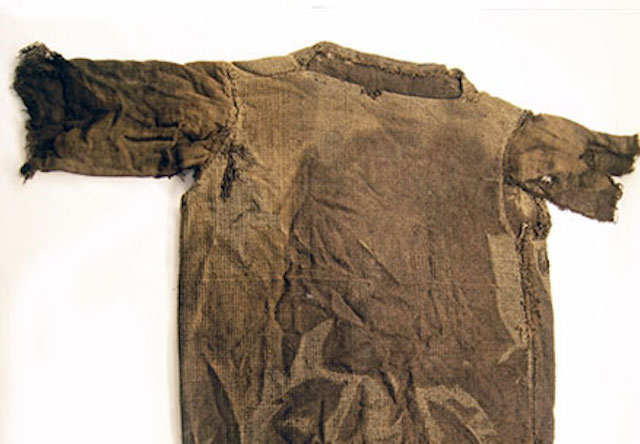
The oldest sweater in the world was discovered on a Norwegian glacier in 2013 and was dated to 1,700 years old. Crafted from lamb and sheep wool woven into a diamond twill fabric, this greenish-brown boatneck sweater was tailored to fit a man standing about 5-foot-9. Remarkably, the design of the sweater bears a striking resemblance to another garment unearthed in a bog over 150 years ago, suggesting its fashion may have been popular in Iron Age Europe. Evidence suggests that the sweater was both well-worn and meticulously cared for, evident from its two patches. Interestingly, researchers speculate that this sweater might be one of the oldest examples of upcycling; some believe it was initially a sleeveless tunic, with sleeves added during the second repair. Over 50 textile fragments have been recovered from the glacier, with many still undergoing dating and analysis. With the ongoing effects of global warming, experts anticipate that more ancient garments and accessories will continue to emerge in the coming years.
TheOldestThing tweet media
English
0
0
3
227