Solo Satoshi 🇺🇲@SoloSatoshi
Bitcoin mining was never meant to be controlled or locked away.
Bitcoin was born from open code, open verification, and the principle that anyone, anywhere, should be able to participate without asking permission.
For too long, Bitcoin mining hardware moved in the opposite direction. Closed designs. Closed firmware. Black-box systems. Hardware stacks that everyday miners could barely modify, or improve.
Then came Bitaxe.
What started as a bold experiment, a single-chip Bitcoin ASIC miner that anyone could study, build, flash, tune, and understand, has grown into a global phenomenon far bigger than one board on a desk. Bitaxe was never just about hashrate. It was about access. It was about taking mining out of the black box and putting it back into the hands of builders, hackers, home miners, educators, plebs, and curious people who believe Bitcoin infrastructure should be spread globally.
The open-source mining movement has come a long way since those early days. AxeOS and ESP-Miner have evolved from experimental systems into a polished mining firmware stack.
If you've kept up closely, it's been a massive leap.
The community went from "can we make one ASIC chip hash on an open board?" to a growing ecosystem of open hardware, open source firmware, web dashboards, apps, pools, performance tuning, different display support, device APIs, and hundreds of community-driven improvements.
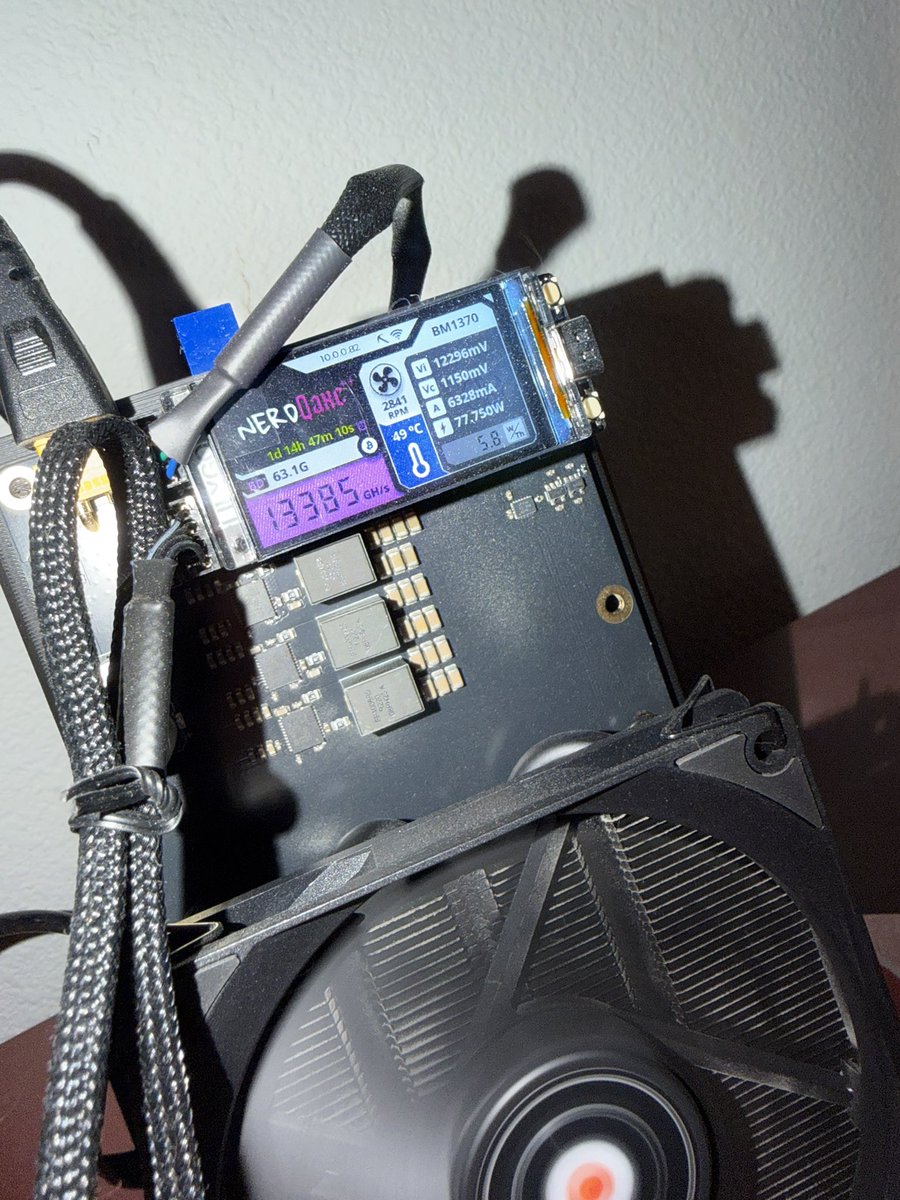
The hardware kept advancing in parallel, while continuing the same open-source, permissionless mining ethos. The Bitaxe Gamma Turbo pushed even further with a dual BM1370 open-source design running ESP-Miner, marking a major step toward modern multi-chip Bitaxe architecture.
That is what makes this moment significant. Bitaxe is no longer a single-chip experiment. It is growing into something more.
A movement with purpose, not a product.
The Bitaxe movement is powered by people who believe mining should be transparent. By contributors who would rather share schematics than hide them. By developers who ship firmware you can audit and improve, not encrypted blobs locked behind a vendor's signing key. By a community where firmware gets better because anyone can read it, test it, break it, fix it, and ship it. By the idea that the smallest miner on your desk can still represent one of the biggest ideas in Bitcoin: freedom at every layer.
This is how open-source mining wins. Not overnight. Not through hype. It wins through board revisions, firmware commits, community testing, late-night debugging, failed prototypes, better thermals, cleaner layouts, smarter firmware, and more builders showing up every day. Something new is on the way.
This Bitaxe was built on the shoulders of every open-source miner, firmware contributor, hardware designer, tester, builder, and believer who helped carry this movement from a single-chip experiment to a serious movement in Bitcoin mining.
The next chapter is about proving that open source mining is not a toy, not a side quest, and not a compromise. It is the path forward.
The next Bitaxe is built to remind the world what happens when miners stop waiting for permission.
The most powerful Bitaxe yet. Coming soon.