THINKPAWS

447 posts

THINKPAWS banner
THINKPAWS

THINKPAWS

@ThinkpawsOrg

Pioneering the Science of Coexistence Within People, Animals & Waste Systems | A Think Tank hosted @NCBS_Bangalore & @OxfordBiology | PI @_NishantK

Delhi | Bengaluru | Oxford Katılım Ekim 2021
284 Takip Edilen225 Takipçiler
THINKPAWS retweetledi
Prof Tim Coulson
Prof Tim Coulson@ProfExistence·
I thought I'd document my journey writing a book and getting it published. If you are interested in learning about how to do this, follow along. If you want highly polished additive videos, this feed isn't for you.
English
0
2
5
94
THINKPAWS retweetledi
छपरा जिला 🇮🇳
एक किलो पियाज अउर एक किलो टमाटर लेले अइहा।
हिन्दी
17
235
1.3K
67.4K
THE SKIN DOCTOR
THE SKIN DOCTOR@theskindoctor13·
“Bro, we feed dogs so they don’t become aggressive and bite people.” That’s not how canine behavior works. Dogs have core behavioral needs: physical activity, mental stimulation, social interaction, and instinct-driven behaviors like exploring, sniffing, and foraging. When these needs aren’t met, theor energy gets redirected into problem behaviors such as barking, chasing, restlessness, and territorial aggression. Earlier, these needs were naturally fulfilled. Dogs had to roam, search, and expend energy to find food, which regulated both their activity and behavior. You’ve replaced that with easy, concentrated feeding. The result isn’t calmer dogs, but dogs with unmet behavioral drives that now express themselves through chasing, barking, and guarding. Feeding points don’t pacify dogs; they create territorial clusters, a well-known trigger for aggression and bite incidents. And the bigger issue is the feeders' complete dismissal of human safety. Take this person, so convinced of his own “compassion” that he dumps food near a busy highway, where packs form and put drivers at risk. Try reasoning with him, and instead of showing compassion to your concerns, this compassionate man will come back with his NGO friends and threaten you.
English
282
1.8K
6.6K
384.5K
THINKPAWS retweetledi
Sam Fabian
Sam Fabian@samueltfabian·
🧵 1/6 Our new paper is out in Journal of Experimental Biology! We've been studying the curious dancing flight of male mayflies and why they do it. Spoiler: it's not just to impress females. 🪲⬇️
Sam Fabian tweet media
English
2
4
18
381
THINKPAWS retweetledi
Nishant Kumar
Nishant Kumar@_NishantK·
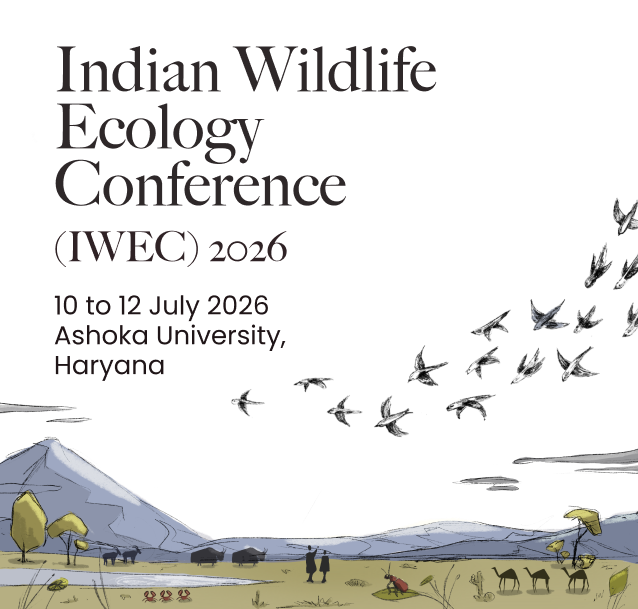
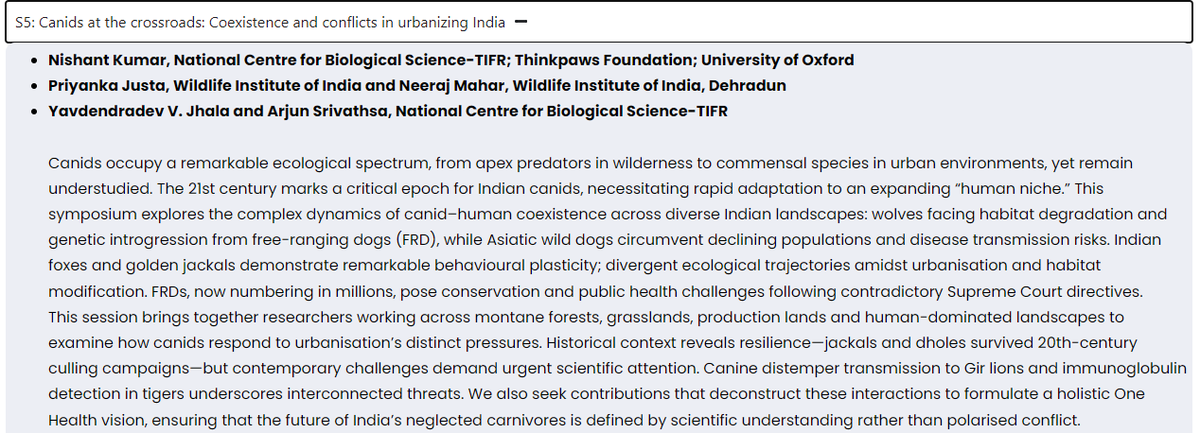
🦊 Submit your paper abstracts for Canids at the Crossroads🚨 (iwecindia.in/call-for-abstr…) – where wild meets urban, conflict meets coexistence. India’s canids are writing one of the most dramatic ecological stories of our time: 1) Wolves navigating genetic swamping and habitat loss 2) Dholes dodging disease in shrinking forests 3) Jackals & foxes thriving (or struggling) in farmlands 4) Millions of free-ranging dogs reshaping cities, public health, and One Health realities I’m thrilled to announce that Symposium #5: Canids at the Crossroads – Coexistence and Conflicts in Urbanizing India is now open for abstracts at the Indian Wildlife Ecology Conference (IWEC) 2026! Join @Priyanka Justa, Neeraj Mahar, @Yadvendradev Jhala, @Arjun Srivathsa and me at @AshokaUniv, Haryana (10–12 July 2026) to bring cutting-edge science, real-world solutions, and bold One Health thinking into the spotlight. Whether you work on wolves in the Himalayas, street dogs in megacities, jackal behavioural plasticity, or disease transmission at the wild–domestic interface — this is your stage. Deadline to submit your abstract: 31 March 2026 (just 10 days left!). Don’t miss the chance to shape the future narrative of India’s most adaptable carnivores. Link (iwecindia.in/call-for-abstr…) / DM me for the abstract template. Let’s turn data into action, CreIndia Foundation @epiharish @abi_vanak @anyadoc @Abhadra7 @kritcrit et al. #IWEC2026 #CanidConservation #UrbanEcology #OneHealth
Nishant Kumar tweet mediaNishant Kumar tweet media
English
0
10
45
2.6K
THINKPAWS retweetledi
Nishant Kumar
Nishant Kumar@_NishantK·
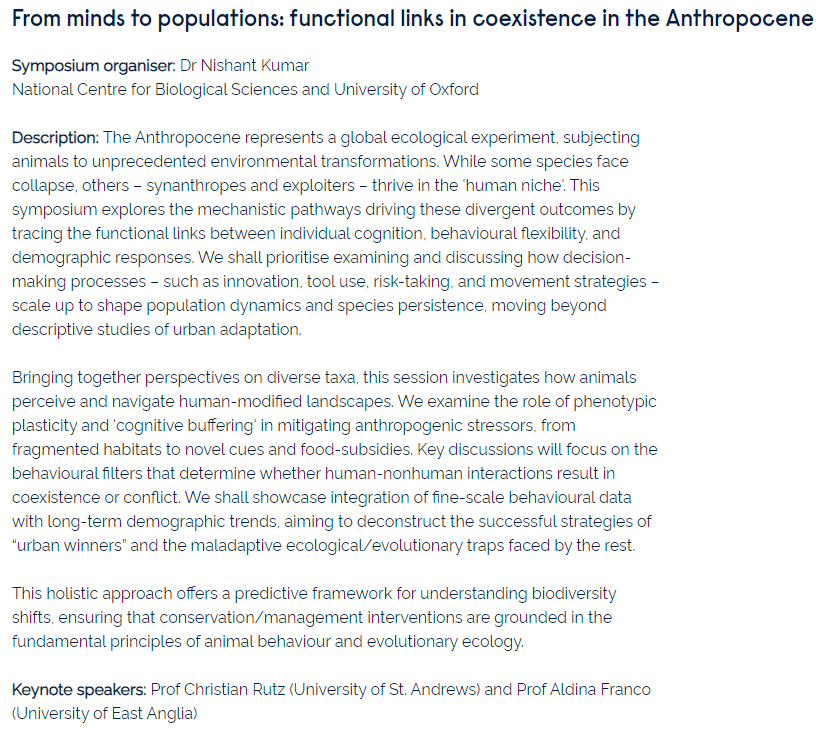
🚨 From #minds to #populations: 🚨 have you been puzzled by the big Q. of how quirks of individual variations are held together via population-level processes? [Abstract submission Deadline: 31.03.2026 aru.ac.uk/events/confere…] For instance, being 100% same as multiple individuals (e.g. in eusocial insects) may make species populations vulnerable to environmental change. However, having too much of variability and versatility might defeat the individual coherence in achievement of life history goals that maintain viable populations. In reality, life worlds constantly maintain ebb-and-flow about costs and benefits linked to the choice of being similar/dissimilar within a species. Now that I have your attention, why not submit an abstract for @ECBB2026 European Conference on Behavioural Biology (ECBB) organised at @AngliaRuskin, Cambridge from 1- 4 Sept? Organised by @Prof. @Claudia Wascher et al., we would love to have your abstract featured in the symposium, titled (check the image)
Nishant Kumar tweet media
English
0
1
4
231
THINKPAWS
THINKPAWS@ThinkpawsOrg·
@ProfExistence This is cool! Wait for the coexistence take from us, Tim... using the pet scenarios from Harry Potter. Perhaps it could make things simpler for layperson, and make casual dog feeders more responsible.
English
0
0
1
24
THINKPAWS retweetledi
Prof Tim Coulson
Prof Tim Coulson@ProfExistence·
I enjoyed the ecosystems depicted in the AVATAR movies, but there were a couple of things that bothered me. The evolutionary history of the Na'vi was a little bewildering. so I wrote an article about it for the Sloan Museum of the Moving Image scienceandfilm.org/articles/3728/…
English
1
1
2
113
THINKPAWS retweetledi
Nishant Kumar
Nishant Kumar@_NishantK·
Would you be able to walk through these #dogged streets, even if the #dogs were neutered? This begets the Q: Why deliberate feeding can increase territorial aggression in free-ranging street #dogs: After my recent The Conversation article (doi.org/10.64628/AB.4f…) on India’s street dogs, I’ve seen strong reactions—especially to the proposition that deliberate feeding can fuel aggression, like we found in Black Kites of Delhi that attack people on head during nesting season. This deserves a clear, scientific explanation. 1) This is not about blaming compassion. It is about understanding how dogs respond to resources in space. Here is what decades of behavioural ecology tell us: ▶️ Food that is predictable and localised becomes defendable. When dogs are fed repeatedly at the same spot (shops, houses, temples), food shifts from diffuse waste to a fixed resource. Fixed resources trigger territorial behaviour in social carnivores. ▶️ Territories emerge around feeding points, quite often in streets. Free-ranging dogs are not randomly aggressive. Barking, chasing, and blocking movement are most intense near feeding locations and along access routes to them. ▶️ More food ≠ calmer dogs. It often means more dogs. Increased food availability raises pup survival and pack density. More dogs in less space leads to competition, vigilance, and defensive behaviour—especially towards unfamiliar humans. ▶️ Dogs learn who “belongs” and who does not. Regular feeders are tolerated; passers-by are not. What humans perceive as “unprovoked aggression” is often context-specific territorial defence. ▶️ Urban infrastructure amplifies the problem. Narrow streets, parked vehicles, and high human traffic compress dog movement, forcing encounters that escalate defensive responses. Importantly, this pattern is seen repeatedly in cities, and less so in villages, where food is dispersed, territories are larger, and dog movement is less constrained. Compassion without population control, waste management, and spatial planning creates an ecological trap—for dogs and for people. If we genuinely care about animal welfare and public safety, we must move beyond emotion-driven debates and engage with how behaviour actually works. 📽️ I’m attaching a short field video that illustrates how aggression switches on and off with feeding contexts. 📄 For those interested, the article is here: theconversation.com/indias-60-mill… Coexistence is not kindness alone. It is ecology, space, and systems. #Thinkpaws
English
0
1
2
227
THINKPAWS retweetledi
PhD_Genie
PhD_Genie@PhD_Genie·
Literature review
English
49
1.2K
6.8K
253.3K
THINKPAWS retweetledi
Nishant Kumar
Nishant Kumar@_NishantK·
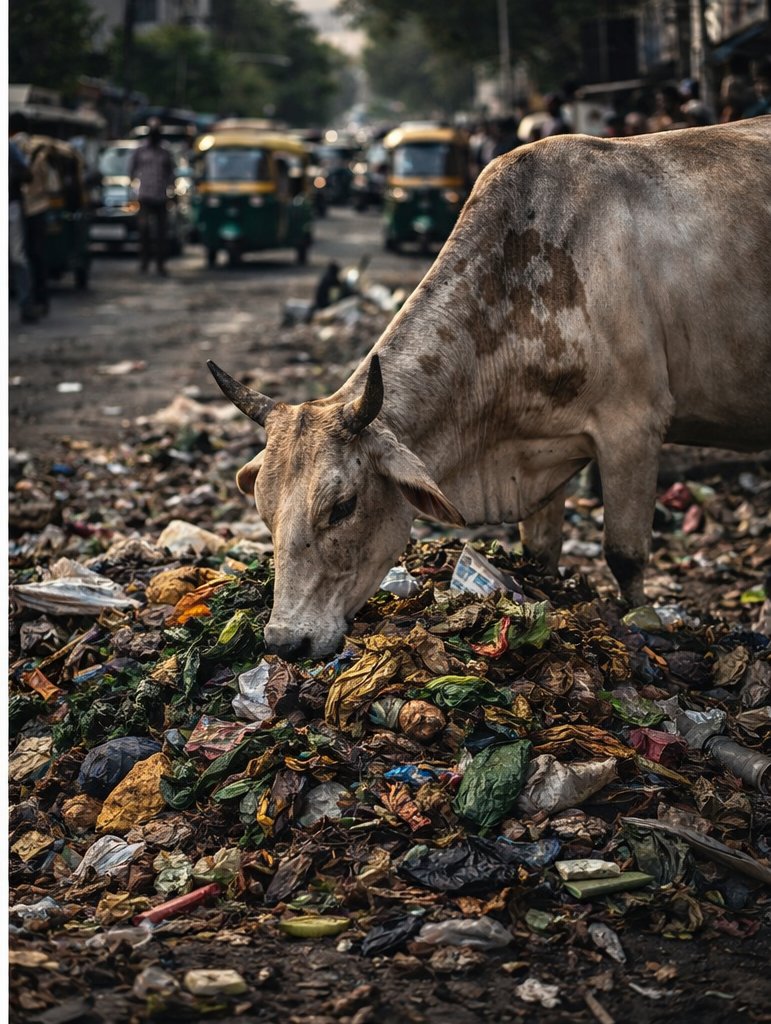
🚨 #Cowpolis in metropolis: 🚨 ~740 Tonnes waste/day. That isn't a landfill capacity. That is what Delhi's street cows eat every day. Calculations based on the fieldwork (road transects @25 locations in Delhi) of Akhilesh Singh & Sahul Kumar with THINKPAWS team [more sampling replicates are underway] suggest that ~50% of Delhi's cow population (~37,000 animals) are subsisting on our refuse. Your productive cows (NOT Strays) are removing 10% of the capital's daily wet waste. We often ask: "Why are there so many animals on the road?" The data gives the answer: Because roads (as urban commons) are spaces where waste based food-subsidies are dumped. To put that in perspective: That is equivalent to the payload of 150 fully loaded garbage trucks—removed from our streets, processed biologically, and returned to the ecosystem, every 24 hours. 🚨 But at what price? 1) For the City: It masks the failure of our waste collection systems. 2) For the Cows: It lures them into traffic corridors and exposes them to plastic impaction (ruminal disorders). 3) For Us: It creates a false sense of "balance" that is actually a public health and safety ticking clock. Kindness without systems is just cruelty in slow motion. We need to stop "thinking" about the problem and start engineering the solution: 100% Segregation at Source. Wait for a research paper on this topic, likely to be out in 2-3 months. DBT/Wellcome Trust India Alliance funded project based at National Centre for Biological Sciences & Department of Biology, University of Oxford. As long as our streets serve as open-air buffets of unsegregated waste, we are literally farming conflict. We are creating an ecosystem where cows must be on the tarmac to survive. #Policy #OneHealth #UrbanPlanning #India #Conservation #NatureCities Swipe to see the data breakdown ➡️
Nishant Kumar tweet mediaNishant Kumar tweet media
English
0
1
2
83
THINKPAWS retweetledi
Nishant Kumar
Nishant Kumar@_NishantK·
The issue of casual feeding of streets dogs takes new dimensions in Delhi’s streets. Dogs have enough that they discard milk in bowl.
English
0
1
2
90
THINKPAWS retweetledi
Nishant Kumar
Nishant Kumar@_NishantK·
🚨Fire "hawks" in Delhi.🚨 It is widely speculated that kites deliberately start fires in Australia (@LucyMAplin: we discussed this last April). At least the opportunistic responses to fires converge.
English
0
1
1
125
THINKPAWS retweetledi
Nishant Kumar
Nishant Kumar@_NishantK·
What Delhi sees and what it misses! ... did you wonder what and how the city suffices you protein requirement?
English
0
1
1
91
THINKPAWS retweetledi
Nishant Kumar
Nishant Kumar@_NishantK·
Dogs, afterall, have to use their faculties to process the environment. Based on what, when how and where, they bark, chase, bite, wag tail, etc.... a saga >20k years long extended game about sharing spaces. We are not sure how "wolves in streets" deal with the urban-its benefits and threats, etc. Extending the confidence about a few dogs in your locality as a silver bullet for all dog issues is not right, as you can see below. People and dogs are both adjusting to executing friendship in a new place. Do you think we can go on, like the old times? Read our research and popular items to explore on our website: thinkpaws.org/publications/
NCMIndia Council For Men Affairs@NCMIndiaa

For those who give long lectures that feed biscuits to Dogs and they will never bite you. Aunty Jee was a Dog Lover and she was feeding #StrayDogs as a daily routine. But even that did not save her from Dog bite. Now she has to take Rabies Injection.

English
0
1
2
90
NCMIndia Council For Men Affairs
For those who give long lectures that feed biscuits to Dogs and they will never bite you. Aunty Jee was a Dog Lover and she was feeding #StrayDogs as a daily routine. But even that did not save her from Dog bite. Now she has to take Rabies Injection.
English
293
1.9K
6.9K
484.4K
THINKPAWS retweetledi
Nishant Kumar
Nishant Kumar@_NishantK·
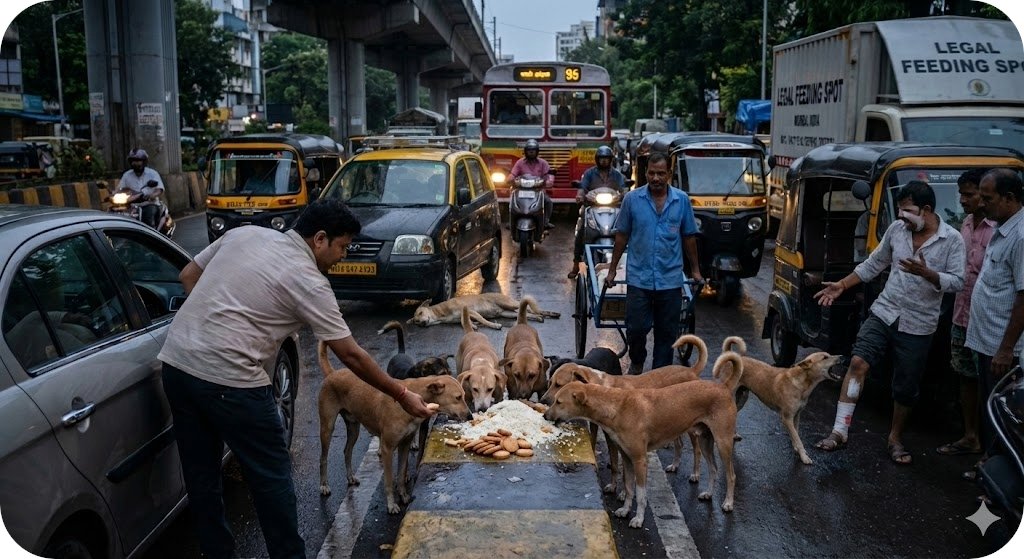
🚨 Do you wish to read one comprehensive article on #Dog crisis 🚨 in India that conveys: The #Chaos and Scale → The #Biology → The Evolutionary Trap → The Social Inequity → The #Behavioural Mechanism → The Legal Deadlock → The Solution. (Link to pre-print: doi.org/10.32942/X25921). I have just submitted my updated perspective, "The Indian Street #Dog Crisis and Multispecies Coexistence in Tropical Urban Futures". This manuscript comes at a critical juncture, as the #SupremeCourt of India navigates a deadlock between public safety and animal welfare. Our argument is simple but uncomfortable: Kindness, when divorced from ecology, becomes a trap. Here are the four pillars of our argument: 1). The Social Justice Imperative We explicitly argue that "kindness" is not economically neutral. In Indian cities, wealthy residents often "outsource" the risk of feeding—provisioning #dogs in public spaces while commuting in private vehicles. Meanwhile, blue-collar workers, pedestrians, and cyclists face the disproportionate consequences of territorial aggression. This is not just an animal issue; it is an issue of urban equity. 2). The Evolutionary Trap We move beyond the "nuisance" debate to define this as a biological failure. By creating resource hotspots near high-traffic zones, we have created an "ecological trap". We are literally luring 60 million animals into conflict zones, turning the act of feeding into a trigger for vehicular trauma and aggression. 3). The Irony of Bureaucracy We highlight the paradox of well-intentioned policy. As seen in Figure 3 of the manuscript (a legal feeding board in a green zone), we are attempting to legislate ecology. Bureaucracy creates "feeding spots," but Biology dictates that these spots become territorial flashpoints that crowd-out native wildlife and endanger the #dogs themselves. 4). Filling the #Scientific Void The current judicial deadlock exists because we are operating in an "empirical vacuum". We cannot solve a 21st-century ecological crisis with sentiment alone. This paper offers the missing framework: linking Robert Trivers’ evolutionary theory to modern urban planning to show why our current "feed and forget" model is failing both #humans and #dogs. It is time to move from reactive management to anticipatory urban ecology. DBT/Wellcome Trust @India_Alliance funded project hosted at @NCBS_Bangalore and @OxfordBiology. #UrbanEcology #NatureCities #PublicHealth #StreetDogs #SciencePolicy #India #NCBS #Oxford
Nishant Kumar tweet media
English
0
2
2
305