Sabitlenmiş Tweet

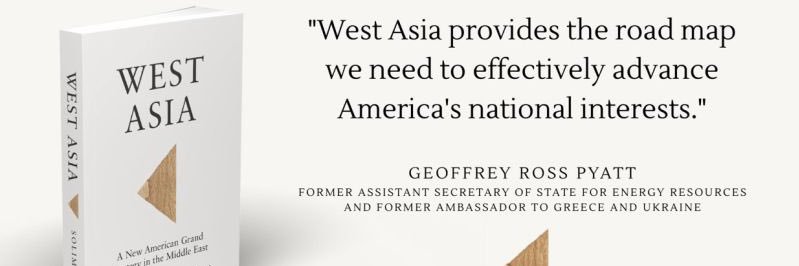
Big news to share: my book West Asia: A New American Grand Strategy in the Middle East is coming out in November 2025 with @politybooks.

English
Mohammed Soliman
54.3K posts
@ThisIsSoliman
Tech & Geopolitics & EMEA @MiddleEastInst. Fellow @FPRI & @TrilateralNA. Prev. @GUDiplomacy & @USIP & @georgetownmsfs. Book: West Asia (02/26)

"Lab compute 3x-es year over year. For a lab to 10x revenue while continuing to only 3x compute, some combination of the following 3 things has to happen: 1. Lab margins have to increase, 2. The price of compute has to increase, 3. Labs have to spend a greater fraction of their compute on inference. My understanding is that basically all 3 of these things have been happening..." "Consider the price at which Google and Anthropic are renting compute from SpaceX. Google is reportedly paying $900 million a month for 110K GPUs [at] ... roughly 2x the spot price per hour for those GPUs. And the current spot price is itself 40% higher than it was in February."

"Lab compute 3x-es year over year. For a lab to 10x revenue while continuing to only 3x compute, some combination of the following 3 things has to happen: 1. Lab margins have to increase, 2. The price of compute has to increase, 3. Labs have to spend a greater fraction of their compute on inference. My understanding is that basically all 3 of these things have been happening..." "Consider the price at which Google and Anthropic are renting compute from SpaceX. Google is reportedly paying $900 million a month for 110K GPUs [at] ... roughly 2x the spot price per hour for those GPUs. And the current spot price is itself 40% higher than it was in February."


There’s been a lot of speculation about where we stand on open-weights models. We’ve outlined our views in full here: anthropic.com/news/position-…




«كل شيء سيعود إلى نصابه التاريخي».. بوتين يقول إن أوكرانيا «ستخسر أراضيها الغربية عاجلاً أم آجلاً»
German officials are working behind the scenes to identify Chinese economic vulnerabilities that they could exploit if the EU finds itself in a trade war bloomberg.com/news/articles/…
Releasing the model weights and technical report of Kimi K3. Kimi K3 is our most capable model: a 2.8T MoE model with native visual understanding and a 1M-token context window. New model architecture: 2.5x the intelligence per unit of compute, not just more params. Alongside Kimi K3, we're opening up more of the stack behind it — high-performance attention kernels, MoE communication library, and infrastructure for running agent environments at scale. Model weights: huggingface.co/moonshotai/Kim… Tech report: github.com/MoonshotAI/Kim… Tech blog: kimi.com/blog/kimi-k3
We are announcing a long-term strategic partnership with NVIDIA. NVIDIA is making a substantial investment in SSI that will let us 10x our compute in the next 12 months. We reached the point where our research is worth scaling and with this partnership we will be able to. We are honored by NVIDIA’s conviction.

Heading to San Francisco to have a little chat with that “rogue agent”
Very happy to support this on behalf of Google. We have long benefited from open source, are big contributors to open source and in fact have consistently made open weights models with Gemma available from @GoogleDeepMind @demishassabis . Onwards!

For my first post, I’m sharing a letter @NVIDIA signed on why open models matter. AI will transform every industry, power every company, and be built by every country. Open models strengthen safety and cybersecurity, accelerate innovation and diffusion, and enable sovereignty. The world needs both frontier closed models and frontier open models. images.nvidia.com/pdf/Open-Weigh…

For my first post, I’m sharing a letter @NVIDIA signed on why open models matter. AI will transform every industry, power every company, and be built by every country. Open models strengthen safety and cybersecurity, accelerate innovation and diffusion, and enable sovereignty. The world needs both frontier closed models and frontier open models. images.nvidia.com/pdf/Open-Weigh…
Ukraine continues applying long‑range sanctions in response to Russian strikes. Last night, the warriors of our Defense Forces hit targets across different regions of Russia that are fueling this war. Once again, a plant in Kirov was struck – the one supplying components for the weapons Russia uses to attack our people. That’s about 1,200 kilometers from Ukraine’s border. Also hit were an oil refinery in Tyumen, a logistics facility in Yekaterinburg, and a fuel and lubricants depot in Rostov‑on‑Don. We also achieved very strong results with long‑range strikes in the Caspian Sea – including vessels used in military cargo shipments involving Iran, as well as a warship. Thank you for these results! Glory to Ukraine!

But the Chinese companies’ open-weight strategy also means wide enough adoption could negate the compute shortage itself, said Mohammed Soliman, a director at the strategic advisory firm McLarty Associates who focuses on global AI infrastructure. “Because it’s open source, you’re able to push this to data centers, to cloud providers, to users, to run their own versions of the models” and thus proliferate the models through those users’ compute, he said. It’s a flood-the-zone tactic that China has used effectively for other technologies. “This strategy is not coming out of nowhere; it’s also coming from Chinese industrial strategy around solar, around electric vehicles, around space—you release the model because you want the biggest amount of users to be using it,” Soliman added. “So yeah, they might be constrained today, but they’re not really constrained in the future.” @ForeignPolicy @Iyengarish @RyanFedasiuk foreignpolicy.com/2026/07/23/chi…