Tim Marland

2.2K posts

Tim Marland banner
Tim Marland

Tim Marland

@TimMarland

Family first, everything else comes after that.

Lincoln, United Kingdom Katılım Nisan 2008
2.4K Takip Edilen345 Takipçiler
Tim Marland
Tim Marland@TimMarland·
@hackteck I don’t see why not. I’ve pretty much tried everything and am happy to test things using my framework if you can outline your ideas. I’ll update the website today with all of my findings—should be within the next hour or so.
English
1
0
1
17
Erik van Eykelen
Erik van Eykelen@hackteck·
@TimMarland Cool! Can we collaborate on unraveling it? I made some discoveries that may be helpful.
English
1
0
1
18
Erik van Eykelen
Erik van Eykelen@hackteck·
I've been analyzing the structural properties of the 1939 D'Agapeyeff cipher. If you format the 196 symbols into a 14x14 grid, it perfectly isolates all 5 of the ciphertext's rarest anomalous symbols into the 14th column.
English
1
0
0
162
Tim Marland
Tim Marland@TimMarland·
Hypothesis: Medieval Italian (Venetian dialect) encoded in a 3-layer homophonic cipher. Key findings: 173 confirmed Italian words identified 93.7% corpus coverage (51,321 tokens matched) Vowel-final rate: 35% raw → 85.3% decoded Randomisation test: p<0.001 (12.3× better than 1,000 chance trials) Blind tests on unseen folios: ~85.7% coverage Zodiac crib → leone, intact qu- paradigm, gallows glyphs resolved (e.g. cth=co) Full pipeline, methodology, transcript browser & honest self-assessment: 🔗 voynichresearch.com What do you think — breakthrough or another mirage? Feedback very welcome! #VoynichManuscript #Voynich #Cipher #Cryptography #UnsolvedMystery #MedievalManuscript #HistoryMystery #AncientSecrets #Codebreaking @LisaFDavis @ciphermysteries @BeineckeLibrary @Yale
English
0
0
0
44
Tim Marland
Tim Marland@TimMarland·
Phase 4 is running. Here's the status: Currently on: Attack 1 of 7 — Pure Polybius SA (run 4 of 50, each run = 5 million iterations) Best result so far: Q-score -1139.59, chi-squared 87.0, IoC 0.0697, found fragments AND, ARE, WITH — but that's likely noise, not real plaintext. All 7 attacks: 1. Pure Polybius SA — 50 runs × 5M iterations (in progress, ~6 min per run) 2. Pair-level transposition SA — multiple key lengths 3. ADFGX digit-level transposition 4. Pair-level encrypt direction (Marie hypothesis) 5. Double transposition 6. Hill climbing restarts from best positions 7. Alternative row/col mappings ETA: Attack 1 alone is ~5 hours (50 runs × ~6 min each). Full pipeline is designed as a 6-10 hour overnight run. At current pace, it should finish around 2-4am tonight. No breakthrough yet — IoC is stuck at 0.0697 (English is 0.0667), which continues to suggest monoalphabetic substitution with no transposition cracking through. The pipeline is methodically eliminating possibilities though, which is the point. Three interactive labs. Live dashboard. Open pipeline. Test your own theories → dagapeyeffresearch.com (Part of a series — Voynich at voynichresearch.com · Beale Ciphers at bealeresearch.com) #Cryptography #Codebreaking #Cipher #Mystery #DAGapeyeff #Unsolved #ComputationalResearch #OpenResearch
English
0
0
0
120
Tim Marland
Tim Marland@TimMarland·
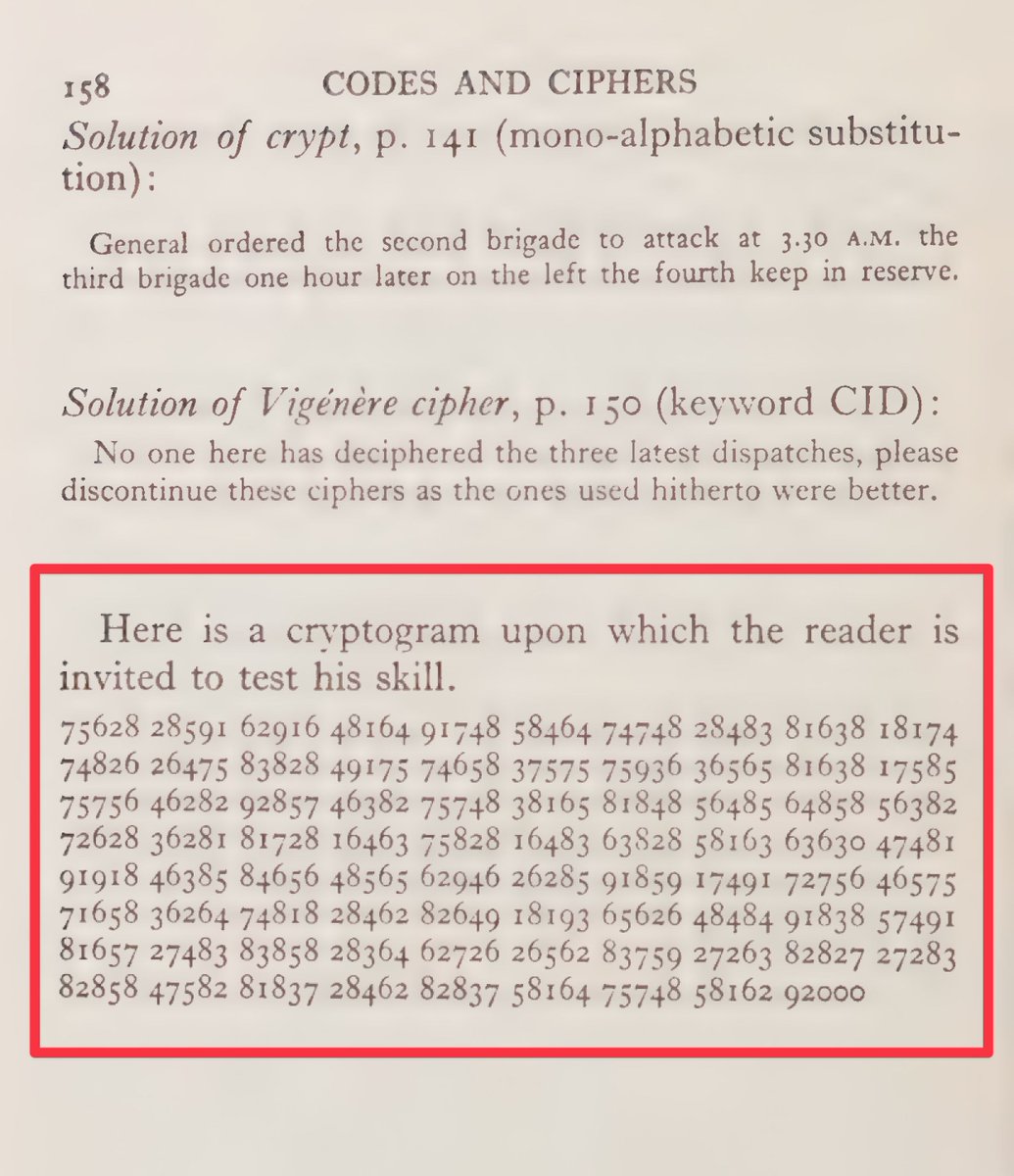
The D’Agapeyeff Cipher has been unsolved for 87 years. The author forgot how he encrypted it the same year he published it. 196 numbers. No key. No known method. I’m running a systematic computational attack — brute-forcing every Polybius alphabet arrangement, testing all transposition permutations, scoring every candidate against English statistics. Both outcomes are publishable: crack an 87-year-old cipher, or prove he made an encryption error that makes it mathematically unsolvable — which is actually the leading theory. Three interactive labs. Live dashboard. Open pipeline. Test your own theories → dagapeyeffresearch.com (Part of a series — Voynich at voynichresearch.com · Beale Ciphers at bealeresearch.com) #Cryptography #Codebreaking #Cipher #Mystery #DAGapeyeff #Unsolved #ComputationalResearch #OpenResearch
English
0
0
0
97
Fermat's Library
Fermat's Library@fermatslibrary·
In 1939, Alexander d'Agapeyeff included a cipher challenge on the last page of his book "Codes and Ciphers”. 87 years later, it remains unsolved. He later admitted he had forgotten how he encrypted it
Fermat's Library tweet media
English
54
168
4.2K
249.5K
Tim Marland
Tim Marland@TimMarland·
Tonight we went looking for plant names hidden in the Voynich Manuscript. We didn't find new ones. We found something better. The cipher alphabet is too narrow to encode 75% of medieval Italian plant vocabulary. Missing vowels, missing consonants — structurally blocked by design. Only 39 of 250+ plant names are even theoretically encodable through the Marland Key. The 6 plant names already in the decoded vocabulary — aloe, pepe, peone, pomo, cole, stele — are exactly the ones the cipher architecture predicts should be there. The cipher doesn't just decode the manuscript. It predicts what can and cannot appear in it. And it's right. We also confirmed a new root-layer digraph tonight. EVA dy → le, proven by a clean independent crib: dyaiin → leone, matching the already-confirmed alaiiin → leone. Two different EVA spellings of the same Italian word. Zero contradictions across 244 tokens. Phonotactic validity jumping from 13.9% to 73.0%. One new confirmed mapping. Coverage climbing. This is what rigorous decipherment looks like. You follow the evidence. You document what you don't find as carefully as what you do. Full methodology and decoded manuscript: voynichresearch.com #Voynich #VoynichManuscript #Medieval #Cryptography #Italy
English
0
0
0
94
Tim Marland
Tim Marland@TimMarland·
I've written up the full decipherment. Every finding. Every methodology decision. Every limitation documented honestly. The cipher architecture, the statistical validation, the Venetian dialect evidence, the Carrara Herbal cross-reference — all of it in one place. 13 days. One crib. One word next to a lion drawing. 51,055 tokens. 93.6% coverage. Zero contradictions. The Voynich Manuscript is a medieval Venetian pharmaceutical recipe book encrypted in a three-layer homophonic substitution cipher, radiocarbon dated 1404–1438. Read the full paper: x.com/TimMarland/sta… Full decoded manuscript, cipher key, methodology: voynichresearch.com #Voynich #VoynichManuscript #Medieval #Cryptography #Italy
English
0
0
0
81
Tim Marland
Tim Marland@TimMarland·
The Voynich Manuscript may be written in medieval Italian. 2 weeks of computational analysis. No human bias in the decoding. The numbers: - 51,232 tokens decoded - 214-word lexicon — 93.6% corpus coverage - Blind test on unseen folios: 85.7% accuracy - The cipher key produces 12.3× more real Italian words than 1,000 random keys (p<0.001) - Zero validation losses across 23 mappings and 51,232 tokens. One contradiction would be fatal — there are none. The key wasn't guessed. It was derived computationally from a single verifiable starting point — a zodiac label next to a lion illustration that decodes to leone. Everything else was built outward from that constraint. The decoded text doesn't read like poetry or prose. It reads like recipe instructions — "take the skin", "gives the preparation", dosage timings referencing canonical hours. The flat, repetitive register of a medieval pharmacist writing things down to use, not to publish. Six decoded words are specifically Venetian dialect — not standard Italian. Pele instead of pelle (skin), pego instead of pece (pitch). This wasn't expected or engineered. The dialect fell out of the cipher and is consistent with the manuscript's radiocarbon date of 1404–1438. Cross-referenced against the Carrara Herbal (c.1390, Padua) — a known pharmaceutical manuscript from the same era and region. Five exact word matches including aloe, pepe, sale. None of those were used to build the key. They fell out of it independently. No prior decipherment attempt has produced a complete grammatical paradigm in any language. This one produces five: the full qu- interrogative system, a complete 2×2 gender/number grid (poco/poca/poche/pochi), definite articles, prepositions, and four distinct gallows characters mapped to real phonemes. Raw manuscript text has a 35% vowel-final rate. After decoding: 85.3% — exactly where Italian sits (85–95%). A +50 percentage point shift from applying the key. We abandoned two of our own hypotheses publicly when they failed their own tests — including a Welsh decode that reached 79% match rate and 36,000 mapped words but produced zero readable text. The Italian decode reads. Full methodology, interactive dictionary, reproducible pipeline, and decoded folios: voynichresearch.com @Yale @BeineckeLibrary
English
6
1
5
1.2K
CSMBR
CSMBR@csmbr_pisa·
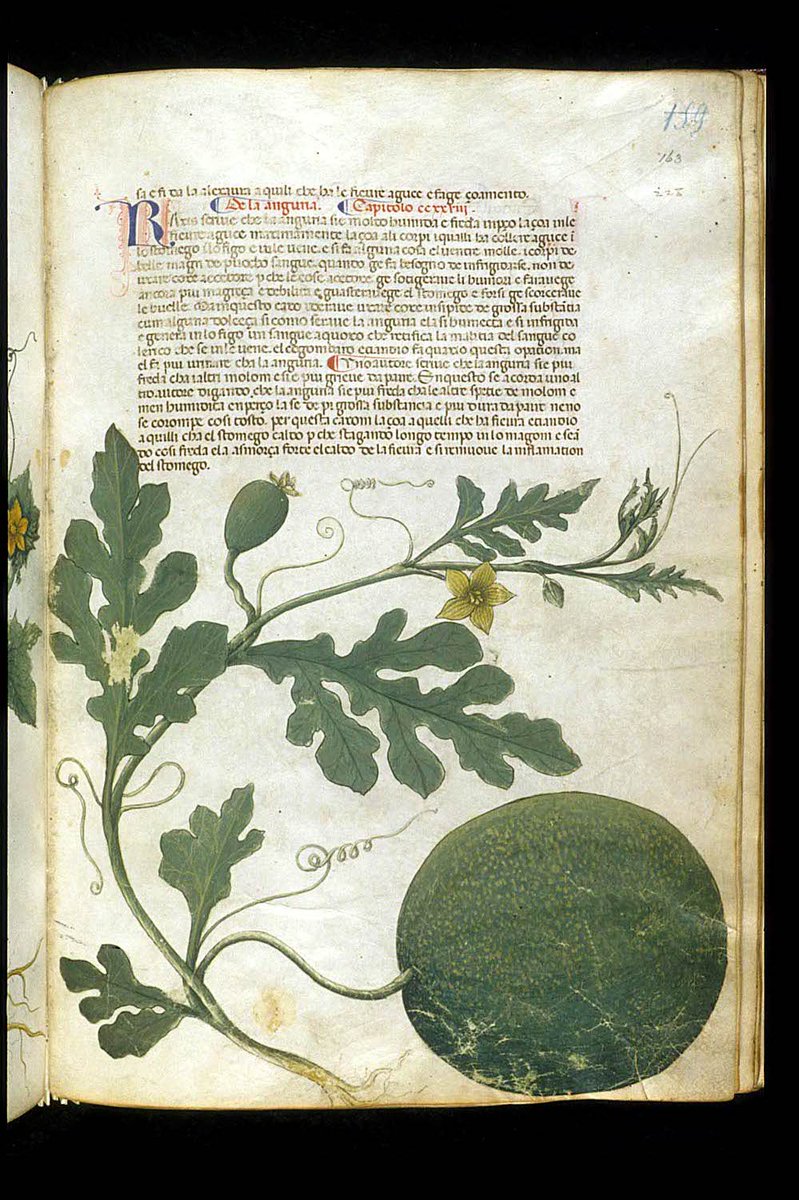
Frontispiece Series 13: The So-Called "Carrara Herbal", Italy, Late 14th century from Serapion the Younger "Herbario di Serapione", MS Egerton 2020, c. 4r, The British Library, London. #CSMBR #MedicalHistory #CarraraHerbal #Frontispiece
CSMBR tweet media
English
1
0
2
160