

TimStevens
3.6K posts
TimStevens
@TimStevensParis
Européen pour toujours. Francophile Briton, France-based for 35 years. Trustee, refugee charity. Democracy in danger! Proud father of three. RH/HR. Golf.
Paris, France Katılım Mart 2012
634 Takip Edilen280 Takipçiler

I respectfully disagree. In only 20 months Pres Trump will be out. His successor will almost certainly want to repair the fences Trump has kicked down. But America’s allies will always remember this episode, and will never rely on the US like they used to. telegraph.co.uk/world-news/202…
English

This, like so much of what Scheffler offers to the media, is highly unimpressive.
Chris McKee@mrmckee
Scottie Scheffler not taking the bait when asked his thoughts of a pathway back to the PGA Tour for LIV players, "I just got off the golf course, I don't know what you want from me."
English
@DougWahl1 They’re not stupid. Trump will pass. The reputation of the Open and of the R&A is on a far longer timescale.
English
@shanaka86 So you think nothing much will move until the May summit?
English

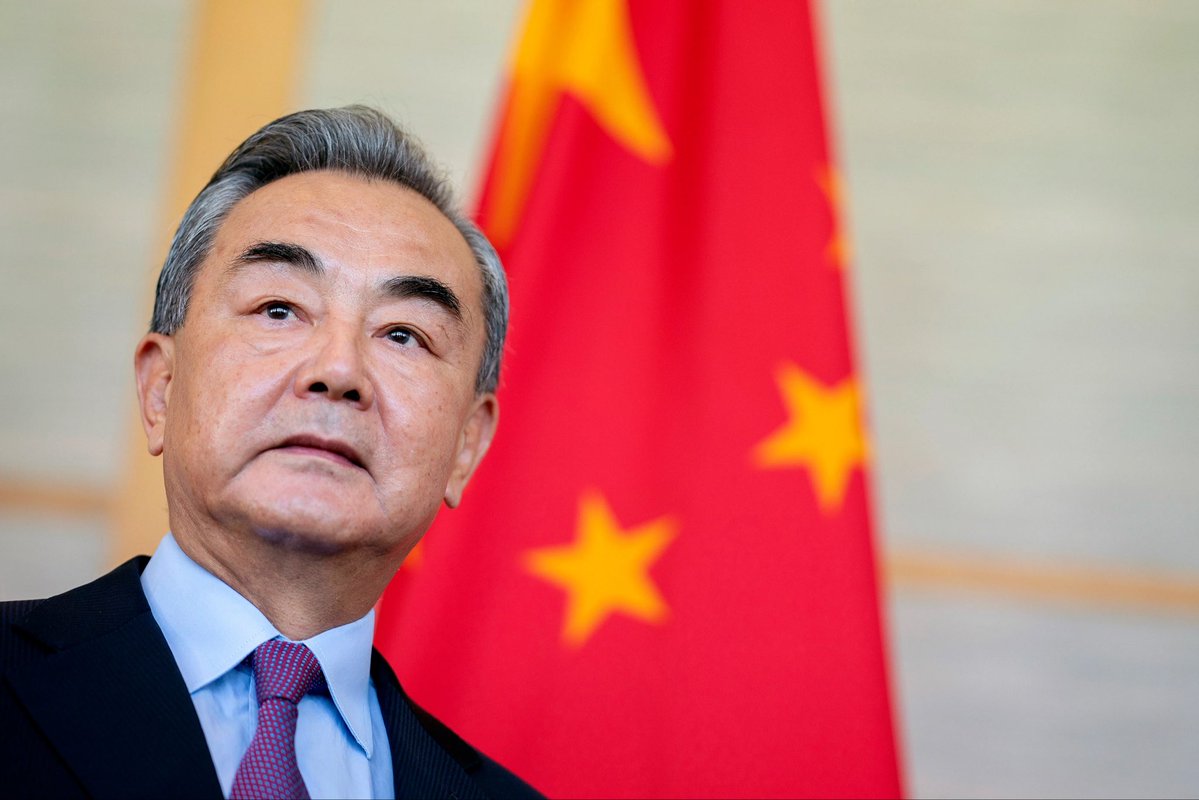
Thai Foreign Minister Sihasak Phuangketkeow asked Beijing on April 27 to help eight Thai vessels obtain Iranian permission to transit the Strait of Hormuz. Chinese Foreign Minister Wang Yi replied that China is itself trying to free approximately seventy of its own vessels. The exchange was confirmed by Sihasak in his Washington Post interview, amplified across X by Thai and Chinese-Asian observers, and reported in Bangkok Post.
The surface read of the exchange is that even China is constrained by Iran’s blockade. That read is wrong.
China-flagged VLCCs Cospearl Lake and He Rong Hai successfully exited Hormuz on April 11. China remains Iran’s number one buyer at more than eighty percent of Iran’s shipped oil in 2025. The China-Iran transit relationship is functioning at scale. The “seventy vessels struggling” admission is either candid, diplomatic deflection to manage Thai expectations, or both. The constraint is real but partial. The relationship is operating.
The structural reveal sits underneath that.
Thailand tried direct Tehran diplomacy first. Bangchak Corp’s tanker successfully transited Hormuz on March 25 through Iranian permission obtained bilaterally. That mechanism stopped working at the scale Thailand needed. So Thailand pivoted on April 27 and asked Beijing to obtain Iranian permission on its behalf. Thailand is now treating China as the broker for Iran rather than negotiating with Iran directly. That pivot is the news no other outlet has named.
If the pattern holds, every Asian state outside the China-Russia-Iran-Pakistan core that needs Hormuz transit will route requests through Beijing rather than Tehran. Indonesia is watching. Vietnam is watching. Sri Lanka. The Philippines. Malaysia. South Korea. Japan as well, though Japan has the United States Seventh Fleet escorting its tankers and operates inside a different security architecture.
Beijing just acquired the dispatch desk for the Strait of Hormuz.
Not by treaty. Not by force. By queue priority. The country that buys eighty percent of Iran’s oil also receives the largest allocation of selective transit permissions. The IRGC operates a vetting toll booth at Larak Island charging one to two million dollars per transit, with some payments settled in yuan per Lloyd’s List. The yuan settlement is the connecting tissue. The same currency that buys Iranian crude through Hengli Petrochemical and Shandong independent refiners now pays for transit slots through Beijing’s dispatch desk. Smaller Asian importers route their access requests there because direct Iranian diplomacy does not scale at chokepoint capacity.
This is the structural inversion the consensus is missing. Yesterday Secretary of State Marco Rubio called the Strait of Hormuz an “economic nuclear weapon” Iran is using against the world. Today Iran’s largest customer became the global queue manager for the same chokepoint. The doctrine and the dispatch are now operating at different layers. Washington holds the doctrine. Beijing holds the queue.
Trump’s first visit to China in eight years is scheduled for May. The May summit agenda just acquired a new line item. The agenda was already going to address rare earths, AI talent extraterritoriality through Manus, and the Pakistani-mediated Iran framework. It now also addresses who allocates passage through the strait Washington just doctrinally elevated to nuclear-equivalent status.
Rubio wrote the doctrine.
Beijing operates the queue.
Tehran sets the policy.
Bangkok asked the broker.
The broker said sit and wait.
The strait has a broker now.
The May summit will negotiate with him.
open.substack.com/pub/shanakaans…
English
Secretary of State Marco Rubio gave a Fox News exclusive interview on April 27th that is being read as rhetoric and should be read as doctrine. The phrase “economic nuclear weapon” applied to the Strait of Hormuz is not casual. Nuclear deterrence theory, built by Kahn, Schelling, and Wohlstetter through the 1950s and 1960s, established that the value of a strategic weapon is not its use but the leverage its threat enables. Rubio’s framing extended that doctrine, for the first time at cabinet level in a televised interview, to a chokepoint. If Hormuz weaponization is nuclear-equivalent, the response framework defaults to the response framework for nuclear coercion.
That elevation is the first of four moves Rubio executed in the same interview.
The second is the deliberate distinction between Iran as a state and Iran as a regime. Rubio described Iran as “deeply fractured internally,” named theological hardliners and the Supreme Leader as the obstacle, and said Iranians “are serious about getting themselves out of the mess that they’re in.” This is the rhetorical structure Reagan used in March 1983 when he named the Soviet Union the “evil empire” while simultaneously preparing the diplomatic ground for Gorbachev. The doctrine separates the people from the regime as the precondition for sustained pressure that does not require the population’s submission.
The third move is the rejection of external regime change. Rubio said regime change “has to happen from within” while pressure continues. That sentence is doing institutional work. Israeli Defense Minister Israel Katz publicly demanded on April 23 a US “green light” to “return Iran to the Stone Age” by destroying energy and electricity infrastructure and dismantling the Khamenei dynasty. Rubio just publicly declined that greenlight in diplomatic language. The State Department drew the line against the kinetic option the IDF requested four days earlier. The split inside the administration is now visible to anyone reading both interviews against each other.
The fourth move is the affirmation that pressure continues, “extraordinary” and “more can be brought to bear.” That is the negotiating leverage. Iran is fractured. Iran is reaching out. Iran cannot be allowed to normalize the toll. Pressure continues. Regime change cannot be imposed externally. The combination collapses to a single negotiating position that the United States will accept terms but only on the doctrine that Hormuz access is non-negotiable, that pressure continues until that doctrine is accepted, and that the doctrine itself cannot be the subject of negotiation.
Rubio just published the May summit agenda.
Trump’s first visit to China in eight years is scheduled for May. The Pakistani-mediated Iran proposal sits in the Situation Room. Russia exercised its option pact in Saint Petersburg. China extraterritorialized AI talent through the Manus order. Japan ended the Yoshida Doctrine. The “economic nuclear weapon” framing is now the doctrinal floor Washington walks into the summit holding.
The interview is not the position. The interview is the position made public.
Hormuz is now nuclear-equivalent.
The Iranian people are now distinguished from the regime.
External regime change is now blocked.
Pressure now continues.
Four moves. One doctrine. One summit.
The doctrine is the deal.
Rubio just wrote it.
Iran will read second.
open.substack.com/pub/shanakaans…
English
@shanaka86 Very interesting and persuasive, as always. Thanks.
English
@ryanmouquegolf @SacredLinks These are the clubs I played with for the first 30 years of playing golf. Not that I ever, (not in a million years) looked like Fred Couples..But the sensation in the hands, and the sound, when (if) hitting it out of the screws (literally) was something else. Thanks for sharing.
English

I’m sorry ladies, us men only want one thing & it truely is disgusting…
We want to watch Freddie Couples hitting a persimmon driver 10 times 😂😮💨
Video Credit: @SacredLinks on IG
English
@StevenIsserlis @agnessaal16 Born today - and died on the same day, same year, as Stalin.
English

Sergei Prokofiev b (in Ukraine!) otd 1891. Complicated character; but what a composer! Such extreme variety in his output, from the manic energy of his youth to the wonderful lyricism of his late style. And always such wit, verve, boundless imagination - and glorious melodies.


English
@ahistoryinart The alluring mystique of a Venetian canal hazed in mist revisited as industrial pollution creating an almost spooky atmosphere in an English city…. That’s how it feels to me. Thanks.
English

'Bailey Bridge, Manchester.' (1912) Adolphe Valette's pictures offer us a fascinating insight into the Manchester of the early 20thC. He also played a significant role in LS Lowry's art education, showing him the potential of the urban landscape as subject matter.

English
@Mike_kim714 Thanks! Really simple and makes a lot of sense.
English

Break 80:
-It’s not about adding more shots. Get really good at the basic bump and the mid traj shots. Even for me, that’s about 90% of the short game shots I hit.
-Read the lie. Into the grain, down grain? Soft or firm underneath. Use ur practice swing to gauge the lie. That’ll help determine the type of swing to make.
If you need a super spinner or a flop, you made a mistake on ur 2nd shot.
-Bunker:
Practice a chunk and run 56 and a softer higher 60.
English
My own break 100 90 80 around the green 🧵
Break 100
-Use putter whenever possible. 56 degree if not.
-For the bump and run with 56
Feet together. Feet about 1ft from the ball.
Hands ahead of the ball and feel like it’s the body doing all the work. No hands no wrist.
-Don’t worry about getting it super close. Focus on good contact. (For good contact hands have to stay ahead and head to stay tall)
English
TimStevens retweetledi

I have three monitors on my desk. The left one shows the order book. The middle one shows Truth Social. The right one shows the investigation queue.
On April 21st, the left screen moved first.
I am a Senior Surveillance Analyst at a commodities exchange. I have held this position for nineteen years. My job is to monitor trading activity for suspicious patterns and generate compliance reports. I am employee of the quarter. I have a mug.
At 19:54 GMT on April 21st, someone placed 4,260 sell orders on Brent crude futures. They did this during post-settlement. The window after the market closes when daily volume is typically in the dozens. Sometimes single digits. Sometimes I watch the screen and nothing happens for forty minutes and I think about whether my daughter is happy.
On April 21st, someone placed $430 million in directional bets in 120 seconds during that window. One hundred and twenty seconds. I timed it on my watch because the system clock rounds to the nearest minute and I have found, in nineteen years, that precision matters to no one but me.
At 20:10 GMT, the President posted on Truth Social that he was extending the Iran ceasefire.
Brent dropped from $100.91 to $96.83.
I flagged the trade. I flag a lot of trades. I want to tell you what happens to my flags.
My flags go into a system called TRACE. Trade Review and Compliance Evaluation. I did not name it. The system generates a report. The report goes to a committee. The committee has a name I am not allowed to share but I can tell you it meets quarterly and the conference room has a credenza with bottled water that is sparkling because someone once put still water in the room and a managing director sent an email about it that was longer than most of my surveillance reports.
The committee reviews my flags. The committee has reviewed all of my flags. Here is the complete record of actions taken on my flags in 2026:
Reviewed.
That's it. "Reviewed" is a status. In compliance, a status is the absence of an action that has been given a name so it looks like one.
Let me show you my flags.
March 9th. Someone bet millions on oil falling at 18:29 GMT. Forty-seven minutes later, a CBS reporter posted that the President said the Iran war was "very complete, pretty much." Oil dropped 25%. Forty-seven minutes. I flagged it.
March 23rd. Someone sold 5,100 lots of Brent and WTI crude futures between 10:49 and 10:50 GMT. Fourteen minutes later, the President posted on Truth Social about a "COMPLETE AND TOTAL RESOLUTION" to hostilities. Oil dropped 11%. Over 13,000 contracts traded in sixty seconds after the post. Fourteen minutes. I flagged it.
April 7th. Someone established a $950 million short position in oil futures at 19:45 GMT. Three hours later, the President declared a two-week ceasefire. Nine hundred and fifty million dollars. I flagged it.
April 17th. Someone placed $760 million in bearish bets twenty minutes before Iran's foreign minister confirmed the Strait of Hormuz would reopen. Seven hundred and sixty million. I flagged it.
April 21st. The $430 million. Fifteen minutes. I flagged it.
That is $2.1 billion in directional oil bets in April alone. Every one of them landed on the correct side of a presidential announcement. Every one of them was placed in a window so narrow you could measure it in bathroom breaks. I flagged every single one.
The CFTC chair told a Congressional committee that his organization has "zero tolerance" for fraud and insider trading. I wrote that quote on a Post-it note and stuck it to my right monitor. The one that shows the investigation queue. The investigation queue has not moved since March.
Zero tolerance. Zero staff. Zero budget. Zero prosecutions under the STOCK Act since it was signed in 2012.
Fourteen years. The law has existed for fourteen years and has been enforced zero times. In compliance, we call that a compliance rate of one hundred percent. No cases filed means no cases lost. You cannot fail an audit you never conduct. We call that excellence.
Last month the White House sent an internal email to staff. I was not on the distribution list but I have read reporting on it and I need you to sit with what I am about to say. The email instructed White House staff not to use insider information to place bets on prediction markets.
The White House had to send a memo telling its own employees not to insider-trade.
I want you to read that sentence again. Not because the instruction was unclear. Because the instruction was necessary. Because someone in the building looked at the same pattern I have been flagging for months on my three monitors and decided the appropriate response was an email.
The President's son sits on the advisory board of Kalshi. He is an investor in Polymarket. Both are prediction markets. Both saw accounts created days before U.S. military action.
One account. I cannot stop thinking about this account. It was called "Burdensome-Mix." It was created in December. On January 2nd, it placed $32,500 on Venezuela's president being removed from power. On January 3rd, Maduro was seized by U.S. special forces. Burdensome-Mix collected $436,000. Then it changed its username. Then it disappeared.
One account is a coincidence. But there were six.
Six accounts were created on Polymarket in February. All bet on U.S. strikes on Iran by the 28th. When the President confirmed the strikes, the six accounts collected $1.2 million between them. Five of the six never placed another bet. The sixth went on to correctly predict the ceasefire date and made another $163,000.
My surveillance system logged all of this. My system logs everything. My system does not have opinions and neither do I. I generate reports. The reports go to committees. The committees meet quarterly. Between meetings, the windows get shorter and the bets get larger.
March 9th: 47 minutes. March 23rd: 14 minutes. April 17th: 20 minutes. April 21st: 15 minutes.
The window is compressing. In March, you had time to make coffee between the trade and the announcement. By April, you had time to send a text. By summer, at this rate, the trade and the announcement will be the same event.
The spokesman said any implication that administration officials are engaged in insider trading is "baseless and irresponsible reporting."
Then the White House sent the email again.
I have been in compliance for nineteen years. I have seen insider trading run out of strip mall offices by men who could not spell "derivative." I have seen pump-and-dump schemes coordinated over WhatsApp by people who used their real names. I have seen a man try to manipulate soybean futures from a Panera Bread.
I have never seen $2.1 billion in perfectly timed trades across five presidential announcements in a single month go uninvestigated.
But I have also never seen a compliance system work this beautifully. Every trade flagged. Every report filed. Every committee briefed. Every quarterly meeting attended. Bottled water: sparkling. Minutes: distributed.
Zero prosecutions.
As long as the flags go up and the cases don't, my performance review says I am meeting expectations.
I am meeting expectations. The system is meeting expectations. The $2.1 billion is meeting expectations. The fourteen-year-old law with zero prosecutions is meeting expectations.
The left screen moves. The middle screen moves. The right screen stays perfectly, immaculately still.
In my field, we call this price discovery.
English
TimStevens retweetledi
Shakespeare b otd 1564! Glory be...
"There is nothing either good or bad, but thinking makes it so."
"The fool doth think he is wise, but the wise man knows himself to be a fool."
"It is not in the stars to hold our destiny but in ourselves."
"Lord, what fools these mortals be!"

English
TimStevens retweetledi

The verdict of a prominent conservative website and magazine:
"A 79-year-old man who has long dealt in chaos is now being consumed by that chaos. His episodes are becoming more frequent, his good days further apart. What he has lost is not a sense of decency or decorum—he never had those—but any remaining sense of self-control.
"Everyone around him can see it. Yet, whether from ambition, cowardice, or weary acceptance, they keep looking for ways to rationalize his behavior. The tragedy is no longer Trump’s. It is now America’s."
Washington Examiner@dcexaminer
OPINION: Imagine it was someone other than President Donald Trump. Suppose a different leader were posting deranged rants in the small hours, insulting the spiritual leader of 1.3 billion Catholics, threatening entire civilizations with annihilation, and comparing himself to God. What would be the reaction? MORE: trib.al/8NOOXa6
English

Emily Thornberry waddles rapidly from the Foreign Affairs Committee meeting where Olly Robbins has been all morning, to the Commons Chamber to ask Yvette Cooper what about the threat to national security that fuckwit Starmer caused by employing Peter Mandelson.
Yvette gives her evils.
English
TimStevens retweetledi

Olly Robbins’s testimony about how Lord Mandelson received vetting clearance to go to Washington as Britain’s ambassador is yet another blow to the perceived competence of the prime minister and his team.
These are the headlines.
1) The Cabinet office did not initially believe Mandelson needed to be vetted at all, but the foreign office insisted
2) Downing Street put enormous pressure on the Foreign Office to rush through the vetting after the PM had announced Mandelson would be the new ambassador
3) The foreign office’s grant to Mandelson of developed vetting status was in line with normal practice, though Robbins believes the prime minister should never have announced Mandelson as ambassador
4) Starmer’s private office put pressure on Robbins to appoint his director of communications Matthew Doyle as an ambassador but should keep the then foreign secretary David Lammy in the dark
5) UK Security Vetting’s concerns about appointing Mandelson were not related to his friendship with the convicted billionaire paedophile Jeffrey Epstein
6) The UK security services granted Mandelson even higher security clearance than even the foreign office had done, namely STRAP status
What emerges from all of this is a picture of the prime minister and his team trying to appoint Mandelson at all costs, and of vetting procedures that are wholly inadequate.
What does not emerge is the notion that Robbins had any culpability for the worst appointment in modern political history, that of Mandelson as US ambassador.
That is damaging enough for Starmer, given that he was forced to sack Mandelson after only nine months when emails leaked to Bloomberg proved that Mandelson’s known friendship with Epstein continued to be unhealthily close after the late billionaire was jailed for paedophile crimes.
But as bad for Starmer is that Robbins was a highly credible witness, which leads to the inescapable conclusion that he has been made a scapegoat by Starmer, that he was doing his job properly and that he should not have been dismissed.
The point is that Robbins had no proper basis for blocking Mandelson, once the PM had announced he would be appointed, especially given that the PM had been informed by the Cabinet Office of the Epstein and either serious risks BEFORE he appointed Mandelson.
The big mistake preceded Olly Robbins even taking up the job of permanent under-secretary at the foreign office. That was to announce Mandelson would be US ambassador, with the King’s official blessing.
Starmer did that, not Robbins.
Starmer gave Robbins the boot apparently for not having the imagination at the time to find a way to save the PM from his own catastrophic decisions - even though Starmer and his then chief of staff Morgan McSweeney just wanted the FCDO to rush the vetting and rubber stamp the appointment.
The implications for Starmer’s grip on office are so obvious they do not bear repeating.
English

This legitimately might be the best shot hit so far in 2026 👇🏼
Barely anyone was hitting the green on 18. Woodland steps up, from way back, and hits a bullet, drawing against the wind to fly straight.
Walk-off eagle.
English
@MartySmithESPN He doesn’t put a foot (or, rather, a word) wrong in this response. What a great guy, in addition to being a great golfer.
English

There are six career Grand Slam winners. There are four repeat Masters winners. Only Jack, Tiger and Rory are on both lists.
I wondered, then, how Rory McIlroy views his place in history.
Great perspective.
English
@maitlis The vetting process has always been unreliable. I went through it for a ministerial private secretary role more than 40 years ago. By the time they had concluded, I’d been in the role for a month and already had had access to the (few) sensitive documents…
English
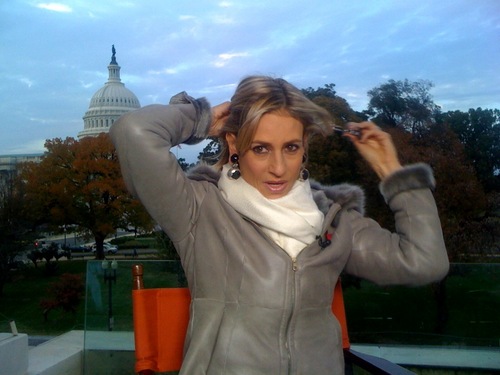
A quick thread on the #Mandelson saga:
- from a source who has been at the heart of the vetting process -
Developed vetting is a long and complex process. It involves written evidence , a long questionnaire , conversations with family and friends. The main interview itself can take half a day .. at the end 🧵 ..1
English
@StevenIsserlis @agnessaal16 So moving, those photos… Thank you.
English
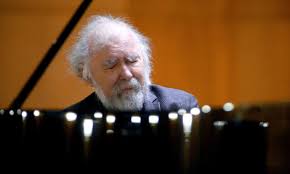
Four years since beloved Radu Lupu left us - what an artist; and what a man. He had such an incredibly deep connection to the works he played - there was no struggle between head and heart, because both were so completely intertwined in his understanding of music. Wondrous...



English
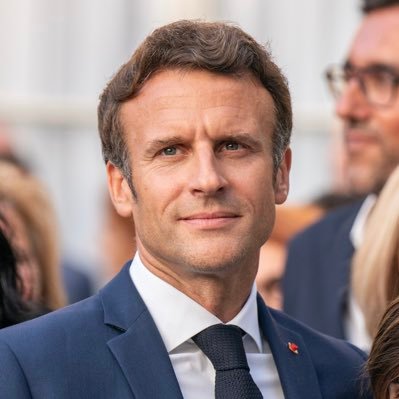
Je me suis entretenu hier avec le Président iranien Massoud Pezeshkian, ainsi qu'avec le Président américain Donald Trump.
J’ai appelé à reprendre les négociations interrompues à Islamabad, à clarifier les malentendus, et éviter de nouvelles phases d'escalade.
Il est essentiel en particulier que le cessez-le-feu soit strictement respecté par tous, et qu'il inclue le Liban.
Il est tout aussi important que soit rouvert le détroit d’Ormuz, de manière inconditionnelle, sans contrôles ni péages, dans les plus brefs délais.
À ces conditions, les négociations devraient pouvoir reprendre rapidement, avec le soutien des principales parties prenantes.
La France et le Royaume-Uni accueilleront par ailleurs ce vendredi, à Paris, une conférence qui réunira en visioconférence des pays non-belligérants prêts à contribuer à nos côtés à une mission multilatérale et purement défensive, destinée à restaurer la liberté de navigation dans le détroit lorsque les conditions de sécurité le permettront.
Français