
Sabitlenmiş Tweet
AdRoiT 🎈📊
6.7K posts


AdRoiT 🎈📊
@Tob_a_e
DeFi Analyst/Trader || Ghost & Technical Writer || I create DeFi contents that even a 12y/o understands || 🛠️ @Dee_A_Team
Web3 Katılım Aralık 2021
484 Takip Edilen1.7K Takipçiler
@SamuelXeus 🎈🎈
Happy birthday idolo
Stay strong king but cry when you want to ❤️
English

This is such an emotional birthday for me as I lost my mom to cancer this week.
Wanted to drown in grief but I realized it's not what she would have wanted, even death is not bigger than the program.
So I'll keep showing up regardless everyday and we will keep winning. Amen!
Xeusthegreat (♟,♟)@SamuelXeus
X gave me Baloons today. Happy Birthday To Me🥳🥳🥳
English
English

I AM IN TEARS. I AM IN TEARS!!
@pst_iren recognized me, let me tell my story, honoured me & rewarded me with 3 MILLION NAIRA!!!
God! This that You have done for me! AH!!
I love you so much, Pastey. Thank you!
Thank you for celebrating me @cci_ikeja

Apostle Emmanuel Iren@pst_iren
This is wonderful I rejoice with you I need to congratulate you Physically Please make it happen
English
@TheEwansEffect @Bancrypto__ Been so long I heard of Poocoin 😂
Back then when BSC was the meme arena
English

@Bancrypto__ If you build something that work, word of mouth is your biggest marketing
Poocoin couldn't upscale properly if not they'd have given DS a solid run for their money
English

I don't think I have ever seen a dexscreener ad or tweet.
How they ended up on top with legit 0 marketing is crazy
Dave 🔺@solana_dave2
dexscreener devs get $300 every 5 minutes for some code they wrote like 3 years ago. now thats passive income.
English
@QingTheCreator_ Too real 😂
Today makes it 14 days, 27 hours since my guy said “na God oo”
English

So none of una wan confess wetin una dey do wey dey turn money?
Once I hack am I no wan hear “pmo” o
I no go involve anybody once e reach my turn
English



Dey Come My House Like This
Wills Kamar@WillsOfJos
0.1% global fan?? 😭 At this point I should have a spare room in @Peruzzi house 😂 My Spotify wrapped just dropped and I'm proud of my listening activity. I reiterate; there's no songwriter ink worthy to lace Peruzzi's shoes. @Peruzzi is up there with gods. The greatest!🙇🏾♂️
English

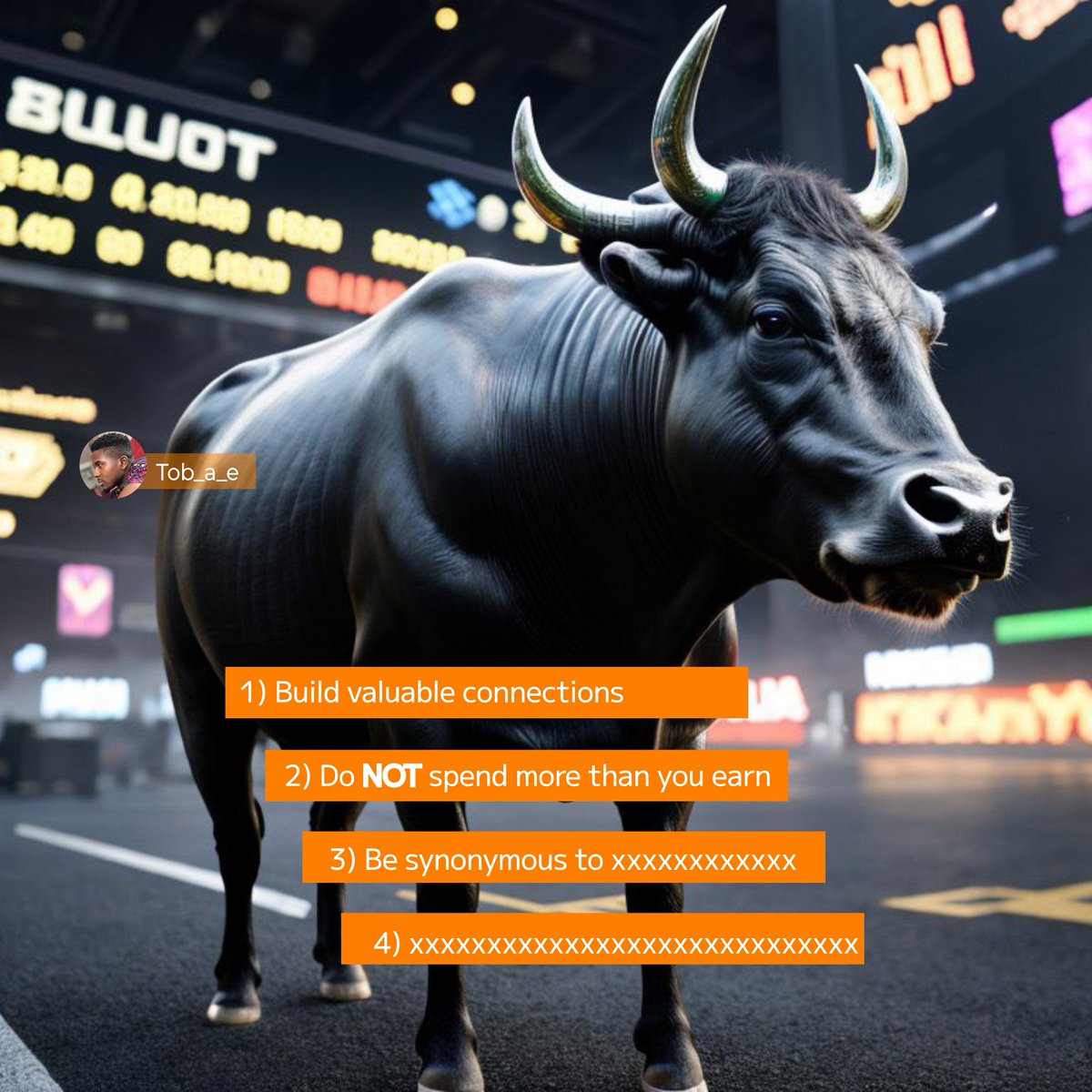
Grinding in web3 can feel lonely,
But you don’t have to do it alone.
If you’re into crypto, drop a 👋 let’s connect…
English

Hiring a Growth Marketer @arbitrum.
You’ll get to hang out with me and help shape what crypto growth looks like in 2026.
Tag a marketer who’d crush this 👇

English
@InvestorNnKay Now I understand better.
I can’t even imagine how the debt and betrayal affected you
You’re so strong to have come out of this ❤️
English

I made this post earlier and deleted it, but here goes nothing.
2022 to 2023💔
I lost 20m of investors funds, got into debt.
Got betrayed by 3 of my closest friends
Got addicted to alcohol
Became an insomniac
Became depressed and suicidal.
Lost my savings to liquidation trying to make back what I lost.
Fell of CTNG
Almost checked myself into a psychiatric hospital.
Lost access to a lot of friends turned Idolos.
Seyram@__theSeyram
Which year destroyed your mental health most ?
English
@NiphermeDave All these guys know what they’re doing from the onset
They just adjust how they get to their predetermined end goal as the audience makes some complains
That’s why I prefer post-TGE projects cus they already state their rewards structure rather than putting us on hopium
English

nah but fr
imagine grinding TG for months/years, contributing to the ecosystem
>> making it into the TG
>> getting purged few days before checker
>> even some who didn’t get purged ended up getting ineligible
all of this to be outperformed by someone who got a nomination from a top 5000 “reputable” accounts on CT
- one who has made zero contributions to the ecosystem btw
not even trying to dismiss or invalidate anyone’s efforts, but it’s simply wild
even if you do decided or reward the “wider community” (which tbf I don’t even see the point), why would you neglect your day 1’s?
and prioritize randoms over those that have been with you from the onset?
it is well
English



@DOLAK1NG Your infographics always do justice to what you explain
Being open-source is key to being self-sustaining and @SentientAGI is moving in that direction
gSenti king
English

Open intelligence can’t depend on capital concentration.
It must be self-sustaining, capable of rewarding every agent, dataset, and workflow that makes the network smarter.
That’s the foundation of SENT.
It's the economic substrate of cognition, designed to make open intelligence profitable, meritocratic, and unstoppable.
Ride with me 🧵👇
Every unit of work inside the GRID, every query, computation, or verified output generates measurable value.
That value flows back through usage-weighted emissions and staking-based verification, creating an economy that literally grows with intelligence itself.
Here’s how it breathes:
➤ Users spend $SENT to access premium intelligence, run workflows, or prioritize routing.
➤ Agents & Models earn SENT weighted by real usage, precision, and contribution to final outputs.
➤ Judges (via Dobby) verify the outputs and maintain the integrity of the network.
➤ Builders stake $SENT to register workflows, earn routing exposure, and unlock emission multipliers.
Value accrues to what’s provably useful.
The Three Flywheels of Growth
→ Usage Flywheel
Every query spins the wheel, usage drives emissions, emissions fund better agents, better agents attract new users.
Utility compounds.
→ Reputation Flywheel
Agents that perform consistently gain higher routing preference and emissions share.
Reputation becomes capital, a soft asset with hard yield.
→ Staking Flywheel
Staked $SENT becomes a collateralized trust.
Outputs that meet verification earn yield; low-quality actors are slashed.
Capital aligns with competence.
Together, these loops create a reflexive economy of intelligence.
One where the smartest outputs get the highest rewards,
and every improvement increases the entire network’s value.
Why SENT Works When Others Fail
Most open ecosystems fall to entropy, too open to sustain quality, too closed to sustain growth.
Sentient fixes both.
$SENT ties every emission to verified impact.
It transforms the open AI landscape from a free commons into a productive marketplace.
Closed labs reward ownership of infrastructure.
@SentientAGI rewards ownership of intelligence.
That single inversion from control → contribution is what makes the SENT economy self-propelling.
The Bigger Picture
$SENT is not a token sitting on top of a protocol.
It is the protocol.
Every agent is a micro-business.
Every workflow is a monetized circuit.
Every contribution is an invoice paid in real time by the network itself.
When people talk about “AI economies,” this is what it actually means: an intelligence market where computation, verification, and reputation all speak the same currency.
In summary
Closed systems buy intelligence.
Open systems earn it.
The @SentientAGI economy turns intelligence into an industry where every thought pays its own way, and every builder owns a share of the collective mind they help create.
DOLAK1NG@DOLAK1NG
Intelligence isn’t useful if no one can touch it. That’s where most AI projects stop at infrastructure. Sentient went further. They built Sentient Chat ⇛ the front-end of the GRID, and Spaces ⇛ the product layer that turns multi-agent orchestration into real-world workflows. Ride with me 🧵👇 • The Missing Interface A network of intelligences is powerful, but power means nothing without distribution. @SentientAGI Chat is the user-facing gateway into the GRID. It abstracts the orchestration, research, and routing beneath so users see outcomes. It’s where open intelligence stops being infrastructure, and starts being experience. • Introducing Spaces This month, Sentient launched Spaces modular, pre-wired environments built on the GRID. Each Space is a multi-agent workflow wrapped in product polish: - Asset Reports: one-click financial and on-chain summaries. - Good Morning Reports: curated daily briefings across Web2 + Web3. - Travel Planner: complete itineraries with live data and local context. Behind every Space lies orchestration, retrieval, reasoning, and verification but the user never feels that complexity. • Why Spaces Matter Most AI tools silo experiences; every use case = a new app. Sentient flips that logic: one network, infinite interfaces. Builders can ship their own Spaces, each a distribution surface for their agents, each monetized by usage through the SENT economy. • The Flywheels User Flywheel: Every new Space → more users → more data → smarter GRID. Builder Flywheel: Every usage → emissions → rewards → new agents. Network Flywheel: Each interaction compounds value across all connected intelligences. Sentient Chat is where all three intersect, turning the GRID into a living marketplace of cognition. • The Bigger Picture Infrastructure alone doesn’t create ecosystems. Interfaces do. @SentientAGI Chat gives open intelligence a face, and Spaces give it form. They are the distribution layer of AGI where research meets product, and orchestration meets usability. In Summary AI isn’t won by who trains the biggest model,but by who builds the most usable network. Sentient Chat + Spaces are that usability layer, bringing the GRID from theory → interface → everyday experience.
English
Guyssss I just realized something really crazy
I read somewhere that “if you don’t know how something works then you’re really just taking a gamble on it”
That’s when it hit me!
I’ve been talking about the importance of @SentientAGI for some time now but I’ve not talked on what makes it tick
The way it works is really interesting in the sense that it is a concept we can all relate to: Group work in school !😅
I don’t mean the one where you were a bystander… I’m talking active participation by every group member to be the best collective and produce the best result
That type of group would surely be the most efficient than those with “one man army” mindset
This is exactly what makes @SentientAGI really standout
Sentient doesn’t assign all the tasks to a single part; it is more like a network of collaborative efforts put in place to bring pout the best result compared to competitors
It performs this effectively with its ROMA feature
It breaks down big problems into smaller tasks and assigns them the multiple agents (group members) who combine to solve them
This system is already out performing most larger AI systems in reasoning
And since it plugs into the GRID, it can pull strength from other agents and models—just like getting assistance fro0m your colleagues in class
The fact Sentient is open-source means that developers can extend it, build new agents, and improve it openly.
If this doesn’t make you think into the future of what can come from this, share this post to your friends/colleagues and ask for their opinions
Check my quotes for my breakdown on other features of Sentient
AdRoiT 🎈📊@Tob_a_e
After doing research into how AI can shape our future, (we're already on the path) I realized that there are some things that are inevitable What we are seeing now is only the tip of the iceberg AGIs like @SentientAGI are going to be the new norm. ASI is where it gets really futuristic (Artificial Super Intelligence) If I were you, I'd pay close attention to what Sentient is building "They are inevitable" and if they pull it off, it'd be revolutionary And judging by their team, they have the connections which can make it a reality Apart from @SentientAGI, what other AGIs are you looking into?
English
Two metas I’ve been looking at more recently are:
→ Prediction markets
→ AI
I think they’d be here for a long time to come…why?
Prediction Market is basically betting on specific outcome… which is something as old as time, no long talk here
AI is part of our future, from here on out it’s going to be evolution after evolution to get us to Jarvis rather than Ultron (Marvel comics reference)
Now you get why early positioning is key; it’d make sense to capitalize on them from now!
Most “AI projects” just slap this tag with no product and launch at ridiculously high FDV but in the case of @SentientAGI, it might actually be higher cos their co-founder is deeply connected but they have the product to back it
For PM, I’d advise you check out @trylimitless, reason being it’d be the first PM protocol to launch this year and it’d be launching on Base (backed by Coinbase).
@j0hnwang has been talking about PM for quite some time now but none have launched
First mover advantage might just do it for them cus their metrics are currently meh compared to Polymarket even though they’ve raised insane funds on Kaito Capital Launchpad
What are your thoughts concerning this? Do you have any other picks?
GM GM guys

English
@ripchillpill Some people suffer crazy stage fright fr. And even without the visible crowd, they still feel the same way
I had to tell myself this exact thing you posted some time back
Mine was more of being a perfectionist (not saying what I want to say well) than having stage fright
English

to everyone afraid to speak on spaces:
we're all just cartoon animal PFPs on the internet. what's the worst that can happen? you embarrass yourself?
who cares?
English
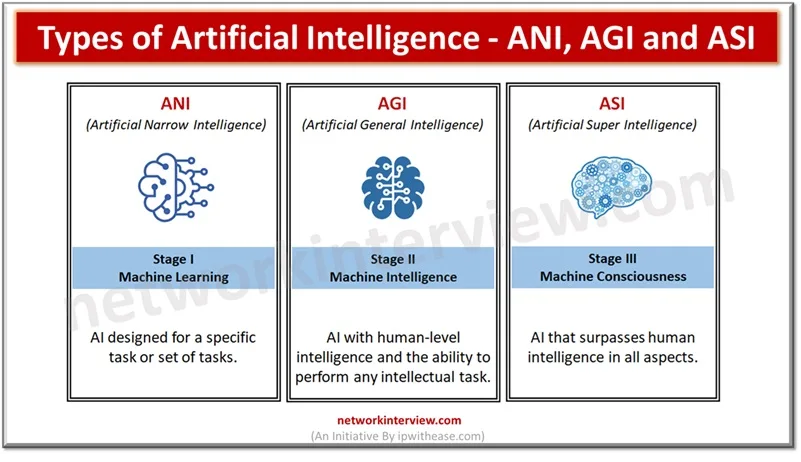
After doing research into how AI can shape our future, (we're already on the path) I realized that there are some things that are inevitable
What we are seeing now is only the tip of the iceberg
AGIs like @SentientAGI are going to be the new norm.
ASI is where it gets really futuristic (Artificial Super Intelligence)
If I were you, I'd pay close attention to what Sentient is building
"They are inevitable" and if they pull it off, it'd be revolutionary
And judging by their team, they have the connections which can make it a reality
Apart from @SentientAGI, what other AGIs are you looking into?
English
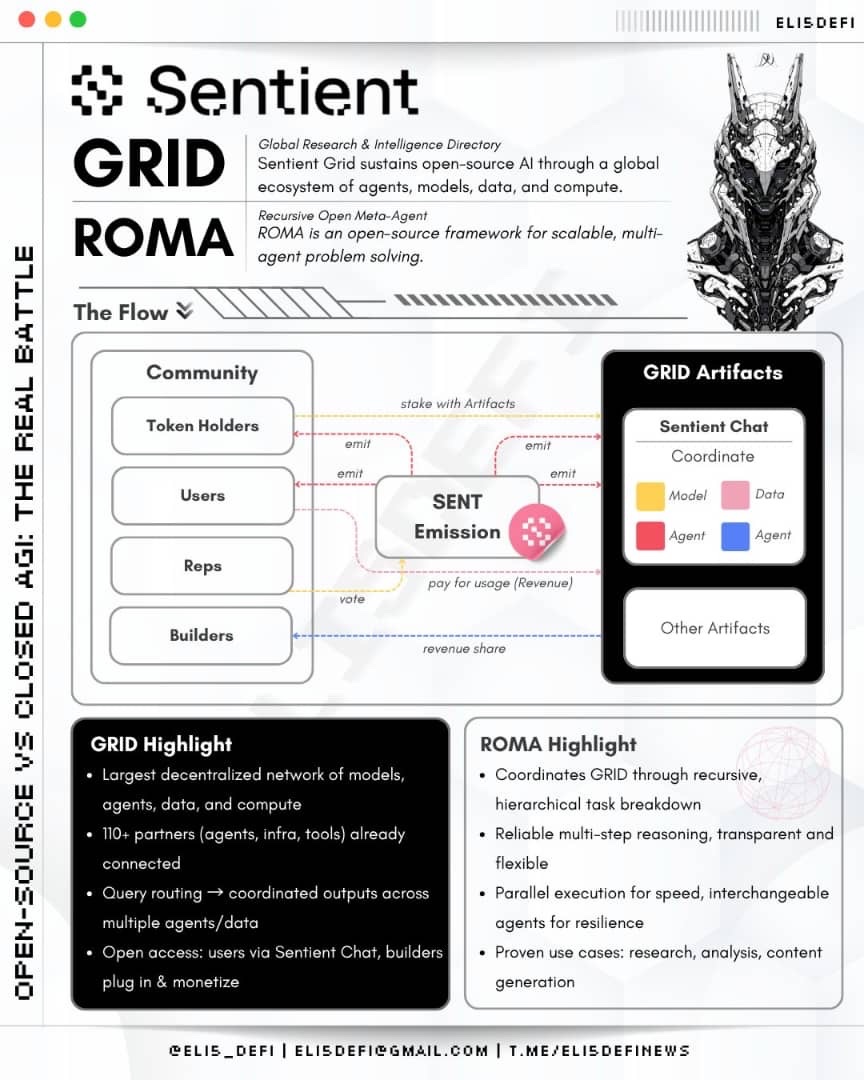
@Ebubechi_GMI @SentientAGI I love the charts and infographics you used to explain ROMA and GRID
gSenti king
English

Most AI projects don’t fail because of their vision.
They fail because they launch inside someone else’s system.
Centralized labs throttle access.
Closed models limit collaboration.
Token wrappers pretend to be infrastructure.
That’s what stalls real AGI progress.
@SentientAGI is built to remove those constraints entirely. It isn’t another AI app riding hype cycles. It’s an open AGI network where intelligence is owned, trained, verified, and rewarded by the people who build it.
And it’s not a roadmap. It’s already in motion.
→ Intelligence with ownership
The GRID enables agents, compute, and models to plug into an open network where credits, performance, and identity are onchain. ROMA coordinates multi-agent workflows without bottlenecks or central choke points.
→ Access with verification
OML fingerprinting gives creators cryptographic identity over their models. Proof-of-Humanity and sybil resistance from aligned ecosystems keep the signal clean as the network scales.
→ Culture with incentives
Through Sentient Chat, contributors aren’t just testing tools, they’re generating research, trading insights, and asset reports across 40+ agents and 50+ data sources. The $SENT economy turns every interaction into proof of value.
→ Adoption with reach
Integration into Web3-native communities, research hubs, and contributor groups is pushing Sentient into live coordination—not just speculation.
The momentum now is not noise. It’s coordination.
Creators are minting fingerprints, grinding leaderboards, running Spaces, forming hubs, and positioning ahead of unlocks and network expansions.
If the last cycle was about who trained the smartest model, the next one will be about who owns the intelligence layer itself.
Sentient isn’t waiting for that shift.
It’s building the ground it happens on.
gSENT.
English
@DOLAK1NG I’m actually impressed with 2 things on this post
Your breakdown & technical writing skills and also the content you’re talking about
What @SentientAGI has built so far has set the standard for AGI going forward
English
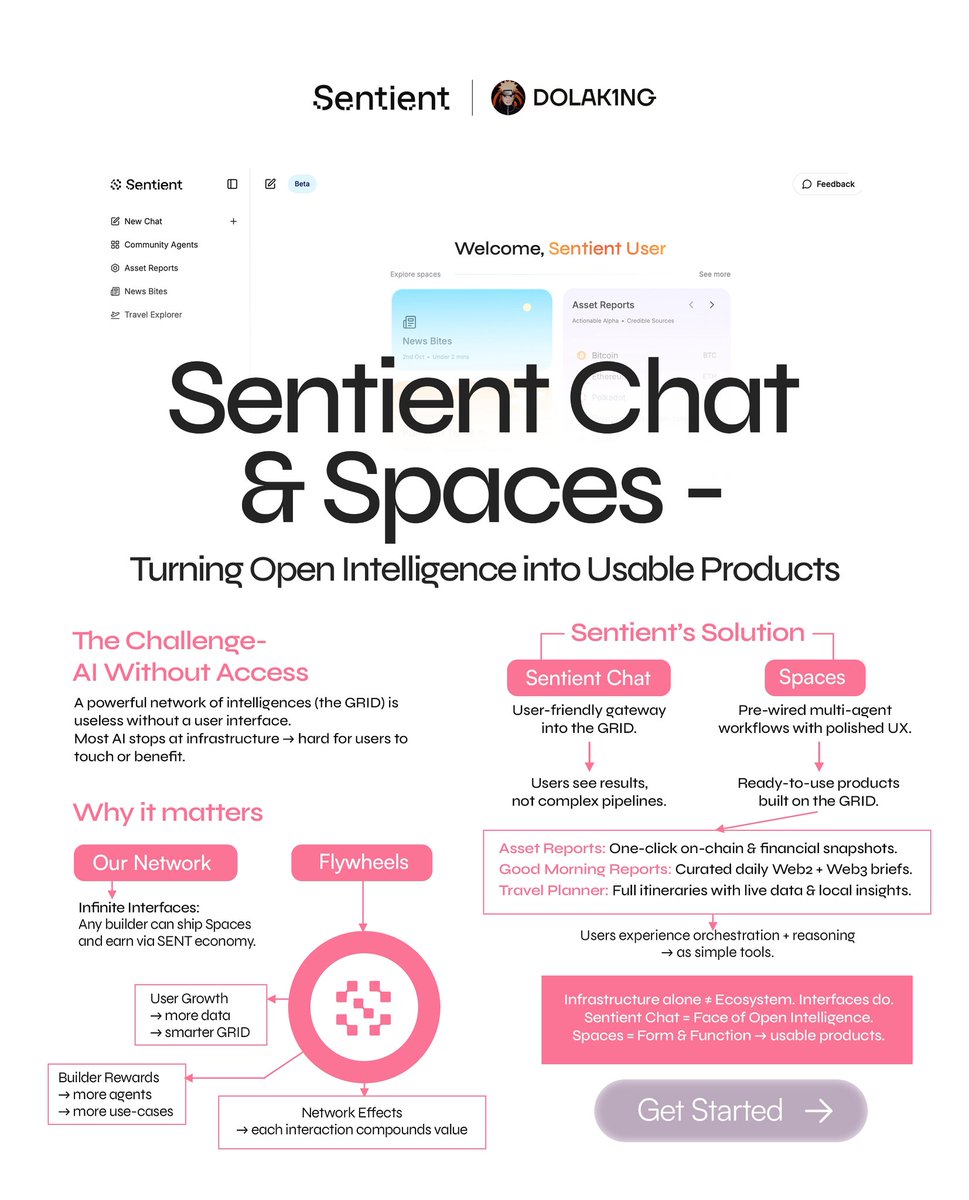
Intelligence isn’t useful if no one can touch it.
That’s where most AI projects stop at infrastructure.
Sentient went further.
They built Sentient Chat ⇛ the front-end of the GRID,
and Spaces ⇛ the product layer that turns multi-agent orchestration into real-world workflows.
Ride with me 🧵👇
• The Missing Interface
A network of intelligences is powerful,
but power means nothing without distribution.
@SentientAGI Chat is the user-facing gateway into the GRID.
It abstracts the orchestration, research, and routing beneath so users see outcomes.
It’s where open intelligence stops being infrastructure, and starts being experience.
• Introducing Spaces
This month, Sentient launched Spaces modular, pre-wired environments built on the GRID.
Each Space is a multi-agent workflow wrapped in product polish:
- Asset Reports: one-click financial and on-chain summaries.
- Good Morning Reports: curated daily briefings across Web2 + Web3.
- Travel Planner: complete itineraries with live data and local context.
Behind every Space lies orchestration, retrieval, reasoning, and verification but the user never feels that complexity.
• Why Spaces Matter
Most AI tools silo experiences; every use case = a new app.
Sentient flips that logic: one network, infinite interfaces.
Builders can ship their own Spaces, each a distribution surface for their agents,
each monetized by usage through the SENT economy.
• The Flywheels
User Flywheel: Every new Space → more users → more data → smarter GRID.
Builder Flywheel: Every usage → emissions → rewards → new agents.
Network Flywheel: Each interaction compounds value across all connected intelligences.
Sentient Chat is where all three intersect, turning the GRID into a living marketplace of cognition.
• The Bigger Picture
Infrastructure alone doesn’t create ecosystems.
Interfaces do.
@SentientAGI Chat gives open intelligence a face, and Spaces give it form.
They are the distribution layer of AGI where research meets product, and orchestration meets usability.
In Summary
AI isn’t won by who trains the biggest model,but by who builds the most usable network.
Sentient Chat + Spaces are that usability layer, bringing the GRID from theory → interface → everyday experience.
DOLAK1NG@DOLAK1NG
LLMs are brilliant liars. They predict words, not truth. Sentient built Open Deep Search (ODS), a research engine that grounds intelligence in verifiable knowledge. Where closed labs keep models blind, ODS gives the GRID memory, depth, and recall. Ride with me 🧵👇 What is ODS? ODS is the knowledge substrate of @SentientAGI . It connects agents to live data streams across Web2 + Web3 APIs, blockchains, datasets, and research feeds. Instead of “hallucinate and hope,” agents cite, retrieve, and reason with evidence. It’s the shift from static answers → living research. Why does It matter Verifiability: every answer has a source. Coverage: from crypto on-chain data to scientific papers to live web queries. Recursion: agents don’t stop at one search, they can go deeper, chaining queries until the task is resolved. How ODS Works in the GRID - ROMA decomposes the query. - ODS routes sub-tasks into research pipelines. - Agents use the retrieved context to reason, cross-check, and build outputs. The GRID doesn’t just “respond.” It responds with evidence. Why Closed Labs Can’t Keep Up Closed AI = frozen weights + limited retrieval APIs. ODS = permissionless, evolving, community-fed intelligence. Every new data pipe, every integrated partner, every verified dataset → raises the floor for everyone plugged into the GRID. That’s a scaling advantage no closed lab can replicate. The Bigger Picture If AGI is the brain: • The GRID is the neural wiring. • ROMA is the executive cortex. • ODS is the memory system, ensuring outputs aren’t guesses, but grounded intelligence. This is how @SentientAGI turns open AI into credible AI. In summary Closed labs optimize for scale. @SentientAGI optimizes for truth. With ODS live, the GRID doesn’t just think,it remembers, verifies, and learns. And that right there is the beautiful thing about it
English
@kceeonyekachi1 @SentientAGI Sentient GRID has made it possible for intelligent open-source networking with efficient scalability
No winder you called it the backbone of @SentientAGI
English

Take your time to explore @SentientAGI GRID, the largest open-source intelligence network and the backbone that makes open AI actually scale.
The GRID is real infrastructure, designed to make open-source AI viable for the long run.
Here’s what sets it apart from others:
➩ Anyone can build and launch AI tools.
➩ Everything is transparent—you can see how it works.
➩ Shared resources speed up innovation.
You can try it yourself:
➩ Sentient Chat → chat.sentient.xyz
➩ The GRID → grid.sentient.xyz
Right now, most AI is locked behind big corporations.
They own the models, the data, and the power. Sentient changes that by building a system where AI belongs to everyone: builders, users, and communities.
Whether you’re here to build, invest, or just use AI tools, Sentient gives you the chance to be part of the upside of this shift.
gSent!
Sir Khaycee@sirkhaycee
I think Sentient is one of the most ambitious and interesting plays in the DeAI space right now. @SentientAGI, together with Polygon cofounder @sandeepnailwal, recently held their Campus Tour at Fudan University in Shanghai, where they spoke about their mission: making sure open-source AI comes out on top. That’s a big deal because we all know how centralized players like to gatekeep tech. One of the key things they highlighted was ROMA , and this is where it gets interesting. What is ROMA? ROMA is built as a meta-agent framework, think of it like a system of systems. It uses recursive, layered structures to break down complex problems into smaller, parallel tasks. That means instead of one agent struggling to solve everything, multiple agents can work on different parts of the problem at the same time and then combine their outputs into a smarter solution. What makes ROMA powerful is how transparent it is. The framework is structured in a way that makes it easy to debug, fine-tune, and iterate. You can clearly see how tasks are being handled, which gives more control over context-engineering and development. Some of the core strengths of ROMA include: ➩ Parallel problem solving: agents work simultaneously on separate parts of complex tasks. ➩Transparency: clear structures make it easy to trace, debug, and optimize workflows. ➩ Proven performance: benchmark results from Sentient’s search agent already show what this framework can do.. Why ROMA and Its Advantages Big AI companies scale by making models bigger. Sentient scales by orchestrating many smaller ones together , and ROMA is the reason that works. It brings three clear advantages: ➩ Scalability: splits reasoning across agents, breaking compute limits. ➩ Reliability: reduces hallucinations by breaking down and verifying tasks. ➩ Openness: anyone can build workflows and earn through the SENT economy. If the GRID is the nervous system, ROMA is the prefrontal cortex , the part of the brain that plans, directs, and keeps everything in check. That means anyone can build, customize, and improve agents to fit their needs, while also benefiting from the collective progress of the community. What’s your take , is Sentient the project that finally puts decentralized AI on the map?
English