Tokyo Deep Value
280 posts

Tokyo Deep Value
@TokyoDeepValue
Japanese stocks are the last great deep value trade on earth. Rock solid balance sheets. Monster cash flows. Dirt cheap prices. I find them and buy them
Dumpster Katılım Mart 2026
9 Takip Edilen33.4K Takipçiler
Sabitlenmiş Tweet

I flew to Osaka with a 14-page activist letter, a translated copy of my proposed slate of independent directors, a slide deck on capital allocation reform, and what I believed, at the time, was a clear and reasonable demand: that the company, which was sitting on cash equal to 180% of its market cap, return a portion of it to shareholders through a special dividend. I had been working on this campaign for nine months. I had hired a Tokyo-based proxy advisor. I had built a 6% position through patient accumulation. I had, by every framework I understood, done the work.
The chairman, who was 81 years old, received me in a tatami room above the company's headquarters, which sat over a soba restaurant that had been in the same family for four generations. He was wearing a navy suit. He bowed at an angle I could not, with my Western training, accurately reciprocate. He gestured for me to sit on a cushion. I sat. A woman of approximately his own age entered, silently, and placed a small ceramic cup in front of me. The cup contained tea. The tea was lukewarm. I did not yet know that the lukewarm tea was the entire negotiation.
I began with the deck. I had prepared it carefully. I had translated the headers into Japanese. I walked him through the capital structure, the unproductive cash, the historical return on equity, the peer comparison, the proposed dividend. He listened. He did not interrupt. When I had finished, he said, in soft but clear English that I had not been told he spoke, "Thank you for traveling so far." Then he stood up, slowly, and gestured for me to follow him.
We walked down a set of wooden stairs that creaked in a way I cannot adequately describe, through a hallway lined with black-and-white photographs of men I did not recognize, and into a small workshop attached to the back of the building. In the center of the workshop was a lathe. It was old. It was, the chairman explained, the original lathe his grandfather had purchased in 1923 to manufacture the first product the company had ever sold, which was a specific kind of brass valve fitting used in steam locomotives. The locomotive industry had been gone for 60 years. The lathe was still running.
"My grandfather operated this machine," he said. "My father operated this machine. I operated this machine, as a child, before school. The factory you visited yesterday produces components that descend, in an unbroken line of design, from the work that began on this lathe. The cash you wish me to distribute is the result of one hundred and one years of refusing to do anything that would shorten the life of this company. I cannot distribute it. I am not, in the deepest sense, the owner of it. I am the custodian of it. The owner is not yet born."
I did not have a response. I had prepared for many possible responses from him. I had not prepared for this one. We returned to the tatami room. The tea was refreshed. It was, again, lukewarm. The chairman asked me about my family. I told him about my wife, my two children, my parents in suburban Connecticut. He listened with what appeared to be genuine interest. He asked the ages of my children. He nodded gravely when I told him. He asked whether I had ever shown my children the work I do. I had not. He asked whether I would, when I returned. I said I would consider it.
Four hours passed. I was served, at various points, three more cups of tea, a small dish of pickled vegetables I did not recognize, and a single piece of mochi that the chairman's assistant placed in front of me with both hands. Nobody mentioned the activist letter again. Nobody mentioned the dividend, the directors, the deck, the proposal, or the 6% position. We talked about the cherry blossom season, which was apparently late this year. We talked about American baseball, which the chairman had followed since 1962. We talked about a poet I had never heard of, whose work he recited a single line of in Japanese and then translated for me, slowly, into English, and which I have, in the three years since, been entirely unable to locate again.
At the end of the meeting, he stood. He bowed. He thanked me, again, for traveling so far. He said he hoped I would visit again, perhaps with my family, perhaps in the spring, when the city was at its best. He did not, at any point, acknowledge the proposal. He did not decline it. He did not engage with it. He simply, through a series of small and almost invisible movements that I am still trying to understand three years later, allowed the proposal to dissolve into the air of the room, until by the time I left the building, it had ceased to exist as a thing that had been said.
I flew home the next morning. I withdrew the campaign two weeks later, in a quiet letter to the proxy advisor that cited "ongoing discussions" and was technically not a withdrawal at all but was understood, by every party who received it, to be one. The position I sold over the following six months at a small loss. The chairman is still alive. The lathe is still running. The cash is still on the balance sheet.
I cannot, even now, explain what happened in that room. I went in as an activist, with a deck, a translator, and a six percent position, and I came out as a guest who had been thanked, very politely, for visiting a man's home, and who, somewhere in the four hours between the first cup of tea and the last, had been quietly, gently, irreversibly, and without a single raised voice or harsh word, defeated.
I think about him often. I do not think he thinks about me at all. This is, in some sense I am still working out, the entire lesson.
English

I just launched a website that allows anyone to screen for cheap Japanese stocks. Take a look. Let me know if you guys like it. This is what I’ve been using internally to write about these stocks. Let me know if you want me to add anything.
tokyodeepvalue.com
English

Follow along for my journey in the land of the soap and cheap Japanese equities
tokyodeepvalue.substack.com
English

I have been quietly attending Soapland for years in the name of Japanese equity research, and last month it delivered one of the cleanest edges I’ve ever found on a cheap Japanese stock.
I walked into a quiet spot in Yoshiwara for a standard ¥48,000 session. The therapist was sharp, the kind who’d spent the whole week scrubbing exhausted salarymen from a sleepy industrial supplier in Gifu Prefecture. Between the legendary bubble technique and the special rinse, she started venting about this one stubborn client — a 72-year-old president who still refused to retire.
Domestic orders were softening, the company was sitting on a mountain of cash it barely deployed, but the old man wouldn’t budge on costs or succession. She named the exact supplier, the margin pressure they were feeling, and how the whole operation was running like it was still 1995.
I listened, asked a few gentle follow-ups, walked out, ran the numbers that night. The company was trading at 4x earnings with a fortress balance sheet, net cash covering half the market cap, and almost no analyst coverage. I bought 0.9% of the obscure forklift-spring manufacturer whose name I still can’t pronounce.
Six weeks later it rerated 38%.
That’s the thing about corporate Japan. In public, everything is polite theater and hierarchical silence. But in those private rooms where ranks dissolve in soap suds and tired section chiefs finally drop their armor, the real unfiltered color leaks out — overtime realities, capex delays, succession drama, inventory builds. The kind of early signals that never make it into Nomura notes or IR decks.
I’ve cross-checked enough of these bubble briefings against later earnings to know the edge is real. The math doesn’t lie, and neither do the bubbles.
This is how you still find genuine information asymmetry in 2026: by going where the salarymen actually talk.
English

I’ve been one of Soapland’s top foreign patrons in the name of Japanese equity research for the last two years. It’s been one of my best investments.
Two weeks ago Hisui no Yume handed me one of the sharpest, most specific edges I’ve turned into real money on a neglected small-cap.
I took the train to Minowa, walked the narrow Yoshiwara streets, and stepped into the sleek, low-lit entrance at 4-32-1 Senzoku, Taito-ku, Tokyo. ¥88,000 for 120 minutes after the guide coupon. The cast that day was stacked; I picked a 24-year-old former gravure model with porcelain skin and the kind of quiet confidence that makes you forget she’s working.
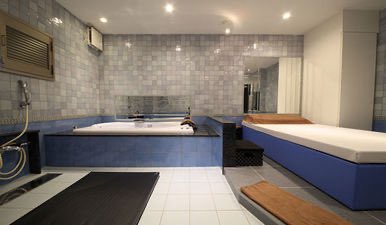
She led me upstairs, drew the deep marble bath, and poured the thick, jasmine-scented soap. What followed was pure ritual: her body pressed slick against mine in the tub, then the move to the bed The friction was relentless, perfect.
Lying there afterward in the clean sheets, still breathing heavy, she wiped me down gently and we started talking. Turns out one of her long-time regulars is a section chief at a obscure electronics component supplier in Tochigi Prefecture. The guy had been coming every other week for months, increasingly loose-lipped as the sessions wore on.
He’d complained about his company’s main customer — a major EV parts assembler — quietly slashing orders by 25% for Q3 while publicly talking up “green transition.” The firm was sitting on ¥18 billion in net cash (almost 60% of its ¥31 billion market cap), had delayed a planned factory upgrade in Gunma for the third year running, and the aging founder was blocking any real cost cuts or diversification. She even remembered the exact product: precision connectors used in automotive sensors. She mimicked the guy’s grumbling tone so well I could picture the tired salaryman spilling it all between bubbles.
I kept my questions casual, left an extra large tip, and left. Back at the hotel I pulled up the filings on that thinly traded TSE Standard name nobody covers. Trading at 4.8x trailing earnings, 0.6x book, 3.8% dividend yield, and a float so small I could build a 0.8% position without moving the tape. The last two quarterly reports showed exactly the order softness she described, masked by one-time gains.
I bought aggressively the next morning. Twelve days later the company pre-announced upward guidance and a surprise ¥5 billion share buyback funded by the cash hoard. The stock popped 44% in four sessions. I trimmed half on the spike.
This is the unfiltered alpha you only get when the armor is off. In the conference rooms it’s all keigo and slide decks. But here, naked and spent in a high-end Yoshiwara room, with a beautiful woman’s hands still on you, the salarymen finally drop the corporate script. Real order books, real management inertia, real cash piles that aren’t being deployed.
Hisui no Yume isn’t cheap, but for a gaijin hunting genuine information asymmetry in 2026, the fieldwork more than pays for itself. The suds don’t lie.
English

Just buy Japanese net nets and chill.
zerohedge@zerohedge
One day the BOJ buys yen, the next day it buys JGBs. Rinse, repeat... net result: 0
English
Tokyo Deep Value retweetledi


@TokyoDeepValue That’s what I call insider trading with an extra happy ending
English

@TokyoDeepValue Holy fuck dude I love u
Instant follow
This wasn’t Kings Club right bc I think that one got shut down
English

@TokyoDeepValue … and then it turns out Soapland “therapists” are running pump and dump schemes
English

If you want to get information on stocks in Japan that no one else has. Head to the soapland and get a massage from a girl. While she is rubbing, talk her up and build a relationship. After a few weeks she will tell you all sorts of things from businessmen who attend the land of the soap. I allocate 15% of my research budget to soapland. It pays for itself many times over. Wife doesn’t care as long as I buy her Mikimoto pearls every so often.
English